Keeping a clean and organized home can sometimes feel like a daunting task, especially when trying to remember all the cleaning tasks that need to be done. This is where a household cleaning checklist can be a game-changer. By creating a detailed checklist, you can ensure that all cleaning tasks are completed, leading to a more organized and clean home.
In this article, we will discuss the benefits of using a cleaning checklist, how to effectively utilize one, the basic components of a house cleaning checklist, a house cleaning schedule for daily, weekly, monthly, and seasonal chores, as well as helpful cleaning tips to pair with your checklist.
Benefits of Using a Cleaning Checklist
Creating and using a cleaning checklist offers several benefits that help streamline the cleaning process and ensure that no task is overlooked. Some of the benefits of using a cleaning checklist include:
Organization
An organized approach to cleaning can make a significant difference in how efficiently and effectively you tackle your household chores. By having a clear checklist that outlines all the tasks that need to be done, you can avoid missing any important cleaning tasks. Organization also helps in prioritizing tasks based on urgency and importance, ensuring that nothing falls through the cracks.
One way to enhance organization in your cleaning routine is to group similar tasks. For example, you can designate a specific day for all kitchen-related cleaning tasks, another day for bathroom cleaning, and so on. This approach not only helps in staying organized but also makes it easier to focus on one area at a time, leading to a more thorough cleaning process.
Efficiency
Efficiency is key when it comes to cleaning, especially if you have a busy schedule and limited time to dedicate to household chores. A cleaning checklist can help you allocate your time effectively by prioritizing tasks based on their importance and frequency. By following a checklist, you can systematically move through your cleaning routine, minimizing wasted time and effort.
To further enhance efficiency, consider creating a cleaning caddy with all the essential cleaning supplies and tools. Having everything you need in one portable caddy can save you time searching for supplies and moving back and forth between rooms. Additionally, using microfiber cloths and reusable cleaning tools can make the cleaning process more efficient by reducing the need for disposable products.
Accountability
Accountability is an essential aspect of maintaining a clean and organized home. A cleaning checklist serves as a visual reminder of the tasks that need to be done, holding you accountable for completing them. By checking off tasks as you complete them, you can track your progress and ensure that no task is left unfinished. This sense of accountability can motivate you to stay on top of your cleaning routine and prevent tasks from piling up.
To further enhance accountability, consider setting realistic goals for your cleaning routine and rewarding yourself upon completion. Whether it’s treating yourself to a relaxing break after completing a challenging task or enjoying a clean and clutter-free space, finding ways to reward your efforts can help reinforce accountability and motivation in maintaining a clean home.
Consistency
Consistency is key to maintaining a clean and organized home in the long run. By following a cleaning checklist regularly, you can establish a consistent cleaning routine that becomes a habit over time. Consistency not only ensures that your home remains clean and clutter-free but also prevents the buildup of dirt, dust, and grime that can be harder to tackle later on.
One way to promote consistency in your cleaning routine is to create a schedule that outlines specific tasks to be done daily, weekly, monthly, and seasonally. By breaking down your cleaning tasks into manageable chunks and spreading them out over a schedule, you can prevent overwhelm and maintain a consistent level of cleanliness in your home. Consistency also makes it easier to track when certain tasks were last completed, allowing you to stay on top of regular maintenance.
Motivation
Staying motivated to keep up with your cleaning routine can sometimes be a challenge, especially when faced with a long list of tasks. A cleaning checklist can serve as a motivational tool by providing a visual representation of your progress and accomplishments. Checking off tasks as you complete them can give you a sense of achievement and satisfaction, motivating you to continue with your cleaning efforts.
To boost motivation, consider setting specific goals or targets for your cleaning routine. Whether it’s completing a certain number of tasks in a day, decluttering a specific area of your home, or tackling a challenging cleaning task, having clear goals can give you something to work towards and keep you motivated. Celebrate your achievements, no matter how small, to maintain a positive attitude towards cleaning and make the process more enjoyable.
How to Use a Household Cleaning Checklist
Using a household cleaning checklist effectively involves a few key steps to ensure that you maximize its benefits. Here are some tips on how to use a cleaning checklist:
Create a Detailed Checklist
When creating a cleaning checklist, it’s important to be thorough and detail-oriented to ensure that no task is overlooked. Start by listing all the areas of your home that require cleaning, such as the kitchen, bathrooms, bedrooms, living room, and outdoor spaces. Break down each area into specific tasks that need to be done, such as dusting, vacuuming, mopping, and decluttering.
To create a comprehensive checklist, consider dividing tasks into categories based on frequency, such as daily, weekly, monthly, and seasonal chores. This approach can help you prioritize tasks and ensure that all areas of your home receive regular maintenance. Be specific when listing tasks to avoid confusion and make it easier to follow the checklist efficiently.
Set a Cleaning Schedule
Setting a cleaning schedule is essential for maintaining a clean and organized home. Determine how often each task needs to be done based on its importance and create a cleaning schedule that aligns with your lifestyle and preferences. Some tasks may need to be done daily, while others can be done weekly or monthly, depending on the level of maintenance required.
When creating a cleaning schedule, consider your daily routine, work commitments, and other responsibilities to find the best time to dedicate to cleaning tasks. Allocate specific days for different areas of your home or types of tasks to establish a routine that works for you. Flexibility is key, so be willing to adjust your schedule as needed to accommodate changes or unexpected events.
Assign Tasks
If you live with family members, roommates, or partners, consider assigning specific cleaning tasks to each person to share the workload and promote collaboration. Divide tasks based on individual preferences, strengths, and availability to ensure that everyone contributes to the cleaning process. Communication is key when assigning tasks to avoid misunderstandings and ensure that expectations are clear.
When assigning tasks, consider creating a rotating schedule to distribute responsibilities fairly and prevent one person from feeling overwhelmed. Encourage open communication and feedback to address any issues or concerns that may arise while sharing cleaning duties. By working together as a team, you can create a more harmonious living environment and maintain a clean home effectively.
Use Technology
In today’s digital age, technology can be a valuable tool for managing your cleaning routine and staying organized. Consider using cleaning apps, digital checklists, or online platforms to create and track your cleaning tasks effortlessly. These tools often come with features such as reminders, notifications, and customizable checklists that can help streamline your cleaning process.
Technology can also help you stay motivated and accountable by providing visual cues of your progress and accomplishments. Some cleaning apps even offer rewards or incentives for completing tasks, making the cleaning process more engaging and rewarding. Explore different options and find the technology that best suits your needs and preferences to enhance your cleaning routine.
Regularly Update
As your cleaning routine evolves and changes, it’s important to regularly review and update your cleaning checklist to reflect any adjustments or additions. Periodically assess your checklist to ensure that it remains relevant and comprehensive, eliminating tasks that are no longer necessary and adding new tasks as needed. Regular updates can help you stay on top of your cleaning routine and adapt to any changing circumstances.
Make adjustments to your checklist based on feedback from family members, changes in your household, or new cleaning techniques or products that you want to incorporate. Take note of any areas in your home that may require additional attention or specialized cleaning to address specific issues. By keeping your checklist up to date, you can ensure that your cleaning routine remains efficient and effective in maintaining a clean and organized home.
Basic Parts of a House Cleaning Checklist
A house cleaning checklist typically includes various tasks categorized by different areas of the home. Some of the basic parts that should be included in your checklist are:
Kitchen
The kitchen is often considered the heart of the home and requires regular cleaning to maintain a hygienic and inviting space. Tasks that should be included in your kitchen cleaning checklist are cleaning countertops, appliances, cabinets, floors, and sinks. Use appropriate cleaning products for different surfaces, such as stainless steel cleaner for appliances and disinfectant for countertops.
In addition to daily cleaning tasks, consider incorporating weekly deep cleaning tasks in your kitchen checklist, such as cleaning out the refrigerator, oven, and pantry. Organize food storage containers, declutter utensil drawers, and wipe down kitchen cabinets to keep the space tidy and functional. Regular maintenance of your kitchen can prevent the buildup of grease, grime, and food particles that can attract pests and bacteria.
Bathroom
The bathroom is another high-traffic area in the home that requires regular cleaning to prevent the growth of mold, mildew, and bacteria. Tasks that should be included in your bathroom cleaning checklist are scrubbing the bathtub, shower, sink, toilet, and mirrors. Use appropriate cleaning products for different bathroom surfaces, such as tile cleaner for shower walls and glass cleaner for mirrors.
In addition to regular cleaning tasks, consider deep cleaning the bathroom periodically by cleaning grout, shower curtains, and showerheads. Organize toiletries, discard expired products, and declutter countertops to create a clean and relaxing atmosphere in your bathroom. Pay attention to ventilation in the bathroom to prevent moisture buildup and promote air circulation for a fresher and cleaner space.
Living Room
The living room is a common gathering space for family and guests and should be kept clean and inviting. Tasks that should be included in your living room cleaning checklist are dusting furniture, vacuuming carpets, cleaning electronics, and organizing entertainment areas. Use a microfiber cloth for dusting to trap dust particles effectively and a vacuum with attachments for thorough carpet cleaning.
In addition to routine cleaning tasks, consider deep cleaning upholstery, curtains, and blinds in the living room to remove dust and allergens. Organize books, magazines, and decor items to create a clutter-free and visually appealing space. Regularly maintain electronics by dusting screens, cleaning keyboards, and organizing cables for a tidy and functional living room.
Bedrooms
Bedrooms are personal retreats that should be kept clean and comfortable for relaxation. Tasks that should be included in your bedroom cleaning checklist are changing bed linens, dusting furniture, vacuuming floors, and decluttering surfaces. Wash bed linens and pillowcases regularly to maintain a clean and hygienic sleeping environment.
In addition to basic cleaning tasks, consider organizing closets, drawers, and storage spaces in the bedrooms to maximize functionality and storage. Rotate seasonal clothing, donate items you no longer use, and store off-season clothing to keep closets organized and clutter-free. Regularly vacuum under the bed, behind furniture, and in corners to prevent dust buildup and promote better indoor air quality.
Common Areas
Common areas such as hallways, entryways, and staircases are high-traffic zones that require regular cleaning to maintain a welcoming atmosphere. Tasks that should be included in your common areas cleaning checklist are cleaning windows, dusting blinds, decluttering surfaces, and organizing entryways. Use a duster or microfiber cloth to dust surfaces and a window cleaner for streak-free windows.
In addition to routine cleaning tasks, consider deep cleaning baseboards, light fixtures, and doorframes in common areas to remove dust and dirt buildup. Organize shoes, coats, and accessories in entryways to create a neat and functional space for coming and going. Regularly sweep or vacuum floors, mop hard surfaces, and spot clean carpets to keep common areas clean and tidy.
Outdoor Areas
Outdoor areas such as porches, patios, and gardens require regular maintenance to enhance curb appeal and create an inviting outdoor space. Tasks that should be included in your outdoor areas cleaning checklist are sweeping porches, cleaning patio furniture, maintaining garden beds, and removing debris. Use a broom or leaf blower to clear leaves and dirt from outdoor surfaces.
In addition to basic cleaning tasks, consider power washing exterior surfaces, sealing wooden decks, and trimming overgrown plants in outdoor areas. Clean outdoor furniture, cushions, and accessories to prolong their lifespan and keep them looking fresh. Regularly maintain garden beds, prune plants, and water as needed to promote healthy growth and vibrant outdoor spaces.
House Cleaning Schedule
Maintaining a cleaning schedule that includes daily, weekly, monthly, and seasonal chores can help you stay on top of household cleaning tasks. Here is a sample house cleaning schedule that you can adapt to fit your needs:
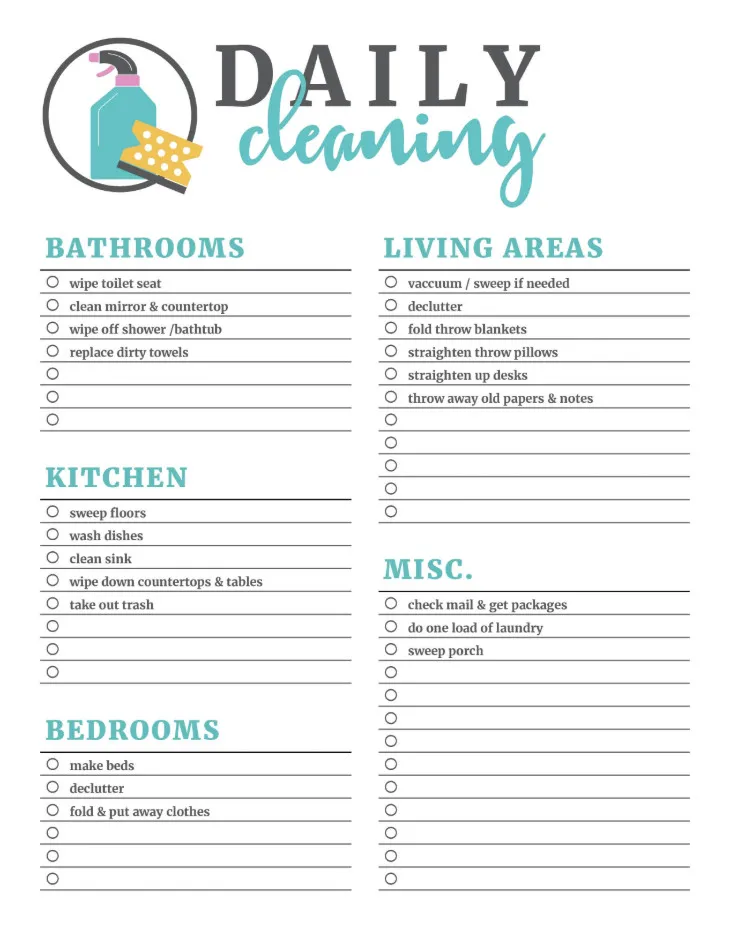
Daily Chores
Daily chores are tasks that should be done daily to maintain a clean and organized home. These tasks are typically quick and easy to accomplish and help prevent the buildup of dirt, clutter, and messes. Some examples of daily chores include making the bed, washing dishes, wiping down kitchen counters, and picking up clutter.
To streamline your daily chores, consider creating a morning and evening routine that includes specific tasks to be done at the beginning and end of each day. Allocate time for quick cleaning tasks such as tidying up living spaces, putting away belongings, and wiping down surfaces to keep your home looking neat and inviting. Consistency is key when it comes to daily chores, so establish a routine that works for you and stick to it.
Weekly Chores
Weekly chores are tasks that should be done every week to maintain a clean and healthy living environment. These tasks are more thorough than daily chores and typically require more time and effort to complete. Some examples of weekly chores include vacuuming carpets, mopping floors, cleaning bathrooms, and changing bed linens.
To effectively manage your weekly chores, consider designating a specific day of the week for each type of task to create a consistent routine. Use a cleaning checklist to track your weekly chores and ensure that no task is overlooked. Break down larger tasks into smaller, manageable chunks to prevent overwhelm and make the cleaning process more efficient. Regularly assess your weekly chores to determine if any adjustments or additions are needed to meet your cleaning goals.
Monthly Chores
Monthly chores are tasks that should be done monthly to address areas of your home that require deeper cleaning and maintenance. These tasks are less frequent than daily and weekly chores, but are essential for keeping your home in top condition. Some examples of monthly chores include dusting ceiling fans, cleaning the refrigerator, washing windows, and organizing closets.
To effectively tackle your monthly chores, consider creating a monthly cleaning calendar that outlines specific tasks to be done each month. Rotate tasks based on seasonal needs and prioritize areas of your home that require attention. Use the opportunity to declutter and reorganize spaces to keep them functional and clutter-free. Regularly review your monthly chores to ensure that they align with your cleaning goals and schedule.
Seasonal Chores
Seasonal chores are tasks that should be done at specific times of the year to address seasonal changes and prepare your home for different weather conditions. These tasks are essential for maintaining the exterior of your home, protecting indoor spaces, and promoting a healthy living environment. Some examples of seasonal chores include cleaning gutters in the fall, airing out mattresses in the spring, pressure washing exterior surfaces in the summer, and sealing windows in the winter.
To effectively manage your seasonal chores, create a seasonal cleaning calendar that outlines tasks to be done each season. Consider the unique needs of each season, such as preparing for holidays, weatherproofing your home, and maintaining outdoor spaces. Prioritize safety when tackling seasonal chores that involve outdoor work or the use of specialized equipment. Regularly assess your seasonal chores to ensure that your home is well-maintained throughout the year
Helpful Cleaning Tips to Pair With Your Checklist
In addition to using a cleaning checklist, incorporating some helpful cleaning tips can further enhance the efficiency and effectiveness of your cleaning routine. Some cleaning tips to pair with your checklist include:
Declutter Before Cleaning
Before you begin the actual cleaning process, take some time to declutter your space. Remove any unnecessary items, relocate misplaced belongings, and tidy up surfaces to make cleaning more efficient. Decluttering not only makes it easier to clean but also creates a sense of order and organization in your home. Consider sorting items into categories and finding designated storage solutions to keep clutter at bay.
To effectively declutter before cleaning, start with one area at a time and work methodically through each room or space. Donate or discard items you no longer need, reorganize belongings that are out of place, and create a system to prevent clutter from building up again. Decluttering regularly can help maintain a clean and organized home and make the cleaning process less overwhelming.
Work From Top to Bottom
When cleaning a room, it’s important to work from top to bottom to prevent dust and debris from falling onto surfaces that have already been cleaned. Start by dusting high surfaces such as ceiling fans, light fixtures, and shelves before moving on to lower surfaces like countertops, furniture, and floors. This approach ensures that you capture and remove dust effectively without spreading it around.
To work from top to bottom efficiently, use a step ladder or extendable duster to reach high surfaces safely. Dust surfaces in a systematic manner, starting from one side of the room and working your way across to ensure thorough coverage. Finish by vacuuming or mopping floors to capture any dust or debris that may have fallen during the cleaning process. Working from top to bottom can streamline your cleaning routine and produce better results.
Use the Right Tools
Having the right cleaning tools and products for each task is essential for achieving the best results in your cleaning routine. Invest in high-quality microfiber cloths, mop heads, scrub brushes, and vacuum attachments that are designed for specific surfaces and purposes. Use appropriate cleaning products for different areas of your home, such as disinfectants for bathrooms, glass cleaners for windows, and wood polish for furniture.
To use the right tools effectively, familiarize yourself with the proper techniques for cleaning different surfaces and materials. Follow manufacturer instructions for cleaning tools and products to prevent damage and ensure optimal performance. Consider organizing your cleaning supplies in a caddy or storage container for easy access and transportation as you move from room to room. Using the right tools can make cleaning more efficient and help you achieve a sparkling clean home.
Delegate Tasks
If you share your home with family members, roommates, or partners, consider delegating specific cleaning tasks to distribute the workload and promote teamwork. Assign tasks based on individual preferences, skills, and availability to ensure that everyone contributes to the cleaning process. Encourage open communication and cooperation to create a harmonious cleaning routine that benefits everyone.
To delegate tasks effectively, create a cleaning schedule that outlines responsibilities for each person and rotates tasks regularly to prevent burnout. Provide clear instructions and expectations for each task to avoid misunderstandings and ensure that cleaning standards are met. Recognize and appreciate the efforts of those who help with cleaning tasks to foster a sense of shared responsibility and accomplishment. Delegating tasks can make cleaning more manageable and create a sense of shared ownership in maintaining a clean home.
Take Breaks
Cleaning can be physically demanding, especially when tackling multiple tasks or deep cleaning projects. It’s important to take breaks and pace yourself to prevent fatigue and burnout during cleaning sessions. Listen to your body’s signals and take short breaks to rest, stretch, and hydrate as needed to maintain your energy and focus.
To take breaks effectively, schedule periodic intervals during your cleaning routine to relax and recharge. Use break time to grab a snack, drink water, or step outside for fresh air to rejuvenate your body and mind. Avoid overexertion by alternating between light and heavy tasks, balancing physical activities with less strenuous ones. Taking breaks not only prevents physical strain but also allows you to approach cleaning with a refreshed perspective and renewed motivation.
Household Cleaning Checklist Template
A Household Cleaning Checklist helps you organize and track cleaning tasks for every room in your home, ensuring nothing gets overlooked. It provides clear sections for daily, weekly, and monthly chores, making it easier to maintain a tidy, hygienic living space. With a structured template, you can stay consistent, save time, and simplify your cleaning routine for a more organized and comfortable home.
Download our Household Cleaning Checklist Template today to keep your home clean, organized, and stress-free.
Household Cleaning Checklist Template – DOWNLOAD
