History timelines are essential tools that visually organize events chronologically, making it easier to understand the sequence, duration, cause-and-effect, and patterns of historical happenings.
By displaying events in a linear format, timelines help individuals comprehend the flow of history, identify significant turning points, and recognize connections between different eras, cultures, and developments. Whether used in classrooms, museums, or research projects, timelines serve as powerful learning tools for both students and historians.
What is a History Timeline?
A history timeline is a graphical representation of events placed in chronological order. It typically consists of a linear bar with dates along the bottom and events or periods marked and labeled along the bar. By visually sequentially displaying historical events, timelines provide a clear overview of the progression of history.
Creating a history timeline involves selecting key events, determining their dates, and coherently arranging them. Timelines may cover specific time periods, such as a century or a decade, or focus on a particular theme or topic, such as wars, inventions, or political movements.
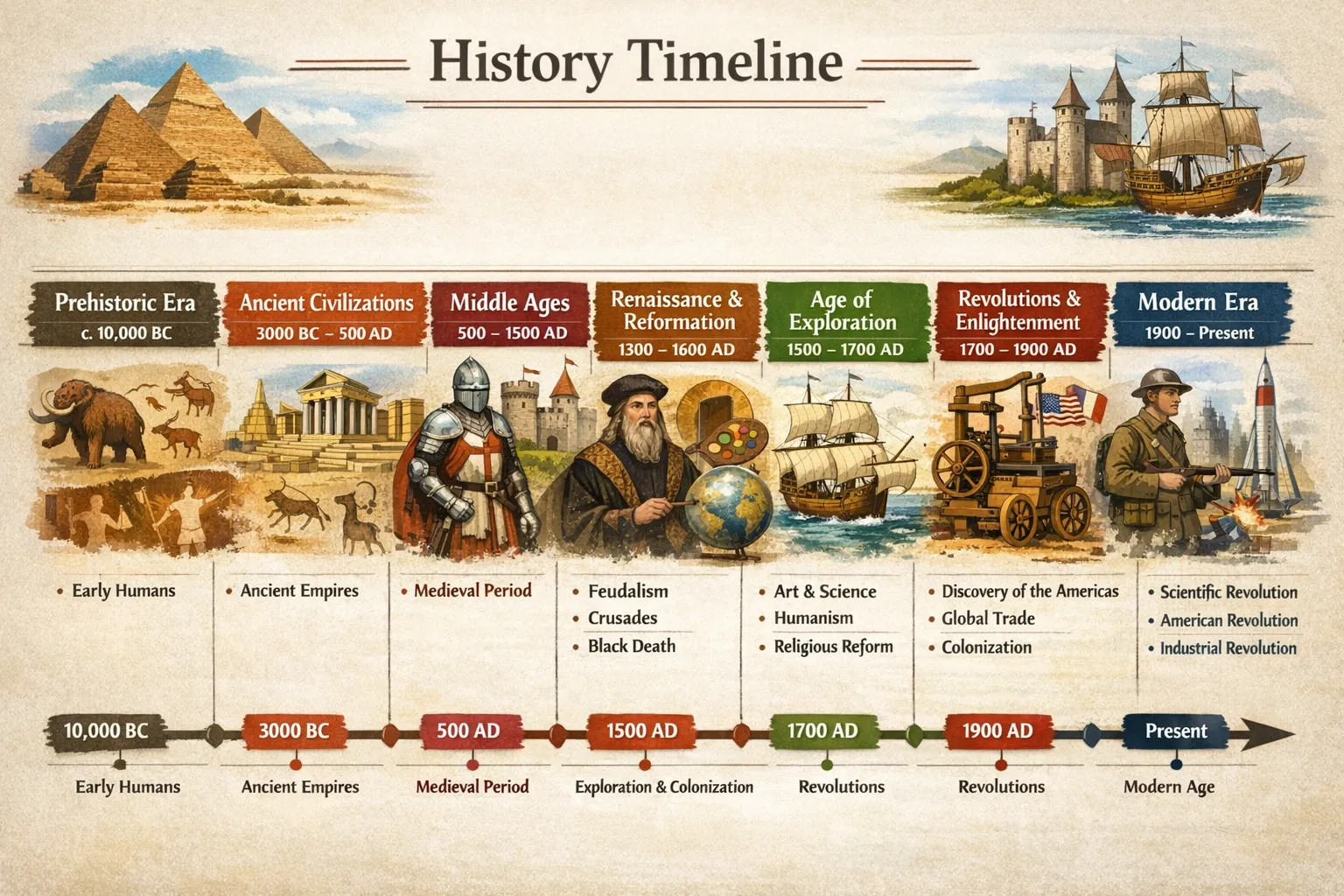
Why are History Timelines Important?
History timelines play a crucial role in improving comprehension and revealing connections between different historical events. Here are some key reasons why history timelines are important:
Enhancing Contextualization
One of the primary benefits of history timelines is their ability to contextualize historical events. By placing events in chronological order, timelines show how different events are connected and influenced by one another. This contextualization helps individuals understand the causes and consequences of historical developments, providing a more nuanced perspective on the flow of history.
When viewing events within a timeline, individuals can see how specific occurrences led to subsequent events and how they fit into the larger historical narrative. This contextualization is essential for gaining a comprehensive understanding of historical processes and identifying patterns and trends that may not be apparent when looking at isolated events.
Identifying Big-Picture Trends
Another important aspect of history timelines is their role in identifying big-picture trends in history. By presenting events in a linear format, timelines allow individuals to observe long-term developments and patterns that may not be immediately apparent when studying isolated events. This broader perspective helps historians and students recognize recurring themes, societal changes, and cultural shifts over time.
By analyzing historical timelines, individuals can identify cycles of growth and decline, technological advancements, political movements, and social changes that have shaped the course of history. This understanding of big-picture trends contributes to a more comprehensive and insightful interpretation of historical events and their significance in shaping the world we live in today.
Highlighting Turning Points
Timelines are instrumental in highlighting significant turning points in history, such as pivotal moments that have had a profound impact on society, politics, or culture. These turning points often mark a shift in the course of history, leading to transformative changes that shape future events and developments. By pinpointing these critical junctures, timelines help individuals understand the causes and effects of major historical shifts.
Turning points can take various forms, including revolutions, wars, inventions, and social movements that have altered the trajectory of nations and civilizations. By visually representing these turning points within a timeline, individuals can appreciate their historical significance and recognize their role in driving change and progress throughout history.
Facilitating Comprehension
One of the primary benefits of history timelines is their ability to facilitate comprehension of complex historical events and processes. By presenting events in a visual and chronological format, timelines make it easier for individuals to follow the sequence of events, understand the duration of different periods, and grasp the cause-and-effect relationships between historical developments.
Comprehension is enhanced through the visual organization of events, which allows individuals to see the connections between different historical eras and movements. This holistic view of history enables students and historians to make sense of the complexities of the past and draw meaningful insights from the interplay of events and factors that have shaped world history.
Serving as a Learning Tool
History timelines serve as powerful learning tools for students, educators, and historians, offering a structured and visual way to study and analyze historical events. In educational settings, timelines are used to support curriculum objectives, reinforce learning outcomes, and provide students with a clear framework for understanding the progression of history.
Educators can use timelines to illustrate key concepts, introduce students to important events, and encourage critical thinking and analysis of historical information. By engaging with timelines, students develop essential historical thinking skills, such as chronological reasoning, causation, and historical interpretation.
What to Include in a History Timeline?
When creating a history timeline, it is essential to include the following elements to ensure clarity and coherence:
The Significance of Title Selection
The title of a history timeline serves as a guiding principle that sets the tone for the entire presentation. It should clearly communicate the theme or topic being covered in the timeline, giving viewers a sense of what to expect and guiding their understanding of the historical events being showcased. A well-chosen title can make the timeline more engaging and memorable, capturing the essence of the historical narrative being presented.
When selecting a title for a history timeline, consider the main focus of the timeline and choose a descriptive yet concise title that conveys the central theme or subject matter. Avoid overly generic or vague titles that may not adequately represent the content of the timeline. Instead, opt for titles that are specific, informative, and relevant to the historical events being depicted.
The Importance of Accurate Dates
Accurate dates are a crucial element of a history timeline, providing viewers with essential information about the chronological sequence of events. Dates help establish a timeline’s framework and structure, enabling individuals to understand the temporal relationship between different historical periods and developments. When including dates in a timeline, ensure that they are meticulously researched and verified to maintain historical accuracy.
Inaccurate or misleading dates can distort the historical narrative and mislead viewers about the sequence of events. To create a reliable and informative timeline, double-check the dates of key events, cross-reference multiple sources, and consult historical records to confirm the accuracy of the timeline’s chronology. By incorporating accurate dates, you enhance the credibility and educational value of the history timeline.
Selecting Key Events
Choosing key events to include in a history timeline is a critical aspect of creating a comprehensive and informative presentation. Key events are pivotal moments, significant developments, or important milestones that have had a notable impact on history and shaped the course of events. When selecting events for inclusion in a timeline, prioritize those that are relevant to the theme or topic being covered and highlight the most influential and transformative aspects of history.
Key events may vary depending on the focus of the timeline, such as political, social, cultural, or technological developments. Consider the overarching narrative or story that you want the timeline to convey and select events that align with that narrative. By including key events that are historically significant and emblematic of their respective time periods, you create a compelling and engaging timeline that captures the essence of history.
Providing Detailed Labels
Incorporating detailed labels for each event in a history timeline is essential for providing context, background information, and additional insights into the significance of the events being presented. Labels serve as captions or descriptions accompanying each event, offering viewers a brief overview of the event’s importance, implications, and relevance to the broader historical context. Well-crafted labels help viewers grasp the significance of each event and understand its role in the overall historical narrative.
When creating labels for events in a history timeline, aim to be concise yet informative, providing key details that elucidate the event’s historical significance. Include relevant dates, names of key figures, locations, and any other pertinent details that help contextualize the event within its historical context. By providing detailed labels, you enrich the viewer’s understanding of the events depicted in the timeline and enhance their engagement with the historical material.
Utilizing Visual Elements
Visual elements such as colors, symbols, icons, and images play a crucial role in enhancing the visual appeal and effectiveness of a history timeline. By incorporating visual cues and design elements, you can differentiate between different types of events, highlight key themes or trends, and make the timeline more engaging and appealing to viewers. Visual elements also aid in organizing information, directing attention to important events, and creating a cohesive and visually appealing presentation.
When selecting visual elements for a history timeline, consider the theme, tone, and purpose of the timeline. Choose colors that are visually striking yet harmonious, select symbols or icons that are easily recognizable and relevant to the events being depicted, and incorporate images that provide additional context and depth to the historical narrative. By utilizing visual elements effectively, you can create a visually engaging and informative history timeline that captivates viewers and enhances their understanding of historical events.
Ensuring Chronological Order
Arranging events in a chronological order is essential for maintaining the coherence and structure of a history timeline. Chronological order establishes a clear and logical sequence of events, allowing viewers to follow the progression of history and understand the temporal relationships between different historical periods. By sequentially organizing events, you create a cohesive and easy-to-follow timeline that effectively conveys the flow and evolution of historical events.
When arranging events in a history timeline, start with the earliest event or period at the beginning of the timeline and progress chronologically towards the most recent events. Ensure that events are placed in the correct sequence and that there are no gaps or overlaps in the timeline’s chronology. By adhering to chronological order, you create a coherent and structured presentation that helps viewers trace the development of history over time and appreciate the interconnectedness of historical events.
How to Create a History Timeline?
Creating a history timeline can be done using various tools and methods, including:
Creating a Manual Timeline
One traditional method of creating a history timeline is by drawing it manually on paper or a whiteboard. To create a manual timeline, follow these steps:
1. Start by determining the time period or theme you want to cover in the timeline.
2. Draw a horizontal line representing the timeline and mark it with dates along the bottom.
3. Select key events to include in the timeline and place them along the timeline in chronological order.
4. Label each event with a brief description or caption to provide context.
5. Use colors, symbols, or images to differentiate between different types of events and highlight key themes.
6. Review the timeline for accuracy and coherence, making any necessary adjustments or revisions.
Creating a manual timeline allows for a hands-on approach to visualizing historical events and can be a creative and engaging way to present historical information.
Using Digital Tools
Digital tools offer a convenient and versatile way to create history timelines with enhanced interactivity and visual appeal. Online timeline generators, software programs, and apps provide users with pre-designed templates, customizable features, and multimedia integration options to create dynamic and engaging timelines. To create a history timeline using digital tools, follow these steps:
1. Choose a timeline creation tool or software program that best suits your needs and preferences.
2. Select a template or design layout for your timeline and customize it to align with the theme or topic you are covering.
3. Input accurate dates, events, and descriptions into the timeline interface, arranging them in chronological order.
4. Incorporate visual elements such as colors, icons, images, and animations to enhance the visual appeal of the timeline.
5. Add interactive features, links to additional resources, and multimedia content to provide viewers with a rich and immersive learning experience.
6. Preview and review the timeline to ensure accuracy, coherence, and visual clarity before sharing it with others.
Digital tools offer a user-friendly and efficient way to create history timelines that are engaging, informative, and visually compelling.
Conducting Historical Research
Historical research is a fundamental step in creating a history timeline, as it provides the necessary information and context to accurately depict key events and developments. To conduct historical research for a timeline, follow these guidelines:
1. Identify the time period, theme, or topic you want to explore in the timeline.
2. Consult reliable historical sources, textbooks, academic articles, and primary documents to gather information about key events.
3. Verify the dates, details, and significance of each event to ensure historical accuracy.
4. Cross-reference multiple sources to corroborate information and gain a comprehensive understanding of the events being depicted.
5. Analyze the context, causes, and consequences of each event to provide viewers with a rich and nuanced portrayal of history.
6. Use citations and references to acknowledge the sources of information and maintain academic integrity in the timeline.
By conducting thorough historical research, you can create a history timeline that is informative, accurate, and engaging for viewers.
Enhancing Visualization
Visualization plays a crucial role in creating an effective history timeline that captures the attention of viewers and compellingly conveys historical information. To enhance visualization in a history timeline, consider the following tips:
1. Use colors strategically to differentiate between different types of events, highlight key themes, and create visual interest.
2. Incorporate symbols or icons that are relevant to the events being depicted, making it easier for viewers to interpret and understand the information.
3. Include images or photographs that provide additional context, depth, and visual appeal to the timeline.
4. Use animations or interactive elements to engage viewers and enhance the interactive experience of the timeline.
5. Organize information in a visually appealing and easy-to-follow layout that guides viewers through the historical narrative.
6. Consider the aesthetics, readability, and coherence of the timeline design to ensure that it is visually engaging and informative.
By enhancing visualization in a history timeline, you can create a visually compelling and immersive learning experience that resonates with viewers and enhances their understanding of historical events.
Reviewing and Editing
Once you have created a history timeline, it is essential to review and edit the timeline to ensure accuracy, coherence, and clarity before sharing it with others. To review and edit a history timeline, follow these steps:
1. Double-check the dates, events, and descriptions in the timeline for accuracy and consistency.
2. Verify the placement of events in chronological order to ensure that the timeline follows a logical sequence.
3. Review the visual elements, such as colors, symbols, and images, to make sure they enhance the visual appeal of the timeline.
4. Check for any spelling or grammatical errors in the labels or descriptions accompanying each event.
5. Seek feedback from colleagues, educators, or historians to get input on the accuracy and effectiveness of the timeline.
6. Make any necessary revisions or adjustments based on feedback and your own assessment of the timeline.
By thoroughly reviewing and editing the history timeline, you can refine its content, design, and presentation to create a polished and professional final product that effectively communicates historical information to viewers.
History Timeline Template – DOWNLOAD
