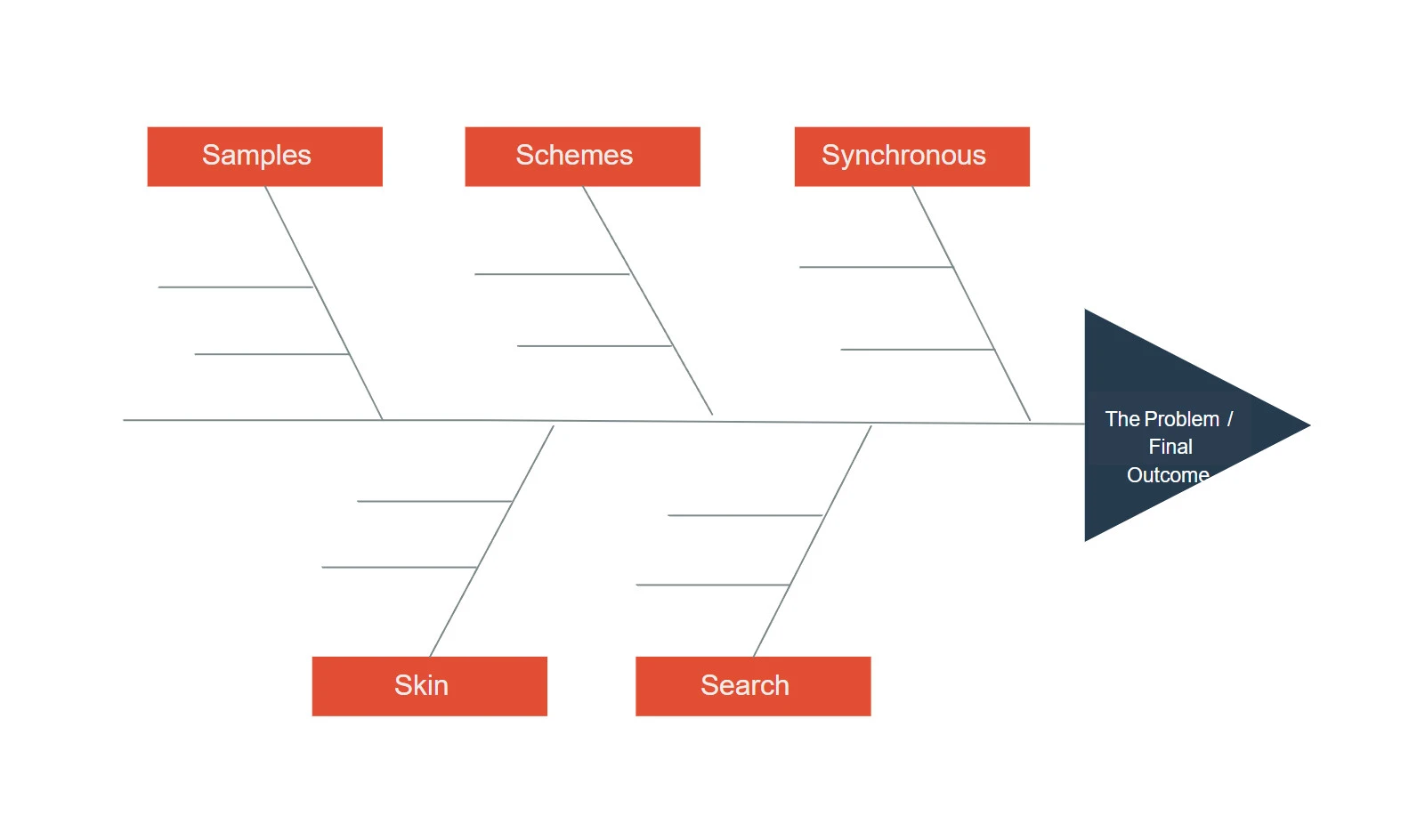
When faced with a complex problem in any industry or field, it can be challenging to pinpoint the root cause. This is where a fishbone diagram, also known as a cause-and-effect diagram or Ishikawa diagram, comes into play. This visual tool is designed to help teams identify potential causes of a specific problem, leading to a better understanding of the issue at hand and more effective solutions.
Let’s delve into the world of fishbone diagrams and explore how they can benefit your problem-solving process.
What is a Fishbone Diagram?
A fishbone diagram is a visual representation that resembles the skeletal structure of a fish, hence its name. It is used to identify the potential root causes of a specific problem or effect. The diagram is structured with a central line representing the problem, with branches extending outwards to categories of potential causes. These categories can include people, process, equipment, environment, and materials, among others.
Why Do You Need Cause and Effect Charts?
Cause and effect charts, like fishbone diagrams, are essential tools for problem-solving and continuous improvement. They help teams brainstorm and organize potential causes, leading to a systematic approach to addressing issues.
By visually mapping out the relationships between various factors contributing to a problem, teams can gain a deeper insight into the root cause and develop more targeted solutions.
When Should a Fishbone Diagram Be Used?
A fishbone diagram is most effective when used in situations where the cause of a problem is unclear or multifaceted. It can be applied in various industries, including manufacturing, healthcare, education, and project management.
Some common scenarios where a fishbone diagram can be beneficial include identifying defects in a product, analyzing delays in a process, investigating customer complaints, and improving team performance.
Steps to Creating a Cause and Effect Diagram
Creating a fishbone diagram involves several key steps to ensure its effectiveness in identifying root causes and facilitating problem-solving. Here are the steps to follow:
- Define the problem: Clearly articulate the issue or effect that needs to be addressed.
- Identify main categories: Determine the major factors that may contribute to the problem, such as people, process, equipment, environment, and materials.
- Add subcategories: Break down each main category into specific subcategories that could be potential causes.
- Brainstorm causes: Engage team members in a brainstorming session to generate potential causes under each subcategory.
- Analyze relationships: Evaluate the relationships between different causes and their impact on the problem.
Pros and Cons of Fishbone Diagrams
Like any tool or technique, fishbone diagrams come with their own set of advantages and limitations. Here are some of the pros and cons to consider:
- Pros:
- Provides a visual representation of potential causes.
- Encourages team collaboration and brainstorming.
- Helps identify root causes of complex problems.
- Facilitates targeted problem-solving and decision-making.
- Cons:
- Can be time-consuming to create and analyze.
- May oversimplify complex issues.
- Relies on subjective input from team members.
- Does not guarantee a definitive solution.
Overall, fishbone diagrams are valuable tools for organizations seeking to improve their problem-solving processes and make more informed decisions. By leveraging the power of cause-and-effect charts, teams can uncover hidden factors contributing to issues and implement targeted solutions for sustainable improvement.
Fishbone Diagram Template – Free Download
