A mileage reimbursement form is a structured document employees use to request compensation for business-related travel completed in their personal vehicles. It records important trip information such as the date, starting location, destination, business purpose, miles driven, reimbursement rate, and total amount requested.
When employees use their own cars for work, keeping an accurate mileage record helps create a clear connection between business travel and the reimbursement being requested. For employers, a standardized form provides consistent documentation that can make expense review, approval, and recordkeeping easier.
Whether you need to document occasional client visits or track business mileage throughout the month, a well-organized mileage reimbursement form can simplify the process and reduce errors.
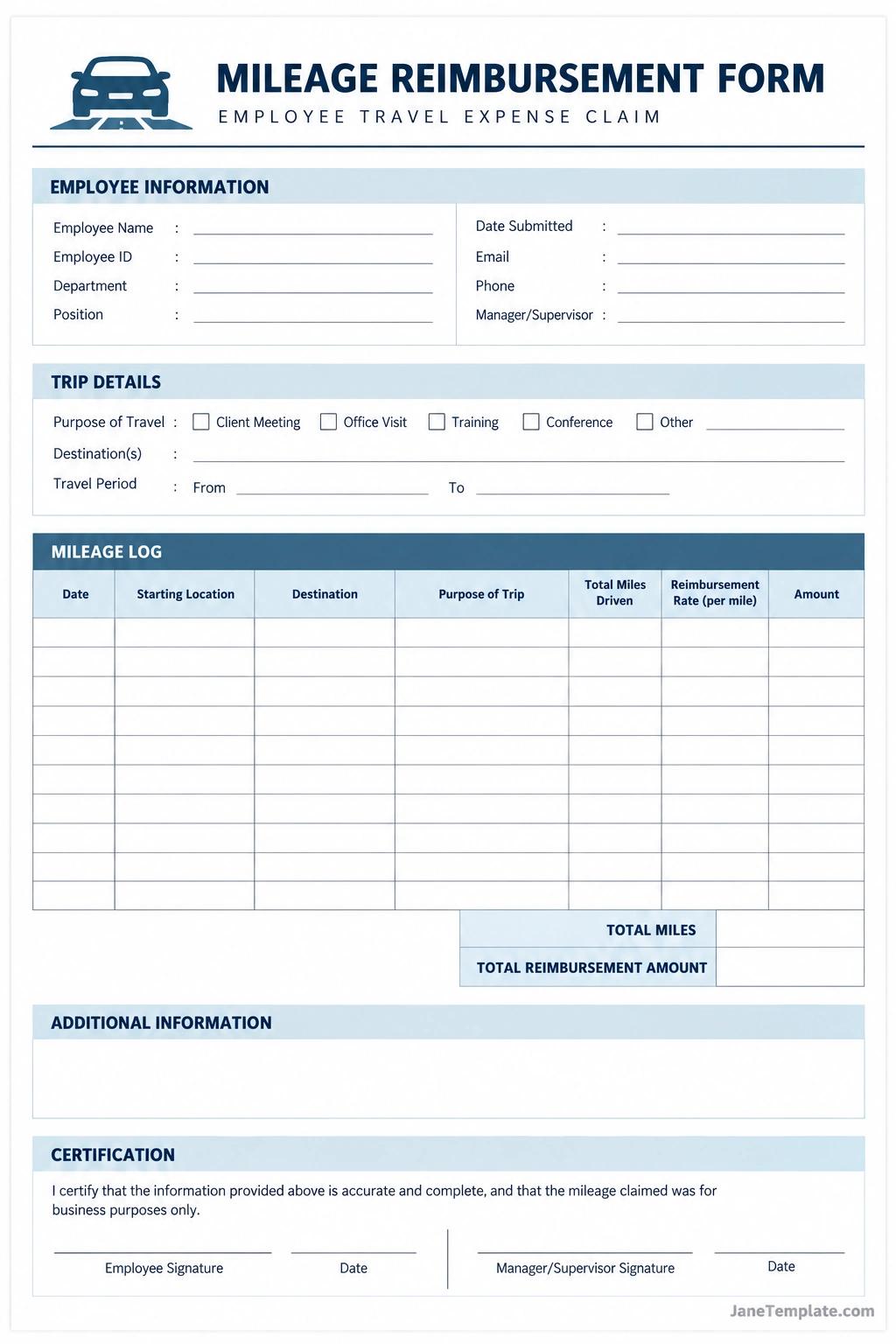
What Is a Mileage Reimbursement Form?
A mileage reimbursement form is an expense claim document used to record business miles driven in an employee’s personal vehicle. The employee completes the form with details about each qualifying trip and calculates the reimbursement amount according to the applicable company policy and mileage rate.
The form typically provides a structured mileage log where employees can record multiple trips. This makes it easier to calculate the total miles driven and determine the amount that should be reimbursed.
A typical mileage reimbursement form may include:
- Employee name and identification
- Department or job position
- Date the claim was submitted
- Business purpose of travel
- Starting location
- Destination
- Date of each trip
- Total miles driven
- Applicable reimbursement rate
- Reimbursement amount
- Total mileage for the claim period
- Total reimbursement requested
- Employee certification and signature
- Manager or supervisor approval
Why Use a Mileage Reimbursement Form?
A mileage reimbursement form creates a consistent way to document employee travel expenses. Instead of relying on informal notes or incomplete records, employees can provide the information needed to review each business trip.
Creates a Clear Mileage Record
One of the main purposes of the form is to create a record of business mileage. Recording each trip as it occurs can help employees avoid forgetting destinations, dates, or distances later.
Supports Expense Reimbursement
Employers often need documentation before approving an employee’s travel expense claim. A completed mileage reimbursement form provides the details needed to calculate the amount requested.
Improves Recordkeeping
Consistent mileage documentation can make it easier for an organization to organize employee expense records. A standardized form also helps ensure that employees provide similar information when submitting travel claims.
Reduces Calculation Errors
When mileage, reimbursement rates, and reimbursement amounts are documented in separate fields, employees and reviewers can more easily check the calculation. This can reduce mistakes caused by incomplete or poorly organized records.
What Information Should a Mileage Reimbursement Form Include?
The exact design can vary depending on an organization’s reimbursement policy, but several sections are commonly useful.
Employee Information
The employee section identifies the person submitting the reimbursement claim. It may include the employee’s name, employee ID, department, position, email address, telephone number, and manager or supervisor.
Trip Details
This section explains why the employee traveled. Common business purposes include visiting a client, attending a meeting, traveling between company locations, attending training, or participating in a conference.
The employee may also provide the destination and travel period associated with the claim.
Mileage Log
The mileage log is the central part of the form. Each business trip can be recorded on its own line so that the employer can review the travel history.
Useful mileage log columns include:
- Date
- Starting location
- Destination
- Business purpose
- Total miles driven
- Reimbursement rate per mile
- Reimbursement amount
Total Reimbursement
After the individual trips have been recorded, the form should provide fields for total miles and the total reimbursement amount. This gives the employee and reviewer a quick summary of the claim.
Certification and Approval
A certification section allows the employee to confirm that the information provided is accurate and that the mileage was related to eligible business activities. Depending on company procedures, a manager or supervisor may also need to review and approve the claim.
How Does Mileage Reimbursement Work?
In a typical mileage reimbursement process, an employee records eligible business trips and calculates reimbursement based on the applicable mileage rate. The general calculation can be represented as:
Reimbursement Amount = Business Miles × Applicable Mileage Rate
For example, if an employee records 250 eligible business miles and the applicable reimbursement rate is $0.50 per mile, the calculated reimbursement would be $125.
The actual rate used should come from the employer’s reimbursement policy or another applicable source. Rates can vary by organization, vehicle policy, jurisdiction, and tax or accounting requirements.
Business Mileage vs. Personal Mileage
An important part of mileage tracking is distinguishing business travel from personal driving. A mileage reimbursement claim should generally identify the trips that qualify under the employer’s travel policy.
Business mileage may include travel for activities such as:
- Client meetings
- Business appointments
- Visits to another company location
- Off-site training
- Conferences and professional events
- Business errands
- Other authorized work-related travel
Personal trips should not be included simply because they occurred during the same period. Employees should follow their employer’s specific rules regarding eligible and non-eligible mileage.
How to Fill Out a Mileage Reimbursement Form
1. Enter Your Employee Information
Start by entering your name and the other identification details requested by your employer. Make sure the information matches the employee records used by the company’s accounting or human resources system.
2. Identify the Business Purpose
Describe why the trip was necessary for work. A specific description such as “Client meeting” or “Site visit” is generally more useful than a vague description such as “Business.”
3. Record the Date
Enter the date for each individual business trip. Recording mileage shortly after each trip can make the information more accurate than trying to reconstruct an entire month’s travel from memory.
4. Record Starting Location and Destination
Clearly identify where the trip began and where the employee traveled. Depending on company policy, additional route or location information may be required.
5. Enter the Miles Driven
Record the number of eligible business miles for each trip. Use a consistent method for determining the distance and follow the employer’s mileage documentation requirements.
6. Apply the Reimbursement Rate
Enter the applicable reimbursement rate and calculate the reimbursement amount for each qualifying trip. Check the organization’s current policy before submitting the form.
7. Calculate the Total
Add the eligible mileage and reimbursement amounts for all listed trips. Review the totals carefully before submitting the claim.
8. Sign and Submit the Form
Complete any required certification, sign the form, and submit it according to your employer’s expense reimbursement process. Some organizations may also require manager approval.
Tips for Keeping Accurate Mileage Records
Accurate records make the reimbursement process easier for everyone involved. A few simple habits can significantly improve the quality of mileage documentation.
- Record business trips as soon as possible.
- Keep business and personal mileage clearly separated.
- Use specific descriptions for the purpose of each trip.
- Double-check the starting location and destination.
- Verify the mileage before submitting the claim.
- Use the reimbursement rate required by your employer.
- Keep supporting documentation when required.
- Retain copies of submitted reimbursement forms for your records.
Common Mistakes to Avoid
Even a simple mileage claim can be delayed when important information is missing. Reviewing the form before submission can help prevent common problems.
Missing Trip Information
Leaving dates, destinations, business purposes, or mileage blank can make a claim difficult to verify. Complete all required fields before submitting the form.
Using an Incorrect Rate
Reimbursement rates can change. Employees should avoid automatically using a rate from an old claim and should instead confirm the current rate required by their employer.
Combining Unrelated Trips
Combining multiple trips into one vague mileage entry can make the claim harder to review. Recording each trip separately provides a clearer record.
Including Personal Travel
Personal mileage should not be mixed with eligible business mileage. If a trip includes both business and personal travel, follow the employer’s policy for determining the reimbursable portion.
Forgetting Approval
If the organization requires manager or supervisor approval, an unsigned or unapproved form may delay reimbursement. Check that all required signatures and dates are present.
Benefits of Using a Mileage Reimbursement Form Template
A mileage reimbursement form template provides a reusable structure for documenting employee travel. Instead of creating a new document from scratch for every reimbursement claim, employees can use the same basic format each time.
A well-designed template can provide several practical benefits:
- Consistent expense documentation
- Faster completion of mileage claims
- Easier review by managers
- Clearer mileage calculations
- Better organization of employee travel records
- Reduced risk of missing important information
Templates can also be adapted to fit different company policies. For example, an organization may add fields for project codes, client names, cost centers, vehicle information, or additional approval requirements.
When Should You Submit a Mileage Reimbursement Form?
The submission schedule depends on the employer’s expense policy. Some companies require employees to submit mileage claims weekly, while others process them monthly or according to a specific expense reporting cycle.
Employees should follow the deadline established by their organization. Waiting too long to record business mileage can increase the possibility of missing or inaccurate information.
Frequently Asked Questions About Mileage Reimbursement Forms
What is the purpose of a mileage reimbursement form?
The purpose is to document business-related mileage and provide the information needed to calculate and request reimbursement for eligible travel in a personal vehicle.
What should be included in a mileage reimbursement form?
A mileage reimbursement form commonly includes employee information, travel dates, starting locations, destinations, business purposes, miles driven, reimbursement rates, reimbursement amounts, totals, and required signatures.
Can I use a mileage reimbursement form for multiple trips?
Yes. Many forms include a mileage log with multiple rows so employees can record several business trips within the same reimbursement period.
Does mileage reimbursement cover fuel?
A mileage reimbursement rate may be designed to account for various vehicle operating costs, depending on the applicable policy or rate. Employees should review their employer’s rules to determine which expenses are covered and whether separate expense claims are allowed.
Can a mileage reimbursement form be digital?
Yes. A mileage reimbursement form can be maintained digitally using a document, spreadsheet, expense management system, or other approved format. The important consideration is that the required information is accurately recorded and retained according to the organization’s procedures.
Conclusion
A mileage reimbursement form provides a practical way to document business travel completed in a personal vehicle. By recording the date, route, business purpose, miles driven, reimbursement rate, and calculated amount, employees can create a clear expense claim while giving employers the information needed for review and recordkeeping.
The most effective mileage forms are simple, organized, and easy to complete. Whether used as a printed worksheet or a digital document, a consistent mileage reimbursement form template can help employees maintain accurate travel records and make the reimbursement process more efficient.
Download: Mileage Reimbursement Form
