A menu planner is a simple tool for organizing meals in advance. Instead of deciding what to cook every day at the last minute, you can plan breakfast, lunch, dinner, and snacks for the week ahead. This makes meal preparation more organized and can help reduce food waste, control grocery spending, and make daily cooking easier.
Meal planning can be useful for individuals, families, schools, healthcare facilities, workplaces, restaurants, and other organizations that need to coordinate meals. A well-designed menu planner can also help accommodate dietary preferences, nutritional goals, allergies, and busy schedules.
Whether you prefer simple home-cooked meals or need to coordinate a more detailed food schedule, a printable menu planner gives you one convenient place to organize your meals and create a practical grocery list.
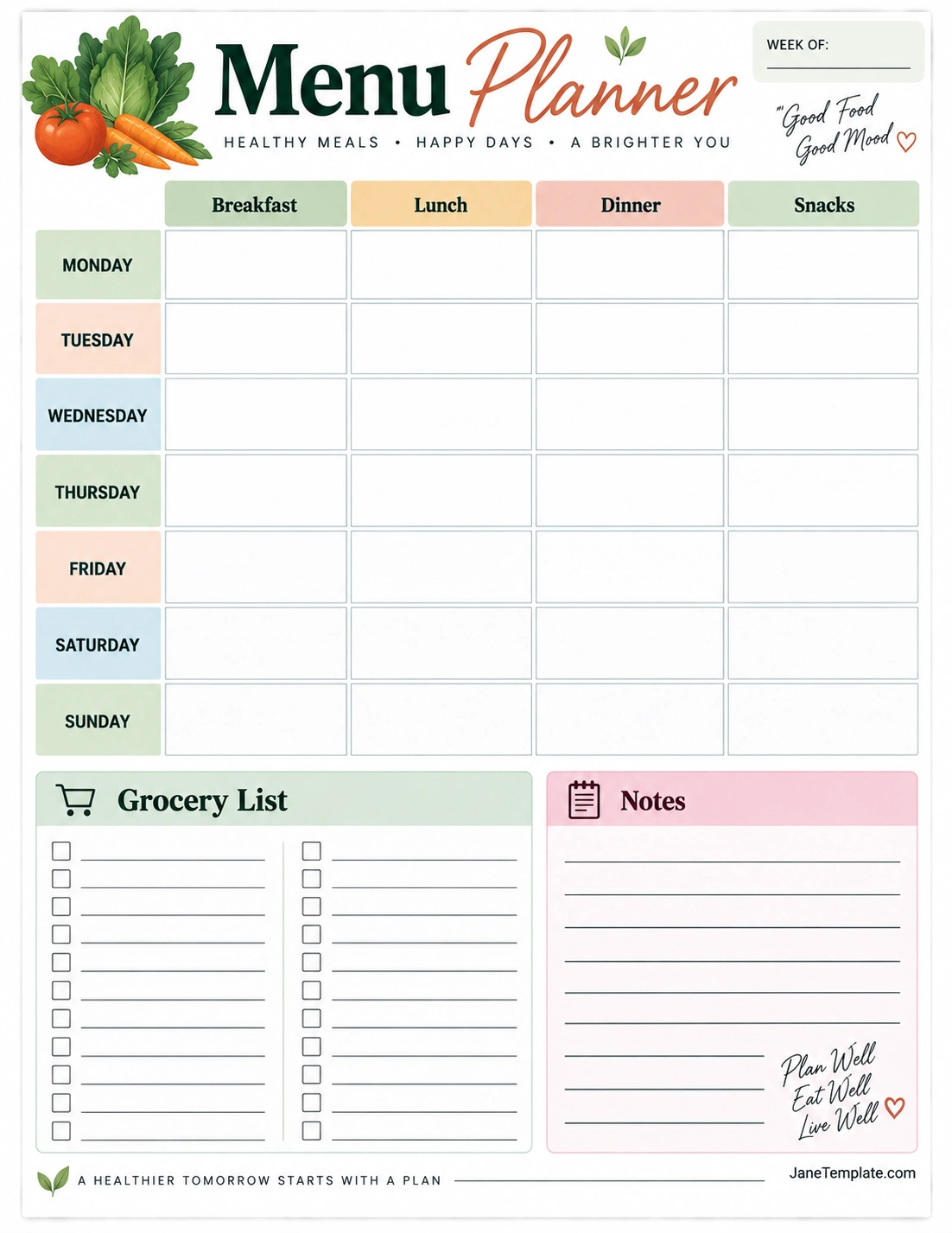
What Is a Menu Planner?
A menu planner is a worksheet or planning system used to schedule meals for a specific period. The most common format is a weekly menu planner with separate spaces for each day and meal.
A basic planner may include breakfast, lunch, dinner, and snacks. More detailed versions can include nutritional goals, preparation notes, ingredient lists, grocery items, serving sizes, and special dietary requirements.
The main purpose is to make meal decisions before the food needs to be prepared. This small step can make a busy week feel much more manageable.
Why Use a Menu Planner?
Planning meals in advance can provide several practical benefits. It gives you a clearer picture of what you need to buy, what needs to be prepared, and how meals fit into your schedule.
- Saves time: You spend less time deciding what to cook each day.
- Reduces food waste: Planned meals make it easier to buy only what you are likely to use.
- Helps manage costs: A planned grocery list can reduce unnecessary purchases and impulse buying.
- Improves organization: Meals and ingredients are recorded in one place.
- Supports balanced meals: Planning allows you to consider variety and nutritional balance throughout the week.
- Accommodates dietary preferences: Meals can be selected around allergies, food preferences, or specific dietary requirements.
- Makes cooking easier: You can prepare ingredients ahead of time when you know what meals are coming.
What Should a Menu Planner Include?
A menu planner can be as simple or detailed as your needs require. A useful weekly planner usually contains several basic sections.
Days of the Week
The main section should provide a space for each day. A seven-day layout is particularly useful for household meal planning because it allows you to see the entire week at a glance.
Meal Categories
Common categories include breakfast, lunch, dinner, and snacks. You can modify these categories depending on your routine.
For example, a family with young children may want a separate space for school lunches, while a restaurant may need sections for different service periods.
Grocery List
A grocery list section allows you to record ingredients needed for the planned meals. Keeping the list next to the menu can make shopping more efficient.
Notes
A notes section provides space for reminders such as ingredients that need to be purchased, food preparation tasks, leftovers, substitutions, or special occasions.
Meal Ideas
A meal ideas section can be used to record recipes or dishes that you want to try in the future. This prevents good meal ideas from being forgotten when it is time to create the next weekly plan.
How to Create a Weekly Menu Planner
Creating a weekly meal plan does not have to take a lot of time. The following process can help you build a practical plan.
1. Check Your Schedule
Start by looking at the week ahead. Identify busy evenings, workdays, school activities, appointments, travel, or other events that could affect meal preparation.
Plan simpler meals on busy days and reserve more time-consuming recipes for days when you have additional time.
2. Check What You Already Have
Look through your refrigerator, freezer, and pantry before creating your grocery list. Using ingredients you already have can reduce waste and prevent unnecessary purchases.
3. Choose Your Meals
Fill in the planner with breakfast, lunch, dinner, and snacks as needed. Consider variety so that the same meals do not appear repeatedly unless they are family favorites.
4. Build Your Grocery List
Review every planned meal and write down the ingredients you need. Check your existing supplies before adding each item to the shopping list.
5. Plan Food Preparation
Consider which ingredients can be prepared ahead of time. Washing vegetables, preparing sauces, cooking grains, or portioning ingredients in advance can make weekday cooking faster.
6. Review the Plan
Before the week begins, look over the complete menu. Make sure the meals fit your schedule, available ingredients, dietary needs, and expected number of servings.
Menu Planner for Families
A family menu planner can help coordinate meals when several people have different preferences and schedules. Instead of making separate decisions every day, the household can review the weekly plan together.
Parents can also use the planner to coordinate school lunches, after-school snacks, family dinners, and weekend meals. Children may enjoy helping choose a few meals, which can make meal planning more collaborative.
For larger families, it can be useful to include serving notes or identify meals that are suitable for leftovers.
Menu Planner for Healthy Eating
A menu planner can also support more intentional meal choices. Planning meals before grocery shopping gives you an opportunity to consider variety and nutritional balance instead of relying entirely on convenient last-minute options.
When creating a weekly plan, consider including a variety of vegetables, fruits, protein sources, whole grains, and other foods that fit your dietary needs.
If you have a medical condition, food allergy, or specialized dietary requirement, follow guidance from a qualified healthcare or nutrition professional when appropriate.
Menu Planner for Specific Dietary Needs
Meal planning can be especially useful when meals need to follow specific dietary preferences or restrictions. A planner can help you identify suitable meals before shopping and reduce the chance of accidentally overlooking an ingredient.
Depending on the situation, a menu planner may be used for vegetarian, vegan, gluten-free, low-sodium, dairy-free, allergy-conscious, or other eating patterns.
Always check ingredient labels and preparation methods when avoiding specific ingredients, especially when managing a serious food allergy.
How a Menu Planner Helps Reduce Food Waste
Food waste often occurs when ingredients are purchased without a clear plan for using them. A menu planner can help connect grocery purchases with specific meals.
For example, if you purchase a large package of vegetables, you can plan to use them in multiple meals during the week. Leftovers can also be incorporated into another meal rather than being forgotten in the refrigerator.
Planning does not mean every meal must be followed rigidly. The goal is to have a reasonable plan while leaving enough flexibility to use ingredients efficiently.
Menu Planner and Grocery Shopping
A menu planner and grocery list work particularly well together. Once the weekly meals are selected, review each recipe and identify the ingredients required.
Group grocery items into categories such as produce, dairy, meat or protein, grains, pantry items, and frozen foods. This can make shopping faster and easier.
Before leaving for the store, check your pantry and refrigerator so you do not buy items you already have.
Menu Planner Tips for Busy People
Meal planning should make life easier rather than become another complicated task. A few simple habits can make your planning routine more sustainable.
- Keep favorite meals handy: Create a list of reliable meals you can use when you are short on time.
- Repeat strategically: Reuse ingredients across several meals when practical.
- Plan leftovers: Intentionally prepare enough food for another meal when appropriate.
- Use simple meals: Not every day needs a complicated recipe.
- Match meals to your schedule: Reserve quick meals for your busiest days.
- Keep a running grocery list: Add items as you notice that supplies are running low.
- Review before shopping: Make sure your grocery list matches your actual menu.
Menu Planner for Restaurants and Institutions
Menu planning is not limited to households. Restaurants, schools, healthcare facilities, childcare centers, workplaces, and other institutions may also use structured menu planning systems.
In these settings, a menu planner can help coordinate ingredients, meal schedules, dietary requirements, serving quantities, and preparation needs.
Institutional meal planning may require additional considerations such as nutritional standards, food safety procedures, allergy information, inventory management, and regulatory requirements.
Using a Printable Menu Planner Template
A menu planner template provides a ready-made structure for organizing meals without having to design a worksheet from scratch. A printable weekly menu planner can be placed on a refrigerator, kitchen board, household binder, or meal-planning folder.
To use a printable template, start by entering the meals for each day. Then create your grocery list based on the meals you selected. Use the notes section for preparation reminders, substitutions, leftovers, or special events.
The best planner is one that fits your actual routine. If you rarely eat snacks, for example, you can use that space for meal preparation notes instead.
Menu Planner Checklist
Use this checklist when creating your weekly meal plan:
- Review the upcoming week’s schedule.
- Check the refrigerator, freezer, and pantry.
- Choose meals for each day.
- Consider breakfast, lunch, dinner, and snacks.
- Include variety where practical.
- Consider dietary preferences and restrictions.
- Identify meals that can use existing ingredients.
- Plan how leftovers will be used.
- Create a grocery list.
- Check the grocery list against your existing supplies.
- Identify meals or ingredients that can be prepared ahead.
- Review the final plan before the week begins.
Final Thoughts
A menu planner is a simple but useful tool for organizing meals, groceries, and food preparation. By deciding what to eat ahead of time, you can make shopping and cooking more predictable while reducing unnecessary purchases and food waste.
A good meal plan does not need to be complicated. Start with a basic weekly schedule, choose meals that fit your lifestyle, build a practical grocery list, and leave some flexibility for unexpected changes.
Whether you are planning meals for yourself, a family, or a larger organization, a printable menu planner template can provide an easy way to keep everything organized in one place.
Download: Menu Planner Template
