A dental payment plan lets you split the cost of dental care into smaller installments over time instead of paying the full amount upfront. It can help you budget for treatments such as fillings, crowns, root canals, braces, and other dental procedures that may be difficult to afford in a single payment.
Understanding your payment options before treatment begins can make it easier to plan your expenses and avoid unexpected financial pressure. Depending on the dental practice, you may be able to arrange installments directly with the office or use a third-party financing provider.
In this guide, you will learn how a dental payment plan works, which options to consider, what to check before signing an agreement, and how a printable dental payment plan template can help you organize treatment costs and payment dates.
What Is a Dental Payment Plan?
A dental payment plan is an arrangement that allows a patient to pay for dental treatment over an agreed period rather than paying the entire patient balance at once. The plan typically identifies the treatment costs, initial payment, installment amounts, due dates, and applicable terms.
Some dental practices offer payment arrangements directly to patients. Others work with third-party financing companies that may provide monthly payments subject to credit approval, interest charges, fees, and other conditions.
The exact terms vary by provider. Some arrangements may be interest-free for a limited period, while others may charge interest or require a deposit. Always review the complete terms before agreeing to a payment schedule.
How Does a Dental Payment Plan Work?
Although each dental office has its own procedures, the process usually follows a few straightforward steps.
- Step 1: Receive a treatment estimate. Your dentist explains the recommended procedures and their estimated costs.
- Step 2: Review insurance coverage. If you have dental insurance, ask the office to estimate what your plan may cover and what you may need to pay.
- Step 3: Choose a payment option. Discuss available installment arrangements, financing terms, deposits, and payment frequencies.
- Step 4: Agree on the schedule. Confirm the installment amount, due dates, payment method, and plan duration.
- Step 5: Review and sign the agreement. Make sure you understand the terms, including fees, missed-payment consequences, and any cancellation provisions.
- Step 6: Make payments as agreed. Keep receipts and track the remaining balance until the account is settled.
Before treatment starts, ask whether the payment plan covers the entire proposed treatment or only specific procedures. Additional treatment or changes to the original plan may create extra costs.
Types of Dental Payment Plans
Several payment options may be available, depending on your dental practice, location, insurance coverage, and financial circumstances.
1. In-House Dental Payment Plans
An in-house dental payment plan is arranged directly with the dental office. The practice establishes the payment schedule and explains its requirements, which may include an upfront deposit or recurring installments.
Ask whether the plan carries interest, administrative fees, or late-payment charges. Also confirm what happens if you need to reschedule treatment or cannot make a payment on time.
2. Third-Party Dental Financing
Some dental practices partner with financing providers that allow eligible patients to pay for treatment over time. Depending on the provider and offer, the financing arrangement may include interest, promotional terms, credit checks, or other eligibility requirements.
Compare the total amount you would repay rather than focusing only on the advertised monthly payment. Promotional financing may have specific conditions, and deferred-interest offers can become expensive if the balance is not paid within the required period.
3. Dental Insurance and Installment Arrangements
Dental insurance may cover part of the cost of eligible procedures, subject to your policy’s benefits, deductibles, annual limits, waiting periods, and other restrictions. You may be able to arrange installments for the remaining patient responsibility if your dental office offers that option.
Ask the practice to explain which figures are confirmed and which are estimates. Insurance payments and coverage decisions may differ from initial projections.
4. Savings and Flexible Payment Arrangements
If available, you may use personal savings or an agreed schedule of payments to prepare for planned dental care. Some practices may offer different payment arrangements depending on the treatment and patient circumstances.
Ask about all available options before making a decision. Choose a schedule that fits your budget without compromising essential living expenses.
What Should a Dental Payment Plan Agreement Include?
A written dental payment agreement helps both the patient and the dental practice understand the payment arrangement. A clear document should include the following information.
Patient and Dental Practice Information
Record the patient’s name and contact information, along with the dental practice’s name and relevant contact details. Include an account or patient reference number when appropriate, and protect personal information when storing or sharing the document.
Treatment Details and Estimated Costs
List the planned procedures and their estimated costs. Where applicable, show the expected insurance contribution, discounts, deposits, and remaining patient responsibility separately.
Distinguish estimated insurance benefits from confirmed payments. This helps prevent confusion if the final insurer payment differs from the initial estimate.
Installment Amounts and Due Dates
State the total amount to be paid under the arrangement, the number of installments, the amount of each payment, and the payment frequency. Include the first due date and the expected final payment date.
Make sure the installment amounts and dates add up correctly. If the schedule includes a deposit or a final balloon payment, identify it clearly.
Interest, Fees, and Missed Payments
Explain whether the arrangement includes interest, setup fees, late fees, or other charges. If a third-party lender provides the financing, refer to the lender’s applicable agreement and disclosures.
The document should also explain what happens if a payment is missed and how a patient can contact the practice to discuss financial difficulties.
Signatures and Authorization
Include signature and date fields when written acknowledgment is appropriate. Clarify what the patient’s signature means, such as confirming receipt of the terms or accepting a specific payment arrangement.
A payment worksheet is not automatically a complete or legally sufficient financing agreement. Use the relevant provider documents and applicable legal requirements when formal authorization is needed.
How to Calculate Dental Payment Plan Installments
Before agreeing to a payment schedule, calculate the amount that remains after applicable insurance payments, deposits, and discounts. Then determine whether the proposed installments fit your budget.
For example, suppose the estimated treatment cost is $1,800 and the dental office estimates that insurance will cover $600. The estimated patient responsibility would be $1,200, assuming the insurance estimate is accurate.
If you make a $200 deposit, the remaining estimated balance would be $1,000. Dividing that balance into 10 equal monthly installments would result in payments of $100 per month, before any additional fees or interest.
These figures are illustrative only. Actual patient responsibility depends on the final treatment charges, insurance processing, and the terms of the payment arrangement.
Before finalizing the schedule, confirm the following:
- Remaining balance: Check that the treatment costs, estimated insurance benefits, and deposit have been calculated correctly.
- Payment frequency: Choose dates that are manageable based on your income and regular expenses.
- Total repayment: Include applicable interest and fees rather than considering the installment amount alone.
- Budget flexibility: Leave room for essential expenses and unexpected costs.
Free Printable Dental Payment Plan Template
A printable dental payment plan template provides a simple way to organize treatment costs and record an agreed installment schedule. It can be useful for dental practices that want a consistent worksheet and for patients who want a clear record of their expected payments.
The template below includes patient information, treatment descriptions, estimated costs, insurance coverage, patient responsibility, payment frequency, due dates, payment status, terms, and authorization fields.
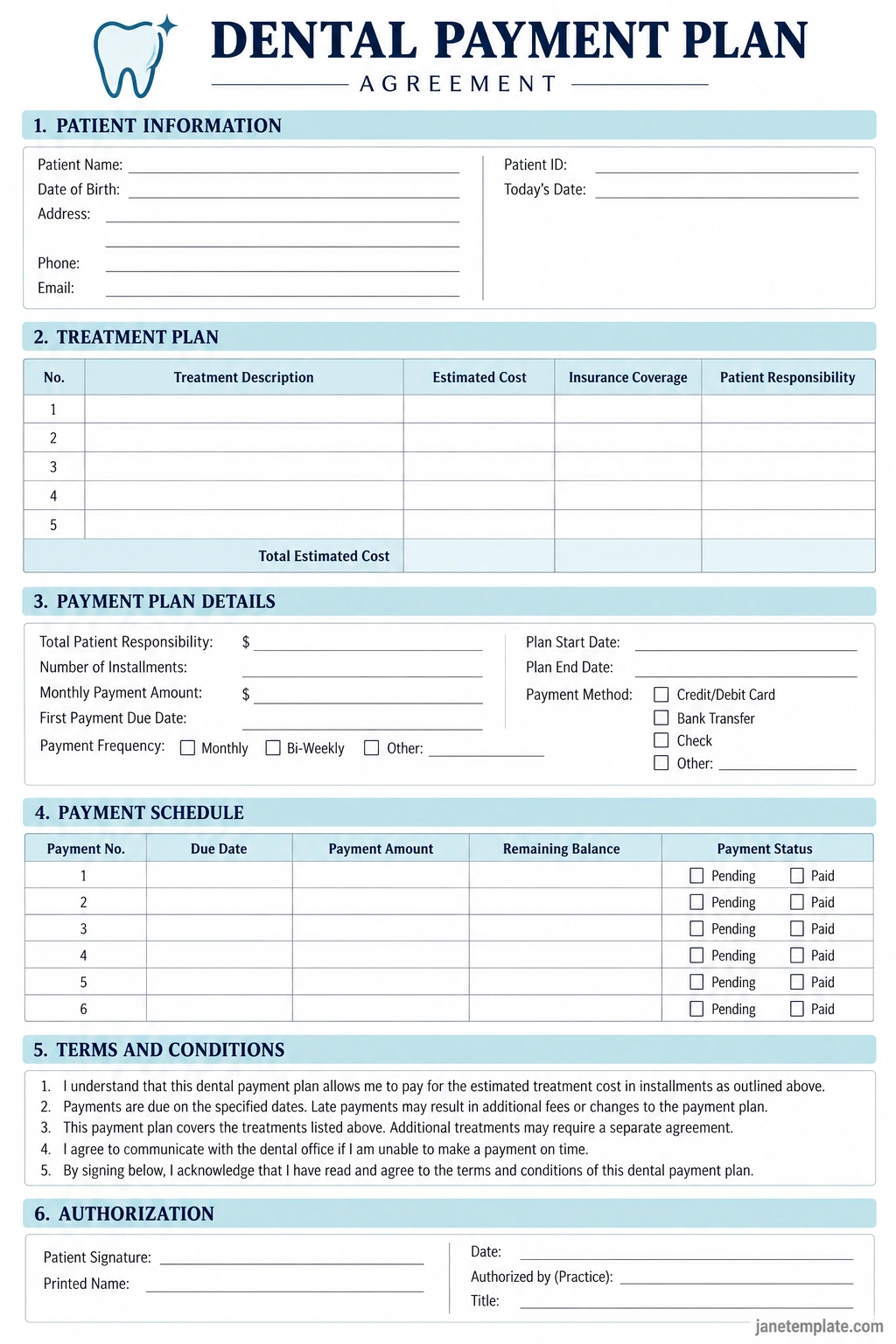
To use the form, enter the patient’s details and list each planned procedure with its estimated cost. Record the estimated insurance coverage and patient responsibility separately, then fill in the installment amount, frequency, and due dates.
Review all figures with the dental office before relying on the schedule. If the final treatment cost or insurance contribution changes, update the payment arrangement and provide the patient with a revised copy.
Benefits and Potential Drawbacks of Dental Payment Plans
A dental payment plan can make planned care easier to budget for, but it is important to understand both its advantages and limitations.
Potential Benefits
- Smaller payments: Spreading eligible expenses over time can reduce the amount due upfront.
- Improved budgeting: A defined schedule helps you plan upcoming expenses.
- Greater cost visibility: A written agreement makes payment dates and amounts easier to track.
- Access to payment options: Some arrangements may help patients manage treatment expenses when paying in full is difficult.
Potential Drawbacks
- Additional costs: Interest, fees, or penalties may increase the total amount paid.
- Ongoing obligations: Installments remain due according to the agreed terms.
- Credit requirements: Some third-party financing options require a credit check or approval.
- Changing treatment costs: Additional procedures or unexpected expenses may affect the original budget.
Ask for a written breakdown of the total repayment amount and compare available options before committing. If treatment is urgent, discuss clinically appropriate timing with your dentist rather than delaying necessary care solely to find a payment arrangement.
Tips for Choosing the Right Dental Payment Plan
Before selecting a plan, compare the terms and make sure you understand the full financial commitment.
- Ask about interest-free options: Confirm whether an offer is genuinely interest-free and what conditions apply.
- Compare total costs: Review interest, fees, repayment periods, and the total amount due.
- Check insurance benefits: Verify coverage and your estimated out-of-pocket expenses with the insurer and dental office.
- Understand late-payment rules: Find out whether missed payments result in fees, changes to promotional terms, or other consequences.
- Request written terms: Keep a copy of the payment schedule and any applicable financing agreement.
- Protect your budget: Choose installments you can reasonably afford without relying on uncertain future income.
- Ask questions before signing: Make sure you understand cancellation policies, refunds, and how changes in treatment are handled.
Do not assume that every dental payment plan works the same way. The dental office’s own arrangement and a third-party financing contract may have different terms and obligations.
Frequently Asked Questions About Dental Payment Plans
Can I get a dental payment plan without insurance?
Possibly. Some dental practices offer in-house payment arrangements, and some financing providers offer options to eligible applicants regardless of whether they have dental insurance. Availability, eligibility, fees, and terms vary by provider.
Are dental payment plans interest-free?
Some plans may be interest-free, but others charge interest or fees. Read the written terms carefully, including any promotional period, eligibility requirements, and conditions that could cause interest to apply.
Can I use a dental payment plan for braces or major dental work?
Some practices offer payment arrangements for orthodontic treatment, crowns, implants, and other major procedures. Eligible treatments and payment terms vary, so ask your dental office for a written treatment estimate and available options.
What happens if I miss a dental payment?
The consequences depend on your agreement. You may face a late fee, changes to promotional financing terms, collection activity, or other consequences allowed by the contract and applicable law. Contact the provider promptly if you expect to miss a payment.
Does a dental payment plan affect my credit score?
It depends on the provider and arrangement. Some financing applications involve a credit check, and some lenders may report account activity to credit bureaus. Ask the provider which credit checks and reporting practices apply before applying.
Can I pay off my dental payment plan early?
Some plans allow early repayment, but the rules vary. Check whether early payment is permitted, whether any fees apply, and how the remaining balance will be calculated.
Is a printable dental payment plan template a legal contract?
Not necessarily. A template is a starting point for recording payment details, but it may not include every disclosure or provision required for a particular arrangement. Use the applicable dental office or lender agreement and seek qualified legal advice when needed.
Conclusion
A dental payment plan can help patients manage the cost of dental treatment by dividing eligible expenses into scheduled installments. Understanding the available options, confirming insurance estimates, and reviewing interest and fees can help you make a more informed decision.
A printable dental payment plan template makes it easier to organize treatment costs, record installment dates, and track payments. Use it as a planning worksheet, verify the figures with the dental office, and review all applicable terms before signing a formal agreement.
With clear documentation and a realistic budget, you can approach dental expenses with a better understanding of your payment responsibilities and the options available to you.
Download: Dental Payment Plan Template
