A payment plan is a practical way to divide a large expense or outstanding balance into smaller, more manageable installments. Instead of paying the full amount upfront, individuals and businesses can spread payments over an agreed period. This approach can make budgeting easier, improve cash flow management, and help both parties understand their financial responsibilities.
Whether you need to repay a debt, pay for a service, manage a large purchase, or collect payments from customers, a well-organized payment plan can provide a clear structure. It outlines the total amount due, installment amounts, payment dates, and remaining balance so everyone understands the arrangement.
In this guide, you will learn what a payment plan is, how it works, what to include in a payment agreement, and how to create a realistic installment schedule. You will also find practical tips for managing payments and using a printable payment plan template to keep financial records organized.
What Is a Payment Plan?
A payment plan is an arrangement that allows a person or business to pay an amount owed through multiple installments instead of making one full payment. The agreement usually specifies the total balance, payment frequency, due dates, installment amounts, and any applicable fees or interest.
Payment plans are commonly used for outstanding bills, personal debts, medical expenses, tuition, service fees, business invoices, and large purchases. Depending on the arrangement, payments may be made weekly, biweekly, monthly, or according to another agreed schedule.
Some payment plans are interest-free, while others include interest, administrative fees, or late payment charges. The terms depend on the provider, the type of obligation, and applicable laws. Always review the complete agreement before accepting a payment schedule.
Why Is a Payment Plan Important?
A clear payment plan helps both the person making payments and the person receiving them understand what is expected. It can reduce confusion, support better financial planning, and provide a written record of the agreed arrangement.
1. Makes Large Expenses More Manageable
Breaking a large balance into smaller installments can make payments easier to incorporate into a monthly budget. Instead of setting aside the entire amount immediately, the payer can plan around scheduled obligations.
However, installments still represent a financial commitment. Before agreeing to a payment plan, make sure the required payments fit your income and existing expenses.
2. Helps Organize Payment Records
A payment schedule records when each installment is due, how much must be paid, and whether the payment has been completed. This makes it easier to identify upcoming obligations and track the remaining balance.
3. Improves Business Cash Flow
Businesses can offer installment arrangements to customers who need additional flexibility. Depending on the circumstances, this may help encourage purchases, support customer retention, and establish a more predictable collection process.
Businesses should still evaluate the risks of delayed payments, administrative costs, and potential defaults before offering payment terms.
4. Encourages Clear Communication
A written payment plan helps prevent misunderstandings about due dates, installment amounts, and other conditions. Both parties can refer to the same document when reviewing the arrangement or discussing a necessary change.
What Should a Payment Plan Include?
A useful payment plan should be easy to read and contain enough information to explain the payment arrangement. The exact details depend on the transaction, but the following sections provide a practical starting point.
Payer and Payee Information
Identify the person or organization responsible for making payments and the person or business receiving them. Include appropriate names and contact information so both parties can communicate about the agreement.
Total Amount and Outstanding Balance
Record the original amount owed, any initial payment, and the remaining balance. If interest, service charges, or other fees apply, explain how they affect the total amount due.
Installment Amount and Frequency
Specify how much must be paid with each installment and how often payments are required. Common schedules include weekly, biweekly, and monthly payments.
For example, a remaining balance of $1,200 divided into six equal monthly installments would require payments of $200 per month, assuming no additional interest or fees.
Payment Due Dates
List the due date for each installment. A specific calendar date is generally clearer than a vague instruction such as paying sometime during the month.
Also explain how payments should be submitted, when they are considered received, and what happens if a due date falls on a weekend or holiday, where relevant.
Terms and Conditions
Include the conditions that apply to the arrangement. These may cover applicable interest, late fees, early repayment, missed payments, changes to the schedule, and the process for resolving disputes.
Terms should be written in plain language and reviewed for compliance with applicable laws. Do not include conditions that conflict with legal requirements.
Payment Status and Signatures
A payment tracking section can show whether each installment is pending or paid. You may also include the date received and a transaction reference when appropriate.
For arrangements that require a written agreement, include suitable acknowledgment or signature fields. A signature section should not replace any additional contract or disclosure required by law.
How to Create a Payment Plan Step by Step
Creating a realistic payment plan starts with accurate figures and a schedule that both parties can understand. Follow these steps to build an organized installment agreement.
Step 1: Calculate the Total Amount Owed
Confirm the outstanding balance before dividing it into installments. Include applicable charges that have been properly disclosed and agreed upon. Record any deposit or initial payment separately so the remaining balance is clear.
Step 2: Choose a Realistic Payment Frequency
Select a payment frequency that matches the payer’s cash flow and the recipient’s requirements. Weekly payments may suit some income schedules, while monthly payments may be easier for people who receive a regular monthly salary.
Step 3: Determine the Installment Amount
Divide the remaining balance by the number of planned installments. If the amount does not divide evenly, adjust the final installment so the schedule adds up to the correct total.
For example, a balance of $1,000 divided into three installments could be scheduled as $333, $333, and $334, provided both parties agree and no additional charges apply.
Step 4: Set Clear Due Dates
Assign a specific due date to every installment. Ensure that the schedule is realistic and gives the payer enough time to prepare for each payment.
Include reminders in a calendar or payment tracking system to reduce the risk of overlooking an upcoming due date.
Step 5: Document the Agreement
Write down the payment terms, the total amount, installment schedule, accepted payment methods, and any applicable fees. Both parties should review the document and keep a copy for their records.
Step 6: Track Payments and Update the Balance
After each payment is received, record the amount and date, mark the installment as paid, and update the remaining balance. Keep supporting receipts or transaction records when available.
If a payment is missed or the arrangement needs to change, communicate promptly and document any agreed revision in writing.
Payment Plan Example
The following example shows how a simple installment schedule can be organized. These figures are illustrative and do not include interest or additional fees.
- Total amount owed: $1,500
- Initial payment: $300
- Remaining balance: $1,200
- Payment frequency: Monthly
- Number of installments: 6
- Monthly installment: $200
Under this example, the payer makes an initial payment of $300 and then pays $200 per month for six months. Once all scheduled payments have been completed, the remaining balance is zero, assuming there are no additional charges or adjustments.
A written payment schedule makes this arrangement easier to follow because both parties can see the expected dates, installment amounts, and payment status.
Printable Payment Plan Template
A printable payment plan template provides a convenient way to document an installment arrangement without creating a new form from scratch. It can be used for personal repayment schedules, service payments, customer balances, or other appropriate financial agreements.
The template should provide space for payer information, payment details, the remaining balance, installment due dates, payment status, terms, additional notes, and signatures when needed.
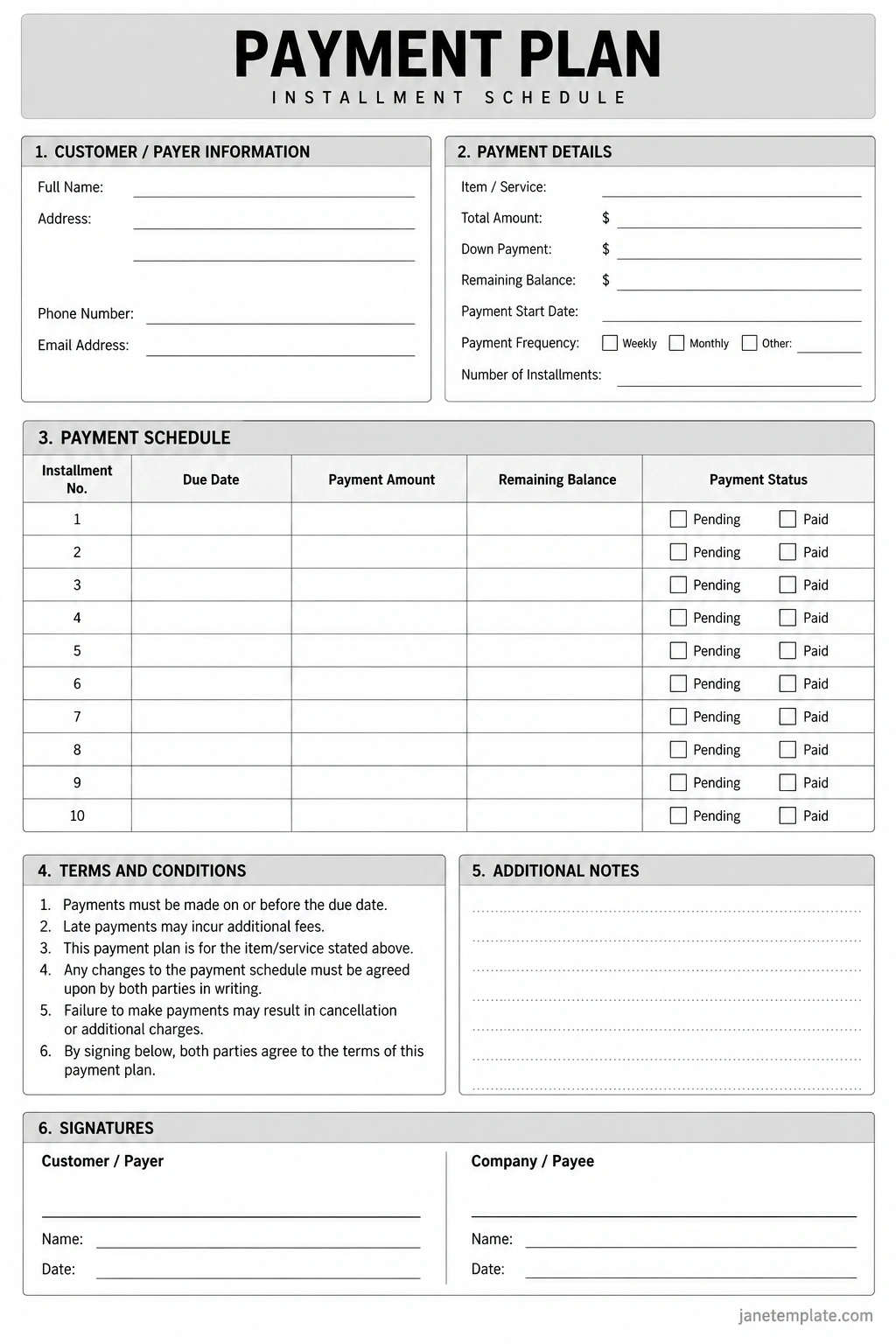
Before using the form, enter the correct balance and confirm that the installment amounts add up to the agreed total. Add the payment dates and frequency, then review all terms with the other party.
You can print the worksheet and complete it by hand or adapt its layout to a digital document. Store completed forms securely because they may contain personal contact details and information about financial obligations.
Tips for Managing a Payment Plan Successfully
A payment plan works best when the schedule is realistic and both parties keep accurate records. The following practices can help you manage installments more effectively.
Choose Payments You Can Afford
Review your income, essential expenses, and other financial commitments before agreeing to an installment amount. A smaller, sustainable payment may be more practical than a large payment that repeatedly causes budget problems.
Set Payment Reminders
Use calendar alerts, written reminders, or an appropriate payment management tool to keep track of upcoming due dates. Set reminders early enough to resolve any issues before a payment becomes overdue.
Keep Receipts and Records
Save payment confirmations and update your schedule after each transaction. Accurate records help resolve disagreements and show how much has been paid and how much remains outstanding.
Communicate About Difficulties Early
If you expect to miss a payment, contact the other party as soon as possible. They may be willing to discuss a revised schedule, depending on the agreement and applicable rules. Any change should be confirmed in writing.
Review the Agreement Regularly
Check the schedule periodically to ensure that payment dates, amounts, and balances remain accurate. Businesses should also review their payment policies and collection procedures to ensure they remain practical and compliant.
Common Payment Plan Mistakes to Avoid
Even a simple installment arrangement can create problems if important details are overlooked. Avoid these common mistakes when creating or managing a payment plan.
- Unclear payment terms: Specify the exact amount, frequency, due dates, and applicable charges.
- Unrealistic installments: Choose an amount that reflects the payer’s financial capacity and the agreed obligations.
- Missing payment records: Record each transaction and update the outstanding balance promptly.
- Unexplained fees: Disclose applicable interest, penalties, or administrative charges before the arrangement is accepted.
- Verbal changes without documentation: Keep a written record of any agreed changes to the payment schedule.
- Ignoring legal requirements: Review relevant consumer protection, lending, contract, and debt collection rules before using the agreement.
Frequently Asked Questions About Payment Plans
What is the purpose of a payment plan?
A payment plan divides an amount owed into scheduled installments. It helps the payer organize expenses over time and gives the recipient a clear schedule for receiving payments.
How do I calculate monthly payments?
Subtract any initial payment from the total amount owed, then divide the remaining balance by the number of installments. If interest or fees apply, include them according to the agreement. Adjust the final installment if necessary to ensure the total is correct.
Is a payment plan the same as a loan?
No. A payment plan is an arrangement for paying an amount over time, while a loan generally involves borrowing money under specified repayment terms. Some payment plans involve credit or financing, but others simply divide an existing obligation into installments.
Can a payment plan include interest or late fees?
Yes, depending on the arrangement and applicable law. Any permitted interest or fees should be clearly disclosed and documented before the agreement is accepted. Requirements vary by location and transaction type.
Can I change a payment plan after signing it?
A payment plan may be changed if the parties agree or if the original agreement or applicable law allows a modification. Document the revised amounts, dates, and terms in writing, and retain copies of the updated agreement.
Does a payment plan improve my credit score?
A payment plan does not automatically improve a credit score. The effect depends on the account, the credit reporting system, and whether payments are reported. Making payments on time may help maintain a positive payment history on accounts that report to credit bureaus, but missed payments or defaults may have negative consequences.
Can businesses use a payment plan template?
Yes. Businesses can use a payment plan template to document customer installment arrangements, track due dates, and record outstanding balances. The template should be adapted to the transaction and reviewed for legal and regulatory compliance.
What happens if someone misses a payment?
The consequences depend on the agreement and applicable law. Possible outcomes include reminders, a discussion about revised terms, or other permitted collection steps. Review the agreement and communicate promptly rather than assuming that the same rules apply to every payment plan.
Conclusion
A payment plan is a practical way to organize an amount owed into smaller installments with clear due dates and payment terms. It can help individuals plan expenses and help businesses manage customer payments, provided the arrangement is realistic and properly documented.
To create an effective payment plan, confirm the total balance, choose a suitable payment frequency, calculate each installment, and record the schedule in writing. Track every payment, keep supporting records, and communicate promptly if the arrangement needs to change.
A printable payment plan template makes these steps easier by bringing payment details, installment schedules, terms, and progress tracking together in one place. Customize the form to suit your needs, review the agreement carefully, and make sure all terms comply with applicable laws before using it.
Download: Payment Plan Template
