An effective operating plan turns business goals into practical actions. It explains what an organization needs to accomplish, which tasks must be completed, who is responsible, and what resources are required. With a clear plan, teams can coordinate daily activities, manage budgets, and measure progress toward strategic objectives.
Whether you run a small business, manage a department, or lead a growing organization, an operating plan helps connect long-term strategy with everyday work. Instead of relying on broad goals alone, you can establish specific responsibilities, deadlines, performance measures, and resource requirements.
In this guide, you will learn what an operating plan is, which sections to include, how to create one, and how to monitor its results. You will also find a printable operating plan template that can help you organize objectives, activities, budgets, and progress reviews.
What Is an Operating Plan?
An operating plan is a practical document that describes how an organization will carry out its objectives within a defined period. It translates strategic priorities into specific activities, assigns responsibilities, identifies required resources, and establishes ways to measure progress.
Depending on the organization, an operating plan may cover daily operations, departmental projects, staffing, purchasing, production, customer service, marketing, or other business activities. It often includes budgets, deadlines, performance indicators, and procedures for reviewing results.
Unlike a broad strategic plan, which explains where an organization wants to go, an operating plan focuses on how the work will get done. It gives employees and managers a shared reference for coordinating tasks and managing resources.
Free Printable Operating Plan Template
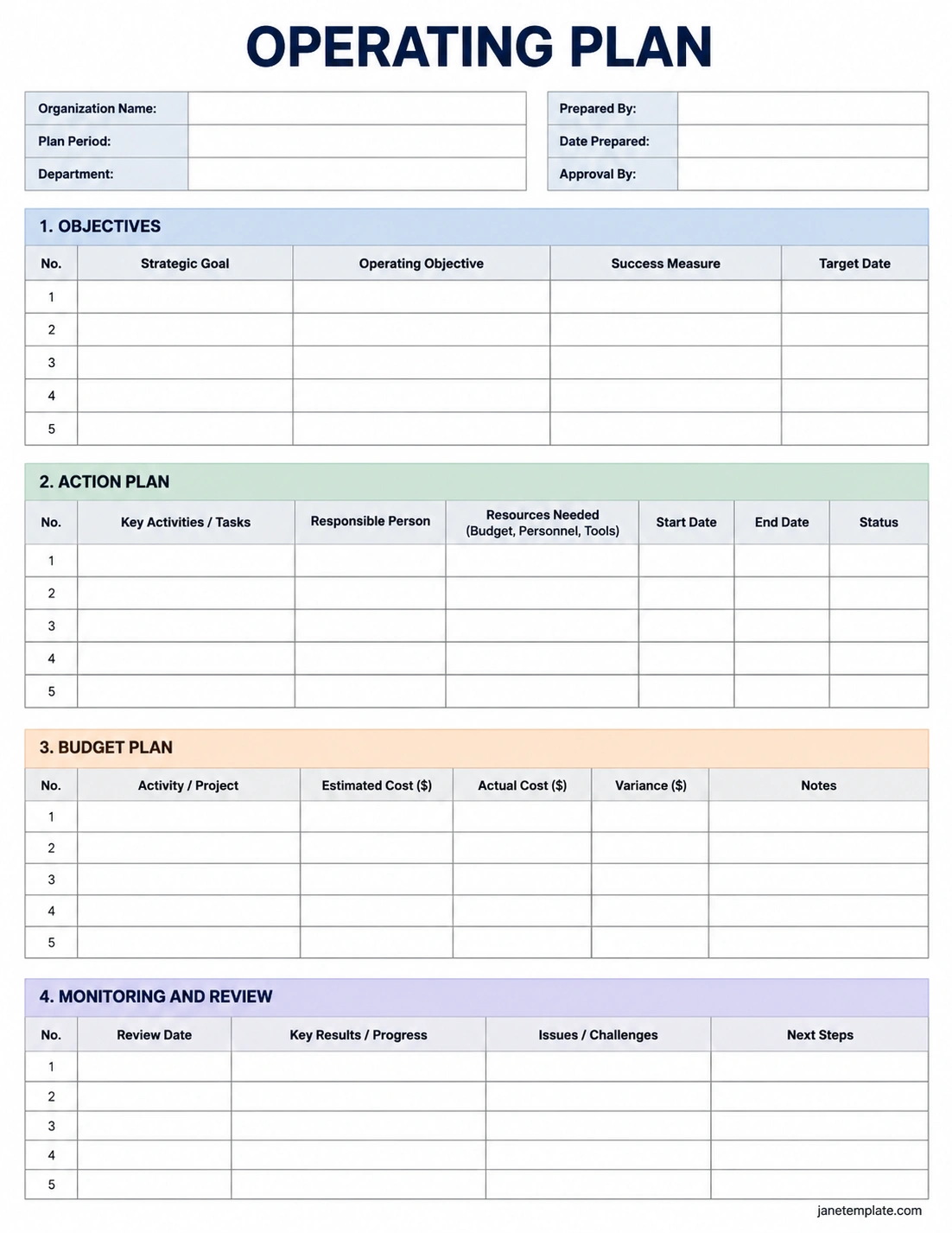
A printable operating plan template provides a structured way to turn objectives into an actionable work plan. It helps managers document priorities, assign tasks, estimate costs, and review progress without building a document from scratch.
The template below uses a clean layout with four main sections: objectives, action plan, budget plan, and monitoring and review. It also includes fields for the organization name, planning period, department, preparation date, and approval details.
You can use this operating plan worksheet for annual planning, departmental operations, business improvement projects, or shorter implementation periods. Customize the fields and add rows to accommodate your organization’s priorities and reporting requirements.
Why Is an Operating Plan Important?
A well-prepared operating plan helps an organization move from ideas to measurable results. It clarifies priorities and gives teams a practical framework for completing the work required to achieve business objectives.
Align Daily Activities with Business Goals
Employees may be busy without necessarily working on the organization’s most important priorities. An operating plan connects everyday tasks to specific business objectives, helping teams understand why their work matters.
Clarify Responsibilities
When every major activity has an assigned owner, employees know who is accountable for completing the work. Clear responsibilities also make it easier to coordinate across departments and identify tasks that need additional support.
Allocate Resources Effectively
An operating plan identifies the people, tools, time, and budget required for planned activities. This helps managers assess whether the organization has enough capacity to meet its commitments and where resources may need to be adjusted.
Track Performance and Identify Problems
Defined deadlines and performance measures make it easier to compare actual results with planned outcomes. Managers can identify delays, investigate cost differences, and take corrective action before small issues become larger problems.
What Should an Operating Plan Include?
The structure of an operating plan depends on the organization’s size, industry, and objectives. However, most useful plans include several core components.
1. Objectives and Expected Results
Start by identifying the goals the organization wants to achieve during the planning period. Each objective should be specific enough to guide action and measurable enough to support a meaningful review.
For example, a customer service team might aim to reduce average response time by 20% within six months. This is more actionable than a general goal to improve customer service because it includes a measurable result and a timeframe.
2. Activities and Action Steps
Break each objective into manageable tasks. Describe what needs to happen, identify important milestones, and establish start and completion dates.
A practical action plan may include:
- Key activities and deliverables
- Task owners and supporting team members
- Start dates and deadlines
- Dependencies between tasks
- Current status and completion milestones
Clear action steps make it easier to turn broad objectives into work that employees can complete and managers can monitor.
3. Roles and Responsibilities
Identify the person or team responsible for each activity. Where several departments are involved, clarify who makes decisions, who provides support, and who approves completed work.
Assign responsibilities based on relevant skills, workload, and authority. Avoid assigning important tasks to multiple people without identifying one accountable owner.
4. Budget and Required Resources
Estimate the financial and operational resources needed to complete the plan. These may include staff time, equipment, software, materials, training, external services, and operating expenses.
Document expected costs and, where appropriate, compare them with actual spending. This helps managers identify budget variances and determine whether planned activities remain financially feasible.
5. Performance Indicators and Deadlines
Define how you will measure success. Depending on the objective, performance indicators may include sales volume, production output, customer satisfaction, delivery times, error rates, project completion, or operating costs.
Assign a target and review period to each important indicator. Use measures that are relevant to the objective and practical to collect, rather than tracking numbers that do not support decisions.
6. Risks and Contingency Actions
Identify obstacles that could prevent the plan from succeeding. Common risks include staffing shortages, supplier delays, unexpected expenses, technology problems, and changes in customer demand.
For significant risks, record the potential impact, preventive actions, and steps the team will take if the problem occurs. This makes the operating plan more resilient when circumstances change.
How to Create an Operating Plan Step by Step
Creating an operating plan becomes easier when you follow a consistent process. Use the steps below to develop a practical plan that connects business priorities with measurable activities.
- Step 1: Review strategic priorities. Identify the business goals and organizational commitments that matter most during the planning period.
- Step 2: Define measurable objectives. Translate each priority into a clear outcome with a target and deadline.
- Step 3: Identify the required activities. Break each objective into specific tasks, milestones, and deliverables.
- Step 4: Assign responsibility. Name an owner for each major task and identify any supporting teams.
- Step 5: Estimate resources and costs. Determine the staff time, equipment, materials, and budget required.
- Step 6: Establish performance measures. Choose indicators that show whether activities are progressing and objectives are being achieved.
- Step 7: Identify risks. Record likely obstacles and prepare practical responses for important issues.
- Step 8: Set review dates. Schedule regular progress meetings to assess results, resolve problems, and update the plan.
Operating Plan Example
Consider a small business that wants to improve order fulfillment over the next quarter. Its operating plan could translate this goal into specific activities, responsibilities, and measures.
- Strategic goal: Improve customer satisfaction.
- Operating objective: Increase the percentage of orders shipped on time to 95% within three months.
- Key activity: Review fulfillment delays and introduce a daily order-priority process.
- Responsible person: Operations manager.
- Resources needed: Staff training, updated workflow instructions, and reporting tools.
- Performance measure: Percentage of orders shipped on time.
- Review schedule: Weekly performance review.
This example shows how a broad goal can become an actionable operating objective. The team can monitor performance each week, investigate recurring delays, and adjust the workflow when results fall short of the target.
How to Monitor and Improve an Operating Plan
An operating plan should be reviewed regularly rather than treated as a document that is completed once and forgotten. Consistent monitoring helps the organization respond to changing priorities and keep planned activities realistic.
Schedule Regular Progress Reviews
Choose a review frequency that matches the pace of the work. Daily check-ins may be useful for time-sensitive operations, while weekly or monthly reviews may be sufficient for broader departmental objectives.
During each review, compare actual results with targets, identify overdue tasks, and decide which issues require action.
Compare Budgeted and Actual Costs
Track spending against the approved budget. Investigate significant variances and determine whether they reflect unexpected costs, inaccurate estimates, scope changes, or savings.
Where necessary, update forecasts and obtain the appropriate approval before changing spending commitments.
Update Priorities When Conditions Change
New customer needs, supplier issues, staffing changes, and market conditions can affect an operating plan. Revise tasks, deadlines, or resource allocations when justified, and communicate changes to everyone affected.
Document Decisions and Lessons Learned
Record major decisions, recurring problems, and successful improvements. These notes help teams understand why changes were made and provide useful information for future planning cycles.
Common Operating Plan Mistakes to Avoid
A useful operating plan must be realistic, specific, and easy to maintain. Avoid these common mistakes when preparing your document.
- Vague objectives: Replace general intentions with measurable outcomes and clear deadlines.
- Unclear ownership: Assign an accountable owner to each important activity.
- Unrealistic budgets: Estimate costs using available information and review assumptions before approval.
- Too many priorities: Focus on the activities that contribute most directly to important business goals.
- Missing performance measures: Define how progress and results will be evaluated.
- Infrequent reviews: Schedule regular check-ins to identify delays and address issues early.
- Failure to update the plan: Revise assumptions, deadlines, and resources when business conditions materially change.
Frequently Asked Questions About Operating Plans
What is the main purpose of an operating plan?
The main purpose of an operating plan is to translate strategic goals into specific activities, responsibilities, resources, and measurable outcomes. It helps an organization coordinate daily work and monitor progress toward its objectives.
What is the difference between an operating plan and a strategic plan?
A strategic plan defines the organization’s long-term direction and major priorities. An operating plan explains how those priorities will be implemented through tasks, budgets, responsibilities, deadlines, and performance measures.
What should an operating plan include?
An operating plan typically includes objectives, action steps, task owners, timelines, required resources, budget estimates, performance indicators, risks, and review dates. The exact structure depends on the organization’s needs.
How long should an operating plan cover?
Many organizations prepare annual operating plans, while others use quarterly, monthly, or project-based plans. Choose a period that fits the organization’s budgeting cycle, operating needs, and rate of change.
Who is responsible for preparing an operating plan?
Responsibility often belongs to business leaders, operations managers, department heads, or project managers. Employees and other stakeholders may contribute estimates, activities, and performance targets for the areas they manage.
How often should an operating plan be reviewed?
Review the plan often enough to identify problems before they affect important objectives. Weekly or monthly reviews are common, but the right frequency depends on the activity, risks, and speed of operational changes.
Can I use a printable operating plan template?
Yes. A printable operating plan template can help you organize objectives, action items, responsibilities, budgets, and progress reviews. You can also transfer the same structure into a spreadsheet or project management tool for easier updates.
Turn Business Goals into Action with an Operating Plan
A practical operating plan helps an organization turn strategic priorities into coordinated, measurable work. By defining objectives, assigning responsibilities, allocating resources, and monitoring results, teams can work more efficiently and respond to problems before they become major obstacles.
Start with the printable operating plan template, adapt it to your organization’s needs, and establish a regular review process. With clear priorities and consistent follow-through, your operating plan can become a useful tool for managing daily activities and achieving business objectives.
Download: Operating Plan Template
