A pay-for-delete letter is a written request asking a creditor or debt collection agency to remove a collection account from a credit report in exchange for an agreed payment. People often consider this approach when trying to resolve an outstanding debt while addressing negative information on their credit history.
Although paying a collection account may resolve a debt, it does not automatically mean that the account will disappear from a credit report. A pay-for-delete arrangement is not guaranteed, and a collection agency may be unwilling or unable to agree to the request.
Before sending a letter, it is important to understand how the process works, what information to include, and what to confirm before making a payment. This guide explains the purpose of a pay-for-delete letter, provides a sample you can customize, and covers practical considerations for communicating with a creditor or collection agency.
What Is a Pay-for-Delete Letter?
A pay-for-delete letter is a negotiation letter in which a consumer proposes paying an agreed amount toward a debt in exchange for the collection agency requesting removal of the associated collection account from one or more credit reporting agencies.
The proposal may involve paying the full balance or negotiating a settlement for less than the amount claimed. Whether a collector accepts the proposal depends on its policies, authority, the account’s circumstances, and applicable laws and reporting requirements.
A pay-for-delete request is different from a dispute. A dispute challenges information believed to be inaccurate or incomplete. A pay-for-delete letter instead proposes a negotiated arrangement concerning the reporting of a collection account.
Sample Pay-for-Delete Letter
The following example illustrates how to write a polite, professional request. Replace the bracketed details with your information and adjust the wording to match your circumstances. This sample is a negotiation proposal, not a guarantee that the recipient will accept the terms.
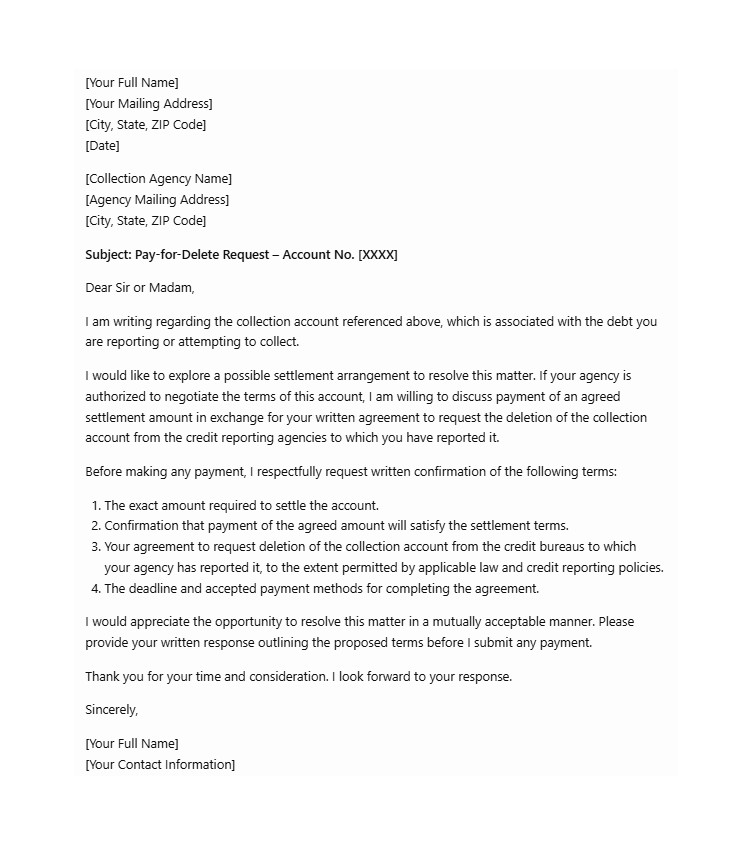
Example Letter
[Your Full Name]
[Your Mailing Address]
[City, State, ZIP Code]
[Date]
[Collection Agency Name]
[Agency Mailing Address]
[City, State, ZIP Code]
Subject: Pay-for-Delete Request – Account No. [XXXX]
Dear Sir or Madam,
I am writing regarding the collection account referenced above. I would like to explore a possible settlement arrangement to resolve this matter.
If your agency is authorized to negotiate the terms of this account, I am willing to discuss payment of an agreed settlement amount in exchange for your written agreement to request deletion of the collection account from the credit reporting agencies to which your agency has reported it, to the extent permitted by applicable law and reporting policies.
Before making any payment, I respectfully request written confirmation of the proposed terms, including the following:
- The exact amount required to settle the account.
- Confirmation of whether payment of the agreed amount will satisfy the settlement terms.
- The agency’s agreement, if available, to request deletion of the collection account from the credit reporting agencies to which it has reported the account.
- The deadline and accepted payment methods for completing the agreement.
- Confirmation of any remaining balance or other obligations after the agreed payment is made.
I would appreciate the opportunity to resolve this matter in a mutually acceptable manner. Please provide your written response outlining the proposed terms before I submit payment.
Thank you for your time and consideration. I look forward to your response.
Sincerely,
[Your Full Name]
[Your Contact Information]
How to Write a Pay-for-Delete Letter
A clear letter can make your proposal easier to review. Keep the message professional, identify the relevant account, and explain the terms you would like to negotiate without making unnecessary admissions or promises.
1. Include Your Contact Information
Begin with your name, mailing address, and the date. Address the letter to the creditor or collection agency using a verified mailing address.
If you are writing to a collection agency, make sure you are contacting the company responsible for the account. Do not send sensitive personal information to an unverified recipient.
2. Identify the Account
Include the account reference or a partial account number that allows the recipient to identify the matter. Avoid placing a full Social Security number or other unnecessary sensitive information in the letter.
If you are uncertain whether the debt is yours or whether the amount is correct, consider requesting debt validation or investigating the account before negotiating payment.
3. State Your Proposal Clearly
Explain that you are interested in resolving the account and would like to discuss a payment arrangement in exchange for a request to remove the collection entry from the credit reports where it appears.
You may propose a full payment or a settlement amount, depending on your circumstances. Do not assume that the collector will accept your offer, and avoid paying until you understand the terms of any agreement.
4. Request Written Confirmation
Ask the collection agency to confirm the agreed amount, the deadline, the effect of payment on the debt, and whether it is willing and authorized to request deletion of the account.
Written confirmation helps document what the parties have agreed to. However, a written promise from a collector cannot override applicable law or guarantee how a credit reporting agency will handle information.
5. Keep a Copy of Your Letter
Save a copy of the letter and any response you receive. If you mail the request, consider using a mailing method that provides delivery confirmation when appropriate.
Keep payment records, settlement correspondence, and other relevant documents together. These records can help if questions arise about the agreement or the account’s status.
When Should You Send a Pay-for-Delete Letter?
A pay-for-delete request may be considered when a collection account appears on your credit report and you want to explore a negotiated resolution. However, the best next step depends on whether the account is accurate, whether you owe the debt, and whether the collector has the authority to negotiate.
When the Debt Appears to Be Accurate
If the account is yours and the balance appears correct, you may contact the collector to discuss settlement options. You can ask whether it considers deletion requests, but it may decline or be unable to agree to one.
When the Account Contains Errors
If the account is not yours, the balance is wrong, the account is duplicated, or another reporting detail is inaccurate, a credit report dispute may be more appropriate than a pay-for-delete proposal.
In the United States, consumers can generally dispute inaccurate or incomplete credit report information with the relevant credit reporting agency and, where appropriate, the company that supplied the information. Follow the applicable dispute process and provide supporting documentation.
When You Do Not Recognize the Debt
Do not assume that paying is the right response to an unfamiliar collection account. Verify the collector and investigate the debt first. Depending on the circumstances, you may have rights to request information or validation under applicable debt collection laws.
Does a Pay-for-Delete Letter Improve Your Credit Score?
A pay-for-delete arrangement may result in a collection entry being removed if the relevant parties agree and the removal is permitted and completed. However, sending a letter alone does not change a credit report or guarantee a credit score increase.
Credit scoring models differ in how they treat collection accounts. The effect of a deletion depends on the information in your credit file, the scoring model used, and other factors affecting your credit history.
Paying or settling a collection account can also affect your financial position even if the account remains on your credit report. Review the agreement carefully and avoid assuming that payment automatically erases the account’s reporting history.
Important Things to Know Before Negotiating
Before proposing a pay-for-delete arrangement, consider the following practical points.
- Deletion is not guaranteed: The collection agency may refuse your request or may not have authority to agree to it.
- Verify the debt: Check the account details and collector before making a payment.
- Understand the settlement terms: Confirm whether the proposed payment resolves the full debt or leaves a remaining balance.
- Get the agreement in writing: Keep written confirmation of the agreed terms before paying.
- Check relevant laws: Debt collection and credit reporting rules vary by jurisdiction.
- Consider time-barred debt: Depending on the state, making a payment or acknowledging a debt may affect the statute of limitations.
- Protect your information: Use verified contact details and share only the personal information reasonably required.
Frequently Asked Questions About Pay-for-Delete Letters
Does a pay-for-delete letter really work?
It sometimes leads to a negotiated deletion request, but there is no guarantee. The collector may refuse, lack authority, or be subject to reporting obligations that limit what it can agree to do.
Should I pay before receiving a written agreement?
If deletion is a condition of your proposal, request written confirmation of the agreed terms before paying. Read the agreement carefully and make sure it clearly states what the payment will resolve and what the collector has agreed to do.
Can I negotiate a pay-for-delete arrangement for less than the full balance?
You can ask whether the collector is willing to consider a settlement for less than the claimed balance and whether it will also consider a deletion request. Acceptance is not guaranteed. Confirm the settlement amount and any remaining obligations in writing.
Will a pay-for-delete letter remove an original creditor’s late payment?
A collection agency’s agreement concerning its own collection entry does not necessarily remove the original creditor’s separate reporting of late payments or account history. Each entry may need to be addressed separately, and accurate information is not automatically removable just because a debt is paid.
How long does it take to remove a collection account?
There is no universal timeline. If a deletion request is accepted and processed, the timing depends on the companies involved and the credit reporting agencies’ procedures. Check your credit reports afterward to confirm whether the requested change occurred.
Can I send a pay-for-delete letter by email?
That depends on the collector’s communication options and your preference for keeping records. You may use a verified email address or postal address. Keep copies of the message and any written response.
Is a pay-for-delete letter the same as a credit report dispute letter?
No. A pay-for-delete letter proposes a negotiated arrangement involving payment and a deletion request. A dispute letter challenges information believed to be inaccurate or incomplete. Use the process that matches the circumstances of the account.
What if the collection agency refuses my request?
You can ask about other settlement options, payment arrangements, or ways to resolve the debt. If the account contains inaccurate information, consider using the appropriate dispute process. Review the consequences of any payment arrangement before agreeing to it.
Conclusion
A pay-for-delete letter is a negotiation tool that allows consumers to ask a creditor or collection agency to request removal of a collection account in exchange for an agreed payment. A well-written letter identifies the account, explains the proposal, and asks for written confirmation of the terms.
Before sending your request, verify the debt, understand your options, and check the laws that apply to your situation. Remember that deletion is not guaranteed, and paying a debt does not automatically remove accurate negative information from a credit report.
Use the sample letter as a starting point, adapt it to your circumstances, and keep copies of all correspondence. Careful preparation can help you make a more informed decision about resolving a collection account.
Download: Pay-for-Delete Letter Template
