A parent consent form is an important document that records a parent or legal guardian’s permission for a minor to participate in an activity, receive a service, or have personal information used for a specific purpose. Schools, sports organizations, healthcare providers, research teams, and event organizers often use these forms to communicate essential details and document authorization.
Using a parent consent form template makes it easier to collect the information needed before an activity begins. A well-organized form can identify the child, record the parent’s contact details, explain the activity, outline relevant risks, and capture the required signature.
Whether you need a school field trip permission form, a youth sports consent form, or a general parental authorization form, this guide explains what to include, how to complete it, and how to use a printable template effectively.
What Is a Parent Consent Form?
A parent consent form is a written document used to record permission from a parent or legal guardian for a child under the age of majority to participate in an activity or for another clearly described purpose. Depending on the situation, it may also be called a parental consent form, parent permission form, or parental authorization form.
The form helps the organization explain what is being authorized and document the parent’s decision. It may include details about the activity, dates, location, potential risks, emergency contacts, medical considerations, and any optional permissions.
For example, a school may request a signed parent consent form before taking students on a field trip. A sports club may use one to record permission for a tournament, while a research team may need parental permission and, when appropriate, the child’s own assent before involving a minor in a study.
The exact requirements depend on the purpose, location, organization, and applicable laws. A general printable template is a useful starting point, but it may not meet every legal or professional requirement.
Why Is a Parent Consent Form Important?
A properly prepared consent form helps parents understand an activity and gives organizations a consistent way to document permission. It also encourages clearer communication before a child takes part.
1. Documents Parental Permission
A signed form creates a record that the parent or authorized guardian was asked to approve a specified activity or use of information. The form should describe the permission clearly rather than relying on a vague statement of general approval.
2. Communicates Important Information
Parents need enough information to make an informed decision. Depending on the activity, this may include the schedule, destination, transportation arrangements, supervision, foreseeable risks, and relevant safety procedures.
3. Supports Emergency Planning
Emergency contact details can help organizers reach a parent or another designated contact if a problem occurs. Medical information may also be relevant when it is necessary for safe participation and is collected and handled appropriately.
4. Clarifies the Scope of Permission
A form can distinguish between permission to participate in an activity and separate permissions, such as photography, video recording, or the use of a child’s personal information. Keeping these choices clear helps parents understand what they are agreeing to.
5. Improves Recordkeeping
Collecting signed forms in a consistent format helps schools, clubs, and organizations confirm which permissions have been received. It also makes it easier to identify missing information before an activity begins.
Printable Parent Consent Form Template
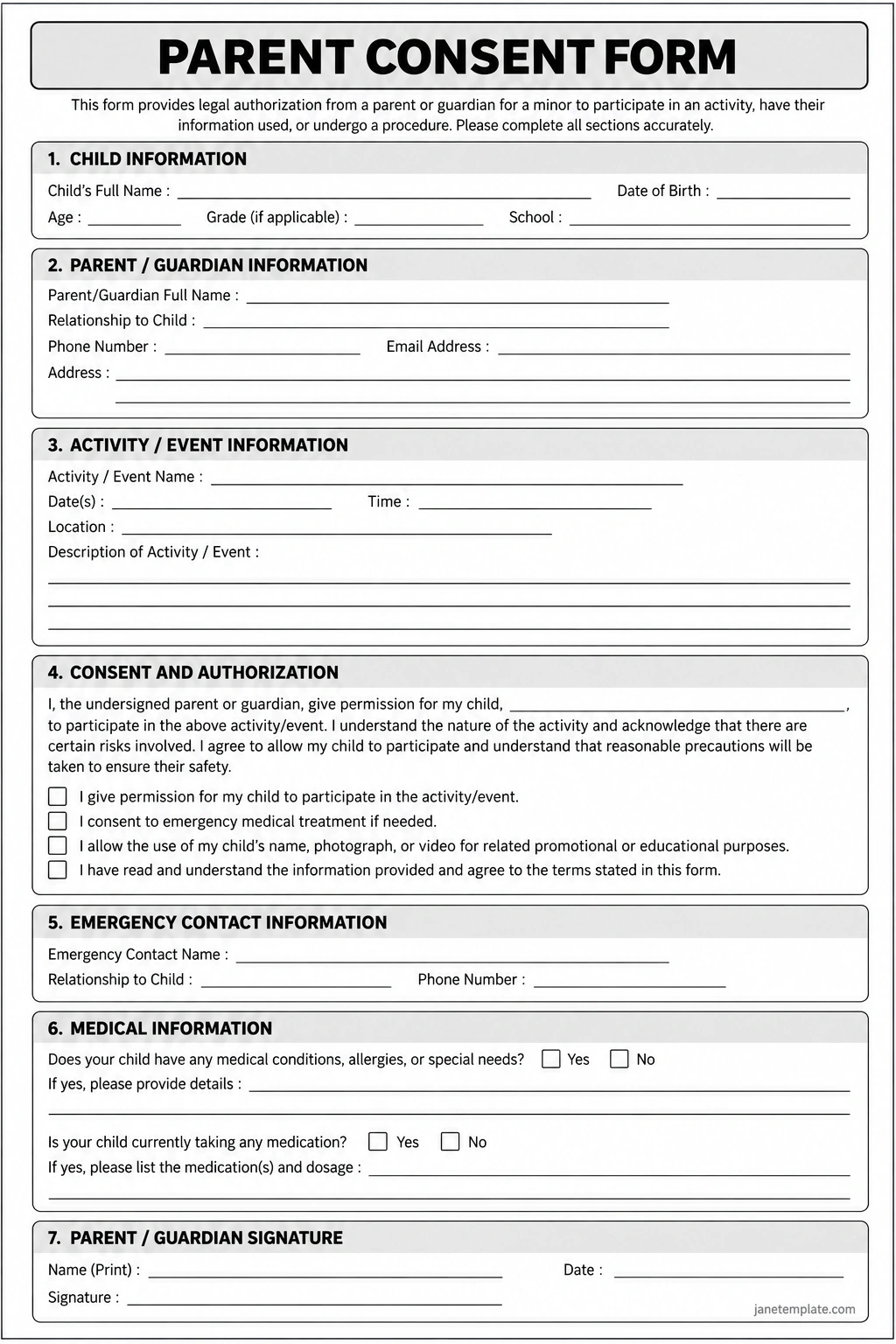
A printable parent consent form template provides a structured layout for recording a child’s details, parent or guardian information, activity information, authorization, emergency contacts, relevant medical details, and signature.
The black-and-white template below is designed for US Letter paper. Its clearly separated sections and blank fields make it suitable as a general starting point for school activities, events, and other situations where written parental permission may be needed.
Before using the form, customize the activity description and consent statements to match your specific requirements. Remove any sections that are unnecessary, and add any information required by your school, organization, healthcare provider, or applicable regulations.
What Should a Parent Consent Form Include?
The information required depends on the intended use. However, a general parental consent form commonly includes the following sections.
Child Information
Record the child’s full name and any other identifying information necessary for the activity. A school form may also request a grade or class, while a sports form may require a team or registration number. Collect only the details that are reasonably necessary.
Parent or Legal Guardian Information
Include the parent’s or guardian’s full name, relationship to the child, and appropriate contact details. If the organization needs to verify legal authority to provide consent, follow its established verification process rather than assuming that any accompanying adult can authorize the activity.
Activity or Service Details
Describe exactly what the parent is being asked to approve. Include the activity name, date or date range, location, relevant schedule, and organizer. For travel or off-site events, include transportation and supervision arrangements when applicable.
Consent Statement
Use clear language that identifies the specific activity or purpose. The statement should explain what permission is being requested and provide enough context for the parent to make an informed choice.
Risks and Safety Information
Where relevant, explain foreseeable risks, safety measures, supervision arrangements, and any important limitations. A consent form should not hide material information or suggest that signing automatically removes all legal responsibility from an organization.
Emergency Contact Information
Request an emergency contact name, relationship to the child, and telephone number. Depending on the activity, it may be useful to include an alternative contact in case the parent or guardian cannot be reached.
Medical or Accessibility Information
When necessary for safe participation, ask about relevant allergies, medical conditions, medication requirements, or accessibility needs. Explain why the information is needed, restrict access to authorized personnel, and avoid collecting unnecessary sensitive information.
Signature and Date
Provide space for the parent or authorized guardian to print their name, sign, and date the form. Some activities may require additional information, verification, or a specific consent procedure. Follow the relevant organization’s requirements.
How to Fill Out a Parent Consent Form
Completing a parent consent form carefully helps prevent misunderstandings and delays. Follow these steps when preparing the document.
Step 1: Read the Entire Form
Review the activity description, permission statement, risk information, and any separate authorization choices. Ask the organizer for clarification if any part of the form is unclear.
Step 2: Enter Accurate Information
Complete the child’s details and the parent or guardian’s contact information. Check names, telephone numbers, dates, and other required fields before submitting the document.
Step 3: Review the Activity Details
Confirm that the activity, location, schedule, and arrangements match what was communicated to you. For travel or off-site events, review the transportation plan and the contact person responsible for the group.
Step 4: Consider Any Additional Permissions
Read photography, media, data-use, or medical authorization statements separately. If a permission is optional, make sure the form explains how to accept or decline it. Do not assume that consent to participate automatically means consent to unrelated uses of a child’s information or image.
Step 5: Ask Questions About Unclear Terms
Before signing, ask the organization to explain unfamiliar terminology, potential risks, emergency procedures, or how information will be stored and used. For medical treatment, research, or legally sensitive matters, additional documentation or professional advice may be appropriate.
Step 6: Sign and Submit the Form
Sign and date the form using the method required by the organization. Keep a copy for your records and confirm that the organizer has received it before the activity or service begins.
Common Uses of Parent Consent Forms
Parent consent forms are used in many settings. The details should be tailored to the specific activity rather than using one generic form for every situation.
School Field Trips and Educational Activities
Schools may request a field trip permission form that describes the destination, date, transportation, supervision, and planned activities. Additional information may be required for overnight trips or activities with specific safety considerations.
Sports and Extracurricular Activities
Sports clubs and activity organizers may need parental permission for training sessions, tournaments, camps, or off-site events. Depending on the activity, separate medical information, emergency procedures, or participation requirements may apply.
Medical Treatment and Healthcare
Healthcare providers may need authorization from a parent or legally authorized representative before providing certain services to a minor. Requirements vary by jurisdiction, the type of treatment, and the child’s circumstances. A general parent consent form should not replace the provider’s required medical consent documents.
Travel and Overnight Stays
Travel consent documents may be requested for trips involving schools, sports teams, relatives, or international travel. The required details can vary by destination, carrier, and authority. International travel may require a specific document or additional supporting evidence.
Photography, Video, and Personal Information
Organizations may request permission to photograph a child, publish images, or use personal information for a defined purpose. Explain how the material will be used, where it may appear, and how long it may be retained when relevant. Separate optional permissions from participation consent where appropriate.
Research and Surveys
Research involving minors may require parental permission, the child’s assent, and review or approval by an appropriate ethics committee or institutional review board. The required process depends on the research setting and applicable rules.
Tips for Creating a Clear and Useful Consent Form
A good parent consent form should be easy to understand, specific to its purpose, and practical to complete. Use these guidelines when adapting a printable template.
- Use plain language. Avoid unnecessary legal jargon and explain unfamiliar terms.
- Identify the purpose. State exactly which activity, service, or use of information requires permission.
- Provide relevant details. Include dates, locations, contact information, and safety arrangements where appropriate.
- Separate different permissions. Make optional photography, media, or data-use choices clear when they are not essential to participation.
- Collect only necessary information. Protect children’s personal and medical information and restrict access appropriately.
- Make signing instructions clear. Explain who must sign, how to submit the form, and the deadline.
- Check the applicable requirements. Confirm whether the organization or jurisdiction requires specific wording, additional documentation, or a particular consent process.
- Keep a secure record. Store completed forms in an appropriate location and follow retention and privacy policies.
Frequently Asked Questions About Parent Consent Forms
What is the purpose of a parent consent form?
A parent consent form documents permission from a parent or legal guardian for a minor to participate in a specified activity, receive certain services, or have information used for a defined purpose. It also helps communicate important details and record the parent’s decision.
Who can sign a parent consent form?
Typically, a parent or legally authorized guardian signs the form. However, the person authorized to provide consent may depend on custody arrangements, applicable law, and the nature of the activity or service. Organizations should verify authority when necessary.
Can I use a printable parent consent form for a school field trip?
A general printable form can be a useful starting point, but you should first check the school’s requirements. The school may require its own permission form with specific details about transportation, supervision, emergency contacts, or the planned activities.
Is a parent consent form legally binding?
Its legal effect depends on the wording, circumstances, jurisdiction, and applicable law. A signed form can document permission, but it does not automatically make every clause enforceable or eliminate an organization’s legal duties. Seek qualified legal advice when the form has significant legal consequences.
Does a parent consent form need a witness or notarization?
Not always. Many routine school or activity forms do not require notarization, but certain travel, medical, legal, or other situations may have additional requirements. Check with the relevant organization or authority before using the form.
Can a parent consent form include medical information?
Yes, when the information is relevant and necessary for the activity or service. Collect only appropriate details, explain how they will be used, and protect them from unauthorized access. Medical treatment may require a separate, provider-approved authorization.
Can a parent withdraw consent after signing?
Whether and how consent can be withdrawn depends on the activity, the terms of the authorization, and applicable rules. Parents should contact the responsible organization promptly to ask about its withdrawal process and any consequences.
Should photography permission be included in a parent consent form?
It can be included when relevant, but photography or media permission should be clearly explained. Where practical and appropriate, provide a separate optional choice so parents can distinguish permission to participate from permission to use a child’s image.
Conclusion
A parent consent form helps document parental permission, communicate important activity details, and support consistent recordkeeping when minors participate in activities or services. The most useful forms clearly identify the child, the parent or guardian, the purpose of the authorization, relevant safety information, and the required signature.
A printable parent consent form template offers a convenient starting point for schools, clubs, events, and other organizations. Before using it, customize the wording to match the intended purpose and verify any legal, medical, privacy, or organizational requirements that apply.
By keeping the form clear, specific, and secure, you can make the consent process easier to understand and help ensure that the necessary permissions are documented before an activity begins.
Download: Parent Consent Form
