When a company needs to use expensive equipment but doesn’t want to commit to purchasing it outright, a machine lease agreement can be a valuable solution. This legal contract allows the company to temporarily use the equipment while conserving cash flow and maintaining flexibility for future upgrades. The agreement outlines the responsibilities of both parties, the owner (lessor) and the user (lessee), regarding payment, maintenance, and insurance, which helps reduce the risk of disputes. Whether it’s for short-term projects or long-term needs, a machine lease agreement is especially useful for equipment that becomes obsolete quickly or when a business wants to test out equipment before making a purchase.
What Is a Machine Lease Agreement?
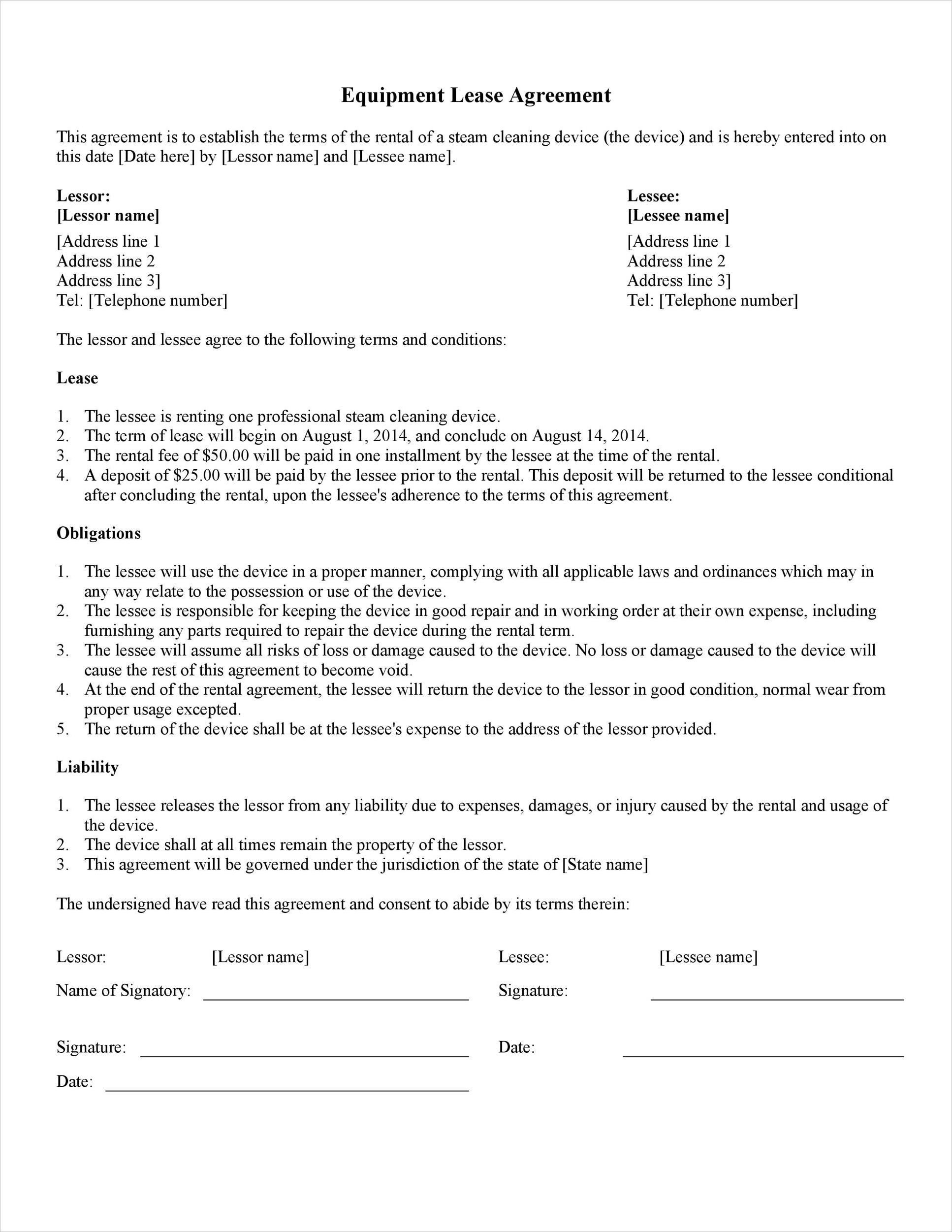
A machine lease agreement is a contract between a lessor, who owns the equipment, and a lessee, who wants to use the equipment for a specified period of time. The agreement lays out the terms and conditions of the lease, including the payment schedule, maintenance responsibilities, insurance requirements, and any other provisions agreed upon by both parties. By signing a lease agreement, the lessee gains access to the equipment without the upfront cost of purchasing it, while the lessor receives regular payments for the use of their equipment.
Why Choose a Machine Lease Agreement?
There are several reasons why a company might choose to enter into a machine lease agreement rather than purchasing equipment outright:
- Conserves Cash Flow. Leasing equipment requires less upfront capital than buying, which can help preserve cash flow for other business needs.
- Flexible Upgrades. Lease agreements often include options for upgrading to newer equipment as technology advances, providing flexibility for staying current.
- Reduced Risk. Clear terms in the agreement outline responsibilities for both parties, reducing the risk of disputes over payment, maintenance, or insurance.
- Try Before You Buy. Leasing allows businesses to test out equipment before committing to a purchase, ensuring it meets their needs.
- Short-Term Projects. For projects with a defined end date, leasing equipment can be more cost-effective than buying for a temporary need.
What to Include in a Machine Lease Agreement
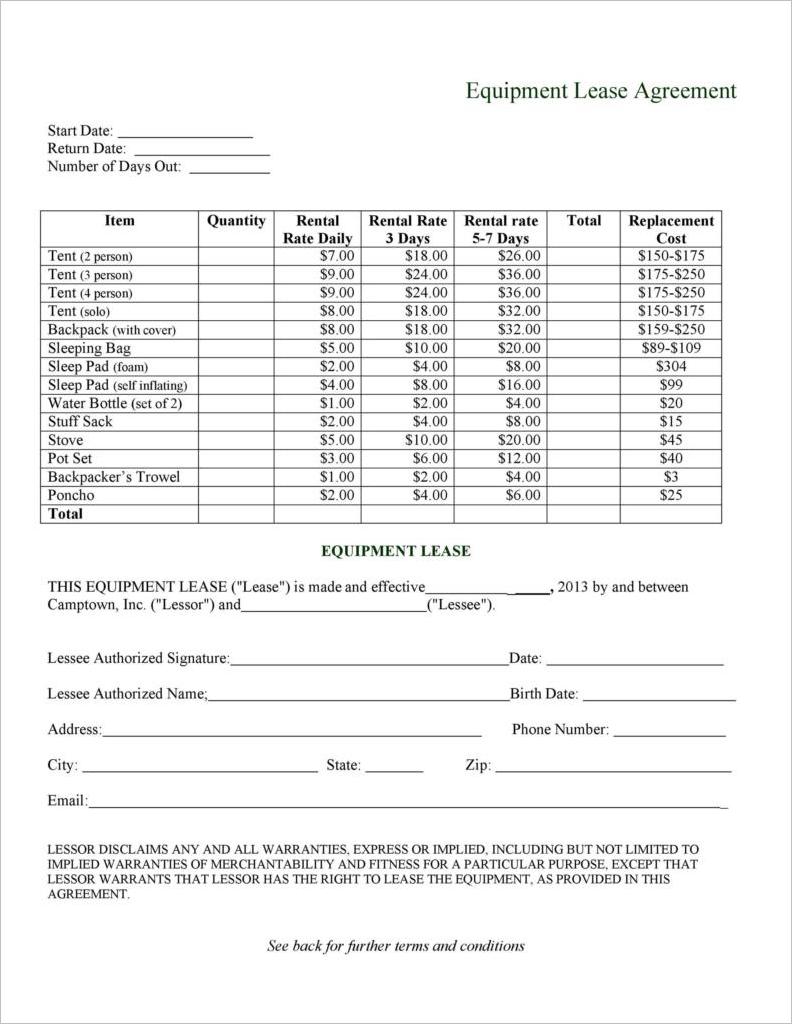
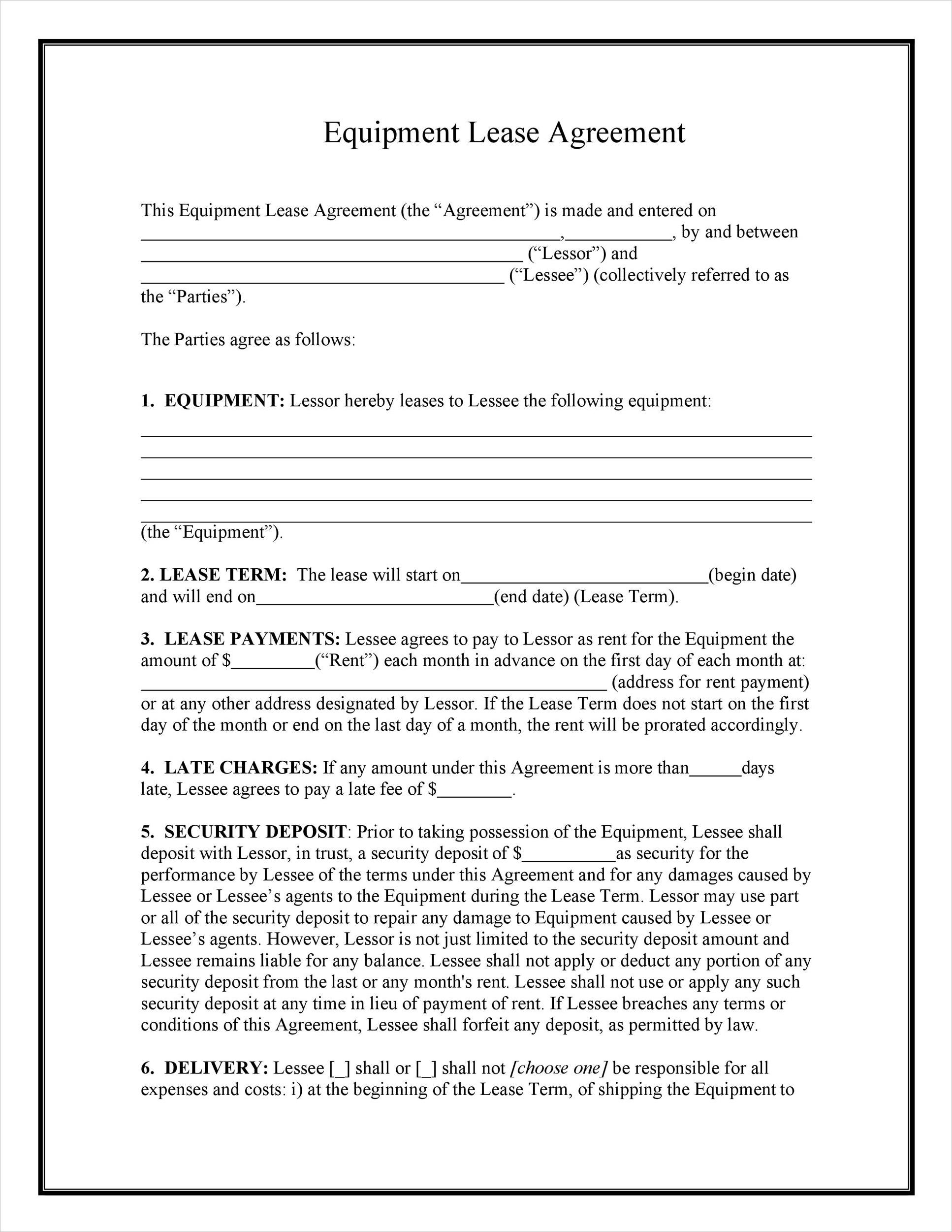
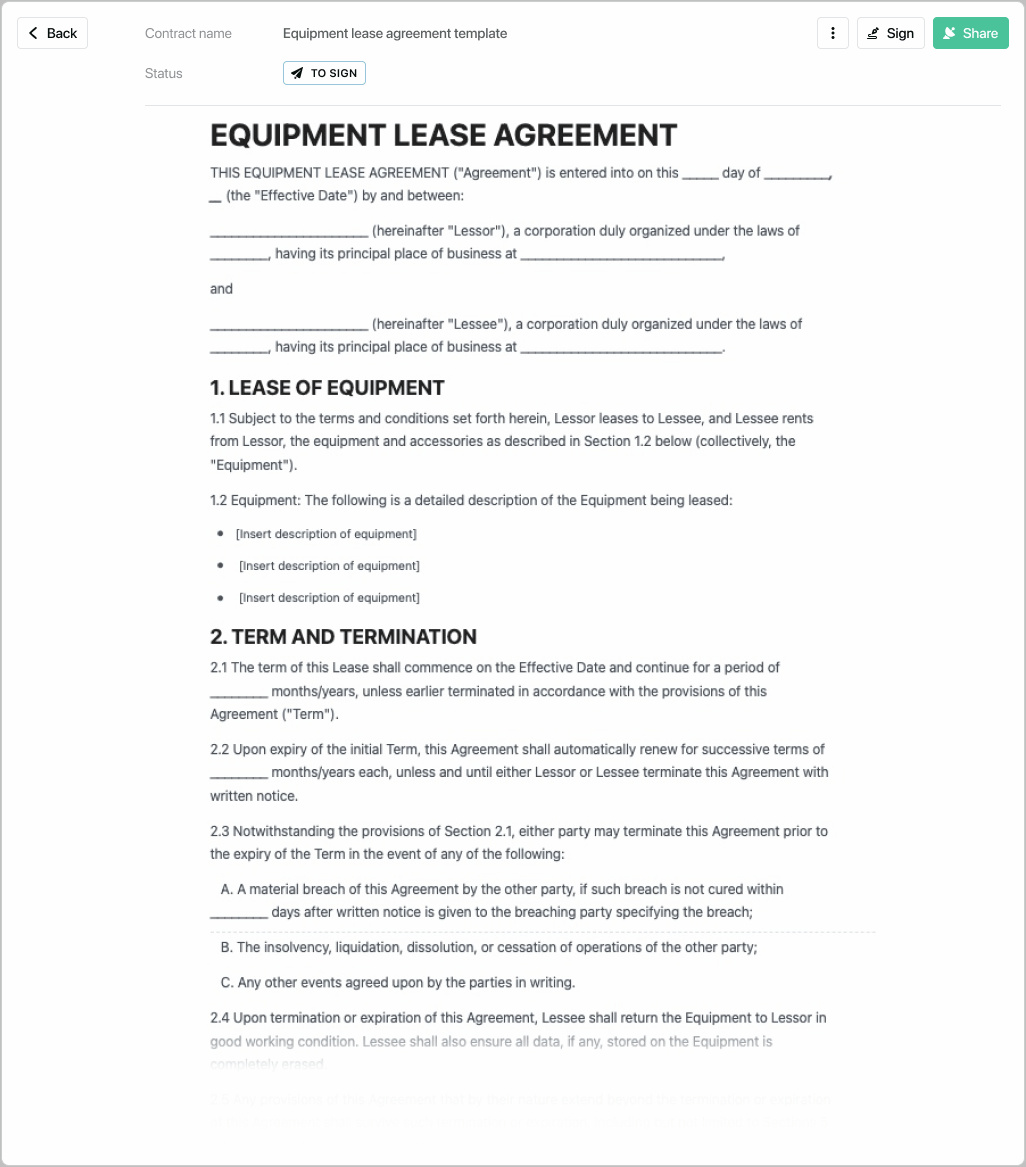
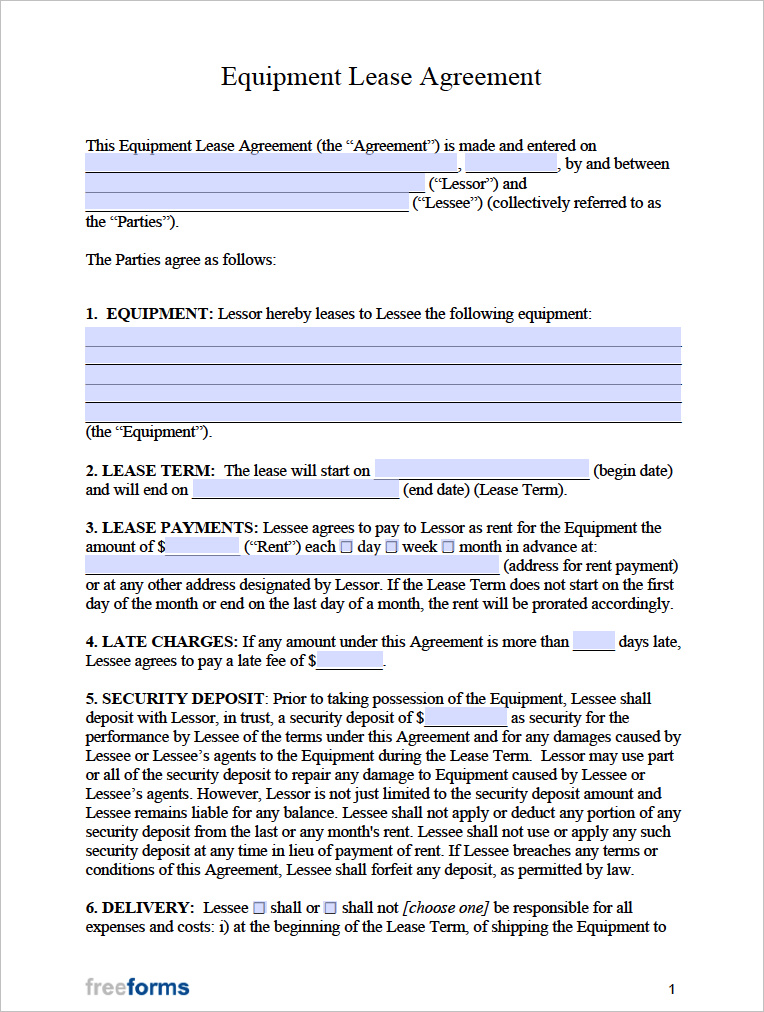
When drafting a machine lease agreement, it’s essential to include specific details to protect both parties and ensure a clear understanding of the terms:
- Equipment Description. Clearly identify the equipment being leased, including make, model, serial number, and any accessories or attachments.
- Lease Term. Specify the start date and duration of the lease, along with any options for renewal or early termination.
- Payment Terms. Outline the amount of rent, payment schedule, late fees, and any security deposit required.
- Maintenance Responsibilities. Define who is responsible for routine maintenance, repairs, and servicing of the equipment.
- Insurance Requirements. Specify the type and amount of insurance coverage required to protect the equipment and both parties.
How to Negotiate a Machine Lease Agreement
When negotiating a machine lease agreement, it’s essential to consider the following factors to ensure a fair and mutually beneficial contract:
- Lease Term. Determine the optimal length of the lease based on the equipment’s useful life and your business needs.
- Payment Structure. Negotiate a payment schedule that aligns with your cash flow and budget constraints.
- Maintenance Provisions. Clarify maintenance responsibilities to prevent disputes over upkeep and repairs.
- Insurance Coverage. Ensure adequate insurance coverage is in place to protect both parties in case of damage or loss.
Tips for Managing a Machine Lease Agreement
Once a machine lease agreement is in place, it’s important to manage the lease effectively to maximize its benefits and minimize potential risks:
- Keep Detailed Records. Maintain accurate records of lease payments, maintenance activities, and insurance documentation.
- Communicate Regularly. Stay in touch with the lessor to address any issues or concerns promptly.
- Monitor Equipment Usage. Track the usage of the equipment to ensure it is being used appropriately and efficiently.
- Plan for Upgrades. Evaluate the need for equipment upgrades or replacements before the end of the lease term.
Conclusion
A machine lease agreement can provide a cost-effective and flexible solution for companies in need of expensive equipment. By outlining the terms and responsibilities of both parties, a lease agreement reduces the risk of disputes and ensures a clear understanding of the agreement. Whether for short-term projects or long-term needs, a machine lease agreement offers benefits such as cash flow conservation, flexible upgrades, and the opportunity to try out equipment before purchasing. By following best practices for negotiating and managing a lease agreement, companies can make the most of their equipment leasing arrangements.
