A painting estimate helps homeowners understand the expected cost of a painting project before hiring a professional. It also helps painters explain the scope of work, materials, labor, and other expenses so clients can make informed decisions. Using a painting estimate template makes it easier to organize these details in a clear, professional format.
Whether you provide interior painting, exterior painting, cabinet refinishing, or commercial painting services, a written estimate can help set expectations before work begins. It gives clients a useful starting point for budgeting and comparing quotes while helping contractors communicate what the proposed price includes.
A printable painting estimate form provides a convenient way to record customer information, project details, material costs, labor charges, and the estimated total. This guide explains what to include, how to prepare an accurate estimate, and how to use a painting estimate template for residential or commercial projects.
What Is a Painting Estimate?
A painting estimate is a preliminary calculation of the expected cost of a painting project. It outlines the work a painter proposes to complete and the anticipated expenses associated with labor, paint, supplies, surface preparation, and other project requirements.
Homeowners can use a painting estimate to understand potential costs and compare proposals from different contractors. Painters can use it to explain their pricing, define the project scope, and reduce misunderstandings before work begins.
An estimate is generally an approximation rather than a final invoice. The actual cost may change if the project scope changes, hidden surface damage is discovered, or the client requests additional work. Any changes should be communicated and approved before the additional work proceeds.
Painting Estimate Template: Printable Form
This painting estimate template provides a structured layout for recording customer details, the scope of work, surface conditions, materials, labor, and the estimated project total. It can be used as a starting point for residential painting jobs, exterior projects, and other painting services.
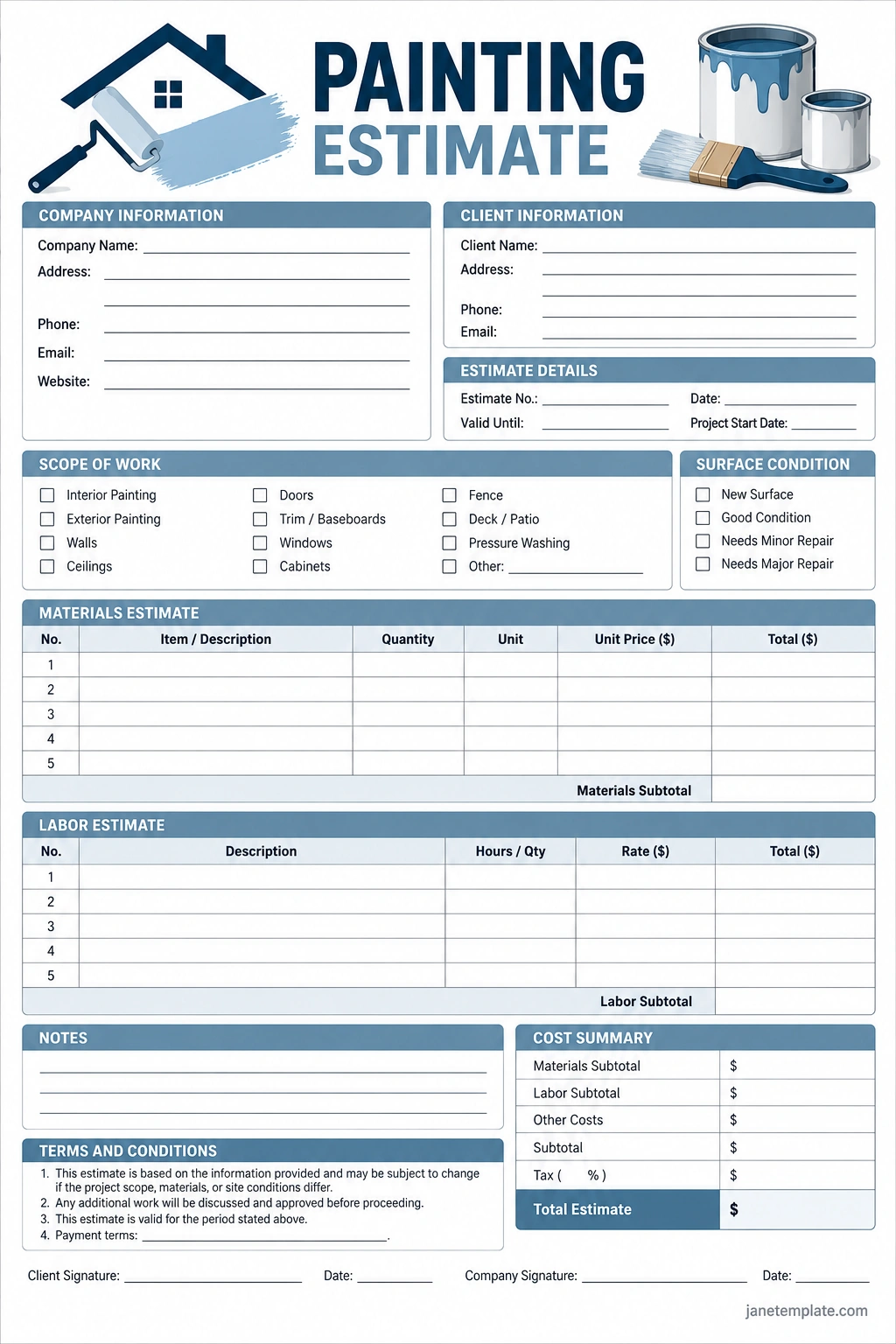
Print the form on standard US Letter paper and complete the relevant fields for each project. Review the scope, pricing, and terms with the client before using the estimate as the basis for an agreement.
What Should a Painting Estimate Include?
A useful painting estimate should explain the proposed work and show how the expected price is calculated. The following sections help make the document easier for both the painter and the client to understand.
1. Company and Client Information
Include the painting company’s name, address, phone number, email address, and website if applicable. Add the client’s name and contact details so the estimate can be linked to the correct project.
For larger jobs, include the property address and the name of the person authorized to approve the work.
2. Estimate Number and Dates
Assign an estimate number to help organize records and distinguish one proposal from another. Include the date the estimate was prepared, its validity period, and the proposed project start date when known.
Stating an expiration date helps clarify how long the quoted prices and assumptions are expected to remain valid.
3. Scope of Work
Describe exactly which areas or surfaces will be painted. The estimate might cover interior walls, ceilings, doors, trim, windows, cabinets, fences, decks, or exterior walls.
Specify whether the price includes surface cleaning, sanding, scraping, patching, priming, caulking, and the number of finish coats. Clear descriptions help clients compare estimates on an equivalent basis.
4. Surface Conditions
Record the condition of the surfaces before painting begins. New surfaces, minor repairs, peeling paint, water damage, and extensive preparation can require different amounts of labor and materials.
If a surface cannot be fully assessed during the initial visit, explain the limitation and how newly discovered damage may affect the final price.
5. Materials and Paint Costs
List the expected materials, quantities, unit prices, and totals. Depending on the project, materials may include paint, primer, brushes, rollers, masking tape, drop cloths, caulk, sandpaper, and patching compound.
When relevant, identify the paint brand, product line, finish, and color selection. These details help prevent confusion about the products included in the estimate.
6. Labor Costs
Estimate labor based on the expected work involved. Depending on the contractor’s pricing method, labor may be calculated by the hour, by the day, by the square foot, or as a fixed project price.
Account for preparation, application, cleanup, equipment setup, and other tasks required to complete the agreed scope. Avoid presenting labor as a single unexplained amount when a more detailed breakdown would help the client understand the proposal.
7. Additional Costs and Total Estimate
Include relevant additional expenses, such as equipment rental, access equipment, travel, disposal, or special surface treatments. Show the materials subtotal, labor subtotal, other costs, applicable taxes, and total estimated price.
Clearly state whether taxes and other charges are included. This makes it easier for clients to understand the expected amount they may need to pay.
How to Calculate a Painting Estimate
Preparing a painting estimate involves measuring the work area, assessing the surface, calculating materials, and estimating labor. A consistent process can improve accuracy and help reduce unexpected expenses.
Step 1: Measure the Painting Area
Measure the length and height of each wall or surface. For a rectangular wall, multiply its length by its height to calculate the approximate square footage. Add the areas of the surfaces included in the project.
Depending on the estimating method, you may subtract large doors and windows. However, small openings are sometimes left in the calculation because they still require cutting in and detailed work around their edges.
Step 2: Assess Preparation Requirements
Inspect the surfaces for peeling paint, cracks, stains, holes, moisture damage, or uneven areas. Determine which preparation tasks are needed before applying paint.
Preparation can significantly affect labor costs, so include it in the scope rather than assuming every surface is ready for painting.
Step 3: Estimate Paint and Supply Quantities
Use the product’s stated coverage rate to estimate the amount of paint required. Divide the total paintable area by the expected coverage per gallon, then adjust for the number of coats and the condition of the surface.
For example, a 1,000-square-foot area requiring two coats represents approximately 2,000 square feet of coverage before adjustments. If a paint covers 350 square feet per gallon under the expected conditions, the calculation is about 5.7 gallons, so you would plan for approximately six gallons before allowing for waste, touch-ups, or additional primer.
Actual coverage varies by product, surface texture, application method, and color change. Always check the manufacturer’s instructions and allow for practical job conditions.
Step 4: Calculate Labor
Estimate the time needed for preparation, priming, painting, and cleanup. Multiply the expected labor hours by the appropriate labor rate if you price by the hour. If you use a fixed-price or area-based method, make sure the price still accounts for the expected work and operating costs.
Step 5: Add Other Expenses and Review the Total
Add the estimated material costs, labor, equipment, transportation, disposal, and applicable taxes. Review the numbers to ensure each cost is included once and the total matches the individual line items.
Before sending the estimate, confirm that the scope, assumptions, exclusions, and proposed schedule are clearly explained.
Tips for Creating a Professional Painting Estimate
A professional painting estimate should be easy to read, specific about the work, and transparent about pricing. Use these tips to improve the quality of your proposals.
- Be specific about the scope: Identify the rooms, surfaces, and areas included in the price.
- List preparation tasks: Explain whether sanding, patching, scraping, priming, and caulking are included.
- Identify paint products: Specify the expected brand, finish, and number of coats when known.
- Break down major costs: Separate materials, labor, and other expenses to make pricing easier to understand.
- State exclusions: Clarify whether repairs, furniture moving, specialty coatings, or additional surfaces are excluded.
- Set a validity period: Explain how long the estimate remains valid.
- Document changes: Obtain client approval for changes that affect the scope or price.
- Keep a copy: Save the estimate with project notes, measurements, and client communications.
Painting Estimate vs. Painting Quote
The terms painting estimate and painting quote are sometimes used interchangeably, but they can communicate different expectations depending on the contractor and jurisdiction.
Painting Estimate
A painting estimate usually provides an approximate cost based on the information available at the time. The amount may change if the scope, surface conditions, or material requirements change.
Painting Quote
A painting quote generally presents a specific price for a defined scope of work. Depending on the terms and applicable law, it may be intended as a more definite offer than an estimate.
Contractors should explain whether their document is an estimate or a fixed-price quote. Clients should review the stated terms rather than relying on the document’s title alone.
Frequently Asked Questions About Painting Estimates
What is a painting estimate?
A painting estimate is a preliminary calculation of the expected cost of a painting project. It typically includes the scope of work, materials, labor, additional expenses, and estimated total.
How do I calculate a painting estimate?
Measure the area to be painted, assess surface preparation needs, estimate paint and supply quantities, calculate labor, and add other project costs and applicable taxes. Review the scope and assumptions before presenting the estimate.
Should a painting estimate include labor and materials separately?
Separating labor and materials is generally helpful because it makes the pricing easier to understand. It also allows the client to see the main cost components and compare proposals more accurately.
How long should a painting estimate be valid?
The validity period depends on the contractor’s policies, material prices, and project conditions. State a clear expiration date so the client knows how long the estimated pricing is expected to remain available.
Is a painting estimate the same as a painting quote?
Not always. An estimate commonly represents an approximate cost, while a quote may offer a more definite price for a specified scope. The document’s actual terms and applicable law determine its effect.
Can I use a painting estimate template for commercial projects?
Yes. A painting estimate template can be adapted for commercial projects, but larger jobs may require additional details about site access, scheduling, safety requirements, insurance, materials specifications, and payment terms.
What should I do if the project cost changes?
Explain the reason for the change, update the scope and pricing, and obtain the client’s approval before proceeding with additional work. Keep a written record of the revised estimate or change order.
Is a painting estimate legally binding?
The legal effect depends on the document’s wording, the parties’ agreement, the circumstances, and applicable law. A preliminary estimate may not have the same effect as an accepted quote or signed contract. Seek qualified legal advice when necessary.
Conclusion
A painting estimate helps painters communicate expected project costs and gives clients a clearer understanding of the proposed work. By documenting the scope, surface conditions, materials, labor, and additional expenses, you can prepare a more transparent and useful estimate.
Using a printable painting estimate template makes it easier to organize project information and maintain consistent records. Customize the form for each job, explain assumptions and exclusions, and review any changes with the client before work begins.
Whether you are estimating an interior room, an exterior home, cabinets, or a commercial property, a clear painting estimate is a valuable starting point for setting expectations and planning the project.
Download: Painting Estimate Template
