A packing list is one of the easiest ways to prepare for a trip without forgetting essential items or bringing too much luggage. Whether you are planning a weekend getaway, a family vacation, a business trip, or an international adventure, a well-organized checklist helps you pack with confidence.
Instead of deciding what to bring at the last minute, you can use a packing list to organize clothing, toiletries, travel documents, electronics, and other necessities. It also helps you identify items you can leave at home, saving valuable space in your suitcase.
The best packing checklist depends on your destination, travel duration, weather, planned activities, and personal needs. This guide explains what to pack, how to customize your list, and how to use a printable packing list template to make travel preparation easier.
What Is a Packing List?
A packing list is a checklist of items you plan to bring on a trip. It helps travelers organize their belongings, track what has been packed, and prepare for different travel situations.
A typical travel packing list includes clothing, footwear, toiletries, travel documents, electronics, medications, and personal accessories. However, the exact items depend on whether you are traveling for business, taking a beach vacation, going camping, or visiting another country.
A printable packing checklist provides a convenient way to check off each item before departure. You can also use a digital list on your phone or create separate checklists for different types of trips.
Why Should You Use a Travel Packing List?
Preparing for a trip can become stressful when you have many things to remember. A packing checklist gives you a simple system for organizing everything before you leave.
1. Avoid Forgetting Essential Items
Travel documents, prescription medications, chargers, and other necessities are easy to overlook when packing in a hurry. A checklist helps you review these items before leaving home.
Keep important items in a dedicated section so you can verify them separately from clothing and accessories.
2. Save Time and Reduce Stress
A prepared packing list removes much of the guesswork from getting ready. Instead of repeatedly checking drawers or wondering what you might have forgotten, you can follow a clear list and mark each item as you pack it.
You can also reuse your checklist for future trips and make small adjustments when your destination or travel plans change.
3. Prevent Overpacking
Bringing too many clothes and unnecessary accessories can make luggage heavier and harder to manage. A packing list encourages you to focus on items you will actually use.
Plan outfits around your itinerary and choose clothing that can be combined in different ways. Before packing an item, consider whether it serves a practical purpose or is simply taking up space.
4. Prepare for Your Destination
Different destinations require different supplies. A tropical vacation may call for sunscreen and swimwear, while a winter trip requires warm layers, insulated footwear, and suitable outerwear.
Review the weather forecast and planned activities before finalizing your checklist. This helps you bring what you need without packing for situations that are unlikely to occur.
Essential Items to Include in a Packing List
Start with the essentials that most travelers need. Then customize the checklist according to your trip length, destination, and activities.
1. Travel Documents and Important Items
Keep essential documents accessible and protected throughout your journey. Requirements vary by destination, so verify the documents needed for your specific trip.
- Passport or government-issued identification.
- Visa or entry documents, when required.
- Flight tickets and boarding passes.
- Hotel and transportation reservations.
- Travel insurance information.
- Emergency contact details.
- Wallet and payment cards.
- Copies of important documents, stored securely.
For international travel, check passport validity and entry requirements well before departure. Keep digital copies of important documents in a secure location, separate from the originals.
2. Clothing and Accessories
Choose clothing based on the weather, length of stay, and activities on your itinerary. Versatile pieces can reduce the number of items you need to pack.
- T-shirts and casual tops.
- Long-sleeved shirts or lightweight layers.
- Trousers, jeans, shorts, or skirts.
- Underwear and socks.
- Sleepwear.
- Jacket, sweater, or hoodie.
- Comfortable walking shoes.
- Sandals or activity-specific footwear.
- Swimwear, if needed.
- Hat, cap, or other weather protection.
Plan outfits in advance to avoid bringing unnecessary clothing. If your accommodation offers laundry facilities, you may be able to pack fewer items for a longer trip.
3. Toiletries and Personal Care
Personal care products help you maintain your routine while traveling. Pack travel-sized containers when appropriate and follow the liquid restrictions that apply to your transportation method.
- Toothbrush and toothpaste.
- Shampoo and conditioner.
- Body wash or soap.
- Deodorant.
- Skincare products and moisturizer.
- Sunscreen.
- Hairbrush or comb.
- Razor and shaving supplies.
- Makeup or personal grooming products.
- Contact lenses and solution, if needed.
Place liquids in a leak-resistant toiletry bag. Check airline rules before packing liquids in carry-on luggage, as requirements can vary by airport and route.
4. Electronics and Travel Accessories
Electronic devices can help you navigate, communicate, work, and record memories during your trip. Pack only the devices you expect to use.
- Mobile phone and charger.
- Laptop or tablet, if needed.
- Power bank that complies with airline rules.
- Headphones or earphones.
- Camera and accessories.
- Universal travel adapter, when required.
- Charging cables.
- Offline maps or downloaded travel documents.
Check the electrical plug type and voltage requirements at your destination. For air travel, verify current airline restrictions for power banks and spare batteries before departure.
5. Health and Medication Essentials
Your health-related packing list should reflect your individual needs and destination. Keep necessary medications accessible and pack enough for the planned trip, allowing for reasonable delays where appropriate.
- Prescription medications.
- Basic first-aid supplies.
- Common pain relief medication, if suitable for you.
- Allergy medication, when needed.
- Motion sickness remedies, if needed.
- Hand sanitizer.
- Insect repellent, when appropriate.
- Personal medical supplies.
Check destination rules for prescription medicines, particularly when traveling internationally. Keep medication in its original packaging when practical, and carry relevant prescriptions or supporting documents if required.
How to Customize a Packing List for Different Trips
A general travel checklist is a useful starting point, but customizing it makes the list more practical. Consider the type of trip, climate, duration, and planned activities.
Weekend Getaway Packing List
A short trip usually requires fewer clothes and accessories. Focus on versatile items that can be worn more than once when appropriate.
- Two or three coordinated outfits, depending on the itinerary.
- Sleepwear and underwear.
- Comfortable shoes.
- Basic toiletries.
- Phone charger and identification.
- Any required medications.
Check the forecast before departure and avoid packing bulky items unless they are necessary for your plans.
International Travel Packing List
International trips often require additional preparation because of entry rules, longer travel times, and differences in climate or electrical systems.
- Valid passport and any required visa.
- Travel insurance documents.
- Flight and accommodation details.
- Suitable payment methods.
- Travel adapter compatible with the destination.
- Essential medication and supporting documentation.
- Weather-appropriate clothing.
Review customs rules, baggage allowances, and entry requirements before packing. Do not assume that documents or medications permitted at home are automatically permitted in another country.
Beach Vacation Packing List
A beach vacation calls for lightweight clothing and sun protection. Your exact needs depend on the activities you plan to enjoy.
- Swimwear and a cover-up.
- Lightweight clothing.
- Sandals or water-friendly footwear.
- Sunscreen and sunglasses.
- Hat or cap.
- Beach bag and reusable water bottle.
- Quick-drying towel, if not provided.
Consider reef-friendly sunscreen where appropriate and follow local guidance for protecting marine environments.
Business Trip Packing List
Business travel requires a balance of professional clothing and practical work essentials. Check your meeting schedule before deciding what to bring.
- Work outfits and suitable footwear.
- Laptop and charger.
- Phone and charging cables.
- Meeting documents or presentation materials.
- Notebook and pens.
- Business cards, if used.
- Travel reservations and identification.
Keep important work files backed up and check whether you need specific adapters or equipment for presentations.
How to Use a Printable Packing List Template
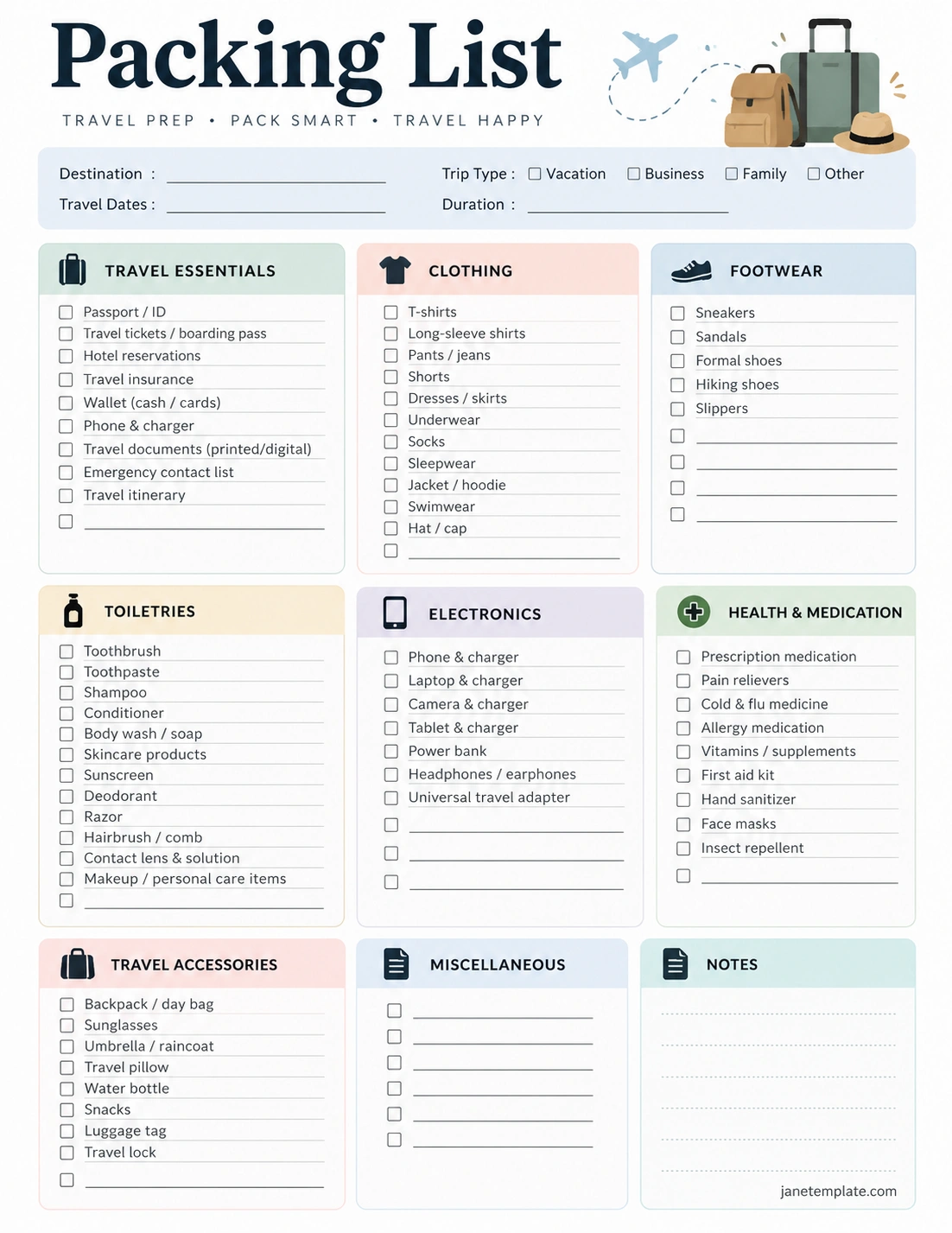
A printable packing list template makes preparation easier by grouping items into clear categories. Instead of writing a new list for every trip, you can use a reusable checklist and adjust it as needed.
Step 1: Enter Your Trip Details
Write down your destination, travel dates, trip duration, and travel type. These details help you determine which items are essential and which can be left at home.
Step 2: Review Each Category
Go through the sections for travel documents, clothing, footwear, toiletries, electronics, health items, and accessories. Remove anything irrelevant and add items specific to your plans.
Step 3: Check Items While Packing
Mark each item only after placing it in your luggage or confirming that it is ready to take. This prevents confusion between items you intend to pack and items already packed.
Step 4: Complete a Final Review
Before leaving, check your essential documents, medications, travel arrangements, and any items you need to keep in your carry-on bag. Review the list once more to catch anything overlooked.
You can also save a digital copy of your checklist for future trips. Update it after each journey based on what you used, what you missed, and what you could have left behind.
Practical Tips for Packing Efficiently
Using a checklist is only one part of efficient packing. These simple strategies can help you make better use of your luggage space.
- Check the weather: Review the forecast close to departure and adjust your clothing accordingly.
- Plan outfits: Choose items that coordinate and can be worn in different combinations.
- Use packing cubes: Separate clothing, accessories, and other belongings into manageable groups.
- Keep essentials accessible: Place documents, medication, chargers, and other important items where you can reach them easily.
- Follow baggage rules: Check your airline’s size, weight, liquid, and battery restrictions.
- Leave some spare space: Avoid filling every corner of your suitcase if you expect to bring souvenirs home.
- Review before closing your luggage: Compare packed items against your checklist.
Remember that efficient packing is about bringing the right items, not the largest number of items. A thoughtful checklist helps you prepare without making your luggage unnecessarily heavy.
Frequently Asked Questions About Packing Lists
What should a basic packing list include?
A basic packing list should include travel documents, clothing, footwear, toiletries, electronics, necessary medications, and personal accessories. Add destination-specific items based on the weather, activities, and length of your trip.
How do I make a packing list for a trip?
Start by writing down your destination, travel dates, and planned activities. Divide your checklist into categories, review the weather, and add essential items. Check off each item as you pack and complete a final review before departure.
How can I avoid overpacking?
Plan outfits in advance, choose versatile clothing, and pack only items that serve a clear purpose. Consider your accommodation facilities and access to laundry. A packing checklist also helps you identify unnecessary duplicates.
Is a printable packing list better than a digital checklist?
Both options are useful. A printable packing list is easy to review on paper, while a digital checklist can be updated and reused on your phone. Choose the format that best fits your planning habits.
What should I pack in my carry-on bag?
Consider keeping essential travel documents, prescribed medication, valuables, a phone charger, necessary personal items, and a change of clothes in your carry-on. Follow your airline’s current rules for liquids, batteries, and restricted items.
How early should I start packing for a vacation?
Start planning several days before departure, or earlier for international trips and journeys requiring special equipment. You can prepare nonessential items in advance and pack daily necessities closer to departure.
Should I use a different packing list for every destination?
A reusable master packing list works well for most trips. Customize it for each destination by adjusting clothing, footwear, health supplies, travel documents, and activity-specific equipment.
Conclusion
A packing list is a simple tool that can make travel preparation more organized and less stressful. By separating essentials into clear categories, you can avoid forgetting important items, reduce overpacking, and spend less time preparing for departure.
Start with a reusable checklist, customize it for your destination, and review each category before packing. Check travel requirements, prepare important documents, and keep essential items accessible throughout your journey.
Whether you are planning a weekend getaway, a family vacation, or an international adventure, a well-organized packing list helps you travel with greater confidence and enjoy a smoother trip.
Download: Packing List Template
