A mortgage letter of explanation, often called a mortgage LOE, is a written statement that helps explain information in a mortgage application that may require additional context. Lenders may request an explanation when they notice something that does not appear straightforward in a borrower’s financial records.
A mortgage application contains many details, including employment history, income, credit history, debts, deposits, and other financial information. When a lender sees an unusual item or a situation that needs clarification, a letter of explanation gives the borrower an opportunity to provide accurate background information.
Common situations that may lead to a request for a mortgage letter of explanation include gaps in employment, late payments, large deposits, recent credit inquiries, changes in employment, or other circumstances that need clarification.
What Is a Mortgage Letter of Explanation?
A mortgage letter of explanation is a short written statement prepared by a borrower to clarify a specific issue in a mortgage application. It provides context for information that a lender may want to understand before completing the loan review process.
The purpose is not to hide or change information. Instead, the letter should explain the circumstances accurately and provide any relevant details or supporting documentation requested by the lender.
A lender may ask for an LOE when documentation alone does not fully explain a particular situation. The exact requirements can vary by lender and loan program.
Why Might a Mortgage Lender Request an LOE?
Mortgage underwriting involves reviewing financial information and supporting documentation. If an item appears unusual, inconsistent, or incomplete, the lender may request additional information.
A mortgage letter of explanation may be requested for reasons such as:
- A gap in employment history
- A recent late payment
- A large deposit into a bank account
- Recent credit inquiries
- A change in employment
- An unusual withdrawal or financial transaction
- Differences between documents
- Address history questions
- Changes in income
- Other circumstances identified during underwriting
Not every lender will require an explanation for the same situation. If an LOE is requested, follow the lender’s specific instructions about what information and documentation should be provided.
What Should a Mortgage Letter of Explanation Include?
A good mortgage LOE should be clear, factual, and focused on the specific issue the lender asked about. Avoid adding unnecessary information that does not relate to the request.
1. Date
Begin with the date the letter is being prepared. This helps identify when the explanation was provided during the mortgage application process.
2. Borrower’s Information
Include identifying information requested by the lender, such as the borrower’s name and, when appropriate, the property address or loan reference number.
Do not include sensitive information unless the lender specifically requests it and provides a secure method for submission.
3. Subject or Purpose
Clearly identify what the letter is explaining. For example, you might use a subject such as Explanation of Employment Gap or Explanation of Large Deposit.
4. Clear Explanation
Explain what happened in straightforward language. State the relevant facts without exaggerating, minimizing, or speculating about information you cannot verify.
5. Supporting Details
Include relevant dates, amounts, circumstances, or other details that help the lender understand the situation.
6. Supporting Documentation
If the lender requests documentation, identify the documents that support your explanation. Depending on the situation, this may include employment records, bank statements, payment records, or other documents.
7. Signature
Sign and date the letter if required by the lender. Some lenders may have specific electronic signature or document submission requirements.
How to Write a Mortgage Letter of Explanation
Writing an LOE does not need to be complicated. The most important qualities are accuracy, clarity, and relevance.
Step 1: Identify the Exact Issue
Read the lender’s request carefully. Determine exactly what information needs clarification before you begin writing.
If the lender asks about a specific deposit, for example, focus your explanation on that deposit rather than providing a general description of your finances.
Step 2: Gather the Relevant Facts
Review your records and gather the information needed to explain the situation accurately. Check dates, amounts, names, and other details before writing the letter.
Step 3: Explain What Happened
Write a concise explanation using plain language. Explain the circumstances that caused the item the lender identified.
Step 4: Mention Supporting Documents
If documents support the explanation, identify them clearly. Follow the lender’s instructions regarding which documents should be submitted.
Step 5: Review the Letter
Before submitting the LOE, check that the information is accurate and consistent with your mortgage application and supporting documents.
Step 6: Submit It as Requested
Use the lender’s preferred submission method. If the lender provides a secure portal or specific instructions, follow those requirements rather than sending sensitive financial information through an unsecured channel.
Mortgage Letter of Explanation for an Employment Gap
An employment gap can sometimes require additional clarification during mortgage underwriting. The purpose of the explanation is to provide the lender with a factual timeline and relevant circumstances.
An employment gap letter may explain:
- The dates of the employment gap
- The reason for the gap, if relevant
- When employment resumed
- The current employment situation
- Relevant supporting documentation, if requested
Keep the explanation factual and avoid including unnecessary personal details. The lender can determine what additional documentation is needed based on its underwriting requirements.
Mortgage Letter of Explanation for a Late Payment
A lender may ask for an explanation of a late payment appearing in a credit or payment history. The letter should identify the payment and explain the circumstances accurately.
For example, the explanation might state the type of account, the approximate date of the late payment, what caused the delay, and when the account was brought current, if applicable.
Do not claim that a payment was made on time if the records show otherwise. The purpose of an LOE is to clarify the circumstances rather than alter the underlying record.
Mortgage Letter of Explanation for a Large Deposit
Large or unusual deposits may require documentation or an explanation because the lender may need to understand the source of funds being used in the mortgage transaction.
An explanation should identify the source of the deposit accurately and provide supporting documentation when requested.
Depending on the circumstances, the lender may have specific requirements for documenting the source of funds. Follow those requirements carefully rather than relying solely on the letter.
Mortgage Letter of Explanation for Credit Inquiries
Recent credit inquiries may sometimes prompt questions during the mortgage application process. If the lender asks about an inquiry, explain why the credit was checked and whether it resulted in a new account or financial obligation.
Keep the explanation specific to the inquiry identified by the lender. If a new account was opened, provide any additional information or documentation the lender requests.
Tips for Writing an Effective Mortgage LOE
A strong mortgage letter of explanation is generally simple and focused. These tips can help you prepare a clear response.
- Be truthful: Make sure every statement accurately reflects your circumstances.
- Be specific: Address the exact issue mentioned by the lender.
- Keep it concise: Avoid lengthy explanations that do not add useful information.
- Use plain language: Write clearly and professionally.
- Check dates and amounts: Make sure they match your supporting records.
- Provide documentation when requested: A letter may not replace documents required by the lender.
- Avoid speculation: State facts you can support rather than guessing.
- Follow lender instructions: Requirements can differ between lenders and loan programs.
- Review before submitting: Check for inconsistencies, missing information, and errors.
Common Mistakes to Avoid in a Mortgage LOE
Because an LOE becomes part of the mortgage documentation process, it is important to prepare it carefully.
Providing Too Much Unnecessary Information
An explanation should focus on the issue being addressed. Adding unrelated personal or financial information can make the letter less clear.
Being Too Vague
A statement such as “There was a problem with my finances” may not provide enough context. Explain the relevant circumstances with specific facts when appropriate.
Contradicting Supporting Documents
Review the information in your letter against your statements, employment records, and other documents. Differences can create additional questions.
Changing the Facts
An LOE should clarify information rather than present an inaccurate version of events. Use the actual dates, amounts, and circumstances.
Ignoring the Lender’s Instructions
Different mortgage lenders can have different documentation requirements. If the lender asks for a particular explanation or supporting document, make sure your response addresses the request directly.
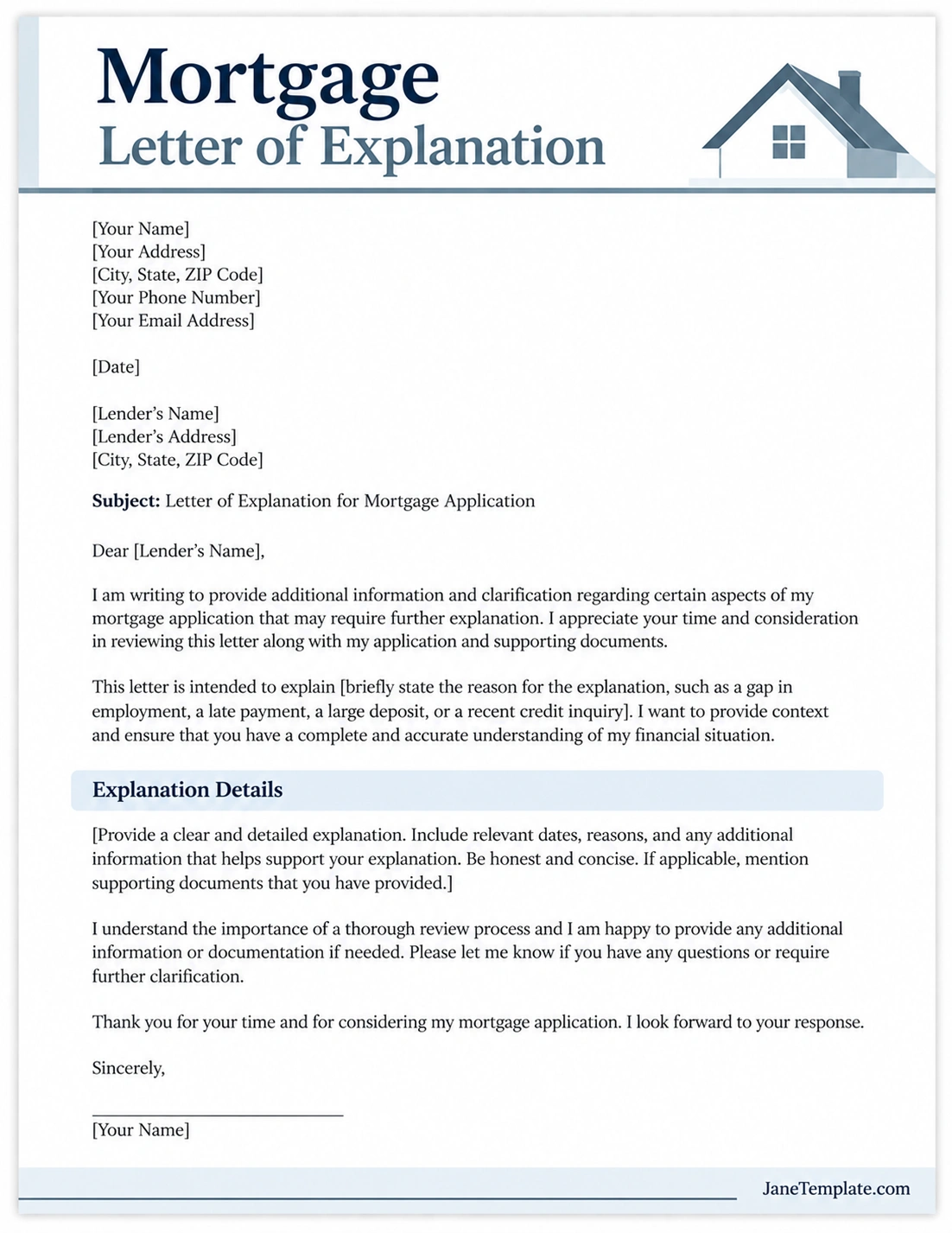
Mortgage Letter of Explanation Template Structure
A simple mortgage LOE can follow a straightforward structure:
- Date
- Borrower’s name
- Property or loan reference information, if requested
- Subject
- Explanation of the specific issue
- Relevant dates, amounts, and circumstances
- Supporting documentation information
- Borrower’s signature and contact information, if required
This structure can be adapted to different situations, including employment gaps, late payments, large deposits, credit inquiries, and other underwriting questions.
Frequently Asked Questions About Mortgage Letters of Explanation
What is a mortgage letter of explanation?
A mortgage letter of explanation is a written statement from a borrower that provides additional context about information in a mortgage application. It may be requested when a lender needs clarification about a particular financial or personal circumstance.
Why would a lender ask for a letter of explanation?
A lender may request an LOE when an item in the mortgage file requires additional context. Examples can include employment gaps, late payments, large deposits, recent credit inquiries, or inconsistencies between documents.
How long should a mortgage letter of explanation be?
There is no universal required length. A good LOE should be long enough to answer the lender’s question clearly but concise enough to avoid unnecessary information.
What should I include in a mortgage LOE?
Include the specific issue being explained, relevant facts, dates or amounts when appropriate, and information about supporting documentation if requested. Follow the lender’s instructions for required information.
Can a mortgage letter of explanation help with a loan application?
An LOE gives the lender additional context about an issue in the mortgage file. Whether the explanation satisfies underwriting requirements depends on the lender, loan program, documentation, and circumstances of the individual application.
Do I need supporting documents with a mortgage LOE?
Sometimes. The documents required depend on the issue and the lender’s requirements. If supporting documentation is requested, submit the appropriate records through the lender’s specified process.
Should a mortgage LOE include personal details?
Include relevant details needed to explain the issue, but avoid unnecessary personal information. Focus on facts that directly address the lender’s request.
Can I use a mortgage letter of explanation template?
Yes. A template can provide a useful structure for organizing your explanation. However, the content should be customized to accurately describe your own circumstances and should follow the lender’s specific requirements.
Final Thoughts
A mortgage letter of explanation gives borrowers a structured way to clarify information that may require additional context during the mortgage application process. Whether the issue involves an employment gap, late payment, large deposit, credit inquiry, or another item, the most useful approach is to provide accurate, concise, and relevant information.
Before submitting an LOE, review the lender’s request carefully, verify your facts, and include supporting documentation when required. Because mortgage requirements vary by lender and loan program, use the lender’s instructions as the primary guide for preparing and submitting your letter.
Download: Mortgage Letter of Explanation Template
