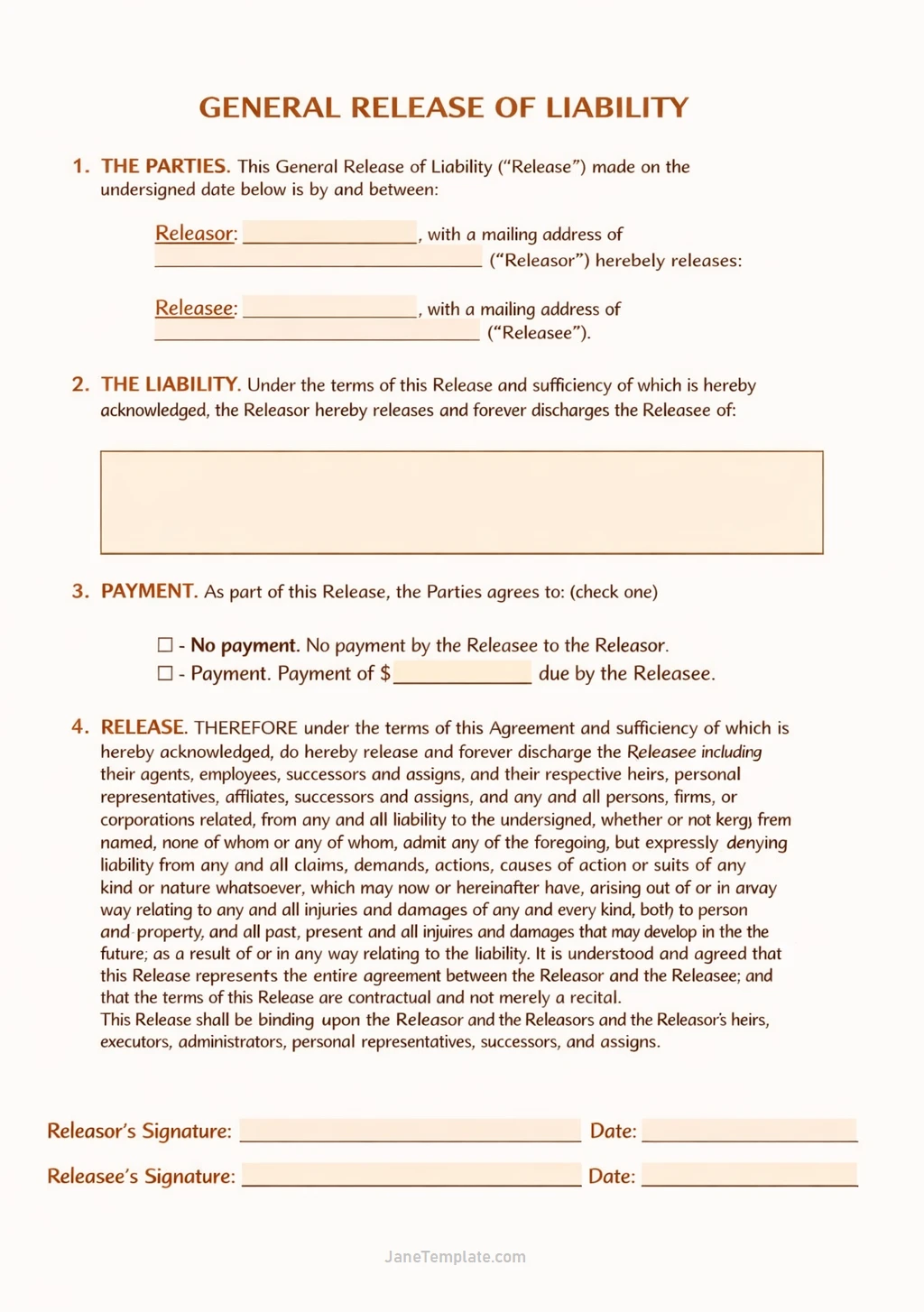
Whether you’re planning a sports event, hosting a workshop, or offering a recreational activity, it’s essential to protect yourself from potential legal liability. One way to do this is by having participants or attendees sign a general release of liability form.
This legal document serves as a contract where the participant acknowledges and assumes certain risks, releasing the host from legal responsibility for any injuries, damages, or losses that may occur during the activity or service. Let’s delve deeper into what a general release of liability form entails and why it’s crucial for both parties involved.
What is a Release of Liability Form?
A release of liability form, also known as a waiver or hold harmless agreement, is a legal document that aims to protect one party from being sued by another party in case of injuries, damages, or losses. By signing the form, the participant agrees to waive their right to take legal action against the host in the event of an accident or mishap. This document is commonly used in various settings, such as sports events, fitness classes, adventure activities, and volunteer work.
In essence, a release of liability form is a preventive measure that helps mitigate potential legal risks for the host or organizer. It outlines the inherent risks associated with the activity or service and informs the participant that they are willingly assuming these risks. By signing the form, the participant releases the host from any liability resulting from negligence, unforeseen circumstances, or accidents.
Types of Liability Release Forms
There are several types of liability release forms tailored to specific activities or services. Some common forms include:
- Sports Liability Waiver: Used for sporting events, activities, or facilities where there is a risk of injury.
- Medical Waiver: Signed by individuals participating in medical treatments, experiments, or procedures.
- Event Liability Waiver: Required for events, festivals, and gatherings to protect organizers from potential lawsuits.
- Volunteer Waiver: Signed by volunteers before engaging in charitable or community service activities.
Each type of liability release form serves a specific purpose and helps outline the risks involved in the particular activity or service. It’s essential to use the appropriate form that best suits the nature of the event or service being provided.
When to Use a Release Form?
A release of liability form should be used in any situation where there is a possibility of injury, damage, or loss during an activity or service. Here are some instances where a release form is necessary:
- Recreational Activities: Adventure sports, fitness classes, and recreational outings where accidents can occur.
- Workshops and Seminars: Training sessions, seminars, or workshops where participants may be exposed to physical or mental strain.
- Volunteer Work: Community service projects, charity events, or volunteer programs involving potential risks.
- Events and Festivals: Concerts, fairs, and festivals where large crowds and activities pose safety hazards.
By implementing a release of liability form in these situations, hosts can protect themselves from legal repercussions and ensure that participants are aware of the risks involved before engaging in the activity or service.
Components of a General Release of Liability Form
A general release of liability form typically includes the following components:
- Participant Information: Name, contact details, and signature of the participant.
- Description of Activity: Details of the activity or service being provided.
- Risks and Assumptions: Explanation of inherent risks involved and participant’s acknowledgment of assuming these risks.
- Release of Liability: Participant’s agreement to waive their right to legal action against the host.
- Indemnification Clause: Provision stating that the participant will indemnify the host in case of any claims arising from their participation.
- Date and Signature: Date of signing and signature of the participant to validate the agreement.
These components are essential for creating a legally binding document that clearly outlines the responsibilities and liabilities of both parties involved. It’s crucial to ensure that the form is detailed and comprehensive to provide adequate protection for the host.
Quick Tips and Things to Avoid
When drafting a general release of liability form, consider the following tips to maximize its effectiveness:
- Be Specific: Clearly outline the risks involved and the responsibilities of both parties.
- Use Simple Language: Avoid legal jargon and use plain language that participants can easily understand.
- Seek Legal Advice: Consult with a legal professional to ensure that the form complies with state laws and regulations.
- Keep Records: Maintain records of signed release forms for future reference in case of disputes or claims.
- Avoid Ambiguity: Ensure that the terms and conditions of the form are unambiguous and leave no room for misinterpretation.
- Update Regularly: Review and update the release form periodically to reflect any changes in the activity or service provided.
By following these tips and avoiding common pitfalls, hosts can create a robust release of liability form that protects their interests and minimizes legal risks.
General Release of Liability Form Template – DOWNLOAD
