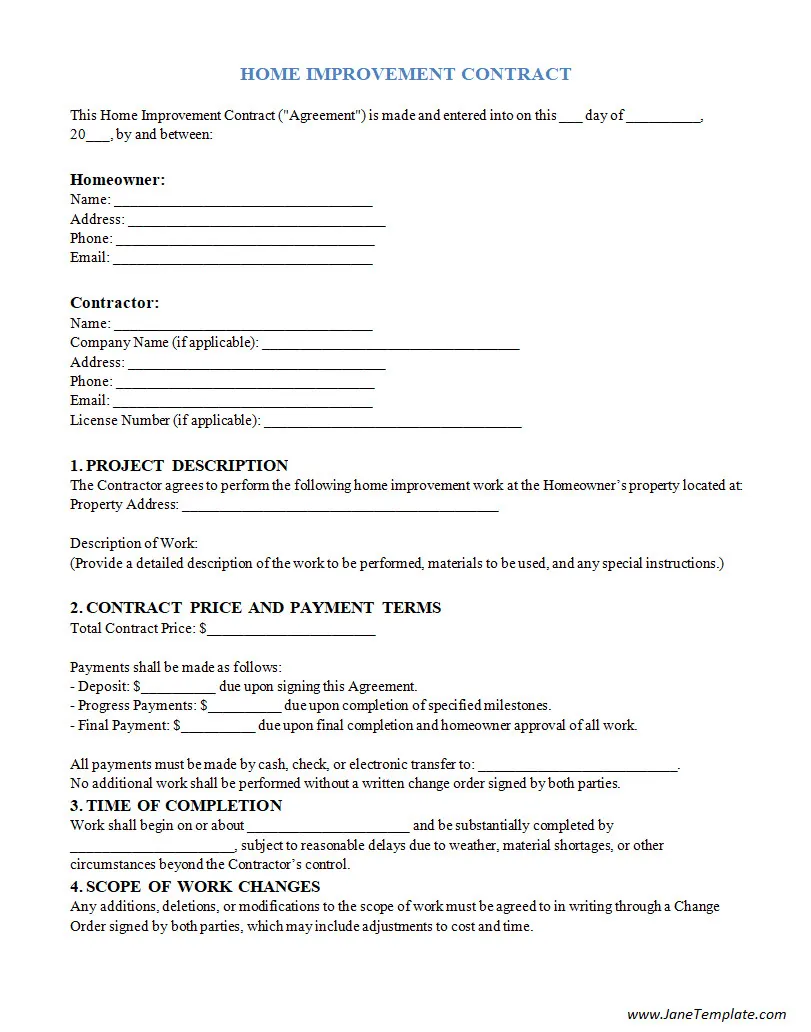
When embarking on a home renovation project, having a clear and detailed contract in place is vital. A home improvement contract serves as a legally binding agreement that protects both the homeowner and the contractor by outlining the specifics of the project.
This document establishes the scope of work, cost, timeline, and responsibilities of each party involved, helping to prevent misunderstandings and potential disputes. A well-defined contract is crucial for the success of the project and provides legal recourse in case any issues arise.
What is a Home Improvement Contract?
A home improvement contract is a written agreement between the homeowner and the contractor hired to complete a renovation project. This document serves as a roadmap for the work to be done, outlining the details of the project to ensure that both parties are on the same page.
By clearly defining the scope of work, cost, timeline, and responsibilities, a home improvement contract helps to set expectations and prevent potential conflicts.
The Purpose of a Home Improvement Contract
A home improvement contract is more than just a piece of paper; it is a crucial tool that protects both the homeowner and the contractor. This legal document outlines the details of the project, including the scope of work, cost, timeline, and responsibilities of each party. By clearly defining these aspects, a contract helps to prevent misunderstandings and disputes, ensuring that the project runs smoothly from start to finish.
Legal Protection
One of the primary reasons for having a home improvement contract is to provide legal protection for both parties involved. In the event of a dispute or disagreement, the contract serves as a reference point for what was agreed upon. It outlines the obligations of both the homeowner and the contractor, establishing a clear framework for the project. This legal document can be used as evidence in case of any legal proceedings that may arise during or after the renovation project.
Setting Expectations
Another important aspect of a home improvement contract is that it helps to set expectations for both the homeowner and the contractor. By clearly outlining the scope of work, cost, timeline, and responsibilities, the contract leaves no room for ambiguity. This ensures that both parties have a shared understanding of what is expected from each other throughout the project. Setting clear expectations from the beginning can help prevent misunderstandings and conflicts later on.
Building Trust
Having a home improvement contract in place also helps to build trust between the homeowner and the contractor. By putting everything in writing, both parties can feel confident that their interests are protected. A well-defined contract shows that the contractor is professional and committed to delivering the work as agreed upon. It gives the homeowner peace of mind knowing that the project is being carried out according to the terms outlined in the contract.
Key Elements of a Home Improvement Contract
A home improvement contract should include several key elements to ensure that all aspects of the project are covered. Some essential components to include in the contract are:
Scope of Work
The scope of work section is one of the most critical parts of a home improvement contract. This section should outline in detail the specific tasks to be completed during the renovation project. It should clearly define what work will be done, what materials will be used, and any specific requirements or expectations. The scope of work provides a roadmap for the project, ensuring that both the homeowner and the contractor agree on what will be accomplished.
Cost
The cost section of the contract specifies the total cost of the project, including all labor, materials, and any additional fees. It should outline the payment schedule, detailing when payments are due and how they will be made. This section helps to prevent any misunderstandings regarding the financial aspect of the project and ensures that both parties are clear on the cost involved. Having a clear understanding of the total cost upfront can help prevent disputes later on.
Timeline
The timeline section of the contract establishes the expected start and completion dates of the renovation project. It should outline the milestones or deadlines for different stages of the work to ensure that the project stays on track. Setting a timeline helps both parties to manage their expectations and plan accordingly. It also provides a clear framework for monitoring progress and ensuring that the project is completed on time.
Responsibilities
The responsibilities section of the contract outlines the duties and obligations of both the homeowner and the contractor. It should specify who is responsible for obtaining necessary permits, ordering materials, and coordinating with subcontractors. By clearly defining each party’s responsibilities, the contract helps to avoid confusion and ensure that everyone knows what is expected of them. This section helps to distribute tasks fairly and prevents any misunderstandings regarding who is responsible for what.
Materials and Permits
The materials and permits section of the contract lists the specific materials to be used in the renovation project and who is responsible for providing them. It should also outline the process for obtaining any necessary permits or approvals for the work. This section ensures that both parties are aware of the materials being used and that all necessary permits are in place before work begins. By including this information in the contract, you can avoid delays or issues related to materials or permits during the project.
Change Orders
The change orders section of the contract addresses how any changes or additions to the original scope of work will be handled. It should outline the process for requesting changes, including how they will be priced and approved. Change orders are common during renovation projects, so having a clear protocol in place helps to streamline the process and avoid any confusion or disputes. By including this section in the contract, both parties know how to address changes to the project scope without causing delays or disagreements.
Dispute Resolution
The dispute resolution section of the contract provides a framework for resolving any conflicts that may arise during the renovation project. It should outline the steps to be taken if either party has a disagreement or issue that cannot be resolved through normal channels. Having a clear process for resolving disputes helps to prevent conflicts from escalating and provides a path for finding a resolution. Including this section in the contract shows that both parties are committed to working together to address any issues that may arise.
How to Create a Home Improvement Contract
Creating a home improvement contract may seem daunting, but it doesn’t have to be complicated. Here are some steps to follow when drafting a contract:
1. Define the Scope of Work
Start by outlining the scope of work in detail, including specific tasks to be completed, materials to be used, and any special requirements. Be as specific as possible to ensure that both parties are clear on the expectations for the project.
2. Specify the Cost
Specify the total cost of the project, including labor, materials, and any additional fees. Outline the payment schedule, including when payments are due and how they will be made. This helps to prevent any misunderstandings regarding the financial aspect of the project.
3. Set a Timeline
Establish the expected start and completion dates for the renovation project. Outline any milestones or deadlines for different stages of the work to help both parties manage their expectations and plan accordingly.
4. Define Responsibilities
Clearly outline the duties and obligations of both the homeowner and the contractor. Specify who is responsible for obtaining permits, ordering materials, and coordinating with subcontractors. This helps to ensure that everyone knows what is expected of them.
5. Include Materials and Permits
List the specific materials to be used in the project and who is responsible for providing them. Outline the process for obtaining any necessary permits or approvals for the work. This helps to avoid delays or issues related to materials or permits.
6. Address Change Orders
Outline how any changes or additions to the original scope of work will be handled. Define the process for requesting changes, including how they will be priced and approved. This helps to streamline the process and avoid any confusion or disputes.
7. Establish Dispute Resolution
Outline the steps to be taken if either party has a disagreement or issue that cannot be resolved through normal channels. Establish a clear process for resolving disputes to prevent conflicts from escalating.
Tips for Successful Home Improvement Projects
In addition to having a solid home improvement contract in place, there are some tips to ensure the success of your renovation project:
1. Choose a Reputable Contractor
Selecting a reputable contractor with a proven track record of quality work is essential for a successful renovation project. Do your research, ask for recommendations, and check references before hiring a contractor.
2. Communicate Openly and Regularly
Maintaining open and regular communication with your contractor throughout the project is key to addressing any concerns or changes promptly. Stay informed about the progress and be proactive in discussing any issues that may arise.
3. Set a Realistic Budget
Establishing a realistic budget for your renovation project and sticking to it can help prevent unexpected costs and financial stress. Work with your contractor to develop a budget that aligns with your goals and priorities.
4. Be Prepared for Disruptions
Renovation projects can
4. Be Prepared for Disruptions
Renovation projects can be disruptive to your daily routine, so it’s important to be prepared for some level of inconvenience. Make alternative arrangements for living spaces, if necessary, and plan for any disruptions to your normal activities.
5. Inspect the Work
Regularly inspect the progress of the work as it is being completed to ensure that it meets your expectations. Address any concerns or issues with your contractor promptly to avoid any misunderstandings or delays in the project.
6. Keep Lines of Communication Open
Maintaining open lines of communication with your contractor throughout the project is crucial. Be available for discussions, ask questions, and address any issues or changes promptly to ensure that the project stays on track.
7. Enjoy the Transformation
Once the renovation project is complete, take the time to enjoy the transformation of your home. Celebrate the hard work and dedication that went into the project and appreciate the improved aesthetics and functionality of your living space.
Home Improvement Contract Template
A Home Improvement Contract helps clearly define the terms of a renovation or repair project between a homeowner and a contractor. It outlines the scope of work, materials, timeline, payment schedule, warranties, and responsibilities of both parties, reducing misunderstandings and disputes. With a professionally structured template, you can ensure expectations are aligned and the project is completed smoothly and fairly.
Download our Home Improvement Contract Template today to create a clear, reliable agreement that protects both homeowners and contractors.
Home Improvement Contract Template – WORD
