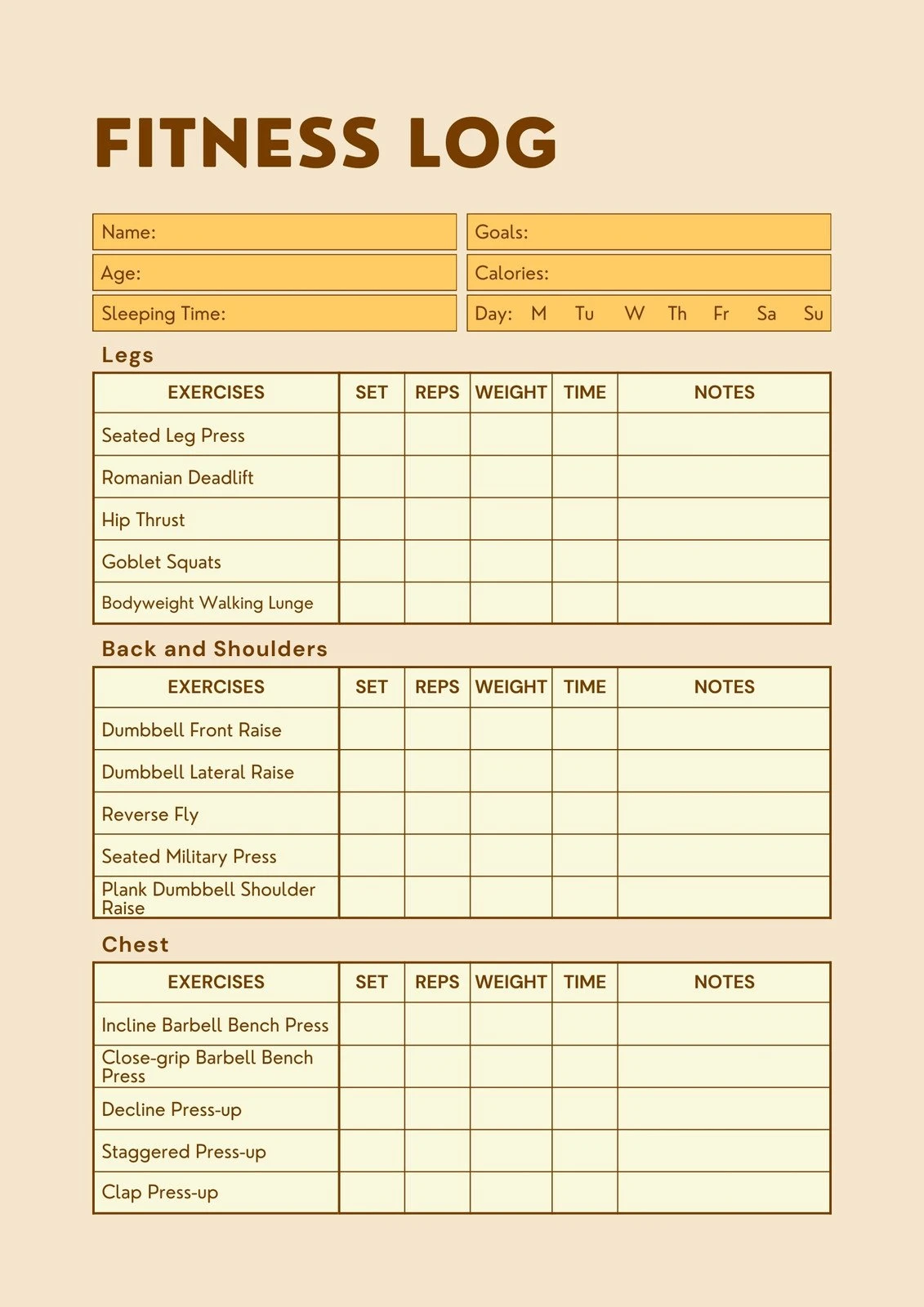
Embarking on a fitness journey can be both exciting and challenging. Whether you are trying to lose weight, gain muscle, or improve your overall health, tracking your progress is essential for staying motivated and making informed adjustments to your exercise and diet plans. One of the most effective ways to do this is by keeping a fitness log.
A fitness log is a record where you can track and monitor various aspects of your workouts and nutrition, helping you stay on track and reach your goals more effectively.
What is a Fitness Log?
A fitness log is a detailed record of your exercise routines, diet, and overall health and wellness habits. By documenting details such as the types of workouts you do, the amount of weight you lift, the number of repetitions, the duration of your workouts, and the foods you eat, you can gain valuable insights into your progress and make necessary adjustments to your fitness regimen.
Keeping a fitness log can help you see improvements over time, identify patterns in your behavior, and set new goals to continue challenging yourself.
Why Keep a Fitness Log?
There are several reasons why keeping a fitness log is beneficial for your overall health and fitness journey:
- Track Progress: By recording your workouts, weights, reps, and duration, you can see how far you have come and track your improvements over time.
- Identify Patterns: A fitness log can help you identify patterns in your behavior, such as eating habits or workout routines, that may be hindering your progress.
- Set New Goals: With a clear record of your past achievements, you can set new, challenging goals for yourself to keep progressing.
- Ensure Consistency: Keeping a fitness log helps you stay consistent with your workouts and nutrition, reducing the likelihood of falling off track.
- Build Confidence: Seeing your progress documented can boost your confidence and motivate you to continue working towards your fitness goals.
- Help Others Understand: If you work with a coach or trainer, a fitness log can help them understand your performance and patterns better, allowing them to provide more personalized guidance.
Key Elements of a Fitness Log
A comprehensive fitness log should include the following key elements:
- Workout Details: Record the type of exercises you do, the amount of weight lifted, the number of sets and repetitions, and the duration of your workouts.
- Nutritional Intake: Keep track of the foods you eat, including portion sizes, macronutrient breakdown, and caloric intake.
- Hydration: Note your daily water intake to ensure you are staying properly hydrated.
- Rest and Recovery: Document your rest days, sleep quality, and any recovery techniques you use, such as foam rolling or stretching.
- Measurements and Progress Photos: Take measurements of your body, such as weight, body fat percentage, and muscle mass, and periodically take progress photos to visually track changes.
How to Keep a Fitness Log
There are several ways you can keep a fitness log, depending on your preferences and lifestyle:
1. Pen and Paper:
You can keep a traditional fitness log using a notebook or journal, where you manually write down your workouts, meals, and other relevant information. This method is simple and can be easily customized to suit your needs.
2. Fitness Apps:
There are numerous fitness apps available that allow you to track your workouts, nutrition, and progress digitally. These apps often come with additional features such as goal setting, workout plans, and progress tracking tools.
3. Excel Spreadsheet:
If you prefer a more organized and detailed approach, you can create a fitness log using an Excel spreadsheet. This method allows you to input data, create charts, and analyze your progress more effectively.
4. Online Platforms:
Some online platforms and websites offer fitness tracking tools where you can input your workouts, nutrition, and measurements. These platforms may also provide community support, workout plans, and challenges to keep you motivated.
5. Wearable Fitness Trackers:
If you have a wearable fitness tracker, such as a smartwatch or fitness band, you can use the device to automatically track your workouts, steps taken, heart rate, and sleep patterns. These trackers can sync data to your smartphone or computer for easy access.
Tips for Successful Fitness Logging
Here are some tips to help you maintain a successful fitness log:
- Be Consistent: Make it a habit to log your workouts and meals daily to ensure accuracy and completeness.
- Set Realistic Goals: Establish achievable goals that are specific, measurable, and time-bound to keep you motivated.
- Review Regularly: Take time to review your fitness log periodically to assess progress, identify areas for improvement, and set new goals.
- Stay Honest: Be truthful in recording your workouts and meals, as this will help you make informed decisions and adjustments.
- Seek Support: Share your fitness log with a friend, coach, or online community for accountability and encouragement.
- Celebrate Achievements: Celebrate your milestones and achievements along the way to stay motivated and inspired to continue your fitness journey.
- Stay Flexible: Be open to adjusting your fitness log and goals as needed to accommodate changes in your lifestyle, preferences, or progress.
Fitness Log Template – Free Download
