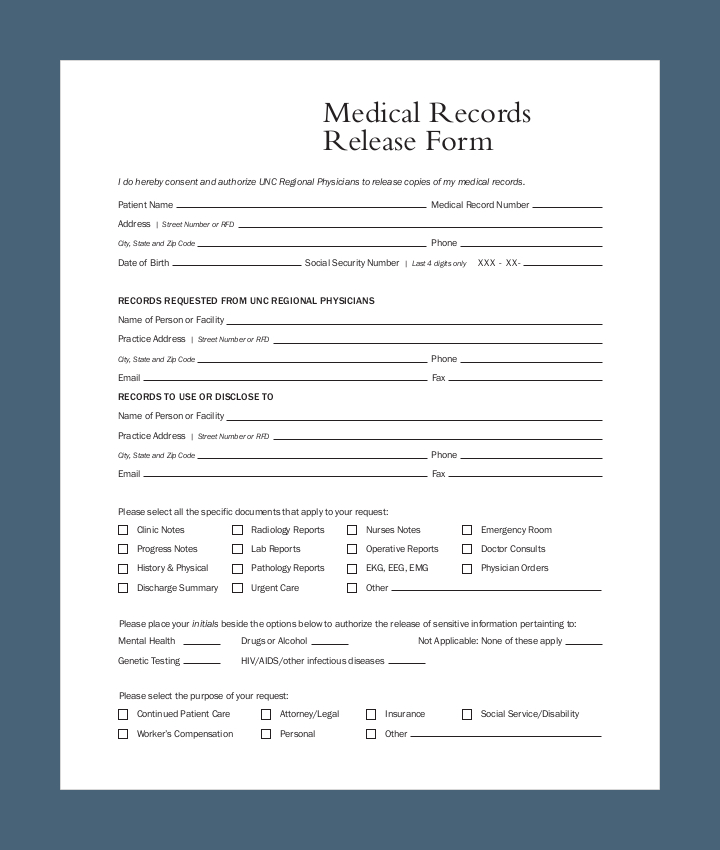
Medical records release forms are legal documents that give patients control over authorizing healthcare providers to share their private health information (PHI) with specific third parties. This process ensures privacy while enabling necessary care coordination, legal processes, or insurance claims, as required by rules like HIPAA. The form details what information is being shared, who receives it, and for what purpose, ultimately protecting patient data while streamlining access for designated recipients.
What Is a Medical Records Release Form?
A medical records release form is a document that allows patients to specify who can access their medical information, under what circumstances, and for what purpose. This form is crucial for healthcare providers to ensure they have the patient’s consent before sharing any PHI with third parties. By signing this form, patients can control who has access to their sensitive information, maintaining their privacy and confidentiality.
Why Are Medical Records Release Forms Important?
Medical records release forms play a vital role in safeguarding patient privacy while allowing for necessary information sharing in the healthcare system. Here are some reasons why these forms are essential:
- Privacy Protection: Patients can control who has access to their medical information, ensuring that only authorized individuals or entities can view their PHI.
- Care Coordination: By specifying which healthcare providers can share their records, patients can facilitate better coordination of their care among different medical professionals.
- Legal Compliance: Medical records release forms help healthcare providers comply with regulations like HIPAA, which mandate patient consent for sharing PHI.
- Insurance Claims: Patients can authorize the release of their medical records to insurers to process claims efficiently and accurately.
Key Elements of a Medical Records Release Form
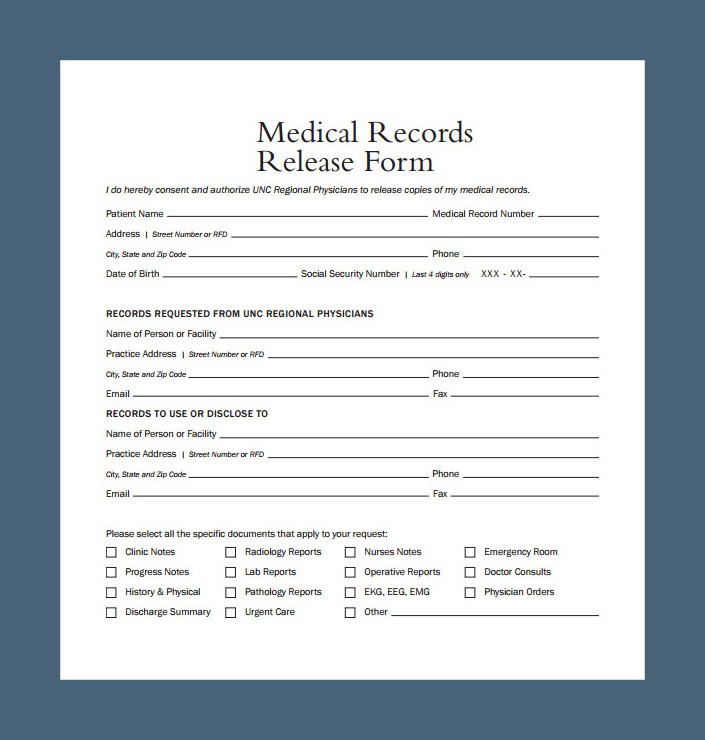
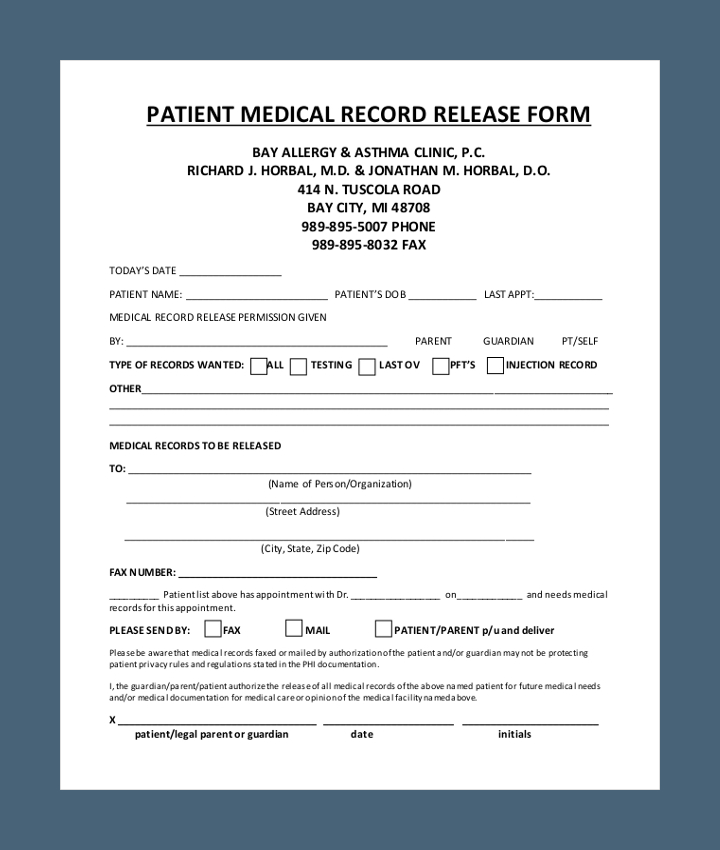
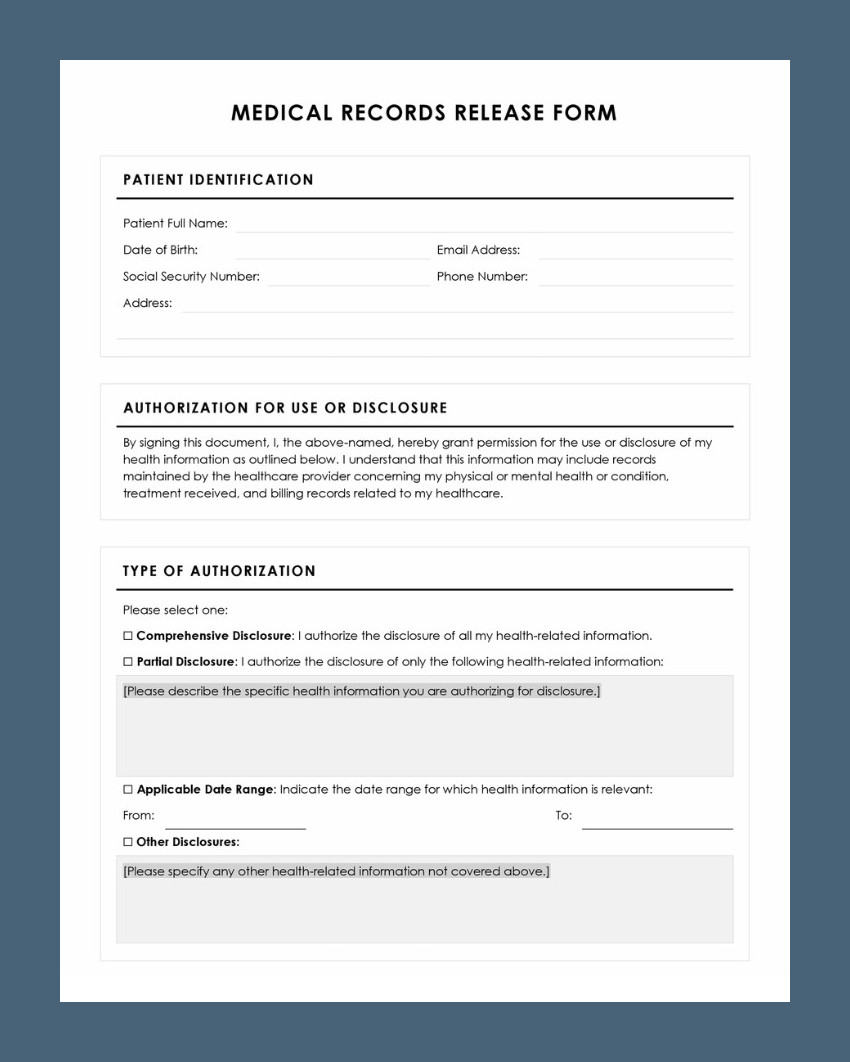
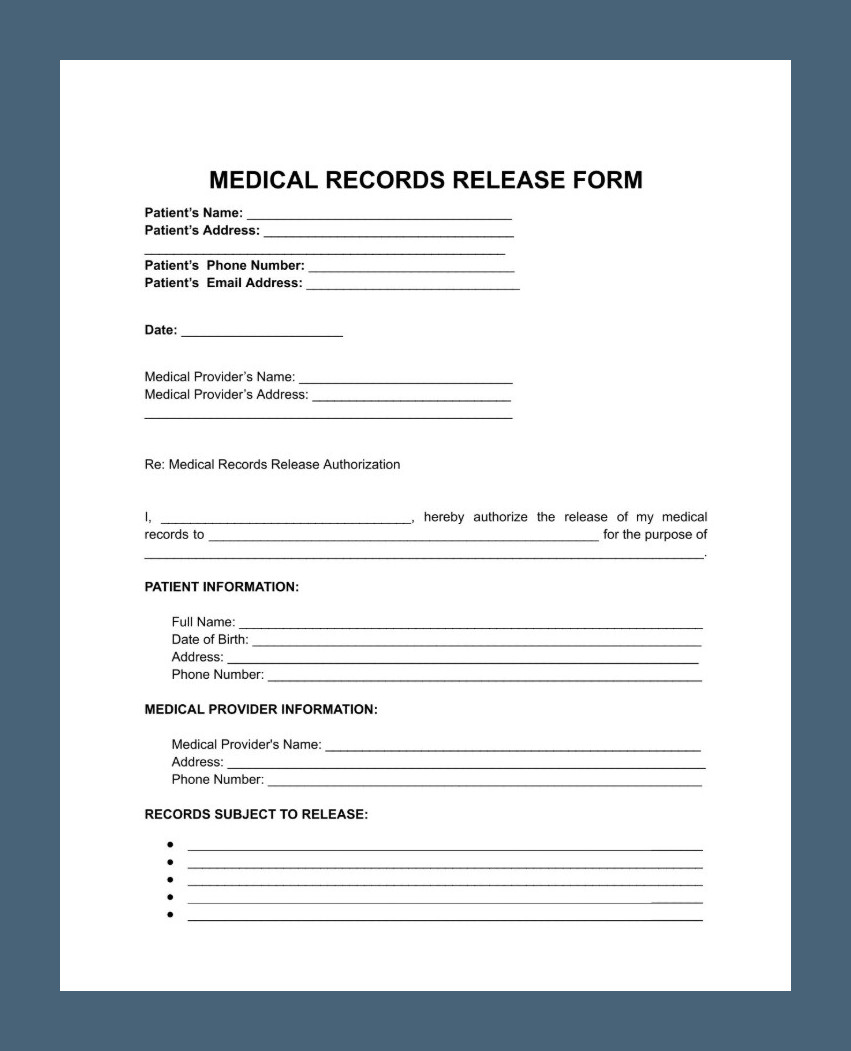
A typical medical records release form includes several key elements to ensure clarity and compliance. These elements may vary slightly depending on the specific requirements of the healthcare provider or institution, but they generally include:
- Patient Information: Name, date of birth, contact information, and other identifying details.
- Authorized Recipients: The names of individuals or entities who are permitted to access the patient’s medical records.
- Scope of Information: Details about the specific information that can be shared, such as medical history, test results, diagnoses, and treatments.
- Purpose of Disclosure: The reason for sharing the medical records, such as treatment, insurance claims, legal proceedings, or research.
- Duration of Authorization: The timeframe during which the authorization is valid, after which a new consent may be required.
Examples
How to Complete a Medical Records Release Form
Completing a medical records release form is a straightforward process that typically involves the following steps:
1. Obtain the Form:
Ask your healthcare provider for a copy of the medical records release form or download it from their website.
2. Fill Out Patient Information:
Provide your personal details, including name, date of birth, address, and contact information.
3. Specify Authorized Recipients:
List the names of individuals or organizations who are allowed to access your medical records.
4. Detail Scope of Information:
Specify the type of information that can be shared, such as medical history, lab results, or treatment plans.
5. State Purpose of Disclosure:
Indicate why you are authorizing the release of your medical records, whether for treatment, insurance claims, legal matters, or other purposes.
6. Sign and Date the Form:
Read the form carefully, sign it to indicate your consent, and date it to establish the timeframe of authorization.
7. Submit the Form:
Return the completed form to your healthcare provider or follow their instructions for submission to ensure proper processing.
Tips for Successful Medical Records Release
When completing a medical records release form, consider the following tips to ensure a smooth and successful process:
- Review the Form Carefully: Read all sections of the form to understand what you are authorizing and to ensure accuracy.
- Provide Accurate Information: Double-check your personal details and the names of authorized recipients to avoid any errors.
- Be Specific About Information: Clearly specify the type of information you are authorizing to be shared to prevent any confusion.
- Understand the Purpose: Know why you are releasing your medical records and who will be accessing them for what reason.
- Keep a Copy: Retain a copy of the completed form for your records in case you need to reference it later.
By understanding the importance of medical records release forms and following the necessary steps to complete them accurately, patients can ensure the privacy of their health information while enabling secure and efficient sharing for essential healthcare needs.
