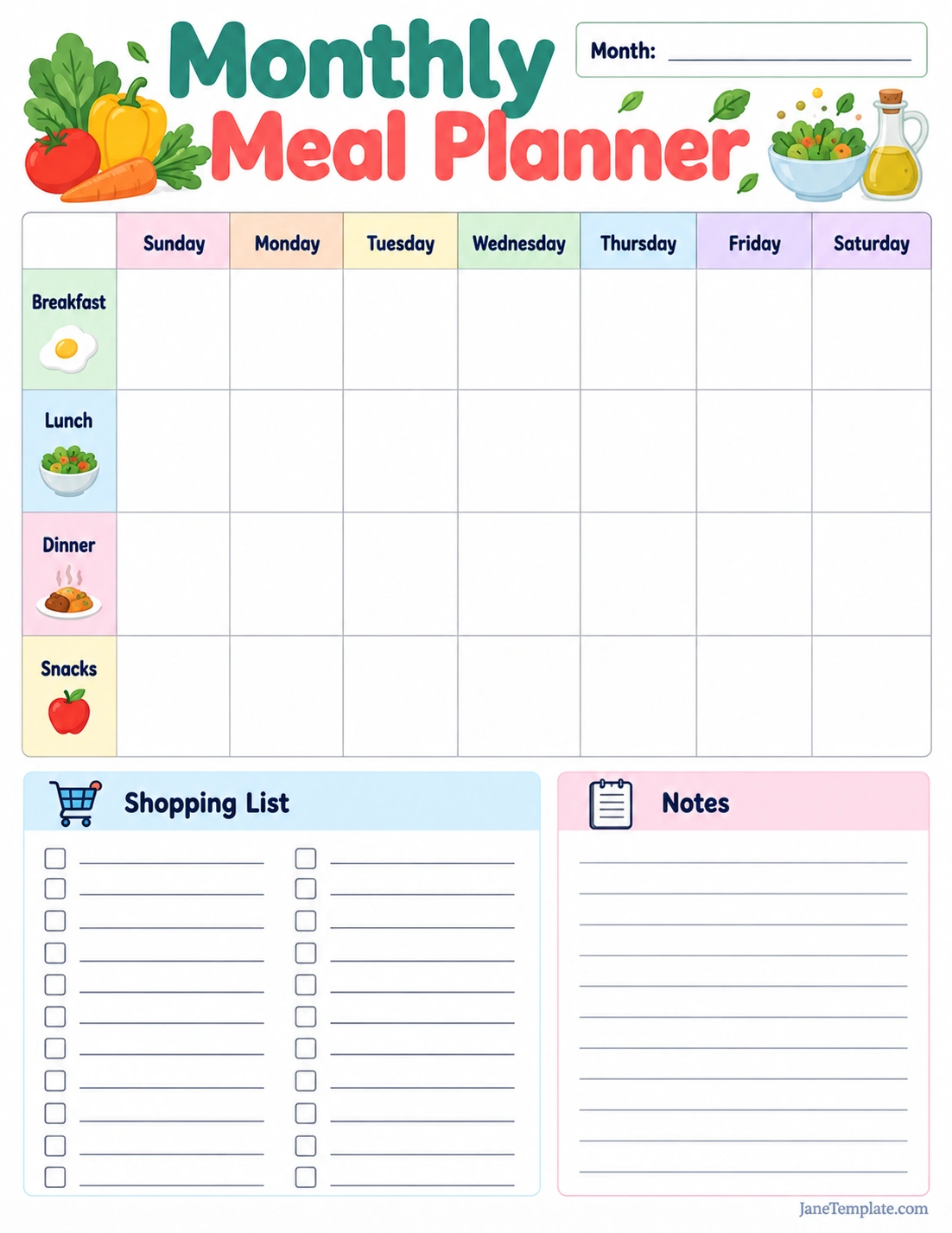
A monthly meal planner is a simple tool for organizing meals throughout an entire month. Instead of deciding what to cook every day, you can plan breakfast, lunch, dinner, and snacks in advance and create a shopping list based on the meals you actually expect to prepare.
Planning meals ahead can make everyday routines easier and more organized. A monthly plan can also help reduce unnecessary grocery purchases, limit last-minute takeout, and make it easier to include a wider variety of foods throughout the month.
Whether you are planning meals for yourself, a family, or a busy household, a printable monthly meal planner gives you one place to organize your ideas. The template can also be used with a monthly grocery list and notes section to keep meal preparation manageable.
What Is a Monthly Meal Planner?
A monthly meal planner is a calendar-style worksheet used to organize meals for several weeks at a time. Instead of planning only one day or one week ahead, you can see the entire month and decide which meals you want to prepare in advance.
A typical monthly meal plan may include breakfast, lunch, dinner, and snacks. It can also include a shopping list and notes section so that grocery needs and meal ideas stay together.
The plan does not have to be complicated. You can write down specific recipes, repeat favorite meals, schedule leftovers, or simply note general meal ideas for each day.
Why Use a Monthly Meal Planner?
Meal planning can make the process of deciding what to eat more predictable. A monthly schedule gives you a broader view of your meals and can help you prepare for busy days, grocery trips, and special occasions.
Save Time
One of the biggest advantages of planning meals in advance is reducing the number of daily food decisions. When you already know what is planned for dinner, you can spend less time deciding what to prepare at the end of a busy day.
Reduce Meal Planning Stress
Coming up with new meal ideas every day can become repetitive. A monthly meal planner gives you a simple framework that can reduce last-minute decision-making.
Make Grocery Shopping Easier
When meals are planned before shopping, you can review recipes and ingredients ahead of time. This makes it easier to create a grocery list based on what you actually need.
Reduce Food Waste
Planning meals can help you think about how ingredients will be used throughout the month. For example, ingredients purchased for one meal may also be used in another planned recipe.
Encourage Variety
A monthly view makes it easier to notice when the same meals are being repeated too often. You can intentionally add different recipes, ingredients, and meal ideas to create more variety.
What to Include in a Monthly Meal Planner
A useful monthly meal planner should provide enough space to organize meals without becoming difficult to use. The exact layout can be customized to fit your household.
Breakfast
Use the breakfast section to plan simple meals such as oatmeal, eggs, yogurt, toast, smoothies, or other household favorites. Planning breakfast can be particularly helpful on busy mornings.
Lunch
Lunch ideas can include packed meals, leftovers, salads, sandwiches, soups, or quick meals that fit your schedule.
Dinner
Dinner is often the meal that requires the most planning. Use this section for recipes or meal ideas that require specific ingredients or preparation time.
Snacks
Adding snacks to the monthly plan can help you remember convenient options and include them when creating your grocery list.
Shopping List
A shopping list section allows you to write down ingredients and household food items as you plan. You can organize the list by grocery category if that makes shopping easier.
Notes
Use the notes area for recipe reminders, special occasions, meal-prep ideas, ingredient substitutions, or other information that does not fit into the main calendar.
How to Create a Monthly Meal Plan
Creating a month-long meal plan does not mean you have to decide every detail at once. A simple step-by-step process can make the task much easier.
1. Check Your Calendar
Start by looking at the month ahead. Mark busy workdays, school activities, appointments, holidays, travel, and other events that may affect meal preparation.
Plan simpler meals for days when you have less time and save more involved recipes for days when your schedule allows additional preparation.
2. List Your Favorite Meals
Write down meals that your household already enjoys. There is no need to create a completely new menu every month.
Divide your ideas into categories such as quick meals, family favorites, vegetarian meals, freezer-friendly meals, and meals that use leftovers.
3. Fill in the Month Gradually
Begin with dinner if that is the meal that requires the most planning. Then add breakfast, lunch, and snacks as needed.
Leave some flexibility rather than filling every space with a complicated recipe. A meal plan should make life easier, not create another source of pressure.
4. Schedule Leftovers
Leftovers can be intentionally included in your plan. A larger dinner can provide lunch for the following day, helping you make better use of prepared food.
5. Review Your Ingredients
Look through your pantry, refrigerator, and freezer before making your grocery list. You may already have ingredients that can be incorporated into upcoming meals.
6. Create a Shopping List
Once your meals are planned, write down the ingredients you need. Remove items you already have at home and group the remaining items in a practical shopping order.
How a Monthly Meal Planner Can Help With Grocery Shopping
Meal planning and grocery shopping work well together because the meal schedule gives you a reason for each purchase. Instead of buying ingredients without a clear plan, you can start with the meals you intend to prepare.
Before going shopping, review your monthly meal plan and identify:
- Ingredients needed for upcoming meals
- Staple foods that need replenishing
- Fresh produce required for specific recipes
- Protein and pantry items needed for planned meals
- Ingredients already available at home
- Items that can be purchased in larger quantities and used across multiple meals
This approach can make grocery shopping more focused and may help reduce impulse purchases.
Monthly Meal Planning on a Budget
A monthly meal planner can also be used as a budgeting tool. Planning ahead gives you an opportunity to compare meals, reuse ingredients, and prioritize foods that are already available.
Use Ingredients More Than Once
If you purchase a large package of an ingredient, look for several meals that can use it. For example, vegetables, grains, herbs, or cooked proteins can sometimes be incorporated into multiple dishes.
Plan Around What You Already Have
Check your pantry and freezer before creating the grocery list. Building a few meals around existing ingredients can help prevent food from sitting unused.
Include Low-Cost Meals
Balance more expensive meals with simple options based on affordable staple ingredients. Pasta, rice, beans, eggs, vegetables, soups, and other household staples can provide flexible meal ideas.
Limit Last-Minute Takeout
Having a meal planned for busy evenings can make it easier to prepare food at home instead of making an unplanned restaurant or takeout purchase.
Monthly Meal Planner Ideas
There is no single correct way to organize a monthly meal plan. Choose a system that matches your schedule and cooking habits.
Theme Night Meal Plan
Assign a general theme to certain days of the week. For example, you might have a soup night, pasta night, taco night, or homemade pizza night.
Theme nights reduce the number of decisions you need to make while still allowing you to change the specific recipe each week.
Family Favorite Meal Plan
Create a list of meals your household already enjoys and rotate them throughout the month. Add a few new recipes when you want more variety.
Leftover-Friendly Meal Plan
Plan meals so that leftovers can become another meal. This can make cooking more efficient and help use food before it goes to waste.
Freezer Meal Plan
Include meals that can be prepared in advance and stored for later use. Mark freezer meals clearly on the planner so you know when they are available.
Busy-Day Meal Plan
Identify the busiest days of the month and schedule quick meals for those dates. Save recipes requiring more preparation for days with more available time.
Tips for Making a Monthly Meal Planner Work
Keep It Flexible
A meal plan is a guide, not a rigid schedule. If plans change, move a meal to another day rather than abandoning the entire plan.
Repeat Meals When Helpful
Repeating favorite meals is not a problem. Familiar recipes can make grocery shopping and cooking easier.
Leave Room for Unplanned Meals
Consider leaving a few flexible days for leftovers, restaurant meals, special occasions, or meals based on ingredients that need to be used quickly.
Plan According to Your Schedule
Consider preparation time when choosing meals. A complicated recipe may not be practical on a day filled with work, school, or other commitments.
Keep the Planner Visible
Place the completed meal planner somewhere easy to see. A visible plan makes it easier for household members to know what is scheduled and what ingredients may need to be prepared.
Monthly Meal Planner for Families
A family meal planner can make it easier to coordinate different schedules and food preferences. Parents can involve children in selecting a few meals each month, while keeping the overall plan practical.
When planning for a family, consider:
- Different work and school schedules
- Favorite family meals
- Available preparation time
- Planned activities and events
- Foods that need to be used soon
- Meals that can be prepared ahead
- Leftovers for lunches
The goal is not to create a perfect menu. The goal is to create a realistic system that makes everyday meals easier to manage.
Monthly Meal Planner vs. Weekly Meal Planner
A weekly meal planner focuses on a shorter period and is useful when you prefer to decide meals close to the day they will be prepared. A monthly meal planner provides a broader overview and can be useful for households that prefer to organize meals and shopping further in advance.
You do not have to choose one format exclusively. Some people create a general monthly meal plan and then make a more detailed grocery list each week.
This approach combines the long-term structure of a monthly meal calendar with the flexibility of weekly planning.
How to Use a Printable Monthly Meal Planner
A printable monthly meal planner can be used with a pen, pencil, or marker. Start by filling in the month and adding the meals you already know you want to prepare.
Next, add your shopping list as you identify ingredients. Keep the planner available during the month so you can make changes when your schedule or preferences change.
At the end of the month, review which meals worked well. Keep successful ideas for the next month and replace recipes that were inconvenient or unpopular.
Frequently Asked Questions About Monthly Meal Planners
What is a monthly meal planner?
A monthly meal planner is a calendar-style worksheet used to organize meals for an entire month. It can include breakfast, lunch, dinner, snacks, a shopping list, and notes.
What are the benefits of a monthly meal planner?
A monthly meal planner can help reduce daily meal decisions, organize grocery shopping, encourage meal variety, make better use of existing ingredients, and support a more organized household routine.
Can a monthly meal planner help save money?
Planning meals can help you create a focused grocery list and reduce impulse purchases or last-minute takeout. Savings will vary depending on food prices, household habits, and how closely the plan is followed.
How far in advance should I plan meals?
You can plan an entire month at once or create a general monthly outline and fill in details each week. The best approach depends on your schedule, cooking habits, and how flexible you want your meal plan to be.
What should I put on a monthly meal planner?
You can include breakfast, lunch, dinner, snacks, planned leftovers, special occasions, and meal-preparation notes. A shopping list section can also help organize grocery needs.
Can I use a monthly meal planner for a family?
Yes. A family meal planner can help coordinate different schedules, organize favorite meals, plan leftovers, and make grocery shopping more structured.
How do I make a monthly meal plan easier to follow?
Keep the plan flexible, schedule simple meals on busy days, reuse ingredients across recipes, include leftovers, and leave a few open days for changes or unexpected events.
Conclusion
A monthly meal planner provides a simple way to organize meals, grocery shopping, and meal preparation in one place. By planning ahead, you can reduce daily food decisions, make shopping more focused, use ingredients more efficiently, and create greater variety in your meals.
The most useful meal plan is one that fits your real schedule. Keep it practical, allow room for changes, and use your shopping list to support the meals you actually intend to prepare. With a printable monthly meal planner, you can turn meal planning into a simple routine that is easier to maintain from one month to the next.
Download: Monthly Meal Planner Template
