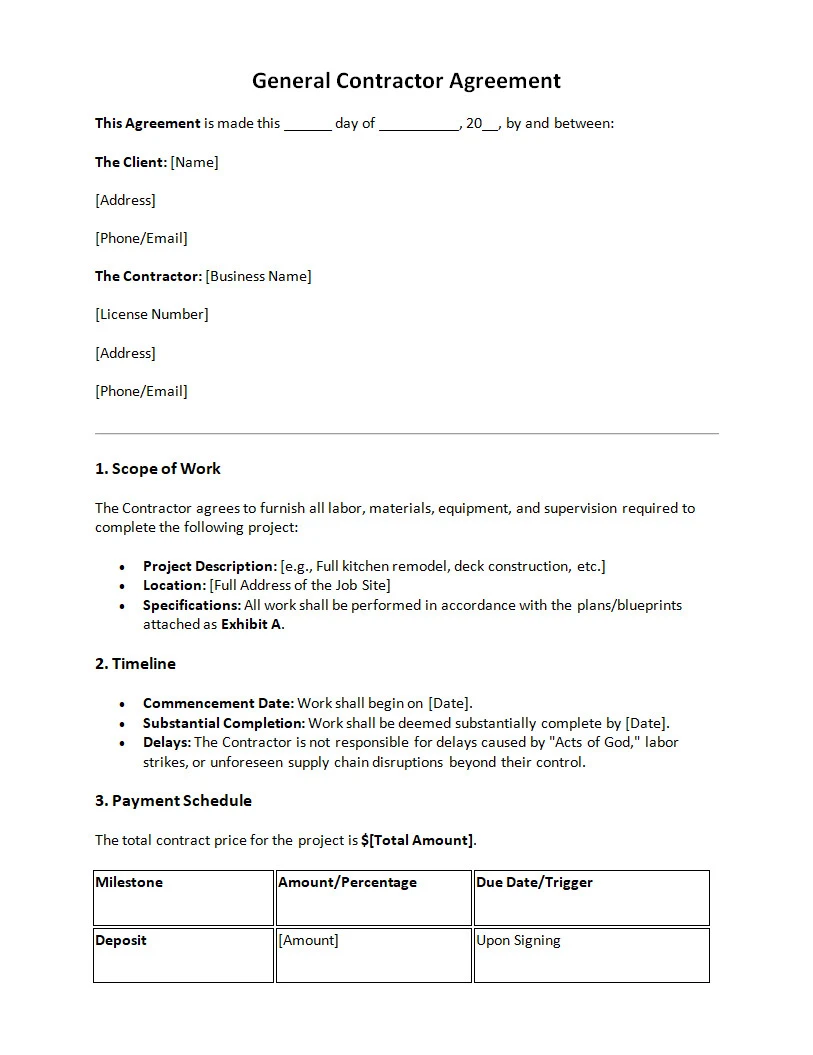
When embarking on a construction project, both clients and contractors want to ensure that their rights and responsibilities are clearly defined. This is where a general contractor agreement comes into play.
This legally binding document serves as a roadmap for the project, outlining the scope of work, timelines, payment schedules, and addressing any potential risks that may arise. By having a thorough general contractor agreement in place, all parties involved can align their expectations and minimize the likelihood of disputes.
What is a General Contractor Agreement?
A general contractor agreement is a written contract between the client and the contractor that lays out the terms and conditions of their working relationship. It serves as a protection for both parties by clearly defining their rights, responsibilities, and expectations for the project. This agreement is crucial for ensuring that the project runs smoothly and that both parties are on the same page throughout the construction process.
When drafting a general contractor agreement, several key components should be included to ensure all bases are covered. Here are some of the most important elements to consider:
What to Include in a General Contractor Agreement?
1. Scope of Work
The scope of work section outlines the specific tasks and responsibilities the contractor will undertake for the project. It should be detailed and clearly define the work that is expected to be completed.
2. Timelines
Setting clear timelines is crucial for keeping the project on track and ensuring that deadlines are met. The agreement should include specific dates for milestones and completion of the project.
3. Payment Schedule
The payment schedule section outlines how and when the contractor will be compensated for their work. This should include the total cost of the project, payment milestones, and any penalties for late payments.
4. Change Orders
Change orders are inevitable in construction projects, so it’s important to include a section in the agreement that outlines how changes to the scope of work will be handled. This should include procedures for requesting changes and any additional costs involved.
5. Insurance and Liability
It’s essential to address insurance coverage and liability in the agreement to protect both parties in case of accidents or damages during the project. This section should specify the type and amount of insurance required.
6. Dispute Resolution
In the event of a dispute, having a clear process for resolution outlined in the agreement can help prevent conflicts from escalating. This section should detail how disputes will be handled, whether through mediation, arbitration, or litigation.
7. Termination Clause
Including a termination clause in the agreement can protect both parties in case the relationship needs to be ended prematurely. This section should outline the conditions under which the contract can be terminated and the consequences of termination.
8. Warranties
Warranties ensure that the work will meet certain standards and provide recourse for the client if there are defects or issues with the completed project. This section should detail the warranties provided by the contractor.
9. Confidentiality
Confidentiality clauses can protect sensitive information shared during the project and prevent it from being disclosed to third parties. This section should outline the obligations of both parties to maintain confidentiality.
How to Create a General Contractor Agreement
Creating a general contractor agreement can seem like a daunting task, but with the right approach, it can be a straightforward process. Here are some steps to follow when drafting a general contractor agreement:
1. Start by outlining the basic terms of the agreement, including the names of the parties involved, the project description, and the project timeline.
2. Clearly define the scope of work, including the specific tasks to be completed, materials to be used, and any special requirements.
3. Establish a payment schedule that outlines the total project cost, payment milestones, and any penalties for late payments.
4. Include provisions for change orders, insurance coverage, dispute resolution, termination, warranties, and confidentiality.
5. Review the agreement with all parties involved to ensure that everyone agrees with the terms and conditions.
6. Sign and date the agreement to make it legally binding.
Tips for Successful General Contractor Agreements
– Be specific: Avoid vague language and make sure that all terms are clearly defined to prevent misunderstandings.
– Seek legal advice: Consulting with a lawyer experienced in construction contracts can help ensure that your agreement is legally sound.
– Communicate openly: Keep the lines of communication open with the contractor throughout the project to address any issues that may arise.
– Document everything: Keep detailed records of all communications, changes, and payments related to the project to protect yourself in case of disputes.
– Review and update: Regularly review and update your general contractor agreements to reflect any changes in the project scope or timeline.
In conclusion, a well-written general contractor agreement is essential for protecting the interests of both clients and contractors in construction projects. By including key elements such as the scope of work, timelines, payment schedules, and risk management strategies, this document can help ensure that all parties are aligned and minimize the likelihood of disputes. Following the tips outlined in this guide can help you create a successful general contractor agreement that sets the foundation for a successful construction project.
General Contractor Agreement Template – Word
