IOU templates, short for “I owe you,” are essential tools for documenting debts between individuals or entities without the need for complicated paperwork. Whether among friends, family members, or business partners, IOUs serve as a testament to mutual trust and accountability.
In this comprehensive guide, we will explore what IOU forms entail, what to include in them, when they are needed, and how to create one effectively.
What is an IOU Form?
An IOU form is a simple document that acknowledges a debt owed by one party to another. It serves as a written agreement outlining the specific terms of the debt, including the amount owed, the date of the transaction, and any additional terms or conditions agreed upon by both parties. While not legally binding like a formal contract, an IOU provides a level of assurance and clarity in informal transactions.
Types of IOU Forms
Various types of IOU forms can be used depending on the nature of the debt and the parties involved. Some common types of IOU forms include:
- Personal IOU: Used for informal loans between friends or family members.
- Business IOU: Used in business transactions where a formal contract is not yet in place.
- Rental IOU: Used for borrowing or lending items with significant value, such as rental equipment or vehicles.
Each type of IOU form may have specific requirements and considerations, so it is essential to use the appropriate template for your situation.
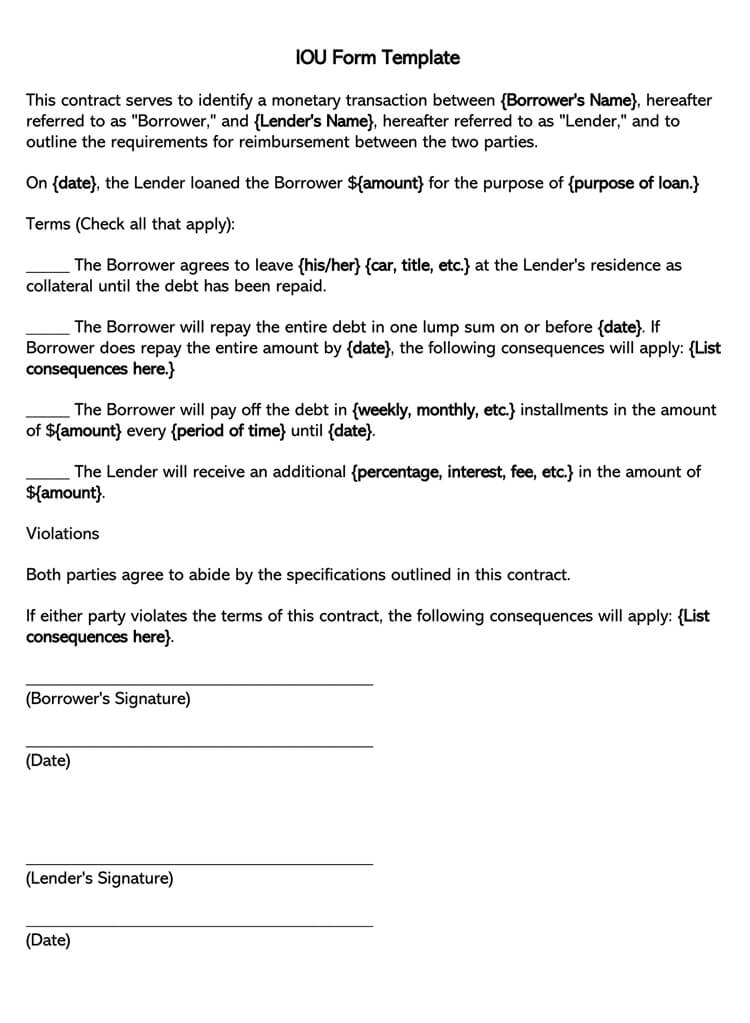
What to Include in an IOU Template?
When creating an IOU template, it is essential to include the following key elements to ensure clarity and prevent misunderstandings:
1. Parties Involved
Clearly identify the parties involved in the transaction, including their full names, addresses, and contact information. This information is crucial for establishing the identities of the debtor and creditor and ensuring that the IOU form is legally binding.
2. Amount Owed
Specify the exact amount of money or value of goods/services owed by the debtor to the creditor. This amount should be clearly stated in both numerical and written form to avoid any confusion or disputes over the debt.
3. Date of Transaction
Document the date when the debt was incurred to establish a timeline for repayment. Including the date of the transaction can help both parties track the progress of the debt and ensure timely repayment.
4. Terms and Conditions
Outline any agreed-upon terms and conditions of the debt, such as the repayment schedule, interest rates, late fees, and any other relevant information. These terms should be clearly communicated and understood by both parties to avoid any misunderstandings.
5. Signatures
Both parties should sign the IOU form to indicate their agreement to the terms and acknowledge the debt. Signatures serve as a form of consent and verification that the parties understand and agree to the terms outlined in the IOU template.
By including these key elements in an IOU template, you can create a comprehensive and legally binding document that clearly outlines the terms and conditions of the debt.
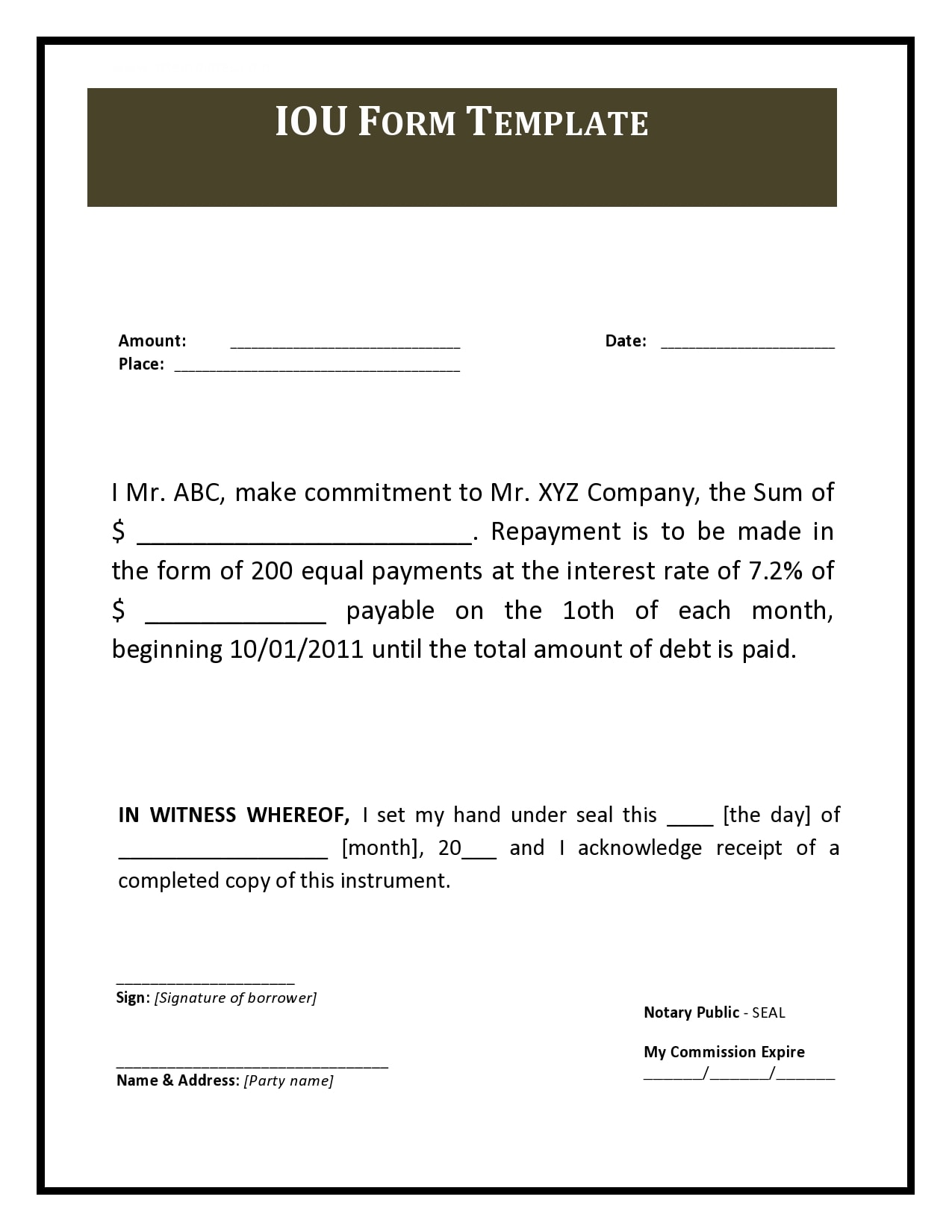
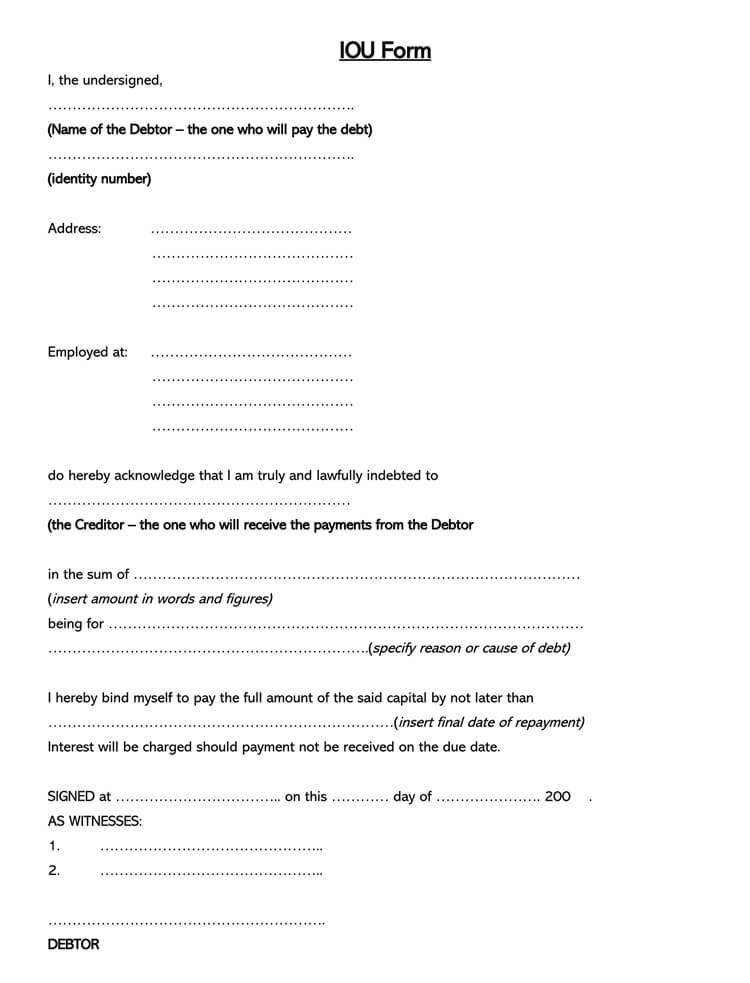
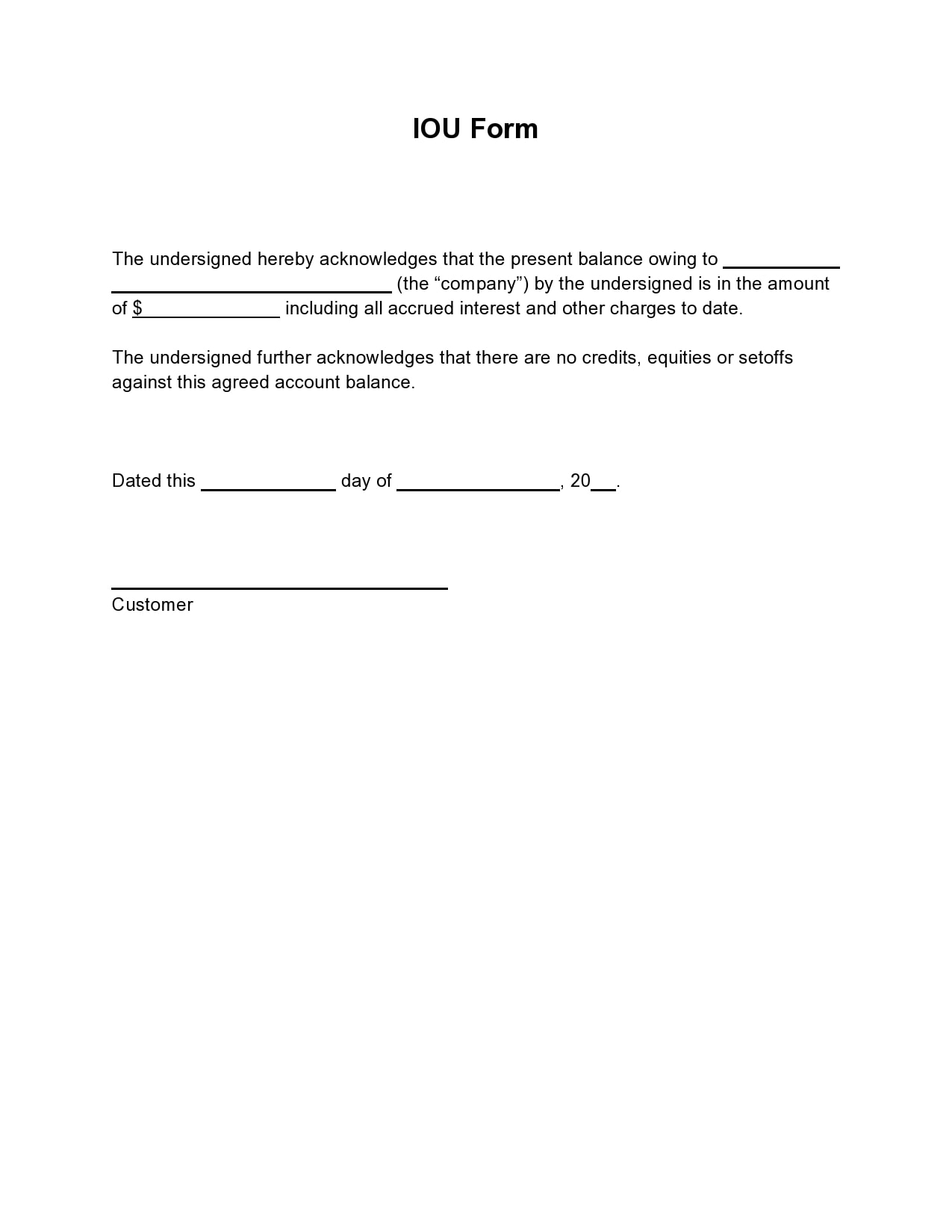
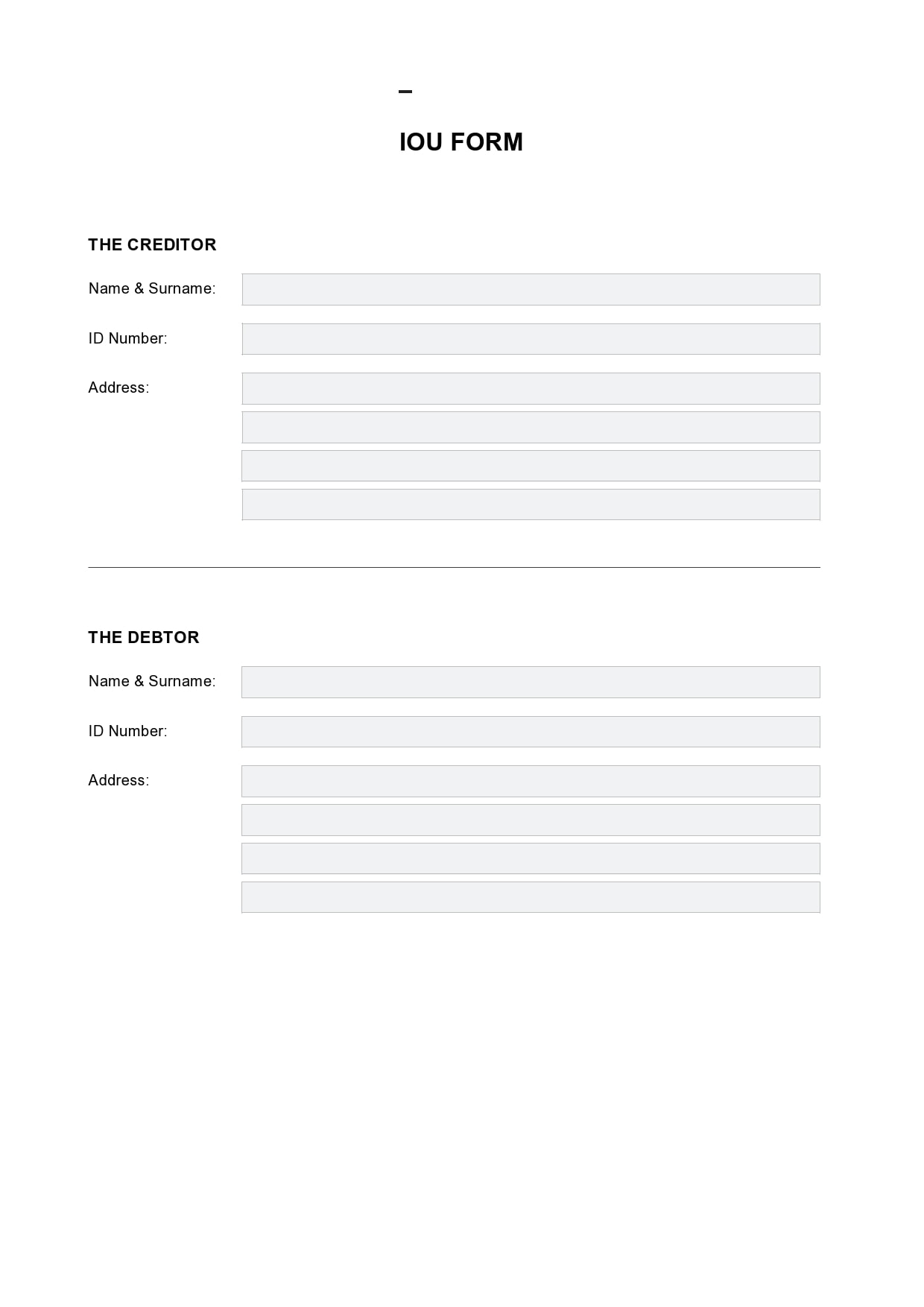
Examples
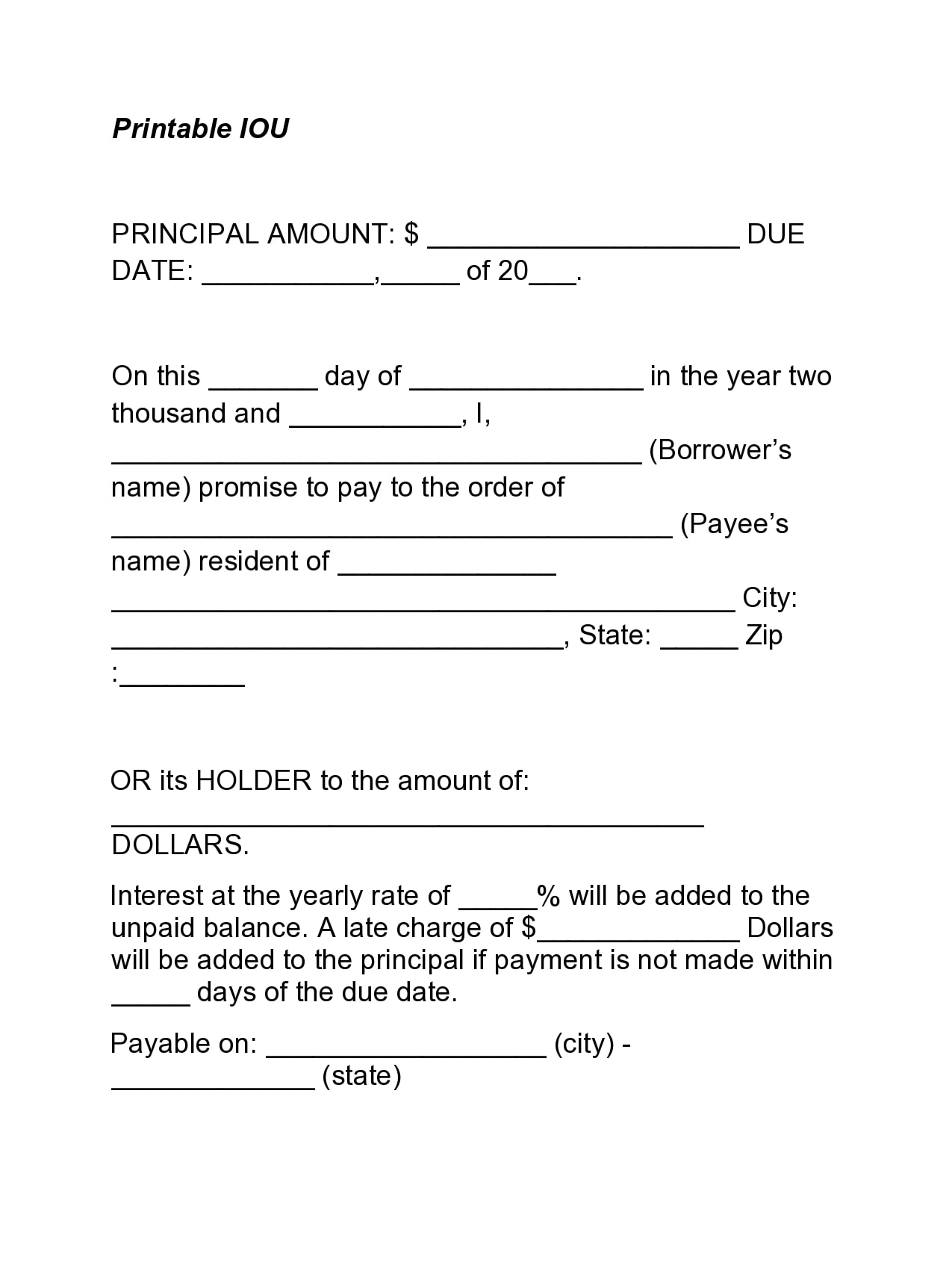
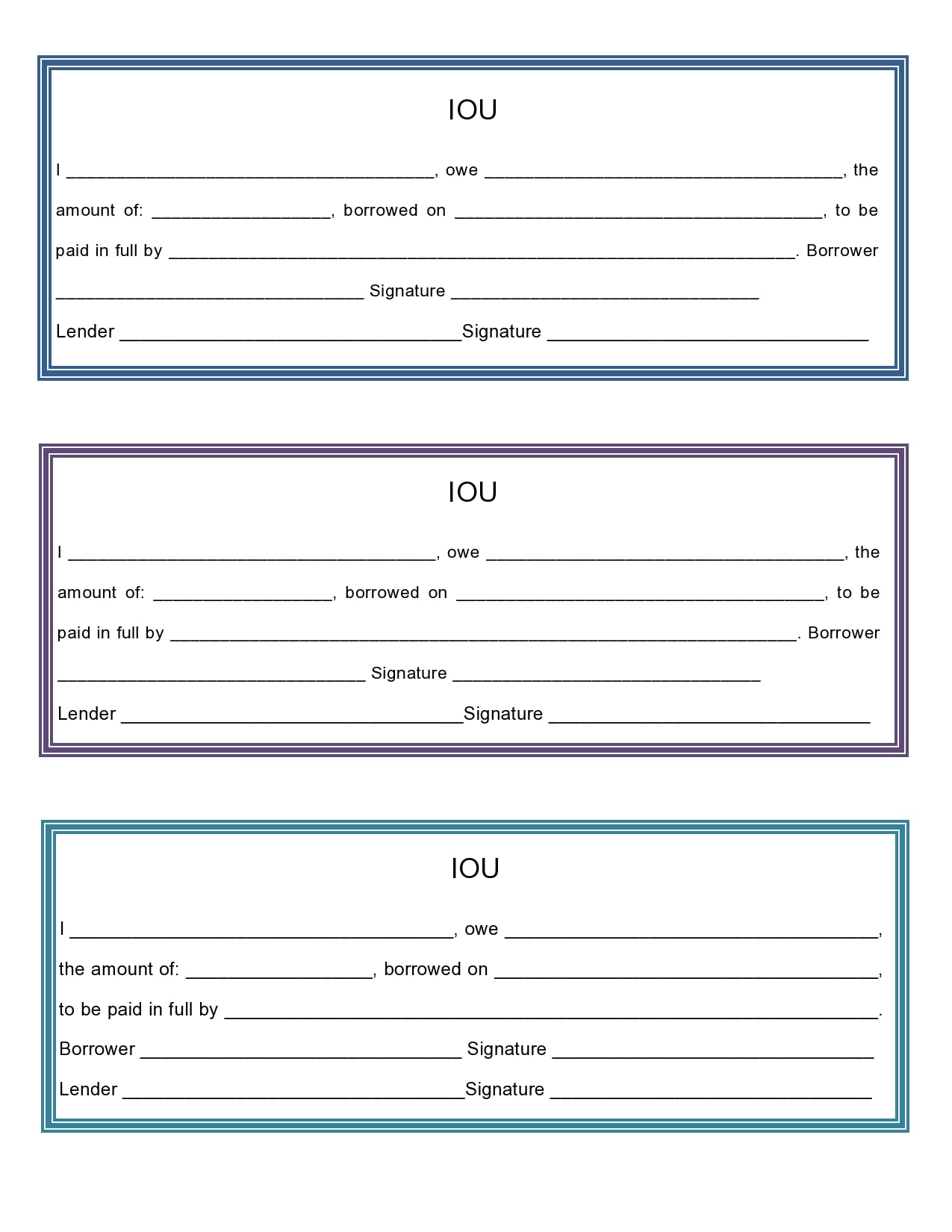
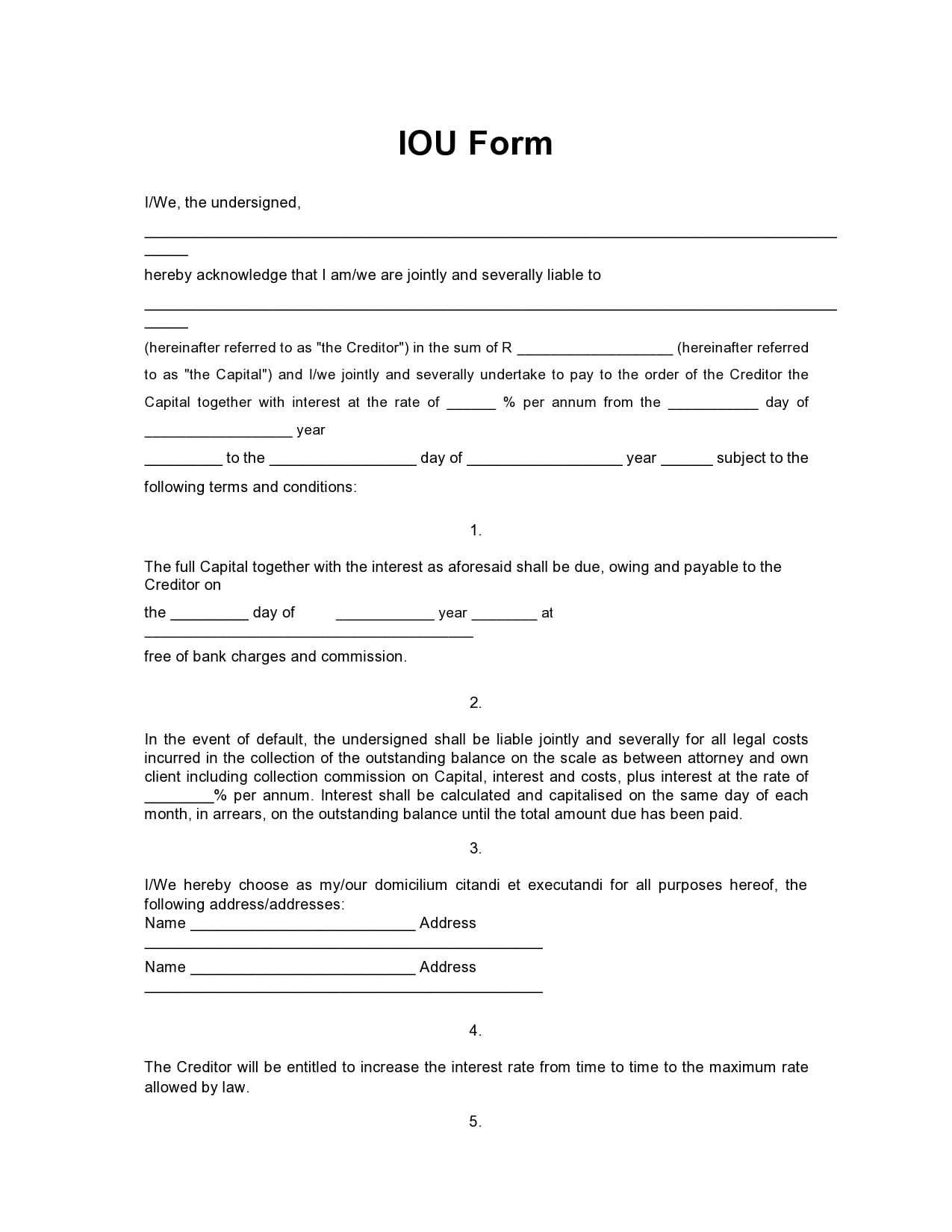
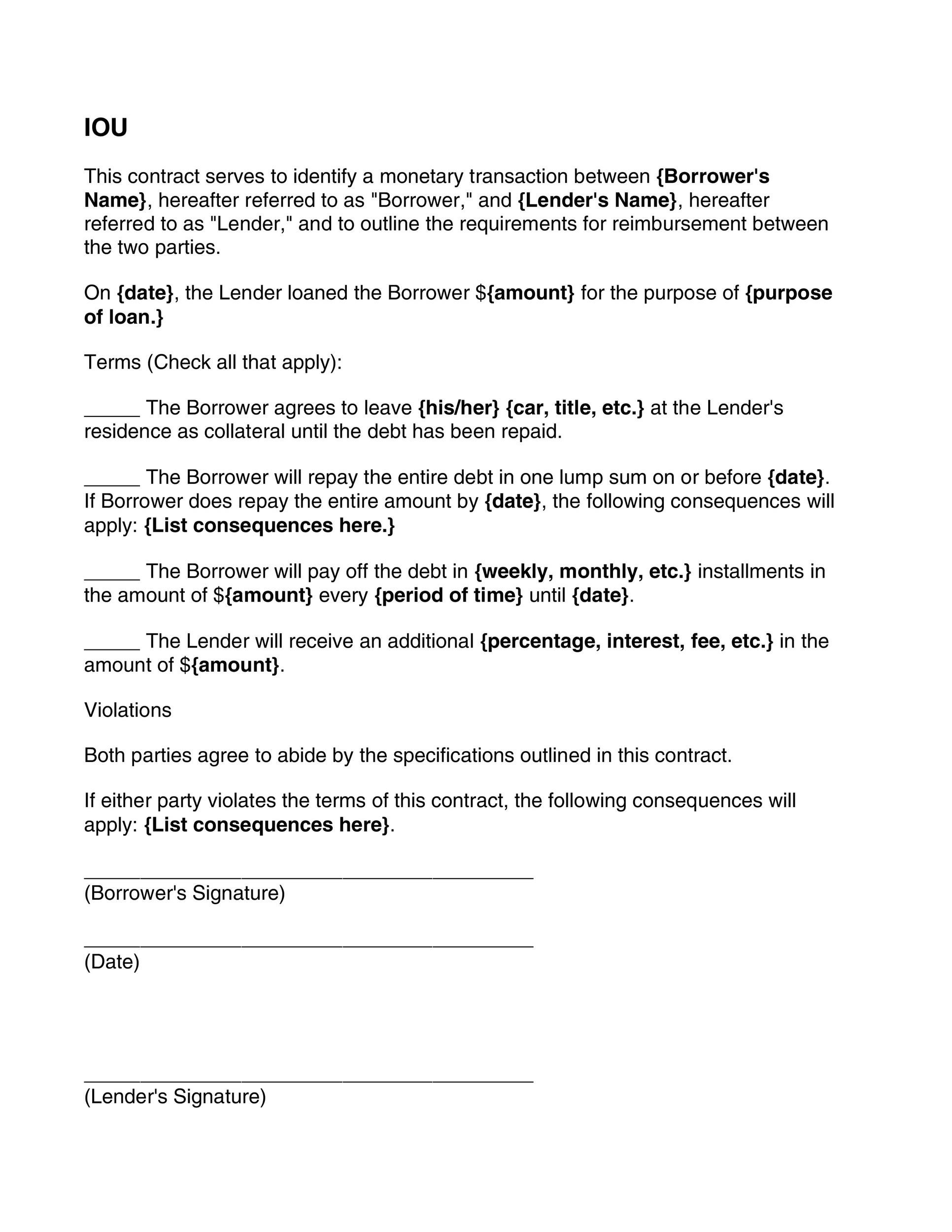
When Do You Need an IOU Template?
IOU templates are commonly used in various situations where a formal contract is unnecessary or impractical. Some instances where an IOU may be needed include:
1. Personal Loans
When lending money to friends or family members, an IOU can help formalize the agreement and prevent disputes. Personal loans often involve informal arrangements that may benefit from the clarity provided by an IOU template.
2. Business Transactions
In informal business dealings, an IOU can serve as a temporary record of debt until a more formal contract is drawn up. Business transactions often involve quick exchanges of goods or services that may require a simple IOU form to document the debt.
3. Rent or Borrowed Items
When borrowing or lending items with significant value, an IOU can ensure both parties are clear on the terms of the arrangement. Rental agreements, borrowed equipment, or loaned items can benefit from the use of an IOU template to establish accountability and prevent misunderstandings.
Overall, IOU templates can be valuable tools in various personal and business transactions where a formal contract is not necessary or practical.
How to Make an IOU
Creating an IOU template is a straightforward process that can be done using a word processing software or online template. Follow these steps to make an effective IOU:
1. Choose a Template
Start by selecting a pre-designed IOU template or creating your own layout with the necessary fields. Templates are available online or through various office supply stores and can be customized to suit your specific needs.
2. Fill in the Details
Input the names of the parties, the amount owed, the date of the transaction, and any other relevant information into the template. Be sure to double-check all details for accuracy before finalizing the IOU form.
3. Add Terms and Conditions
Clearly outline the repayment terms, including the deadline for repayment, any interest rates or late fees, and any other conditions agreed upon by both parties. These terms should be specific and easy to understand to avoid confusion.
4. Get Signatures
Once the IOU form is complete, have both parties sign the document to indicate their agreement and commitment to fulfilling the debt. Signatures serve as a form of consent and verification that the parties understand and agree to the terms outlined in the IOU template.
By following these steps, you can create a well-structured and comprehensive IOU template that clearly outlines the terms of the debt and ensures accountability between the parties involved.
IOU Template – Download
