Receiving multiple parking tickets can create an unexpected financial burden, especially when several fines and penalties accumulate over time. Paying the entire balance at once may not be affordable for every vehicle owner. Fortunately, some cities and municipalities offer a payment plan for parking tickets that allows eligible drivers to pay their outstanding fines in smaller installments.
A parking ticket payment plan can make it easier to manage unpaid citations without having to pay the full amount immediately. Depending on local regulations, an approved arrangement may allow you to divide your balance into monthly payments over an agreed period.
However, payment options, eligibility requirements, and application procedures vary by location. Understanding how these programs work can help you choose an appropriate payment arrangement and avoid additional penalties. This guide explains how parking ticket payment plans work, how to apply, what information you need, and how to manage your payments responsibly.
What Is a Payment Plan for Parking Tickets?
A payment plan for parking tickets is an arrangement offered by certain parking authorities or municipal agencies that allows vehicle owners to pay outstanding parking fines through scheduled installments rather than making one large payment.
Instead of paying the entire balance immediately, an eligible applicant may be allowed to divide the amount into smaller payments over several weeks or months. The payment schedule and installment amounts depend on the rules established by the local authority.
These arrangements are particularly helpful for drivers who have accumulated multiple parking citations or cannot afford to pay their outstanding balance in a single transaction.
A parking ticket payment plan may cover:
- Unpaid parking citations.
- Accumulated parking fines and penalties.
- Eligible late payment charges.
- Multiple outstanding parking violations.
- Other parking-related balances approved by the municipality.
Not every parking authority provides installment options. Some programs also have restrictions on which citations, penalties, or administrative fees can be included. Contact your local parking department to confirm the available options.
Why Do Cities Offer Parking Ticket Payment Plans?
Parking authorities may provide installment programs to help residents resolve outstanding violations while making payments more manageable. These arrangements can benefit both vehicle owners and municipal agencies.
1. Makes Outstanding Fines More Affordable
Paying several parking tickets at once can be difficult for individuals with limited budgets. Monthly installments help divide a large balance into smaller amounts that may be easier to manage.
2. Helps Reduce Unpaid Parking Balances
Some drivers delay paying their tickets because they cannot afford the full amount. An installment program provides another way to address outstanding fines and work toward resolving the balance.
3. Provides a Structured Payment Schedule
An approved payment arrangement establishes clear payment amounts and deadlines. This helps applicants organize their finances and understand when each installment is due.
4. May Help Prevent Additional Collection Problems
Depending on local rules, entering and maintaining an approved payment plan may help eligible drivers avoid certain collection actions or additional consequences. However, this protection is not automatic. Applicants should confirm exactly which penalties or enforcement actions are affected by their agreement.
How Does a Parking Ticket Payment Plan Work?
Although procedures differ between cities, most parking ticket installment programs follow a similar process. The applicant provides information about outstanding citations, requests a payment arrangement, and waits for approval from the responsible authority.
Step 1: Review Your Outstanding Parking Tickets
Start by identifying all unpaid parking citations associated with your vehicle or account. Check the ticket numbers, violation dates, and outstanding balances.
You can usually find this information through your city’s parking enforcement website, municipal payment portal, or customer service department.
Step 2: Check Payment Plan Eligibility
Contact the local parking authority to determine whether you qualify for an installment arrangement. Some programs are available to anyone with eligible unpaid tickets, while others may require proof of financial hardship or compliance with specific conditions.
Ask about the following requirements:
- Minimum outstanding balance.
- Eligible parking violations.
- Required deposit or initial payment.
- Available installment periods.
- Late payment and administrative fees.
- Documents needed for the application.
Step 3: Submit a Payment Plan Request
Complete the application form provided by the parking authority. Include your personal information, contact details, ticket numbers, total outstanding balance, and preferred payment schedule.
Some municipalities accept applications online, while others require applicants to submit a printed form or contact the parking department directly.
Step 4: Review the Proposed Installments
After reviewing your request, the authority may provide an installment schedule based on its program rules. The schedule should explain the number of payments, amount due for each installment, and payment deadlines.
Review these details carefully before accepting the arrangement. Make sure the proposed payments are manageable within your budget.
Step 5: Make Payments on Time
Once your payment plan is approved, follow the agreed schedule. Keep receipts and confirmation numbers for every installment. If you experience financial difficulties, contact the parking authority before missing a payment to ask whether alternative arrangements are available.
What Information Is Needed to Apply?
Before requesting a payment plan for parking tickets, prepare the information that the municipality may require. Having everything ready can make the application process easier.
Common information and documents include:
- Applicant information: Full legal name, mailing address, phone number, and email address.
- Vehicle information: License plate number, vehicle registration details, and other identifying information if requested.
- Parking ticket details: Citation numbers, violation dates, violation descriptions, and outstanding balances.
- Total amount due: The combined balance of eligible parking fines and penalties.
- Requested payment schedule: Preferred installment period and proposed monthly payment amount.
- Supporting documents: Proof of identity, residency, or financial circumstances when required by the program.
Requirements vary by municipality, so check the official application instructions before submitting personal documents.
Payment Plan for Parking Tickets Template
A parking ticket payment plan form helps organize an applicant’s information and document a proposed installment arrangement. It provides a convenient way to list outstanding citations, calculate the total amount due, and record the requested payment schedule.
A typical payment plan request form includes the following sections:
- Applicant name and contact information.
- Parking ticket numbers and violation dates.
- Outstanding amounts for each citation.
- Total parking ticket balance.
- Requested number of monthly installments.
- Proposed monthly payment amount.
- Payment start date.
- Applicant signature and date.
The following printable worksheet provides a simple layout for organizing parking ticket information and requesting an installment arrangement.
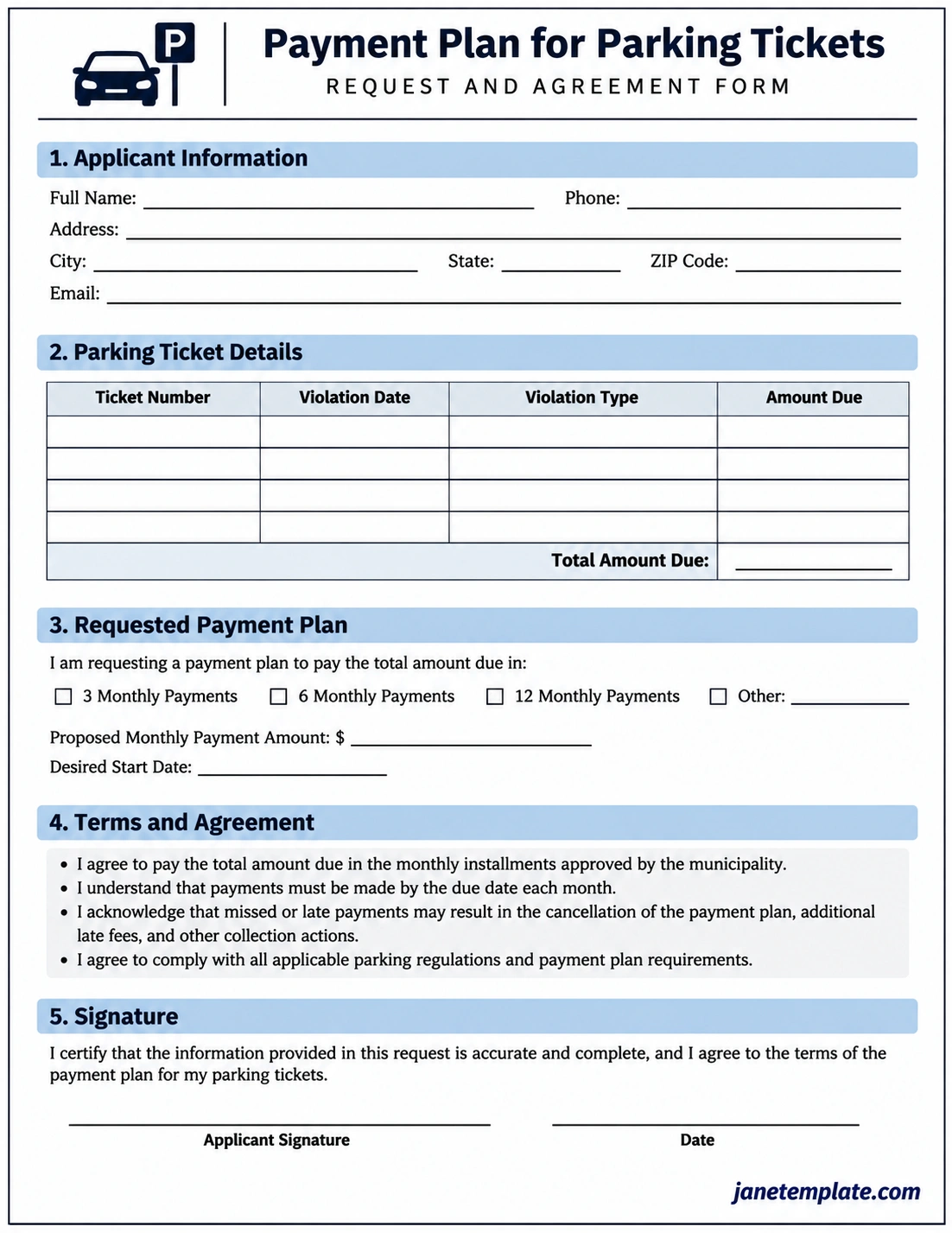
You can use this worksheet to prepare your information before contacting your local parking authority. However, it is a general organizational template, not an official municipal application. Submit the form required by your city or parking agency when applying for an actual payment arrangement.
How to Calculate Monthly Parking Ticket Payments
Calculating your estimated monthly payment can help you understand how much you may need to budget. The basic calculation involves dividing the eligible outstanding balance by the number of installments.
Monthly Payment = Total Eligible Balance ÷ Number of Monthly Installments
For example, assume you have $600 in eligible outstanding parking fines and your municipality approves a six-month payment arrangement.
- Total outstanding balance: $600
- Payment period: 6 months
- Estimated monthly payment: $100
In this example, you would pay approximately $100 each month for six months, assuming there are no additional fees or interest charges.
Remember that the actual installment amount may differ depending on minimum payment requirements, administrative charges, interest, or other municipal rules. Always follow the official payment schedule provided after approval.
Tips for Managing Your Parking Ticket Payment Plan
Once your installment request is approved, managing the payment schedule is important. Missing payments could result in additional charges or cancellation of the arrangement, depending on local regulations.
- Set payment reminders: Add each installment deadline to your calendar to avoid forgetting a payment.
- Choose a realistic payment amount: Consider your monthly expenses before agreeing to an installment schedule.
- Keep payment records: Save receipts, confirmation emails, and transaction reference numbers.
- Check your remaining balance: Review your account periodically to confirm that payments have been properly credited.
- Contact the authority early: If you cannot afford an upcoming installment, ask about available options before the due date.
- Read the agreement carefully: Understand the consequences of missed payments, additional fees, and changes to the payment arrangement.
Common Mistakes to Avoid When Requesting a Payment Plan
Applying for a parking ticket payment arrangement requires accurate information and careful attention to the program’s requirements. Avoid these common mistakes:
Ignoring Outstanding Tickets
Waiting too long to address unpaid parking citations may lead to additional penalties or collection procedures. Check your outstanding balance and contact the appropriate authority as soon as possible.
Providing Incomplete Application Information
Missing ticket numbers, incorrect contact details, or incomplete applicant information may delay the review process. Double-check every section before submitting your request.
Assuming Every Ticket Qualifies
Some parking violations, penalties, or balances may be excluded from installment programs. Confirm which citations are eligible before calculating your proposed payment schedule.
Missing Installment Deadlines
Failing to make scheduled payments may affect your payment plan status. Keep track of due dates and contact the municipal office if you anticipate a problem.
Using an Unofficial Payment Website
Always verify payment instructions through the official municipal website or authorized parking agency. Avoid sharing personal or payment information through unverified websites.
Frequently Asked Questions
Can I get a payment plan for parking tickets?
Yes, some cities and municipalities offer payment plans for eligible parking tickets. Availability depends on local regulations, outstanding balances, and program requirements. Contact your local parking authority to check whether installment payments are available.
How many months can I take to pay parking tickets?
The repayment period varies by municipality. Some programs offer short-term arrangements, while others may allow payments over several months. The approved duration depends on the local program’s rules and your eligibility.
Do all parking tickets qualify for a payment plan?
No. Certain citations, administrative fees, or other penalties may be excluded. Check with the issuing parking authority to confirm which outstanding charges can be included.
Can I apply for a parking ticket payment plan online?
Some municipalities allow residents to request installment arrangements through an online parking payment portal. Other authorities require a phone call, email, or printed application. Visit the official municipal website for instructions.
What happens if I miss a payment?
Missing an installment may result in late fees, cancellation of the payment arrangement, or further collection actions, depending on the applicable rules. Contact the parking authority immediately if you cannot make a scheduled payment.
Will a payment plan stop additional parking ticket penalties?
Not necessarily. Some approved programs may pause or prevent certain additional collection actions while the applicant follows the agreement. However, the treatment of late fees, penalties, and enforcement actions varies by location. Confirm the specific protections with your municipality.
Can I include multiple parking tickets in one payment plan?
Some municipalities allow multiple eligible citations to be combined into a single payment arrangement. You may need to provide every ticket number and the outstanding balance for each citation when applying.
Is a parking ticket payment plan form available for printing?
Yes. You can use a printable worksheet to organize applicant information, citation details, outstanding balances, and proposed monthly installments. However, an official municipal application may still be required to establish an approved payment plan.
Conclusion
A payment plan for parking tickets can provide a practical way to manage accumulated parking fines without paying the entire balance at once. By dividing eligible outstanding citations into smaller installments, vehicle owners may find it easier to organize their finances and resolve unpaid violations.
Before applying, review your outstanding tickets, check your municipality’s eligibility requirements, and prepare the necessary information. Once your payment plan is approved, follow the installment schedule and keep records of every payment.
Using a printable parking ticket payment plan worksheet can also help you organize your information and prepare for the application process. With careful planning and timely payments, you can work toward resolving your outstanding parking fines in a more manageable way.
Download: Payment Plan for Parking Tickets Worksheet Template
