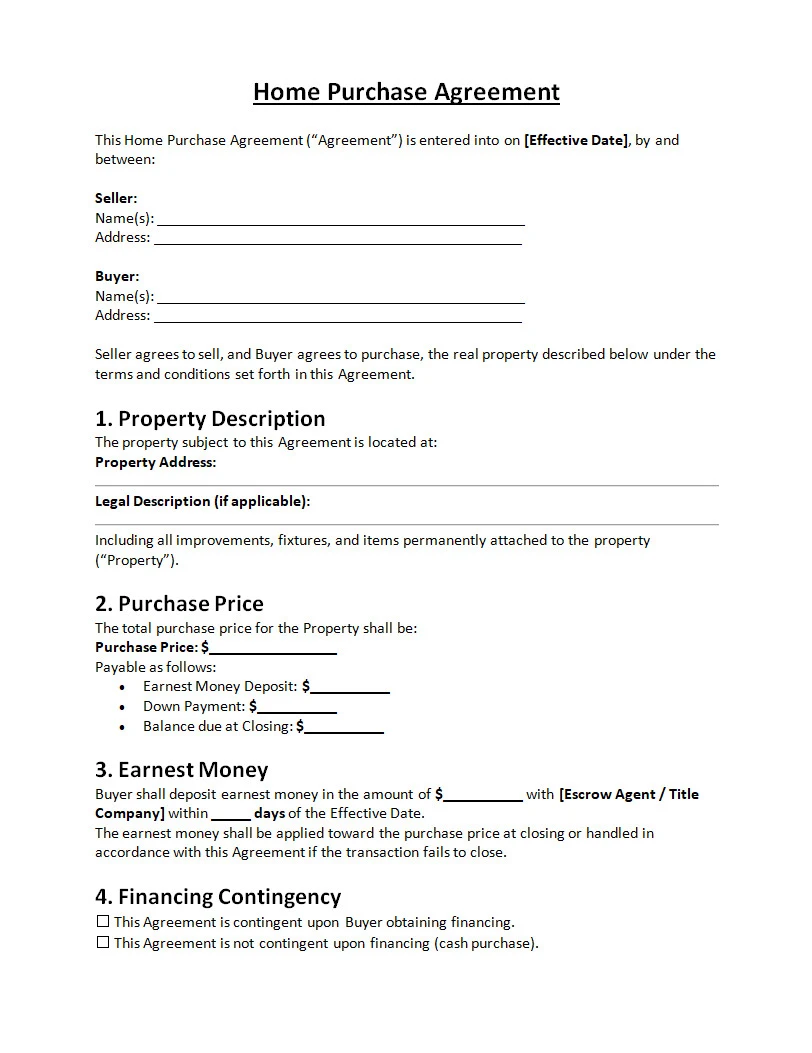
When buying or selling a home, a crucial aspect of the process is the creation and execution of a home purchase agreement. This legal document serves as the backbone of the transaction, providing a comprehensive outline of the terms and conditions that both the buyer and seller must adhere to.
Let’s delve deeper into why a home purchase agreement is vital in ensuring a successful and smooth real estate transaction.
What is a Home Purchase Agreement?
A home purchase agreement, also known as a purchase agreement or sales agreement, is a legally binding contract that sets out the terms and conditions of a property sale.
It is a critical document that formalizes the agreement between the buyer and seller, covering various aspects such as the property price, financing details, contingencies, closing date, and responsibilities of both parties.
Why is a Home Purchase Agreement Important?
The importance of a home purchase agreement cannot be overstated when it comes to real estate transactions. Let’s explore some of the key reasons why this document is crucial for both buyers and sellers.
Legal Protection for Both Parties
One of the primary reasons why a home purchase agreement is essential is that it offers legal protection to both the buyer and the seller. By clearly defining the terms of the sale and documenting them in writing, the agreement serves as a legally binding contract that can be enforced in case of disputes or breaches of contract. This protection ensures that both parties are held accountable for their obligations.
Clarity and Transparency
A home purchase agreement promotes clarity and transparency throughout the transaction process. By specifying all the terms and conditions of the sale, including the purchase price, financing arrangements, contingencies, and closing date, the agreement leaves no room for confusion or misinterpretation. This clarity helps in establishing clear expectations for both parties and reduces the likelihood of misunderstandings.
Establishing a Formal Commitment
By transforming a verbal offer into a formal written agreement, a home purchase agreement establishes a formal commitment between the buyer and seller. This commitment serves as a demonstration of both parties’ intent to proceed with the sale under the agreed-upon terms. It assures both parties that the transaction is being taken seriously and will be executed in accordance with the agreed conditions.
Setting Clear Timelines and Deadlines
Timelines and deadlines are crucial aspects of any real estate transaction, and a home purchase agreement helps in setting clear expectations in this regard. By specifying the closing date and any other deadlines that need to be met, the agreement ensures that the transaction progresses smoothly and efficiently. Clear timelines help in keeping all parties accountable and on track throughout the process.
Defining Responsibilities and Obligations
Another key benefit of a home purchase agreement is that it clearly defines the responsibilities and obligations of both the buyer and the seller. From who is responsible for paying closing costs to who will handle any necessary repairs or inspections, the agreement outlines each party’s role in the transaction. This clarity helps in avoiding misunderstandings and ensures that all parties are aware of their duties.
Reducing the Risk of Disputes
Disputes can often arise in real estate transactions, especially when there is ambiguity or uncertainty regarding the terms of the sale. A well-drafted home purchase agreement can help in reducing the risk of disputes by providing a comprehensive and detailed outline of the transaction. By addressing potential issues upfront and documenting the agreed-upon terms, the agreement minimizes the chances of conflicts between the parties.
What to Include in a Home Purchase Agreement?
When it comes to drafting a home purchase agreement, there are several key components that should be included to ensure that all aspects of the transaction are covered comprehensively. Let’s take a detailed look at what should be included in a home purchase agreement.
Property Details
One of the fundamental elements of a home purchase agreement is a detailed description of the property being sold. This should include the property’s address, legal description, lot size, and any other pertinent details that accurately identify the property. Providing a thorough description of the property helps in avoiding any confusion about which property is being sold.
Purchase Price and Financing Terms
The purchase price of the property is a critical component of the home purchase agreement. The agreement should clearly state the agreed-upon purchase price, as well as the method of payment and any financing terms. Details regarding the down payment, mortgage amount, interest rate, and repayment terms should also be included to ensure that both parties are in agreement on the financial terms of the sale.
Contingencies and Conditions
Contingencies are conditions that must be met before the sale can be finalized, and they play a crucial role in a home purchase agreement. Common contingencies include a satisfactory home inspection, appraisal, financing approval, or the sale of the buyer’s current home. The agreement should outline these contingencies clearly and specify the actions that need to be taken if they are not met.
Closing Date and Possession Date
The closing date is the date on which the property sale will be finalized, and it should be clearly specified in the home purchase agreement. Additionally, the possession date, which is when the buyer will take possession of the property, should also be included. Both dates should be agreed upon by both parties to ensure a smooth transition of ownership.
Responsibilities of Buyer and Seller
The home purchase agreement should clearly define the responsibilities and obligations of both the buyer and the seller. This includes who is responsible for paying closing costs, any repairs or maintenance needed on the property, and other relevant tasks. By outlining these responsibilities, the agreement ensures that both parties are aware of their duties and can fulfill them accordingly.
How to Draft a Home Purchase Agreement
Drafting a home purchase agreement requires careful attention to detail and a thorough understanding of the legal requirements involved in real estate transactions. Here is a step-by-step guide on how to draft a comprehensive and effective home purchase agreement.
Consult with Real Estate Professionals
When drafting a home purchase agreement, it is advisable to seek assistance from real estate professionals, such as real estate agents or attorneys. These professionals have the expertise and knowledge to ensure that the agreement meets all legal requirements and covers all necessary details. They can provide valuable guidance and advice throughout the drafting process.
Identify the Parties Involved
The first step in drafting a home purchase agreement is to clearly identify the parties involved in the transaction. This includes the full legal names and addresses of both the buyer and the seller. It is essential to accurately identify the parties to avoid any confusion or disputes later on.
Describe the Property in Detail
A detailed description of the property being sold should be provided in the home purchase agreement. This description should include the property address, legal description, lot size, and any other relevant details that accurately identify the property. The more specific the description, the less room there is for confusion or disagreement.
Outline the Purchase Price and Financing Terms
The agreement should clearly state the purchase price of the property and any financing terms agreed upon by the parties. This includes details such as the down payment amount, mortgage terms, interest rate, and repayment schedule. It is crucial to specify these financial terms
Include Contingencies and Conditions
Contingencies and conditions are essential components of a home purchase agreement as they protect both the buyer and the seller. Common contingencies include a satisfactory home inspection, appraisal, and financing approval. The agreement should outline these contingencies and specify the actions that need to be taken if they are not met. Including clear contingency clauses helps in mitigating potential risks and uncertainties.
Specify the Closing Date and Possession Date
The agreement should clearly specify the closing date, which is the date on which the property sale will be finalized. Additionally, the possession date, when the buyer will take possession of the property, should also be included. Both dates should be agreed upon by both parties to ensure a smooth transition of ownership. It is crucial to adhere to these dates to avoid any delays or complications in the transaction process.
Detailed Responsibilities and Obligations
Defining the responsibilities and obligations of both the buyer and the seller is crucial in a home purchase agreement. This includes specifying who is responsible for paying closing costs, any repairs or maintenance needed on the property, and other relevant tasks. By clearly outlining these responsibilities, the agreement ensures that both parties understand their roles and can fulfill them accordingly, minimizing the chances of conflicts or misunderstandings.
Review and Revise the Agreement
Once the home purchase agreement has been drafted, it is essential to review and revise it carefully before signing. Both parties should thoroughly examine the agreement to ensure that all terms and conditions are accurate and acceptable. It is advisable to seek legal advice or assistance from a real estate professional to review the agreement and address any concerns or questions that may arise. Making any necessary revisions at this stage can help prevent future disputes or complications.
Tips for a Successful Home Purchase Agreement
When creating a home purchase agreement, there are several tips to keep in mind to ensure a successful and stress-free transaction. Let’s explore some key tips for drafting a comprehensive and effective home purchase agreement.
Get Everything in Writing
It is essential to put all terms and conditions of the sale in writing to avoid misunderstandings or misinterpretations. Verbal agreements are not legally binding and can lead to disagreements down the line. By documenting all aspects of the transaction in a written agreement, both parties have a clear reference point that outlines their obligations and responsibilities.
Be Specific and Detailed
Include as many details as possible in the home purchase agreement to ensure clarity and prevent disputes. From the property description to the purchase price, contingencies, and closing date, every aspect of the transaction should be clearly defined. Being specific and detailed in the agreement leaves little room for confusion and helps in establishing clear expectations for all parties involved.
Review Carefully Before Signing
Before signing the home purchase agreement, take the time to review it carefully and ensure that all terms and conditions are accurate and acceptable. If there are any discrepancies or concerns, address them before signing the agreement. Once the agreement is signed, it becomes legally binding, so it is crucial to be thorough in the review process to avoid any potential issues later on.
Maintain Open Communication
Throughout the transaction process, it is essential to maintain open communication with the other party. Keep the lines of communication open and address any questions or concerns that may arise promptly. By staying in touch and discussing any issues that come up, you can work together to resolve them and ensure a smooth and successful transaction.
Seek Professional Advice
If you are unsure about any aspect of the home purchase agreement or if you have any legal concerns, consider seeking advice from real estate professionals or attorneys. These experts can provide guidance and assistance in drafting and reviewing the agreement to ensure that it meets all legal requirements. Seeking professional advice can help in avoiding pitfalls and ensuring that the transaction proceeds smoothly.
Keep Copies for Reference
After the home purchase agreement has been signed, make sure to keep copies of the document for reference. Each party should retain a copy of the agreement for their records, as it serves as a legally binding contract that outlines the terms of the sale. Having copies on hand can be helpful in case any questions or disputes arise in the future, as it provides a clear record of the agreed-upon terms.
Follow Through on Responsibilities
Once the home purchase agreement is in place, both parties should adhere to their responsibilities and obligations as outlined in the agreement. Whether it’s completing repairs, securing financing, or meeting contingencies, it is essential to fulfill your commitments to ensure a successful transaction. By following through on responsibilities, you can help maintain trust and cooperation between all parties involved.
Stay Informed Throughout the Process
Throughout the transaction process, it is important to stay informed and updated on any developments or changes that may impact the sale. Stay in touch with your real estate agent or attorney and ask questions if you need clarification on any aspect of the agreement. By staying informed and proactive, you can navigate the transaction process with confidence and ensure a successful outcome.
Be Prepared for Contingencies
Contingencies are a common aspect of home purchase agreements, and it is essential to be prepared for any potential contingencies that may arise. Whether it’s a home inspection issue or a financing delay, having a plan in place to address contingencies can help in resolving issues quickly and efficiently. By being proactive and prepared, you can navigate any unexpected challenges that may arise during the transaction process.
Seek Guidance from Experienced Professionals
If you encounter any challenges or uncertainties during the transaction process, don’t hesitate to seek guidance from experienced professionals. Real estate agents, attorneys, and other experts can provide valuable advice and assistance in navigating complex issues and ensuring a successful transaction. By leveraging their expertise and knowledge, you can address any concerns effectively and move forward with confidence.
Stay Flexible and Open-Minded
Real estate transactions can sometimes be unpredictable, and it is important to stay flexible and open-minded throughout the process. Be willing to consider different options or solutions to address any issues that may arise. By maintaining a positive and adaptable mindset, you can overcome challenges and work towards a successful closing.
Home Purchase Agreement Template
Home Purchase Agreement Template – DOWNLOAD
