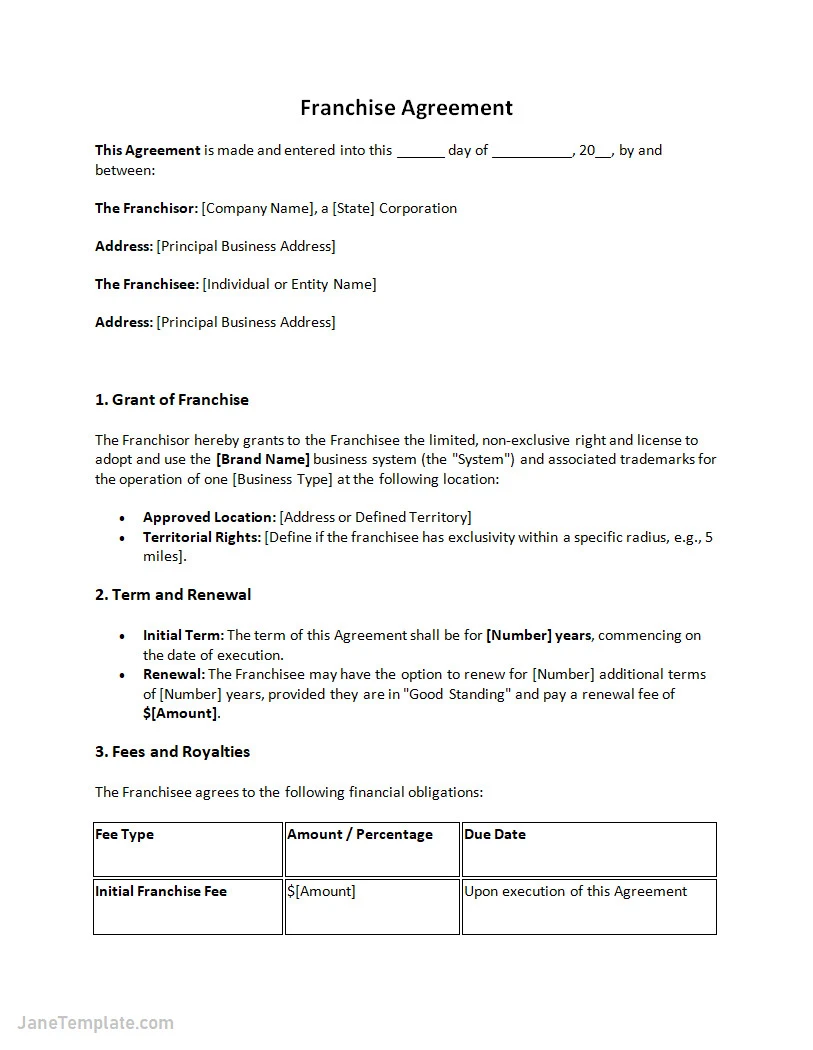
Franchise agreements are a crucial component of the franchising business model. These agreements serve as legally binding contracts that define the relationship between a franchisor and a franchisee. They outline the rights, responsibilities, and operational framework for the business, granting the franchisee the right to use the franchisor’s brand, trademarks, and business systems in exchange for fees and royalties.
The key purposes of franchise agreements include establishing a legal framework, protecting both parties’ rights and the franchisor’s intellectual property, ensuring brand consistency, and preventing disputes.
What is a Franchise Agreement?
A franchise agreement is a legal document that governs the relationship between a franchisor (the owner of the business) and a franchisee (an individual or entity granted the right to operate a business under the franchisor’s brand).
This agreement outlines the terms and conditions under which the franchisee will operate the business, including the use of the franchisor’s trademarks, business systems, and ongoing support. It also details the financial obligations of both parties, such as initial franchise fees, ongoing royalties, and advertising contributions.
Why are Franchise Agreements Important?
Franchise agreements are essential for both franchisors and franchisees as they provide a framework for the operation of the business. These agreements help protect the rights of both parties, ensuring that each party understands their obligations and responsibilities.
By clearly defining the terms of the relationship, franchise agreements can help prevent misunderstandings and disputes down the line. Additionally, franchise agreements help maintain brand consistency across all locations, ensuring that customers receive a consistent experience no matter where they visit.
Key Elements of a Franchise Agreement
A typical franchise agreement includes several key elements that define the relationship between the franchisor and franchisee. These elements may vary depending on the specific industry and business model, but some common components include:
- Franchise Fees: Details on initial franchise fees, ongoing royalties, and other financial obligations.
- Term of Agreement: The duration of the franchise agreement and any renewal options.
- Territorial Rights: The geographical area in which the franchisee is allowed to operate the business.
- Training and Support: The type and extent of training and support provided by the franchisor.
- Intellectual Property: Protection of the franchisor’s trademarks, logos, and other intellectual property.
- Operational Guidelines: The standards and procedures that the franchisee must follow in operating the business.
- Termination Clause: Conditions under which the agreement can be terminated by either party.
How to Negotiate a Franchise Agreement
Negotiating a franchise agreement can be a complex process, as both parties have their interests to protect. It is essential to thoroughly review the agreement and seek legal advice before signing any document. When negotiating a franchise agreement, consider the following tips:
- Understand Your Obligations: Make sure you fully understand the terms and conditions of the agreement before signing.
- Seek Legal Advice: Consult with a franchise attorney to review the agreement and ensure that your rights are protected.
- Clarify Expectations: Clearly communicate your expectations with the franchisor to avoid misunderstandings.
- Negotiate Terms: Don’t be afraid to negotiate terms that are favorable to your business interests.
- Consider Long-Term Implications: Evaluate how the terms of the agreement will impact your business in the long run.
Tips for Successful Franchise Agreements
To ensure a successful franchise agreement, both parties must work together to establish a strong foundation for their relationship. Some tips for successful franchise agreements include:
- Open Communication: Maintain open lines of communication with the franchisor to address any issues or concerns promptly.
- Compliance with Standards: Adhere to the operational guidelines and standards outlined in the agreement to maintain brand consistency.
- Continuous Training: Take advantage of the training and support provided by the franchisor to enhance your business operations.
- Regular Evaluation: Periodically review the terms of the agreement to ensure that they continue to meet the needs of both parties.
- Mutual Respect: Foster a relationship of mutual respect and cooperation with the franchisor to promote a positive business environment.
In conclusion, franchise agreements play a vital role in establishing and maintaining successful franchising relationships. By understanding the key elements of these agreements, negotiating effectively, and following best practices, both franchisors and franchisees can create a solid foundation for their business partnership. It is essential to approach franchise agreements with careful consideration and due diligence to ensure a mutually beneficial and sustainable business arrangement.
Franchise Agreement Template – Download
