In the world of business and entrepreneurship, securing funding is often a crucial step in turning ideas into reality. An investment proposal serves as a formal document that outlines a business or project plan, market opportunity, financial projections, and how the requested funds will be utilized to achieve specific goals. Convincing potential investors to fund a venture requires a well-crafted proposal that demonstrates a compelling opportunity for a profitable return on their investment.
In this article, we will explore the key elements of an effective investment proposal and provide tips on how to create a persuasive document that attracts investors.
What is an Investment Proposal?
An investment proposal is a detailed document that presents a business or project idea to potential investors to secure funding. It outlines the business plan, market analysis, financial projections, and the expected return on investment. The goal of an investment proposal is to convince investors that the opportunity is worth their financial support and that the venture has the potential for success.
1. Executive Summary
The executive summary is a concise overview of the entire investment proposal. It should highlight the key points of the business or project, including the market opportunity, financial projections, and the amount of funding requested. The executive summary should be compelling and engaging to capture the interest of potential investors from the start.
2. Business Plan
The business plan outlines the overall strategy and objectives of the venture. It includes details on the target market, competition analysis, marketing strategy, and revenue model. A well-developed business plan provides investors with a clear understanding of how the business will operate and generate profits.
3. Market Analysis
A thorough market analysis is essential in demonstrating the viability of the business idea. This section should include information on the target market, customer demographics, industry trends, and competitive landscape. Investors want to see that there is a demand for the product or service and that the business has a competitive advantage.
4. Financial Projections
Financial projections are a key component of an investment proposal as they provide insight into the potential return on investment. This section should include revenue forecasts, expense projections, cash flow statements, and break-even analysis. Investors will carefully examine the financial projections to assess the profitability and sustainability of the venture.
5. Funding Request
The funding request section specifies the amount of capital needed to launch or expand the business. It should detail how the funds will be used, such as for product development, marketing initiatives, hiring staff, or scaling operations. Investors want to know exactly how their money will be utilized to achieve the business goals.
6. Team Overview
Investors are not only investing in the business idea but also in the team behind it. The team overview should highlight the experience, expertise, and skills of the key members involved in the venture. This section should inspire confidence in investors that the team is capable of executing the business plan successfully.
7. Risk Analysis
Every business venture comes with inherent risks, and investors want to be aware of these potential challenges. The risk analysis should identify and assess the risks associated with the business, such as market fluctuations, competition, regulatory issues, or operational challenges. It is important to demonstrate that the business has strategies in place to mitigate these risks.
8. Exit Strategy
An exit strategy outlines how investors can expect to recoup their investment and realize a return. This section should detail potential exit options, such as a merger or acquisition, an initial public offering (IPO), or a buyback agreement. Having a clear exit strategy reassures investors that there are opportunities for them to exit the investment with a profit.
Why Invest in a Compelling Investment Proposal?
A well-crafted investment proposal is essential for attracting potential investors and securing funding for a business or project. Investors receive numerous proposals on a regular basis, so it is crucial to make a strong impression with a compelling document that stands out from the competition.
An effective investment proposal not only outlines the business opportunity but also builds trust with investors by demonstrating thorough research, realistic financial projections, and a strong team. By investing time and effort into creating a persuasive proposal, entrepreneurs can increase their chances of securing the financial support needed to bring their ideas to fruition.
Key Elements of an Effective Investment Proposal
- Clear and Concise: Present information in a clear and concise manner to keep investors engaged.
- Market Opportunity: Highlight the market opportunity and explain how the business will address a specific need or gap in the market.
- Financial Projections: Provide realistic and well-supported financial projections that demonstrate the potential for profitability.
- Team Expertise: Showcase the skills and experience of the team members to instill confidence in investors.
- Risk Mitigation: Identify and address potential risks associated with the business and explain strategies to mitigate them.
- Exit Strategy: Outline potential exit options for investors and clarify how they can realize a return on their investment.
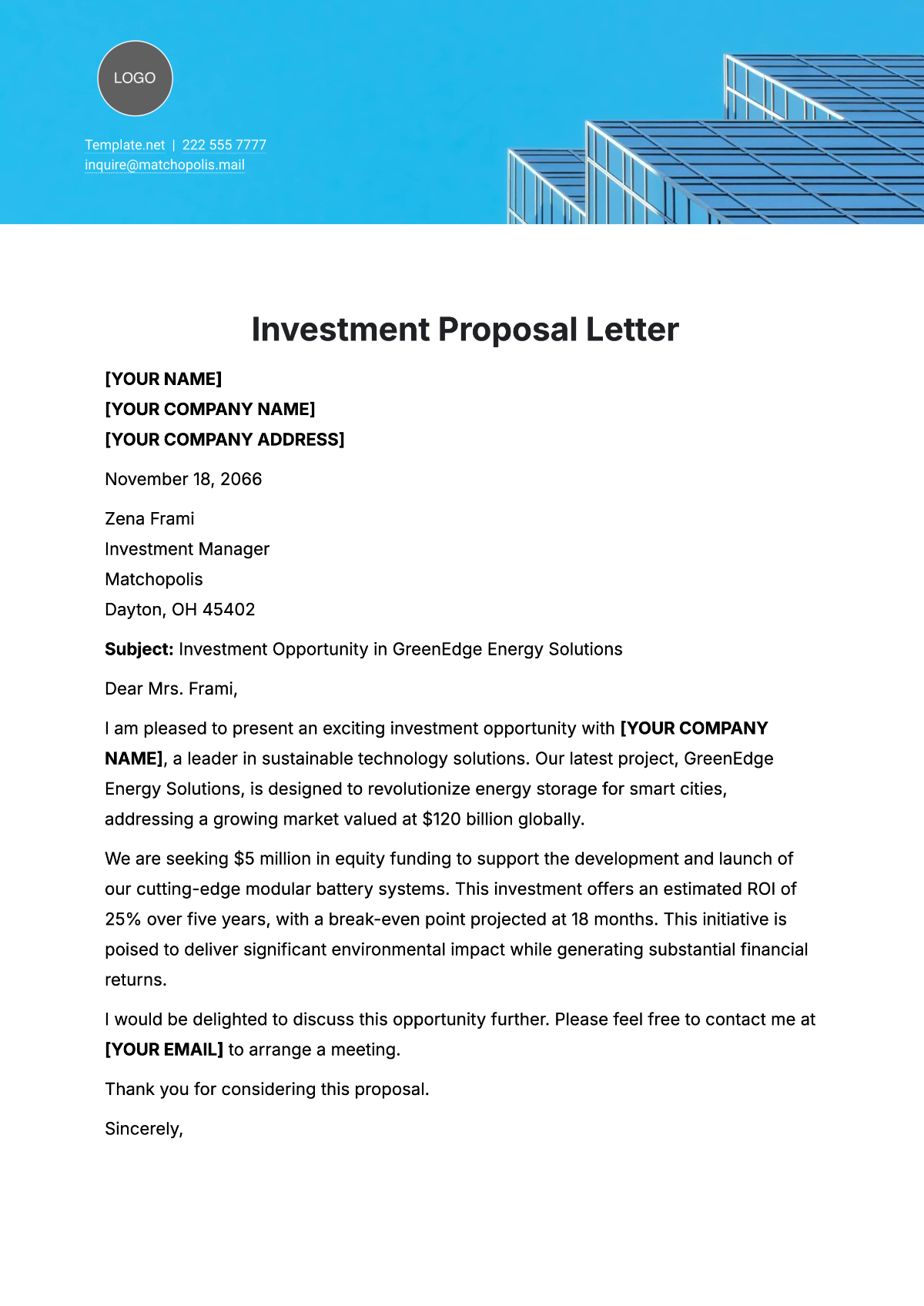
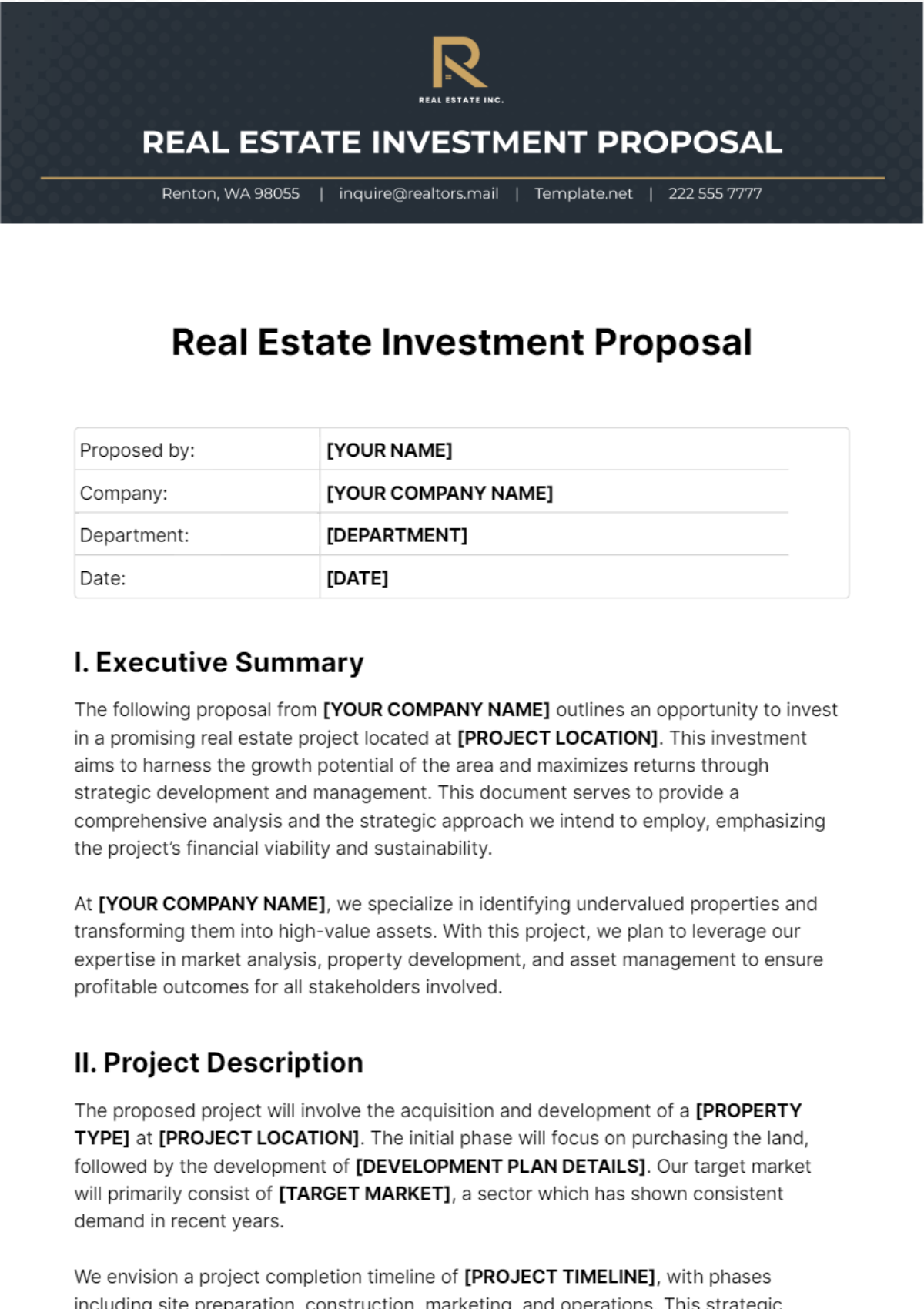
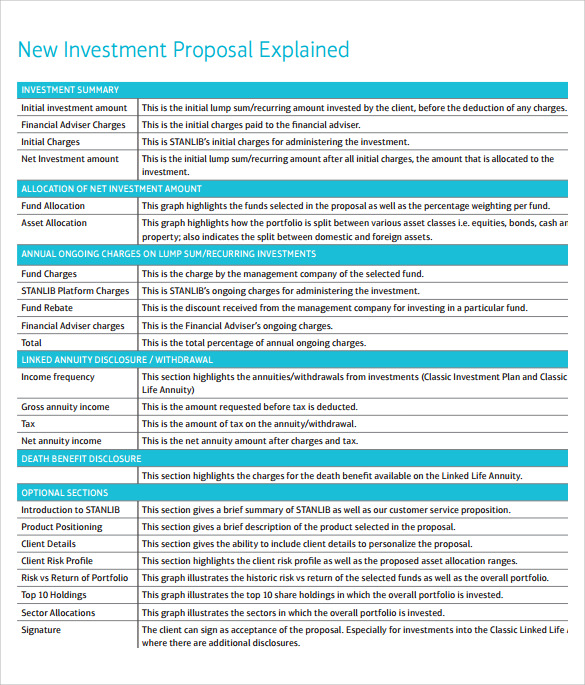
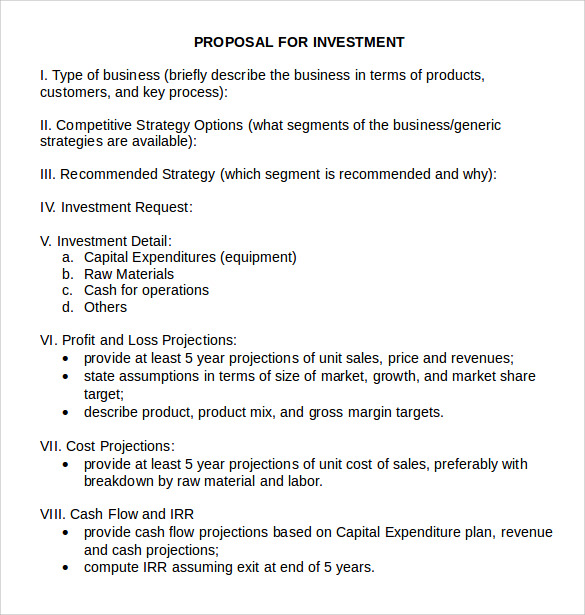
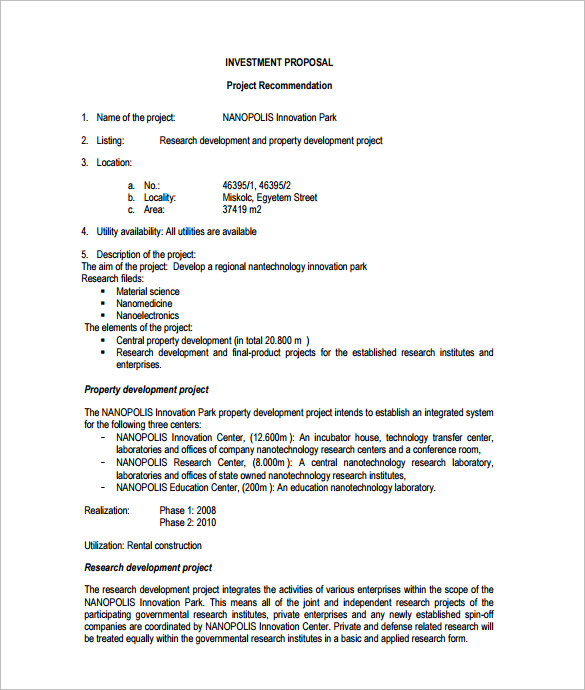
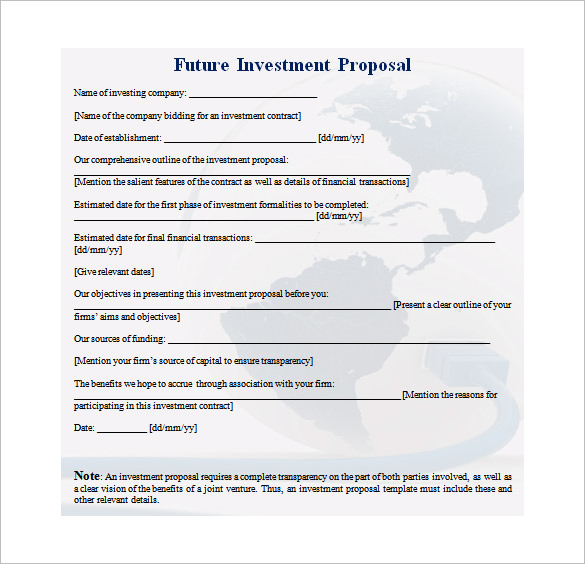
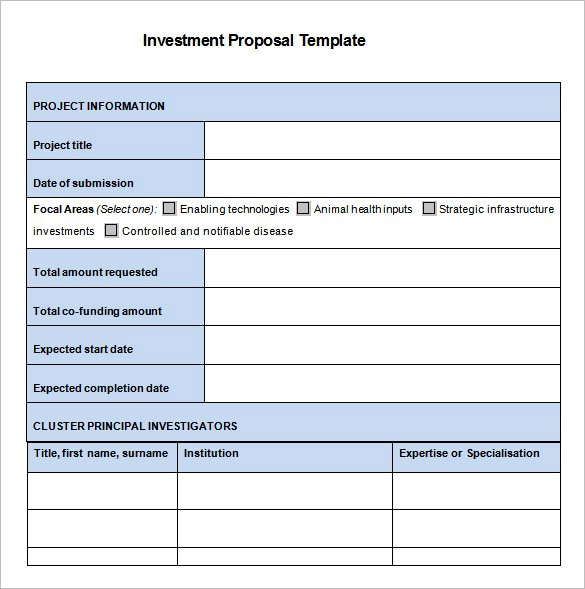
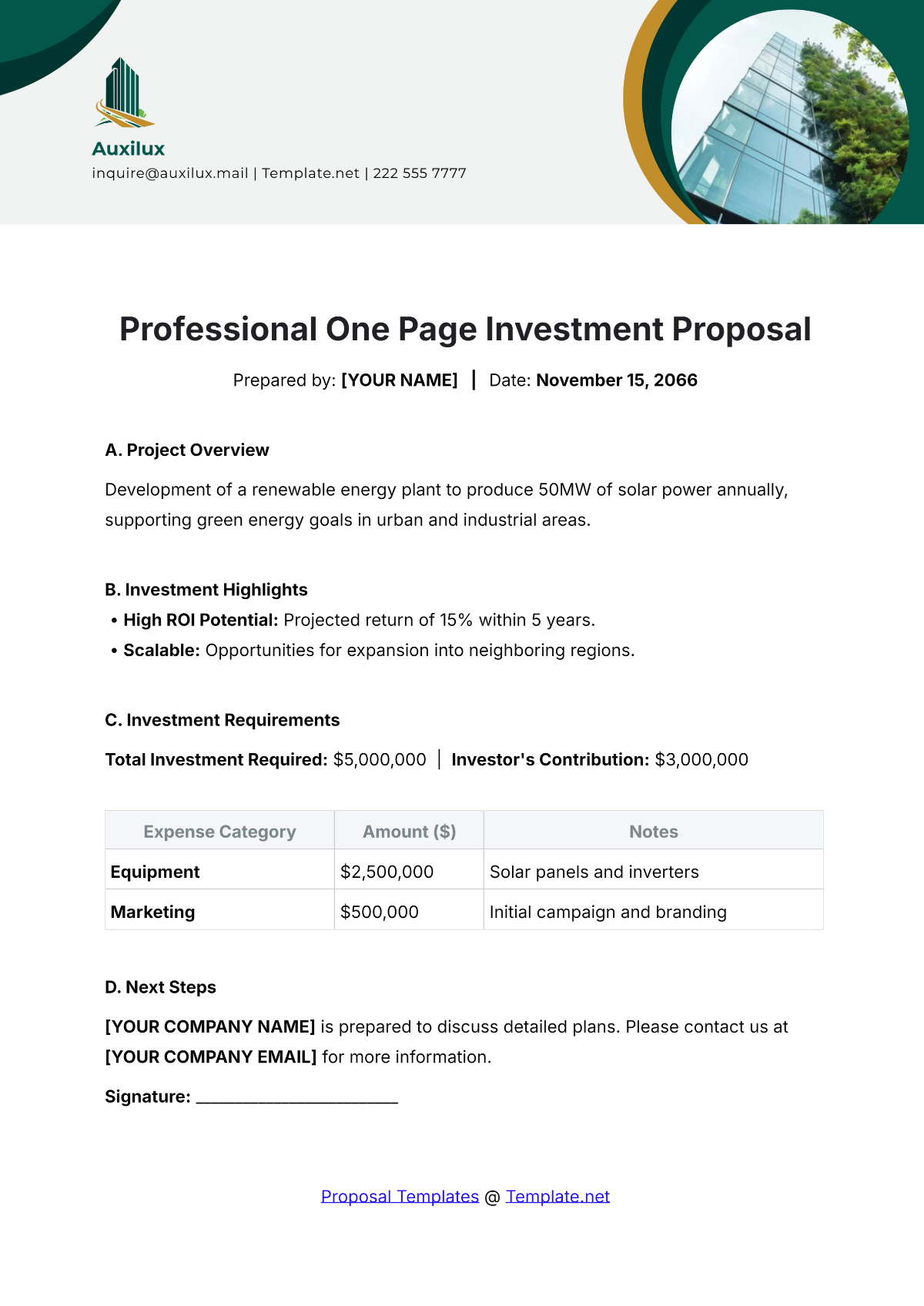
Examples
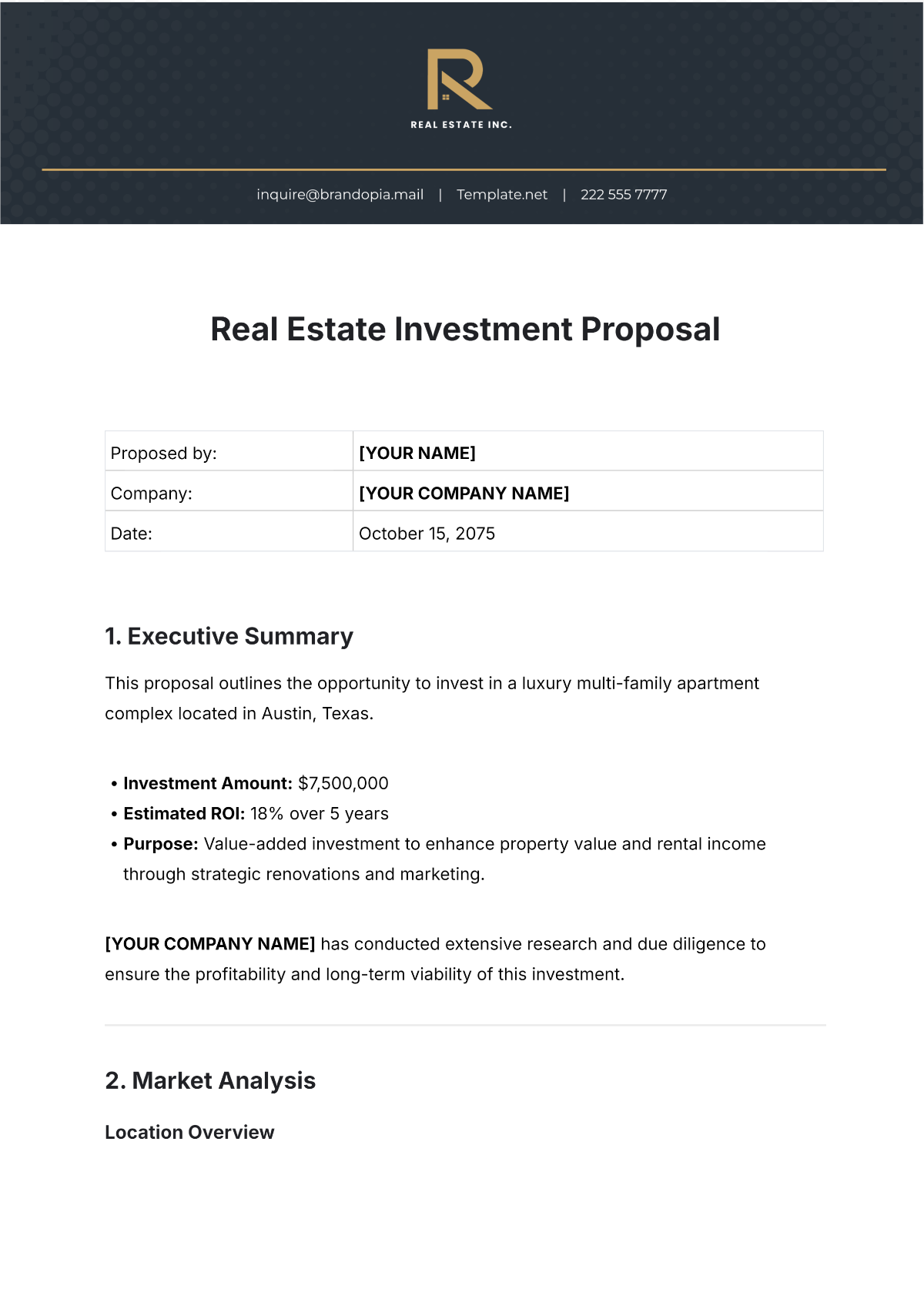
How to Create a Persuasive Investment Proposal
Creating a persuasive investment proposal requires careful planning and attention to detail. Here are some tips to help you craft a compelling document that attracts potential investors:
- Understand Your Audience: Tailor your proposal to the preferences and expectations of your target investors.
- Focus on the Value Proposition: Clearly articulate the unique value proposition of your business and why it is a lucrative investment opportunity.
- Provide Supporting Evidence: Back up your claims with data, research, and market analysis to validate the feasibility of your business idea.
- Be Transparent: Be honest and transparent about the risks and challenges associated with the venture to build trust with investors.
- Show Passion and Commitment: Demonstrate your passion, enthusiasm, and commitment to the business idea to inspire confidence in investors.
- Solicit Feedback: Seek feedback from mentors, advisors, or potential investors to refine and improve your investment proposal.
- Follow Up: Stay proactive and follow up with investors after presenting your proposal to address any questions or concerns they may have.
Conclusion
In conclusion, creating a compelling investment proposal is essential for attracting potential investors and securing funding for a business or project. By including key elements such as a clear executive summary, detailed business plan, thorough market analysis, realistic financial projections, and a strong team overview, entrepreneurs can increase their chances of convincing investors to fund their venture. By following the tips provided in this article and putting in the effort to create a persuasive proposal, entrepreneurs can showcase the potential for a profitable return on investment and bring their business ideas to life.
Investment Proposal Template – Download
