A monthly calendar is a simple and flexible way to organize appointments, deadlines, projects, personal activities, and important dates in one place. By viewing an entire month at once, you can understand how your schedule is developing and make better decisions about how to use your available time.
Unlike a calendar that already contains dates, holidays, or other information, an undated monthly calendar gives you a completely blank starting point. You can begin using it at any time of the year and customize it according to your personal, academic, professional, or household needs.
A blank monthly calendar can be especially useful when you want more control over your planning system. You can use the calendar to schedule appointments, track project deadlines, plan meals, set monthly goals, organize family activities, or simply create a visual overview of everything that needs your attention.
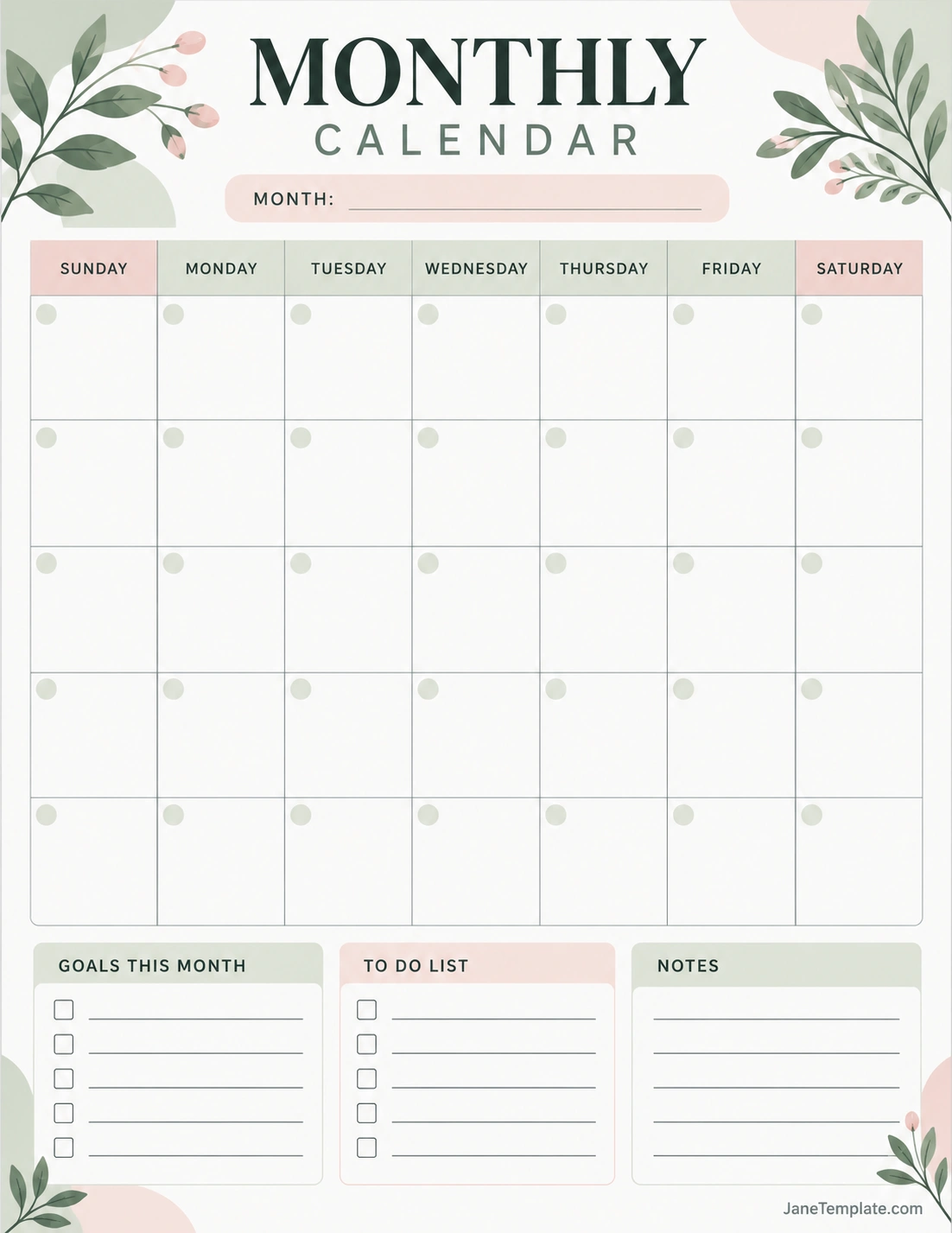
What Is a Monthly Calendar?
A monthly calendar is a planning tool that displays the days of a month in a grid format. Each day typically has a designated space where you can write appointments, events, deadlines, reminders, or other information.
A traditional calendar may be pre-filled with specific dates and holidays, while an undated monthly calendar leaves the date fields open for the user to customize. This makes it possible to use the same style of calendar at any point during the year.
Depending on the design, a monthly calendar may also include additional areas for goals, notes, tasks, reminders, or other planning information.
Why Use a Monthly Calendar?
Planning by month provides a broader perspective than a daily or weekly planner. Instead of focusing only on what needs to happen today, you can see upcoming events and deadlines several weeks in advance.
A monthly calendar can help you:
- Keep track of important dates and appointments.
- Visualize deadlines across an entire month.
- Plan personal and professional activities.
- Organize projects and recurring responsibilities.
- Set and review monthly goals.
- Plan meals and household activities.
- Identify busy periods before they become overwhelming.
- Coordinate schedules with family members or team members.
- Maintain a simple overview of upcoming commitments.
The main advantage is visibility. When everything is presented on one page, it becomes easier to understand how different responsibilities fit together.
Benefits of Using a Blank Monthly Calendar
A blank monthly calendar provides flexibility because it does not force you to follow a predetermined planning system. You decide what information belongs in each day or section.
Start Planning at Any Time
An undated calendar does not depend on a particular year or month. You can print a fresh copy whenever you need one and add the appropriate dates yourself.
Customize Your Planning System
Everyone has different scheduling needs. One person may use a calendar primarily for appointments, while another may use it for project deadlines, meal planning, or family activities.
A blank layout allows you to create a planning system that fits your routine rather than adapting your routine to a rigid calendar.
Reuse the Same Format
If you like a particular calendar layout, an undated template can be printed repeatedly. This allows you to maintain a consistent planning format throughout the year.
What Can You Plan on a Monthly Calendar?
A monthly calendar can be used for much more than recording appointments. Its large overview makes it suitable for many types of planning.
Appointments and Events
Write medical appointments, meetings, school events, birthdays, social activities, and other commitments directly into the appropriate dates.
Deadlines and Projects
Project milestones and deadlines are easier to manage when you can see them in relation to one another. A monthly calendar can help you identify periods when several deadlines occur close together.
Personal Goals
Use a goals section to identify what you want to accomplish during the month. These goals can relate to work, education, health, hobbies, home organization, or personal projects.
Meal Planning
A monthly calendar can also provide a convenient framework for meal planning. You can assign meals to specific days, identify busy evenings when quick meals are needed, and plan grocery shopping around your schedule.
Family Activities
Families can use a shared calendar to record school activities, appointments, extracurricular events, vacations, household responsibilities, and other important dates.
How to Use a Monthly Calendar Effectively
A monthly calendar becomes more useful when you have a consistent system for entering and reviewing information. The following approach can help you get started.
1. Add Fixed Dates First
Begin with events that already have a specific date. Add appointments, meetings, birthdays, deadlines, travel dates, and other commitments.
These fixed events provide the foundation for the rest of your monthly plan.
2. Add Important Deadlines
Next, record deadlines for projects, assignments, bills, applications, or other responsibilities. If a deadline requires preparation, consider adding earlier milestones rather than recording only the final due date.
3. Add Monthly Goals
Choose a few meaningful goals for the month. Keeping the list manageable makes it easier to focus on progress rather than creating an overwhelming collection of objectives.
4. Add Flexible Tasks
After fixed events and deadlines are recorded, add tasks that can be completed at flexible times. These might include errands, household projects, administrative work, or personal activities.
5. Review the Calendar Regularly
Check your calendar at the beginning of each week and whenever your schedule changes. Regular reviews help you notice upcoming deadlines and prevent important activities from being forgotten.
Monthly Calendar for Work and Projects
A monthly calendar can be a useful project management tool for individuals and teams. Instead of keeping deadlines in a separate list, you can place major milestones directly on a visual timeline.
For example, a project calendar might include the start date, research period, draft deadline, review period, final submission, and follow-up activities.
This makes it easier to see whether several important tasks are scheduled during the same period. If a particular week appears overloaded, you can identify the problem early and adjust the project timeline where possible.
Monthly Calendar for Students
Students can use a monthly calendar to manage assignments, examinations, class activities, study sessions, extracurricular events, and important academic deadlines.
A monthly view is particularly useful during busy periods because it provides a quick overview of multiple assignments and exams. Students can then divide larger projects into smaller tasks and work on them before the final deadline approaches.
For example, a major assignment could be divided into research, outline, first draft, revision, and submission milestones across several weeks.
Monthly Calendar for Home Organization
A monthly calendar can also help manage household responsibilities. Families can use it to organize cleaning schedules, appointments, grocery shopping, home maintenance, school activities, and other recurring tasks.
Because the entire month is visible, it becomes easier to coordinate household activities and avoid scheduling too many demanding responsibilities on the same day.
Monthly Calendar for Goal Setting
Goal setting becomes more practical when large objectives are connected to specific time periods. A monthly calendar can help turn general intentions into visible actions.
For example, instead of simply writing “organize the home,” you could schedule specific areas for different weeks. Similarly, a professional goal can be divided into research, planning, execution, and review periods.
The calendar does not have to contain every step. It only needs enough information to remind you what deserves attention during the month.
Monthly Calendar vs. Weekly Planner
A monthly calendar and a weekly planner complement each other rather than serving exactly the same purpose.
A monthly calendar provides a big-picture view. It is useful for seeing important dates, deadlines, events, and major commitments across several weeks.
A weekly planner provides more detailed space for organizing individual tasks, appointments, and daily activities.
Using both can create a practical planning system. The monthly calendar can establish the overall direction, while the weekly planner can break that plan into manageable actions.
Monthly Calendar vs. Digital Calendar
Digital calendars offer useful features such as reminders, notifications, recurring events, and synchronization across devices. However, a printable monthly calendar offers a different planning experience.
A physical calendar can be placed somewhere visible and updated by hand. Some people find that physically writing information makes their schedule easier to remember and understand.
You can also combine both approaches. Use a digital calendar for automatic reminders and a printable monthly calendar for a quick visual overview of your priorities and activities.
Tips for Creating a Useful Monthly Schedule
A monthly calendar works best when it remains simple enough to maintain. These tips can help you create a practical system:
- Keep important information visible: Record dates that genuinely affect your schedule.
- Use consistent symbols: Create simple marks for appointments, deadlines, birthdays, or other categories.
- Avoid overcrowding: Use short descriptions instead of writing lengthy details in each calendar box.
- Review upcoming weeks: Look ahead so you can prepare for busy periods.
- Track major goals: Keep your monthly objectives visible without filling the calendar with unnecessary tasks.
- Leave some flexibility: Not every day needs to be completely planned.
- Update changes promptly: Move or remove events when plans change.
How to Use an Undated Monthly Calendar
An undated monthly calendar is easy to customize. Begin by writing the month and year at the top. Then enter the correct dates into the calendar grid according to the appropriate day of the week.
Once the dates are established, add your appointments, deadlines, events, and other important information. You can then use any additional sections for goals, tasks, notes, or reminders.
The ability to fill in the calendar yourself makes an undated template useful for people who want to start planning immediately without waiting for the beginning of a calendar year.
Using a Printable Monthly Calendar
A printable monthly calendar provides a simple physical planning surface that can be kept on a desk, wall, clipboard, or inside a planner binder.
Printing a new page each month also makes it easy to keep completed calendars as records. You can look back at previous months to review deadlines, events, completed goals, or recurring patterns in your schedule.
A printable template can also be useful when you want a clean page without unnecessary information competing for attention.
How to Make Your Monthly Calendar Work Better
The best calendar is one that you will actually use. Start with the information that matters most and avoid creating a system that requires too much maintenance.
At the beginning of each month, review your upcoming commitments and identify your main priorities. During the month, update the calendar when appointments change or new deadlines appear.
At the end of the month, take a few minutes to review what was completed, what was postponed, and what needs to carry into the next month. This simple review can make future planning more accurate.
Final Thoughts on Monthly Calendars
A monthly calendar provides a flexible way to organize appointments, deadlines, projects, goals, and personal activities while maintaining a clear view of the entire month. An undated format makes the planning process even more adaptable because you can begin using it at any time of the year.
Whether you need a calendar for work, school, family organization, meal planning, project management, or personal goals, a simple monthly layout can provide the structure needed to keep important information visible and manageable.
The most effective calendar is not necessarily the most complicated. A clean, customizable layout with enough space for important dates, goals, tasks, and notes can provide everything you need to plan your month with greater clarity and flexibility.
Download: Monthly Calendar Template
