A note card is a simple yet effective tool for recording important information, organizing ideas, and reviewing what you learn. Whether you are studying for an exam, conducting research, preparing a presentation, or organizing personal reminders, note cards help break large amounts of information into smaller, manageable pieces.
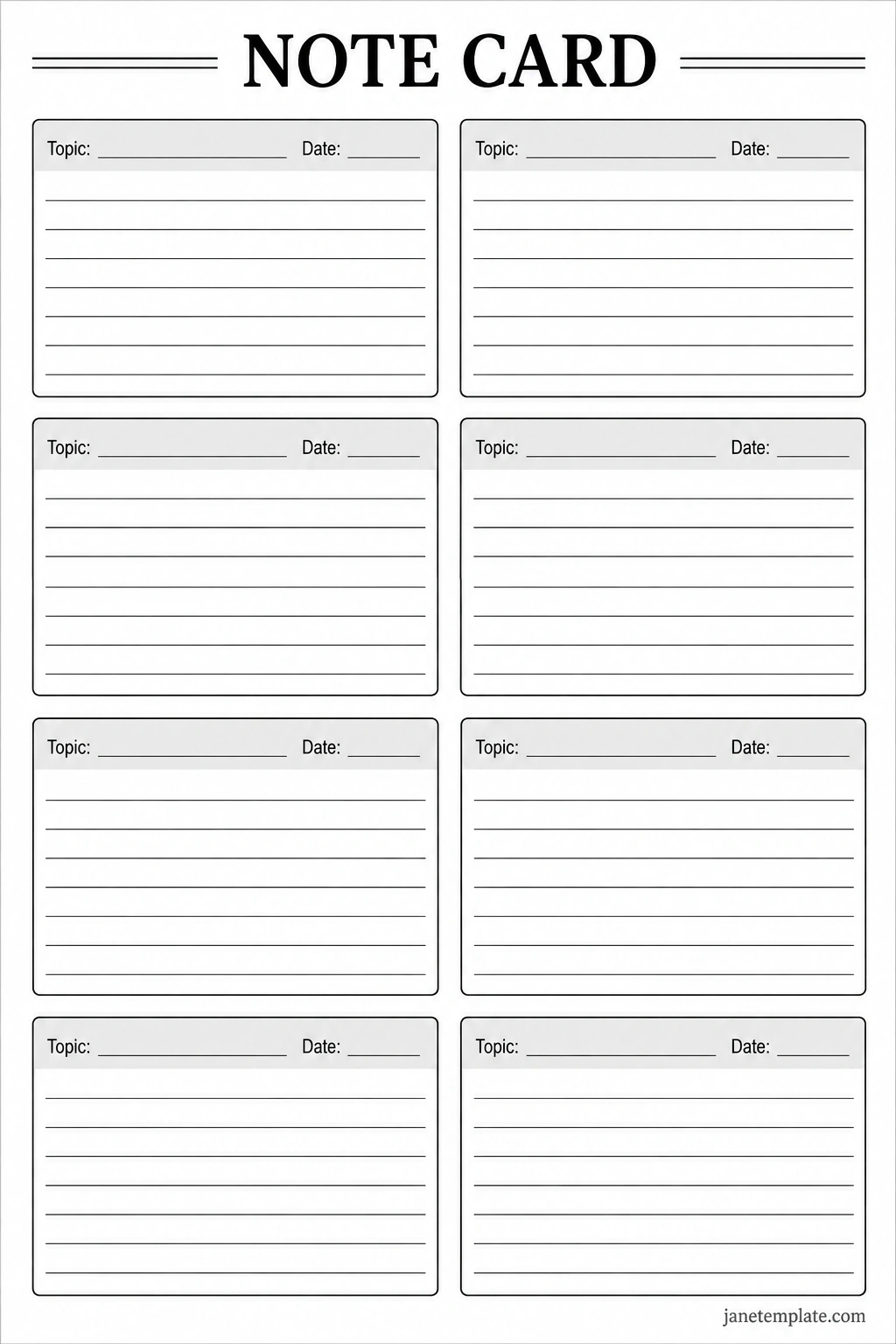
With a printable note card template, you can create organized notes without starting from scratch. Each card can focus on one topic, key concept, question, or important detail, making it easier to review information and find what you need.
In this guide, you will learn how to use note cards effectively, explore their benefits for studying and research, and discover practical ways to organize your notes. You will also find tips for creating useful study cards and answers to frequently asked questions.
What Is a Note Card?
A note card is a small card used to record information in a concise and organized format. It can contain a definition, key fact, research detail, question, reminder, or short summary of a larger topic.
Note cards are available in physical and digital formats. Traditional index cards are useful for handwritten notes, while printable note card sheets allow users to prepare several cards on one page. Digital cards provide another option for organizing information on a computer or mobile device.
The main purpose of a note card is to focus attention on one manageable piece of information. Instead of reviewing an entire chapter at once, for example, you can create separate cards for definitions, major concepts, important dates, and questions.
Benefits of Using Note Cards
Note cards can support studying, research, planning, and everyday organization. Their simple format encourages users to select the most important information instead of copying large blocks of text.
1. Make Information Easier to Review
Breaking a large topic into smaller cards makes review sessions easier to organize. You can sort cards by subject, chapter, priority, or difficulty and focus on the information that needs the most attention.
2. Support Active Recall
Study note cards can be used to test your memory instead of simply rereading notes. Write a question on one side and its answer on the other. Try answering the question before checking the response.
This active recall approach encourages you to retrieve information from memory. Repeating the process over several study sessions can help reinforce learning.
3. Improve Research Organization
Researchers and students can use note cards to record source details, quotations, evidence, and summaries. A consistent format makes it easier to compare information and connect ideas from different sources.
4. Encourage Focused Thinking
Because each card has limited space, you must decide which information matters most. This process can help you identify key ideas, remove unnecessary details, and summarize complicated topics in your own words.
5. Keep Information Portable
Physical note cards are easy to carry, rearrange, and review in short sessions. Digital note cards offer similar convenience while allowing users to search, edit, and organize information electronically.
What to Include on a Note Card
The information on a note card depends on its purpose. A study card requires different details from a research card or personal reminder.
Topic and Date
Use the topic field to identify the subject of the card. A date can help you track when the note was created, when the information was reviewed, or when a task needs attention.
Main Idea or Key Information
Record the most important point in a few clear sentences. Avoid copying an entire textbook paragraph or article. Instead, summarize the information using concise language that makes sense to you.
Questions and Answers
For study cards, place a question on the front and the answer on the back. This structure works well for vocabulary, scientific concepts, historical events, formulas, and other material that requires recall.
Sources and References
When taking research notes, record the source alongside the information. Include the author, title, publication date, page number, or URL as appropriate. This practice helps you locate the original material and prepare accurate citations later.
Additional Notes
Use the remaining space for examples, keywords, reminders, or connections to other topics. Keep the content focused so that the card remains easy to review.
How to Use Note Cards for Studying
Note cards can turn a large set of class notes into a practical study system. Follow these steps to create cards that support focused review.
Step 1: Choose One Topic per Card
Start with your textbook, class notes, or study guide. Identify the important concepts and create a separate card for each definition, question, formula, or major idea.
Avoid combining too many unrelated facts on one card. Keeping each card focused makes it easier to identify what you know and what you still need to review.
Step 2: Write Clear Questions
Turn important information into questions that require you to recall the answer. For example, instead of writing a complete paragraph about photosynthesis, ask, “What is photosynthesis?” on the front of the card.
Write the explanation on the back using concise language. Include an example if it helps clarify the concept.
Step 3: Test Yourself Before Looking at the Answer
Read the question and try to answer it from memory. Then turn the card over and check your response. Mark difficult cards so you can revisit them more frequently.
Step 4: Review Cards Over Multiple Sessions
Rather than reviewing every card only once, return to the material over several sessions. You can schedule reviews over increasing intervals, with more frequent practice for difficult information.
This approach, often called spaced repetition, helps distribute practice over time instead of concentrating all review into one long session.
Step 5: Organize Cards by Progress
Separate cards into groups based on how confidently you can answer them. For example, use categories such as “Need Practice,” “Improving,” and “Know Well.”
Review challenging cards more often and continue checking familiar cards periodically. Adjust the system to suit the amount of material and time available.
How to Use Note Cards for Research and Writing
Note cards are also useful when preparing essays, reports, presentations, and research projects. They help separate information by theme and make it easier to build an organized argument.
Record One Main Idea at a Time
Create a card for each relevant idea, fact, quotation, or piece of evidence. Add a short heading that explains the card’s main point so you can identify its purpose quickly.
Track the Original Source
Record enough bibliographic information to locate the source later. For direct quotations, preserve the original wording accurately and include the page number or other relevant location when available.
Clearly distinguish direct quotations from paraphrases and your own interpretations. This reduces the risk of accidental plagiarism and makes the writing process more reliable.
Group Cards by Theme
Once you have collected your research notes, sort them into themes, questions, or sections of your project. Look for patterns, similarities, differences, and gaps in the available evidence.
This method can help you create an outline before writing a complete draft. It also allows you to rearrange ideas without rewriting your entire set of notes.
Tips for Creating Effective Note Cards
A useful note card should be clear, readable, and easy to review. These practical tips can help you get more value from each card.
- Keep each card focused: Limit each card to one main idea or question.
- Use simple language: Write explanations that are easy to understand and remember.
- Highlight important terms: Use headings or consistent formatting to make key information stand out.
- Include examples: Add a short example when it clarifies an abstract concept.
- Use consistent categories: Organize cards by subject, project, or chapter.
- Review actively: Test your memory instead of only reading the cards.
- Update information: Correct mistakes and remove outdated details when necessary.
- Keep research sources: Record source information whenever a card contains material from another author.
Printable Note Card Template vs. Digital Note Cards
Both printable and digital note cards can help organize information. Your choice depends on your learning preferences, available tools, and the amount of material you need to manage.
- Printable note cards: Useful for handwriting notes, cutting out individual cards, sorting them physically, and studying without a screen.
- Digital note cards: Useful for searching, editing, organizing large collections, and accessing notes across devices.
- Printable note card sheets: Convenient when you want multiple cards on a standard page and prefer to print only what you need.
If you prefer paper, choose a printable note card template with enough writing space and clear borders. For digital study systems, consider tools that support question-and-answer cards, review scheduling, and topic-based organization.
Frequently Asked Questions About Note Cards
What is a note card used for?
A note card is used to record concise information for studying, research, writing, planning, and personal organization. Each card can focus on one main idea, question, fact, or reminder.
How do note cards help with studying?
Note cards help organize information into smaller topics and can support active recall. Question-and-answer cards allow students to test their memory and identify concepts that need additional practice.
What should I write on a note card?
Include a topic, main idea, question, definition, summary, or reminder. For research, add source details so you can locate the original material. Keep the information concise and relevant to the card’s purpose.
Are note cards and index cards the same thing?
The terms are often used interchangeably. An index card is a physical card commonly used for recording notes, while a note card can refer more broadly to a card used for information, study, or reminders.
Can I use note cards for research papers?
Yes. Research note cards can help organize evidence, quotations, summaries, and source information. Grouping the cards by theme can make it easier to develop an outline and organize a research paper.
How many note cards should I make for studying?
The number depends on the amount of material and the complexity of the subject. Create enough cards to cover the essential concepts, but avoid splitting information into unnecessary fragments that make studying inefficient.
Are printable note card templates useful?
Yes. Printable note card templates provide consistent writing spaces and help you prepare several cards at once. They are useful for study notes, research records, vocabulary practice, and everyday reminders.
What is the best way to organize note cards?
Group cards by subject, chapter, project, or topic. For studying, you can also separate cards according to how confidently you can answer them. For research, organize them by theme and keep the original source information attached.
Conclusion
Note cards provide a simple and flexible way to record information, organize ideas, and review important material. By focusing on one main idea per card, you can make large topics easier to manage and create a practical system for studying, research, and everyday planning.
Choose a printable note card template or digital format that suits your needs. Keep each card concise, organize related information together, and use active recall when studying. For research projects, remember to record original sources and distinguish quotations from your own ideas.
With a consistent approach, note cards can become a valuable tool for improving organization, supporting effective review, and making information easier to retrieve when you need it.
Download: Note Card Template
