Unexpected veterinary expenses can be stressful, especially when your pet needs urgent treatment, surgery, or ongoing medical care. A veterinary payment plan can help make these expenses more manageable by dividing the total bill into smaller payments over an agreed period. Instead of paying the entire amount upfront, eligible pet owners may be able to spread their costs across several installments.
Whether you are a pet owner organizing upcoming treatment expenses or a veterinary clinic looking for a simple payment tracking system, having a written payment plan can make the process easier. A veterinary payment plan worksheet helps organize treatment costs, down payments, installment amounts, due dates, and outstanding balances in one place.
In this guide, you will learn how veterinary payment plans work, what information to include, and how to use a printable worksheet to organize your pet’s medical expenses.
What Is a Veterinary Payment Plan?
A veterinary payment plan is an arrangement that allows pet owners to pay veterinary expenses over time rather than covering the entire treatment cost in one payment. Depending on the clinic and financing provider, payments may be divided into weekly, biweekly, or monthly installments.
These arrangements can be useful for expensive procedures, emergency treatment, dental care, surgery, diagnostic testing, and other veterinary services.
A typical veterinary payment plan may include:
- Total treatment cost: The complete estimated or confirmed cost of veterinary services.
- Down payment: The initial amount paid before or when treatment begins.
- Remaining balance: The amount left after subtracting the down payment.
- Installment amount: The amount due for each scheduled payment.
- Payment frequency: How often payments must be made.
- Interest or fees: Any additional charges associated with the arrangement.
- Payment due dates: The dates when each installment must be paid.
Not every veterinary clinic offers in-house payment arrangements. Some clinics work with third-party financing companies, while others require payment before providing non-emergency services. Always confirm the available options directly with your veterinary provider.
How Does a Veterinary Payment Plan Work?
A veterinary payment plan generally starts with an estimate of the treatment expenses. The clinic explains the recommended services and their costs before discussing available payment arrangements.
Once both parties agree on the payment terms, the total amount can be divided into scheduled installments according to the agreed conditions.
1. Calculate the Total Veterinary Bill
Start by listing all expected expenses. Depending on your pet’s treatment, the bill may include consultations, laboratory tests, medications, diagnostic imaging, surgery, hospitalization, and follow-up appointments.
Ask the clinic for an itemized estimate so you understand exactly what is included in the total cost.
2. Determine the Down Payment
Some payment arrangements require an initial payment. This amount reduces the outstanding balance before the installment schedule begins.
For example, if your pet’s treatment costs $1,200 and you make a $300 down payment, the remaining balance is $900.
3. Choose an Installment Schedule
The remaining balance can be divided into an agreed number of payments. The schedule may depend on the clinic’s policies, the financing provider, and your financial circumstances.
For example, a $900 balance divided into six equal monthly payments would result in payments of $150 per month, assuming there are no additional fees or interest charges.
4. Record Every Payment
Keep track of each installment, including its due date, amount paid, and remaining balance. A payment tracker makes it easier to identify upcoming payments and avoid confusion about the amount still owed.
What to Include in a Veterinary Payment Plan Worksheet
A well-organized veterinary payment plan worksheet should contain the essential information needed to understand and manage the payment arrangement. It should be simple enough for pet owners and veterinary staff to complete without unnecessary paperwork.
Pet and Owner Information
Begin with basic identification details, including:
- Pet’s name and species.
- Breed and age.
- Pet owner’s full name.
- Contact number and email address.
- Veterinary clinic name and contact information.
These details help ensure that the payment record is associated with the correct patient and account.
Treatment and Cost Breakdown
List the veterinary services included in the estimate. Separating individual expenses makes the total easier to understand and helps identify additional costs that may arise during treatment.
Common cost categories include:
- Consultation and examination fees.
- Laboratory tests and diagnostic imaging.
- Prescription medications.
- Surgical procedures.
- Hospitalization and recovery care.
- Follow-up examinations.
Payment Terms and Installment Details
This section explains how the veterinary bill will be paid. Include the total amount, down payment, remaining balance, number of installments, payment frequency, and any applicable interest or administrative fees.
Clearly documenting these details helps prevent misunderstandings between the pet owner and veterinary clinic.
Payment History and Remaining Balance
A payment history section should provide enough space to record each transaction. Useful columns include payment number, due date, amount due, amount paid, remaining balance, and payment status.
Both parties can use this information to verify completed payments and identify outstanding amounts.
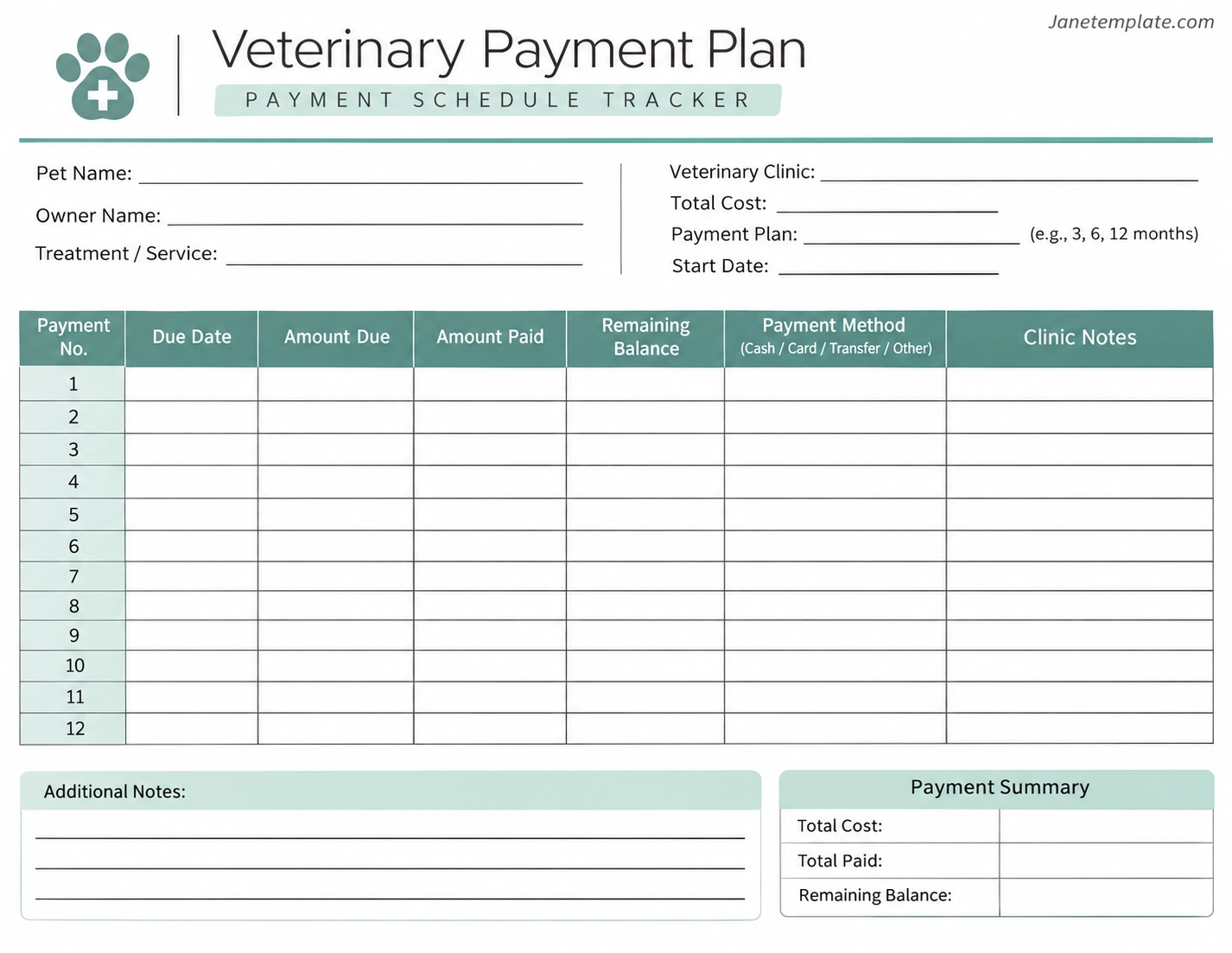
Free Veterinary Payment Plan Template
Using a printable veterinary payment plan template is a practical way to organize pet treatment expenses and installment arrangements. Instead of creating a payment schedule from scratch, you can use a ready-made worksheet to record the necessary information.
The following printable is designed to help pet owners and veterinary clinics document scheduled payments, monitor outstanding balances, and keep important financial details together.
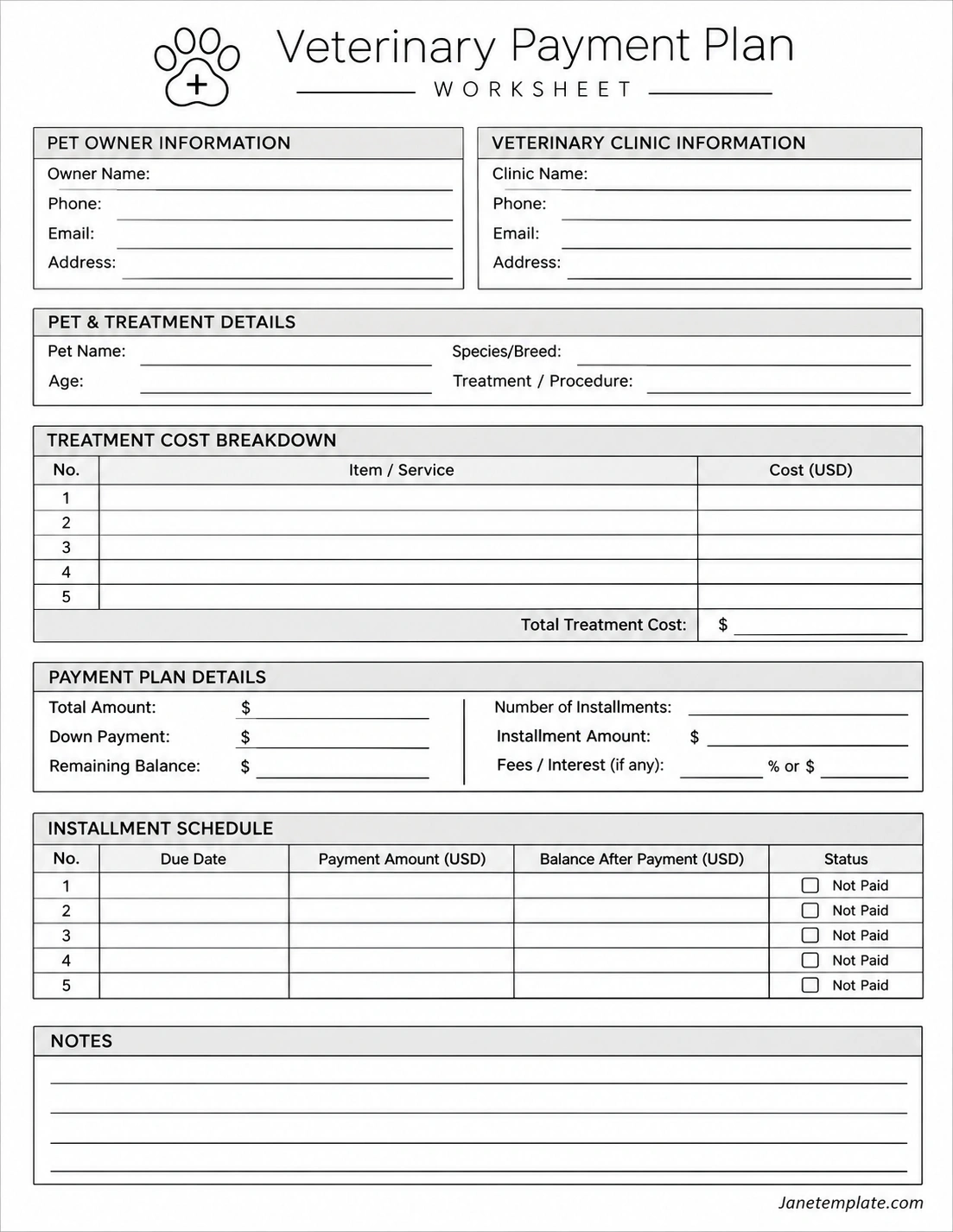
Veterinary Payment Plan Worksheet for Cost Calculations
Before agreeing to an installment arrangement, it is helpful to calculate the full treatment cost and understand how much you will need to pay initially. This worksheet provides dedicated sections for treatment expenses, down payments, remaining balances, and installment amounts.
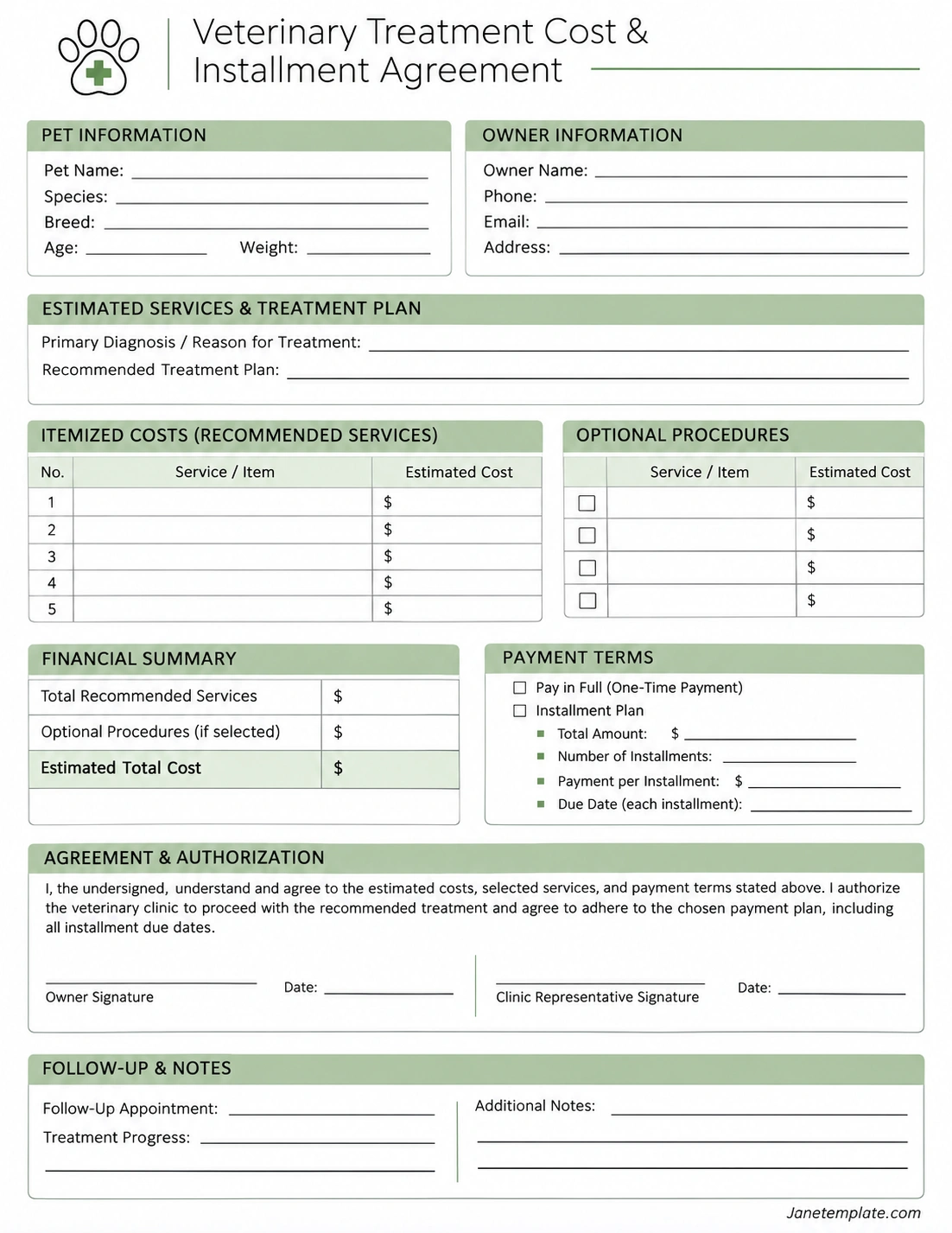
Veterinary Treatment Cost and Installment Agreement
For arrangements involving a veterinary clinic, documenting the agreed terms is particularly important. A written agreement can identify the services covered, estimated costs, payment frequency, applicable fees, and responsibilities of each party.
Example of a Veterinary Payment Plan Calculation
Understanding the numbers can make an installment arrangement easier to evaluate. Consider the following hypothetical example of a pet owner arranging payments for veterinary treatment.
- Total treatment cost: $1,500
- Initial down payment: $300
- Remaining balance: $1,200
- Number of installments: 6 months
- Monthly installment: $200
- Additional interest: $0
In this example, the pet owner pays $300 initially and then makes six monthly payments of $200. The total amount paid is $1,500.
If interest, service charges, or other fees apply, the actual installment amount may be higher. Always calculate the final repayment total using the written terms provided by the clinic or financing company.
Tips for Managing Veterinary Expenses
Planning ahead can make veterinary expenses easier to manage. Although not every medical expense can be predicted, a few practical habits can help pet owners prepare for future costs.
1. Request an Itemized Treatment Estimate
Ask your veterinarian for a breakdown of recommended services and estimated expenses. This helps you understand the treatment plan and identify which costs are essential or optional.
2. Compare Available Payment Options
Ask whether the clinic offers in-house installments or works with third-party financing providers. Compare repayment periods, interest rates, promotional conditions, and additional fees before choosing an option.
3. Understand the Full Repayment Amount
Do not focus only on the monthly installment. Check the total repayment amount, interest charges, late-payment penalties, and other contractual conditions.
4. Set Payment Reminders
Record every due date in a calendar or reminder application. Consistent reminders can help prevent missed payments and unnecessary late fees.
5. Consider Building a Pet Emergency Fund
Setting aside a small amount regularly can help cover unexpected veterinary expenses. Even modest savings can provide additional flexibility when your pet needs medical attention.
6. Keep Payment Records
Save receipts, invoices, financing documents, and completed payment schedules. These records can help resolve billing questions and confirm that installments have been paid.
Common Mistakes to Avoid When Using a Veterinary Payment Plan
Even a straightforward payment arrangement can become confusing if important details are overlooked. Avoid these common mistakes:
- Ignoring additional charges: Always check whether interest, processing fees, or administrative costs apply.
- Choosing an unrealistic installment: Make sure the payment schedule fits your regular budget.
- Not reviewing the agreement: Read the terms carefully before signing or accepting financing.
- Missing payment deadlines: Keep a clear record of due dates and payment confirmations.
- Failing to update the balance: Record every completed installment to maintain accurate financial information.
- Assuming every clinic offers financing: Confirm payment options with the veterinary provider before treatment.
Frequently Asked Questions About Veterinary Payment Plans
Can I arrange a payment plan for veterinary bills?
Yes, some veterinary clinics offer payment arrangements that allow eligible pet owners to pay their bills in installments. Other clinics may work with third-party financing providers. Availability and eligibility depend on the provider’s policies.
Do veterinary payment plans charge interest?
Some arrangements are interest-free, while others include interest, service charges, or administrative fees. Review the repayment terms carefully to understand the total amount you will pay.
What information should a veterinary payment plan include?
A veterinary payment plan should include the pet owner’s information, veterinary clinic details, treatment cost breakdown, down payment, remaining balance, installment amounts, due dates, applicable fees, and payment history.
Can I use a veterinary payment plan worksheet at home?
Yes. Pet owners can use a printable worksheet to estimate treatment expenses, compare installment options, organize due dates, and monitor payments. However, the worksheet itself does not provide financing or guarantee approval.
Can veterinary clinics use payment plan templates?
Yes. Veterinary clinics can use payment plan templates as administrative tools to document agreed payment arrangements, record transactions, and communicate outstanding balances. Clinics should ensure that their agreements comply with applicable laws and business policies.
What happens if I miss a veterinary payment?
The consequences depend on the payment agreement or financing provider. Possible outcomes include late fees, additional interest, collection activity, or other contractual consequences. Contact the provider as soon as possible if you expect difficulty making a scheduled payment.
Is a veterinary payment plan the same as pet insurance?
No. Pet insurance is an insurance product that may reimburse eligible veterinary expenses according to the policy’s coverage and conditions. A veterinary payment plan is a method of paying a bill over time. The two options serve different purposes.
Conclusion
A veterinary payment plan can make unexpected pet care expenses easier to organize by dividing a larger bill into manageable installments. Before agreeing to any arrangement, understand the total treatment cost, down payment, repayment schedule, and applicable fees.
A printable veterinary payment plan worksheet makes it easy to document treatment expenses, track scheduled payments, and monitor outstanding balances. Whether you are a pet owner planning medical expenses or a veterinary clinic organizing payment records, a clear written schedule can make the process more transparent and manageable.
Download and use a veterinary payment plan template to keep your pet care expenses organized and your payment records easy to follow.
