A cruise payment plan is a helpful way to organize and track the money you need to pay for an upcoming cruise vacation. Instead of paying the entire trip cost at once, many cruise lines allow passengers to secure a reservation with an initial deposit and pay the remaining balance through scheduled installments before the final payment deadline.
Planning a cruise involves more than choosing a destination and booking a cabin. You also need to manage deposits, installment payments, due dates, and additional travel expenses. Without a clear payment schedule, it can be easy to forget an upcoming payment or underestimate how much money you still need to save.
A printable cruise payment plan template makes this process easier. It provides a convenient place to record your total cruise cost, deposit, payment dates, amounts paid, and remaining balance. Whether you are planning a family vacation, a couple’s getaway, or a group cruise, a simple payment tracker can help you stay organized.
In this guide, you will discover different cruise payment plan templates, learn how to create a payment schedule, and find practical tips for managing your cruise vacation budget.
What Is a Cruise Payment Plan?
A cruise payment plan is an arrangement that allows passengers to pay for a cruise reservation over time instead of paying the entire booking amount upfront. Depending on the cruise line, passengers may pay an initial deposit followed by one or more installments before the final payment deadline.
The payment schedule typically depends on the cruise line, booking date, sailing date, fare type, and reservation conditions. Some bookings may offer flexible installment options, while others require the remaining balance by a specific deadline.
A printable cruise payment tracker is a separate planning tool that helps you monitor these payments. It does not create or change the cruise line’s official payment arrangement.
A typical cruise payment worksheet includes:
- Total cruise booking cost.
- Initial deposit amount.
- Deposit payment date.
- Scheduled installment amounts.
- Individual payment due dates.
- Total amount already paid.
- Remaining balance.
- Final payment deadline.
Using a payment tracker helps you understand your financial commitment and prepare for upcoming payments without losing track of important booking details.
Free Printable Cruise Payment Plan Templates
A printable cruise payment plan template provides an organized way to manage your cruise reservation payments. You can use it to record your booking information, schedule installments, and check off payments as you complete them.
Here are three different designs to suit different cruise planning preferences.
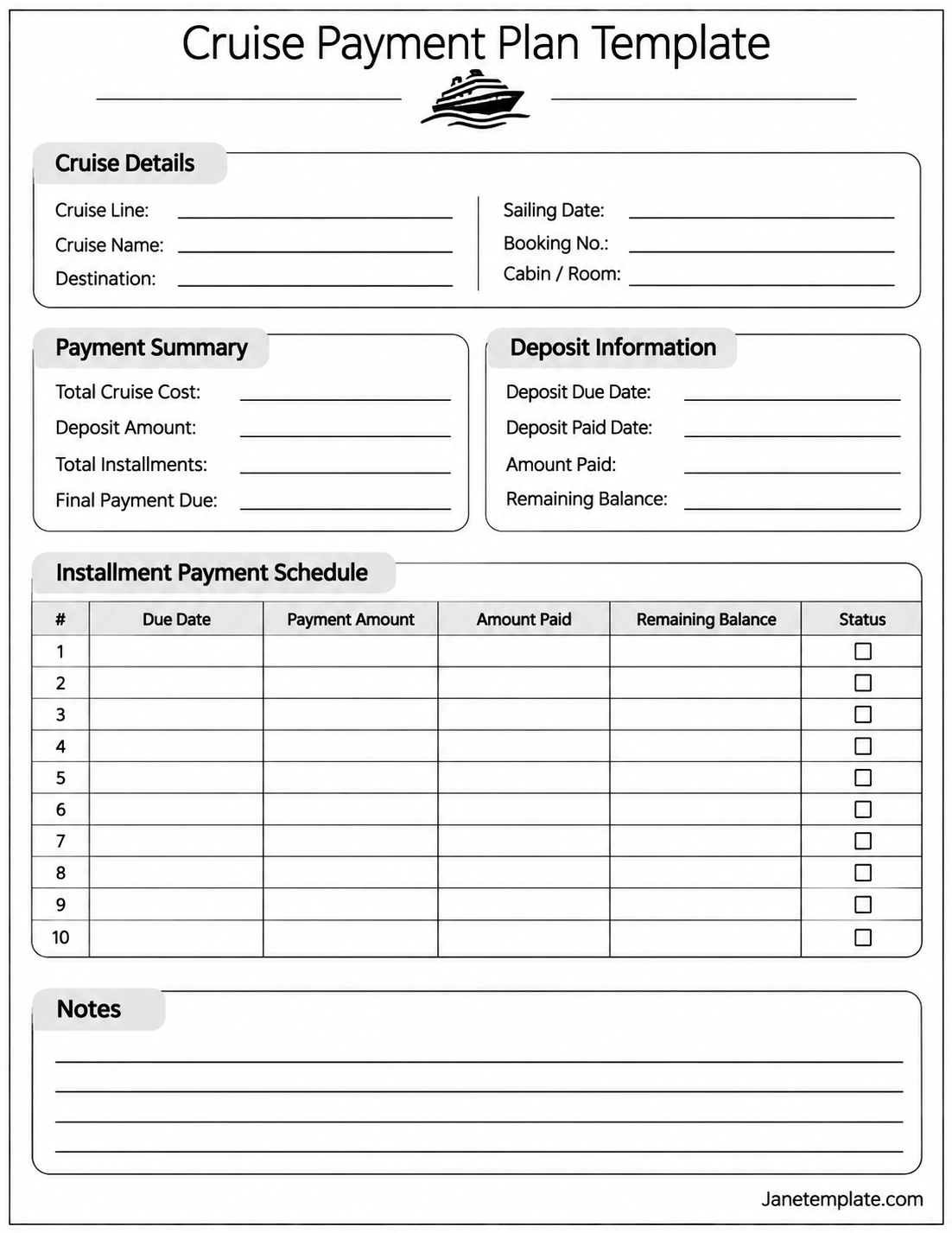
1. Classic Cruise Payment Plan Template
This design features a traditional payment schedule with dedicated sections for cruise details, payment summaries, installment amounts, due dates, and remaining balances. It is ideal for travelers who want a straightforward way to organize their cruise expenses.
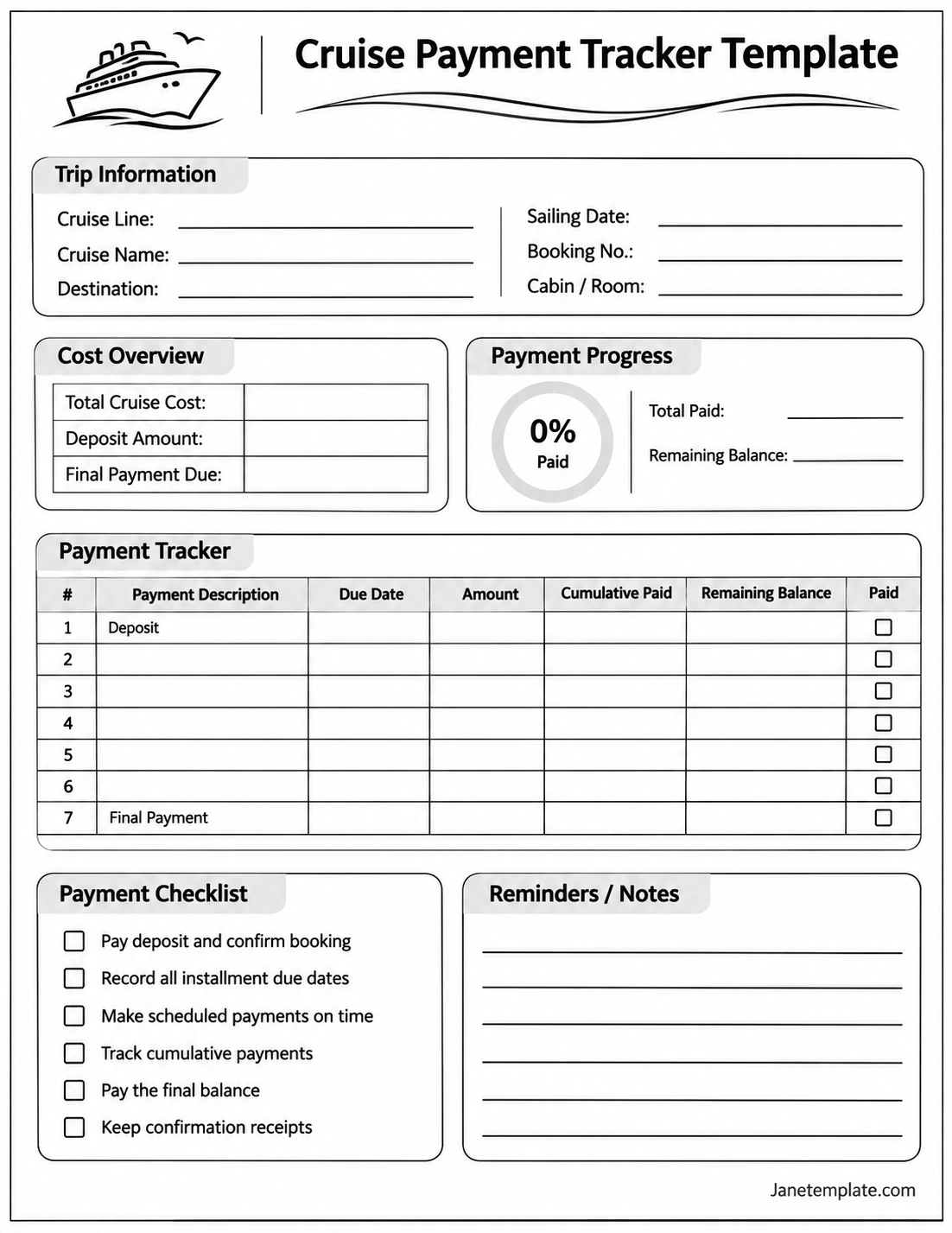
2. Cruise Payment Tracker Template
This layout focuses on tracking individual payments and monitoring how much you have paid over time. It includes a trip information section, cost overview, installment tracker, cumulative payment columns, and a reminder checklist.
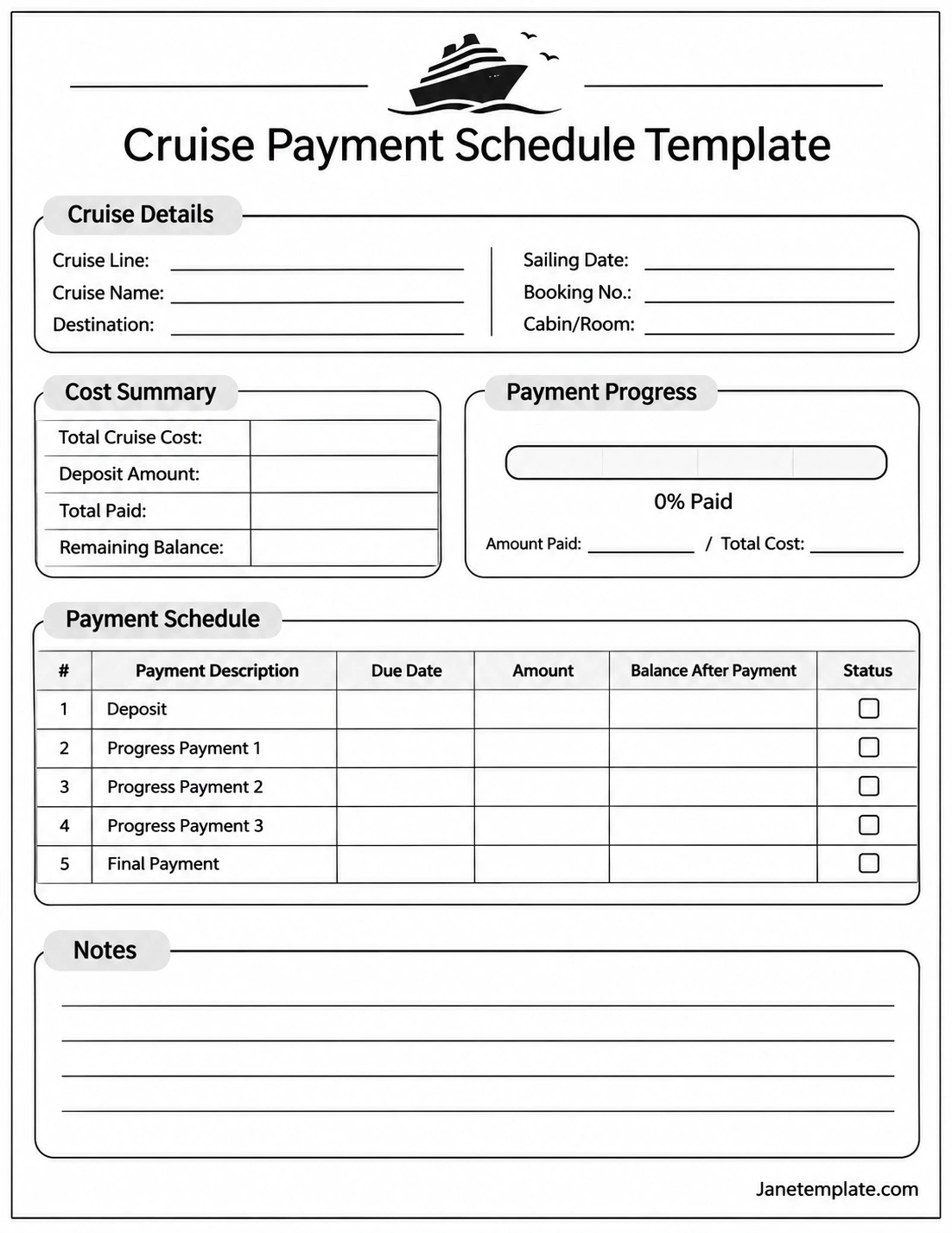
3. Cruise Payment Schedule Template
This modern design features a clear payment schedule with separate rows for the initial deposit, progress payments, and final payment. It also includes a payment progress section to help you monitor how much of the cruise cost has already been paid.
Choose the layout that best matches your planning style. Print a new copy for each cruise reservation or keep one worksheet for your entire vacation payment schedule.
What Information Should a Cruise Payment Tracker Include?
A useful cruise payment tracker should contain enough information to help you understand your booking and monitor every scheduled payment. The following sections are especially helpful.
1. Cruise Booking Details
Start by recording the basic information about your reservation. This makes it easier to identify the booking and check payment information when needed.
- Cruise line name.
- Ship name.
- Cruise itinerary or destination.
- Departure and return dates.
- Booking confirmation number.
- Cabin category or room information.
2. Total Cruise Cost
Record the total amount charged for your cruise reservation. Depending on the booking, this may include the selected fare and applicable taxes and fees.
Check whether optional expenses, such as gratuities, beverage packages, shore excursions, travel insurance, and transportation, are included in the amount or need separate budgeting.
3. Initial Deposit
The deposit is the amount paid when securing a cruise reservation. Record the required deposit, the payment date, and the amount actually paid.
Deposit requirements and refund conditions vary by cruise line, fare type, and booking terms. Always check your reservation confirmation for the applicable conditions.
4. Installment Payments
If your cruise booking allows multiple payments, create a separate entry for each installment. Include the scheduled due date, payment amount, and payment status.
5. Remaining Balance
The remaining balance shows how much you still owe toward the cruise reservation. Calculate it by subtracting all confirmed payments from the total amount due.
6. Final Payment Deadline
This is one of the most important details to record. Cruise lines establish final payment deadlines based on their booking policies and sailing schedules.
Missing the deadline may result in cancellation or other consequences under the reservation terms. Record the official deadline and consider setting a reminder several days in advance.
How to Create a Cruise Payment Plan in 6 Steps
Creating a cruise payment schedule is simple when you start with your booking information and divide the remaining balance into manageable amounts.
Step 1: Calculate Your Total Cruise Cost
Begin by reviewing your cruise confirmation and identifying the total amount due for the reservation. Make sure you understand which charges are included and which expenses are separate.
Step 2: Record Your Initial Deposit
Write down the required deposit and the amount you have already paid. Keep the payment confirmation for your records.
Step 3: Identify All Payment Deadlines
Check your cruise line’s official booking information to identify the remaining payment deadlines. Do not assume that every cruise booking follows the same schedule.
Step 4: Divide the Remaining Balance
Calculate how much remains after your deposit. If your booking allows multiple installments, decide how much you want to allocate to each payment.
For example, consider a hypothetical cruise booking with these figures:
- Total cruise cost: $2,400.
- Initial deposit: $400.
- Remaining balance: $2,000.
- Number of planned installments: 4.
- Amount per installment: $500.
This example illustrates a personal budgeting approach. The actual installment amounts and dates must follow the cruise line’s payment requirements.
Step 5: Record Every Payment
Whenever you make a payment, update your worksheet with the date, amount, and confirmation status. Keep a record of successful transactions to avoid confusion.
Step 6: Review Your Remaining Balance
Check your payment tracker regularly to see how much remains. Make sure the outstanding balance can be paid before the official final payment deadline.
Cruise Payment Plan Example
The following example shows how a hypothetical installment schedule might look for a cruise reservation costing $2,400.
Example Cruise Payment Schedule:
- Booking deposit: $400.
- First installment: $500.
- Second installment: $500.
- Third installment: $500.
- Final installment: $500.
- Total payments: $2,400.
After each successful payment, update the remaining balance. This makes it easier to see your progress and identify any upcoming financial commitments.
Remember that this is only an illustrative savings and payment example. Your actual cruise line may require different deposit amounts, installment arrangements, or final payment dates.
Tips for Managing Your Cruise Payments
Planning ahead can make cruise payments easier to manage. Consider these practical tips when organizing your vacation finances.
- Start tracking early: Create your payment worksheet as soon as you receive your booking confirmation.
- Use official due dates: Always follow the payment schedule provided by your cruise line or travel agent.
- Set payment reminders: Add important deadlines to your calendar to avoid missing payments.
- Save consistently: Set aside money regularly to prepare for upcoming installments.
- Keep payment receipts: Save transaction confirmations and booking documents for reference.
- Update your balance: Record each successful payment so your remaining balance stays accurate.
- Prepare for additional expenses: Budget separately for excursions, transportation, gratuities, and other optional purchases.
- Review cancellation policies: Understand the deposit refund rules and cancellation conditions before making changes.
- Keep a financial buffer: Avoid using all your available savings for the cruise if you need money for emergencies.
Cruise Payment Plan vs. Cruise Vacation Budget
A cruise payment plan and a cruise vacation budget are related, but they serve different purposes.
A cruise payment plan focuses on the amount owed for the booking and when each payment must be made. It helps you track deposits, installments, and the remaining reservation balance.
A cruise vacation budget covers the broader cost of the trip. It may include:
- Cruise booking and cabin costs.
- Flights or other transportation.
- Hotel accommodation before or after sailing.
- Travel insurance.
- Shore excursions and activities.
- Gratuities and onboard purchases.
- Food, drinks, and personal expenses.
- Emergency travel funds.
Using both worksheets can give you a more complete picture of your vacation finances. The payment tracker helps you meet booking deadlines, while the overall budget helps you prepare for the full cost of your trip.
Common Cruise Payment Mistakes to Avoid
Even a well-planned vacation can become stressful when payment details are overlooked. Avoid these common mistakes when managing your cruise reservation.
Forgetting the Final Payment Deadline
One of the biggest mistakes is focusing on the deposit while forgetting the final payment date. Record the official deadline immediately after booking and set advance reminders.
Confusing the Deposit with the Total Cost
A low initial deposit does not mean the cruise is inexpensive. Always calculate the full reservation cost and plan for the remaining balance.
Ignoring Additional Travel Expenses
Your cruise fare may not cover every vacation expense. Prepare a separate budget for transportation, excursions, gratuities, and other purchases.
Failing to Update Payment Records
An outdated worksheet can make it difficult to understand your actual balance. Update your tracker after each successful transaction and keep supporting receipts.
Assuming All Deposits Are Refundable
Deposit refund conditions vary depending on the cruise line, fare type, and cancellation policy. Read your booking terms carefully before making financial commitments.
Frequently Asked Questions About Cruise Payment Plans
What is a cruise payment plan?
A cruise payment plan is an arrangement that allows passengers to pay for a cruise reservation through an initial deposit and scheduled payments rather than paying the entire amount at once. The available options depend on the cruise line and booking conditions.
Can I pay for a cruise in monthly installments?
Some cruise bookings allow passengers to make multiple payments over time. However, monthly installments are not available for every reservation. Check the cruise line’s payment options and official due dates before booking.
What is a cruise payment tracker?
A cruise payment tracker is a worksheet or spreadsheet used to record deposits, installment payments, due dates, amounts paid, and remaining balances. It helps travelers stay organized while preparing for their vacation.
When is the final cruise payment due?
The final payment deadline depends on the cruise line, sailing date, fare type, and booking conditions. Your reservation confirmation or official cruise account should provide the applicable deadline.
What happens if I miss a cruise payment deadline?
Missing a required payment deadline may result in cancellation or other consequences under the cruise line’s booking terms. Contact the cruise line or travel agent promptly if you think you may miss a payment.
Can I use a printable cruise payment plan template?
Yes. A printable cruise payment plan template is useful for manually recording booking details, deposits, installments, due dates, and outstanding balances. You can print a separate worksheet for each reservation.
What is the difference between a cruise deposit and a final payment?
A deposit is the initial amount paid to secure a reservation. The final payment is the remaining amount required to complete the cruise booking by the specified deadline.
Should I include excursions in my cruise payment tracker?
You can include excursions if you want to monitor all cruise-related payments in one place. However, it may be helpful to separate optional purchases from the main cruise reservation balance.
Can I make extra payments before the final due date?
Whether you can make additional payments depends on the cruise line’s payment system and booking conditions. Check your reservation account or contact the cruise provider to confirm available payment options.
How do I calculate my remaining cruise balance?
Subtract the total amount of confirmed payments from the total cruise booking amount. For example, if your cruise costs $2,400 and you have paid $900, your remaining balance is $1,500.
Conclusion
A cruise payment plan is a practical way to organize your vacation payments and prepare for an upcoming sailing. By tracking your deposit, installment amounts, due dates, and remaining balance, you can manage your booking more confidently.
A printable cruise payment plan template makes the process easier by keeping important payment information in one place. Whether you prefer a classic payment schedule, a detailed payment tracker, or a modern progress worksheet, choose a layout that suits your planning needs.
Download and print your preferred cruise payment plan template, enter your booking details, and update it whenever you make a payment. With consistent tracking and advance planning, you can stay on top of your cruise expenses and focus on preparing for your vacation.
