An engagement ring payment plan is a practical way to organize the cost of purchasing an engagement ring without putting unnecessary pressure on your finances. Whether you plan to pay upfront, save over several months, or use a retailer’s financing option, having a clear payment strategy can help you manage the expense more confidently.
Buying an engagement ring is an exciting milestone, but the financial commitment deserves careful consideration. Between the ring price, taxes, insurance, and possible financing charges, the total cost can be higher than expected. A structured payment plan helps you understand what you can afford, set realistic savings goals, and keep track of upcoming payments.
In this guide, you will learn how to create an engagement ring budget, compare payment options, calculate monthly costs, and track your progress using a printable engagement ring payment plan template.
What Is an Engagement Ring Payment Plan?
An engagement ring payment plan is a budgeting and payment tracking system used to organize the cost of purchasing an engagement ring over time. It helps buyers determine the total purchase price, plan an affordable down payment, calculate monthly installments, and monitor the remaining balance.
Some people use personal savings to purchase an engagement ring, while others prefer retailer financing or installment payment arrangements. Regardless of the payment method, a written plan makes it easier to understand the financial commitment before making a purchase.
An engagement ring payment plan worksheet can include several important details:
- Ring style, description, and retailer information.
- Original purchase price and applicable taxes.
- Down payment and remaining financed balance.
- Monthly payment amount and payment duration.
- Interest rate and estimated financing charges.
- Payment due dates and payment status.
- Savings goals and remaining amounts needed.
By keeping these details together, you can make more informed purchasing decisions and avoid overlooking important expenses.
Why Use an Engagement Ring Payment Plan?
A payment plan is useful because it turns a large purchase into a more organized financial goal. Instead of focusing only on the ring’s price, you can consider how the purchase fits into your monthly budget and other financial responsibilities.
1. Establish a Realistic Budget
Before shopping for an engagement ring, determine how much you can comfortably spend. Consider your income, regular expenses, existing debt, emergency savings, and other financial priorities.
A realistic budget helps you avoid choosing a ring that creates unnecessary financial stress. Remember that the right engagement ring is one that suits your preferences and financial situation, not one that meets an arbitrary spending rule.
2. Organize Payments Over Time
If you choose an installment arrangement, a payment schedule helps you understand when each payment is due and how much remains outstanding.
This is especially helpful when a purchase involves several monthly payments or a promotional financing period.
3. Track Your Savings Progress
If you prefer to save before buying the ring, a payment planner can help you monitor how close you are to your target amount.
You can record your current savings, remaining balance, and target purchase date. This makes it easier to adjust your monthly savings contributions when necessary.
4. Understand the Total Purchase Cost
The advertised ring price may not represent the full amount you eventually pay. Sales tax, resizing, insurance, maintenance, and financing charges can increase the overall cost.
Tracking these expenses in one place helps you understand the actual financial commitment before completing the purchase.
What to Include in an Engagement Ring Budget
A good engagement ring budget should account for more than the price displayed by the retailer. Before creating a payment schedule, identify the expenses that may affect your final purchase cost.
Ring Purchase Price
Start with the listed price of the engagement ring. Record the style, metal type, gemstone, retailer, and any other details that help you identify the exact ring you intend to purchase.
Taxes and Additional Fees
Depending on your location and retailer, additional expenses may include sales tax, shipping, resizing, engraving, and other services.
Insurance and Maintenance
Consider whether you want to insure the ring against loss, theft, or accidental damage. You may also need to budget for future cleaning, inspections, and maintenance.
Financing Charges
If you use a financing arrangement, review the annual percentage rate (APR), interest charges, administrative fees, and late payment penalties.
Some retailers offer promotional financing with deferred interest. This can be expensive if the promotional balance is not paid in full by the required deadline. Always read the terms carefully rather than assuming that a promotional offer is interest-free.
How to Create an Engagement Ring Payment Plan
Creating an engagement ring payment plan does not have to be complicated. Follow these steps to organize your purchase and develop a payment schedule that fits your budget.
Step 1: Determine Your Maximum Budget
Decide how much you can afford without compromising essential expenses or financial goals. Your budget should reflect your actual financial circumstances rather than traditional engagement ring spending guidelines.
For example, you might set a maximum purchase budget of $3,000 based on your available savings and monthly financial capacity.
Step 2: Research Ring Prices
Compare different ring styles, materials, gemstones, and retailers. Look at several options within your budget before choosing a particular design.
Make sure you compare similar products and check important details such as gemstone quality, certification, warranty coverage, and return policies.
Step 3: Choose Your Payment Method
There are several ways to pay for an engagement ring. Each option has different financial considerations.
- Paying upfront: Purchase the ring using available savings without taking on installment debt.
- Saving over time: Set aside a fixed amount each month until you reach your target purchase price.
- Retailer financing: Use a financing arrangement offered by the jewelry retailer, subject to its interest rates and terms.
- Credit card payment: Pay using a credit card, ideally with a plan to repay the balance within the interest-free period.
- Installment services: Use a buy now, pay later service if the terms, fees, and repayment schedule are suitable for your circumstances.
Compare the total cost of each option, not just the monthly payment. A smaller monthly installment can still result in a more expensive purchase if interest and fees accumulate.
Step 4: Calculate Your Down Payment
If you are using financing, determine how much you can pay upfront. A larger down payment may reduce the amount you need to finance and could lower your monthly installments.
For example, if the total purchase cost is $3,000 and your down payment is $1,000, the remaining amount to finance is $2,000 before any additional financing charges.
Step 5: Calculate Your Monthly Payments
Divide the amount you need to repay by the payment period when using a genuinely interest-free arrangement with no additional fees.
For example, a $2,000 balance spread over 10 months would require payments of $200 per month.
For interest-bearing financing, use the lender’s repayment schedule or a reliable loan calculator. The actual monthly payment depends on the APR, term, fees, and repayment structure.
Step 6: Set Payment Due Dates
Record every payment date in your worksheet. If possible, schedule payments shortly after your regular payday so they are easier to manage.
Keep track of completed payments and the remaining balance to avoid confusion throughout the repayment period.
Step 7: Review Your Budget Regularly
Check your payment plan every month. If your financial circumstances change, consider adjusting your savings contributions or purchase timeline rather than taking on payments you cannot comfortably afford.
Engagement Ring Payment Plan Example
Here is a simple example of how an engagement ring payment plan might work using personal savings rather than financing.
- Engagement ring price: $2,400
- Estimated taxes and fees: $150
- Total purchase cost: $2,550
- Current savings: $750
- Remaining amount needed: $1,800
- Monthly savings goal: $300
- Estimated savings period: 6 months
In this example, saving $300 per month for six months would provide the remaining $1,800 needed for the purchase.
This approach allows the buyer to reach the purchase goal without paying financing interest. However, the savings amount and timeline should always be adjusted to fit personal financial priorities.
Free Engagement Ring Payment Plan Printable Template
Keeping track of ring expenses, savings goals, and installment payments can become difficult when information is scattered across different notes and documents.
A printable engagement ring payment plan template provides a convenient way to organize everything on one page. It helps you record ring details, calculate the total purchase cost, plan payments, and monitor your progress toward becoming debt-free or reaching your savings target.
The worksheet below includes dedicated sections for ring details, payment plan calculations, a 12-payment tracking schedule, optional savings goals, and additional notes.
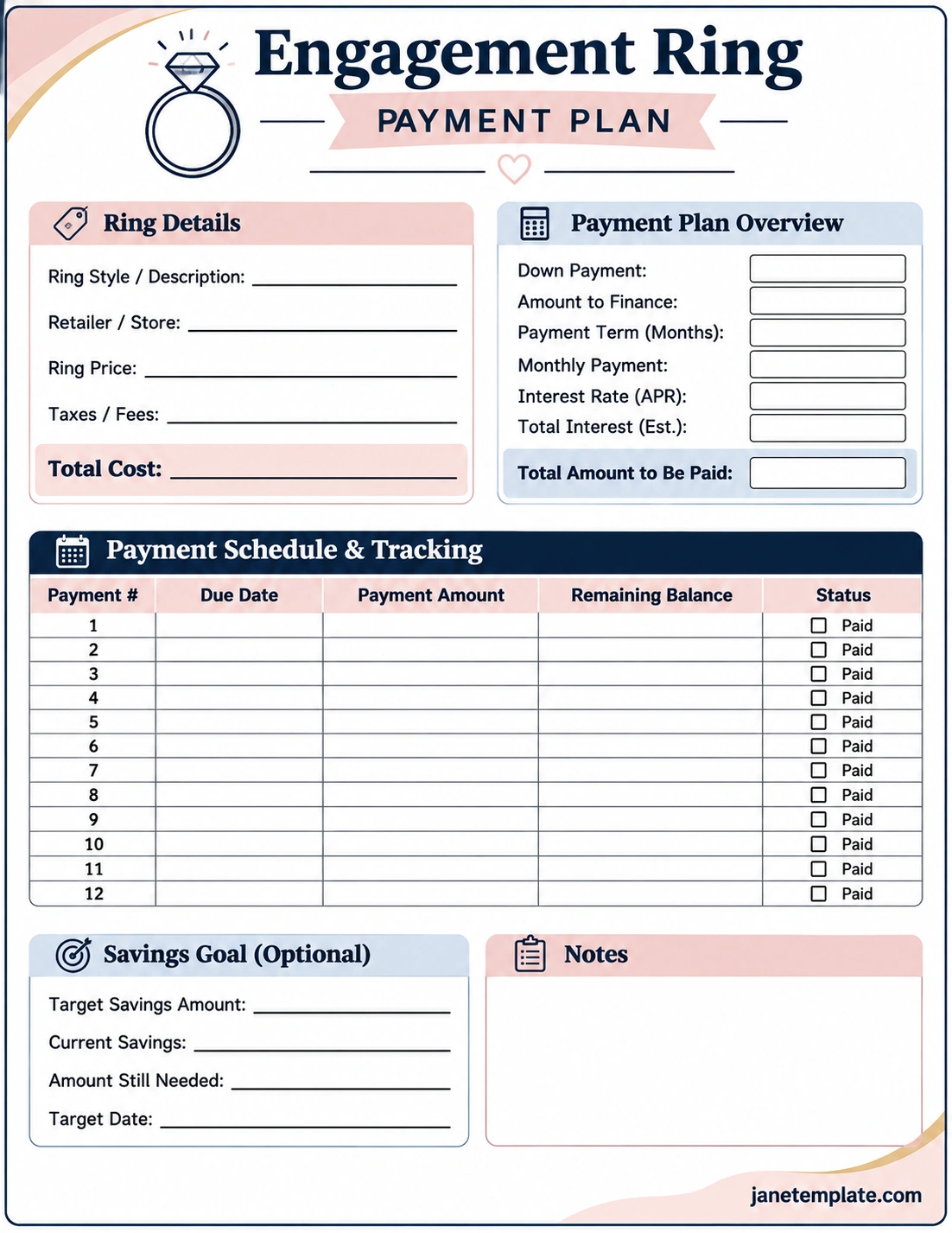
The template is designed in US Letter portrait format (8.5 x 11 inches), making it suitable for standard home and office printing.
You can complete the worksheet by hand or use its sections as a reference when creating a digital payment tracker in Excel or Google Sheets.
Tips for Managing Engagement Ring Payments Responsibly
A payment plan should make your purchase easier to manage, not create additional financial pressure. Consider these practical tips before committing to a purchase.
Choose a Comfortable Monthly Amount
Never select a payment amount simply because a retailer says you qualify for it. Review your monthly income and expenses to determine what you can realistically afford.
Read Financing Terms Carefully
Understand the APR, promotional periods, deferred interest conditions, late fees, and repayment requirements before signing a financing agreement.
Avoid Using Emergency Savings
Try to keep your emergency fund separate from your engagement ring budget. Unexpected expenses can occur at any time, and maintaining accessible savings provides important financial protection.
Compare Multiple Retailers
Do not assume that the first ring you find offers the best value. Compare prices, warranties, return policies, and financing terms from different retailers.
Consider Delaying the Purchase
If the ring you want is outside your current budget, consider saving for a longer period or choosing a more affordable design. There is no need to rush into a financial commitment.
Frequently Asked Questions About Engagement Ring Payment Plans
What is an engagement ring payment plan?
An engagement ring payment plan is a budgeting or installment tracking arrangement used to organize the cost of purchasing an engagement ring. It can include savings goals, down payments, monthly installments, due dates, and remaining balances.
How do I create an engagement ring payment plan?
Start by setting a realistic budget, researching ring prices, and choosing a payment method. Calculate your down payment and monthly savings or repayment amount, then record all due dates and balances in a payment worksheet.
Can I pay for an engagement ring in monthly installments?
Yes. Some jewelry retailers and financing providers offer monthly installment options. Before choosing one, review the interest rate, fees, repayment period, and total amount payable.
Is it better to save for an engagement ring or finance it?
Saving before purchasing can help you avoid interest charges and installment debt. Financing may provide flexibility, but it can increase the total cost. The better option depends on your budget, financial priorities, and the financing terms available.
How much should I save each month for an engagement ring?
Your monthly savings goal depends on the ring’s total cost, your current savings, and your desired purchase date. Divide the remaining amount needed by the number of months available to establish a realistic target.
What expenses should I include in an engagement ring budget?
Include the ring price, applicable taxes, shipping, resizing, engraving, insurance, and potential maintenance expenses. If you use financing, also include interest charges and applicable fees.
What is the difference between a down payment and a monthly payment?
A down payment is the amount paid upfront when purchasing the ring. Monthly payments are the installments made afterward to repay the remaining balance under the agreed payment terms.
Can I use a printable engagement ring payment plan template?
Yes. A printable worksheet can help you organize ring details, estimate costs, record payment dates, and monitor your remaining balance. It is useful for both personal savings plans and installment payment tracking.
Can I use Excel or Google Sheets to track engagement ring payments?
Absolutely. Excel and Google Sheets allow you to create a digital payment tracker with automatic calculations for monthly contributions, completed payments, and remaining balances. A printable worksheet is a convenient alternative if you prefer writing down your progress by hand.
Should I pay off an engagement ring before buying it?
Paying with available savings can help you avoid financing charges. If you choose an installment arrangement, make sure the repayment schedule fits your budget and that you understand the full cost before purchasing.
Plan Your Engagement Ring Purchase with Confidence
An engagement ring payment plan can make an important purchase easier to organize and manage. By setting a realistic budget, comparing payment options, and tracking your expenses, you can approach the purchase with greater financial confidence.
Whether you plan to save gradually or use a suitable installment arrangement, having a clear payment schedule helps you understand your financial commitment and stay organized.
Use a printable engagement ring payment plan template to record ring details, monitor monthly payments, and track your savings goals. With thoughtful planning, you can focus on choosing a meaningful ring while keeping your financial priorities in balance.
Download: Engagement Ring Payment Plan Template
