If you owe taxes to the Internal Revenue Service (IRS) but cannot afford to pay the full balance at once, you may be able to arrange monthly payments instead. The payment plan form for IRS, officially known as Form 9465 (Installment Agreement Request), allows eligible taxpayers to request an installment agreement and pay their outstanding tax debt over time.
Paying a tax bill can be challenging, especially when you are dealing with unexpected expenses or financial difficulties. Fortunately, the IRS provides payment options that may help you manage your tax balance without having to pay everything immediately.
In this guide, you will learn what IRS Form 9465 is, who can use it, how to complete the form, and what happens after submitting your request. You will also discover alternative ways to apply for an IRS payment plan and answers to common questions about installment agreements.
What Is the Payment Plan Form for IRS?
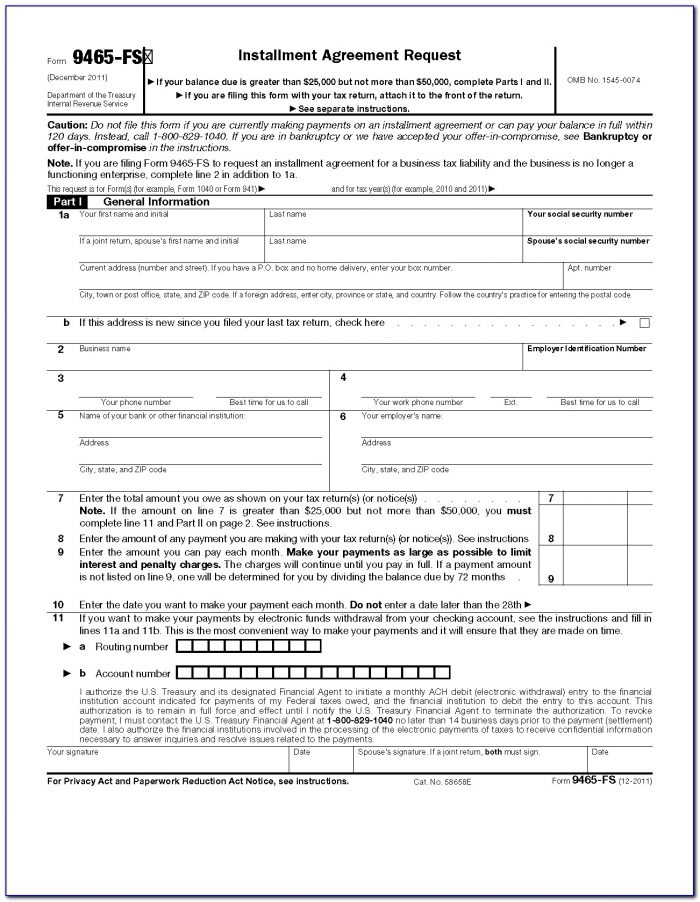
The payment plan form for IRS is Form 9465, also called the Installment Agreement Request. It is an official IRS document that individuals can use to request permission to pay their federal tax debt through monthly installments rather than making one full payment.
This form is particularly useful for taxpayers who cannot afford their outstanding tax balance by the original payment deadline. Instead of paying the entire amount immediately, they can propose a monthly payment amount that fits their financial situation.
Form 9465 generally requests information such as:
- Taxpayer name and identifying information.
- Mailing address and contact details.
- Total amount of tax owed.
- Proposed monthly payment amount.
- Preferred monthly payment date.
- Bank account information for automatic payments, if applicable.
After receiving the request, the IRS reviews the information and determines whether to approve the proposed installment agreement. Approval is not automatic, and taxpayers must continue meeting their tax filing and payment obligations.
Who Can Use IRS Form 9465?
Form 9465 is primarily intended for individual taxpayers who cannot pay their federal tax balance in full. It provides a way to request a monthly payment arrangement based on their circumstances.
You may generally use this form if you:
- Owe individual income taxes reported on Form 1040 or Form 1040-SR.
- Are responsible for certain civil tax penalties.
- Owe certain employment taxes related to a sole proprietorship that is no longer operating.
- Cannot afford to pay your outstanding tax liability in one payment.
However, Form 9465 is not appropriate for every taxpayer. For example, individuals who can pay their full balance within 180 days may qualify for a short-term payment plan instead.
You generally should not use Form 9465 if you are requesting an online payment agreement, are currently in bankruptcy, or have an ongoing business with unpaid employment or unemployment taxes. Different procedures may apply to these situations.
What Are the Requirements for an IRS Payment Plan?
Before requesting an installment agreement, it is important to understand the IRS eligibility requirements. Your available payment options depend on the amount you owe, your filing history, and your financial circumstances.
Individual Taxpayer Requirements
For an individual taxpayer, the IRS generally requires all applicable tax returns to be filed before approving a payment plan.
For the online long-term payment plan, individuals may qualify if their combined tax, penalties, and interest balance is $50,000 or less and all required returns have been filed.
If you owe more than this amount or cannot qualify for an online agreement, you may still request an installment agreement by submitting Form 9465 or contacting the IRS.
Short-Term and Long-Term Payment Plans
The IRS offers different payment arrangements depending on how quickly you can repay your tax debt.
- Short-term payment plan: Allows eligible individual taxpayers to pay their outstanding balance within 180 days. There is generally no setup fee, although penalties and interest continue to accrue.
- Long-term payment plan: Allows taxpayers to make monthly payments over an extended period. This arrangement is also known as an installment agreement.
The appropriate option depends on your ability to pay and the IRS requirements. Before choosing a plan, consider how much you can realistically afford each month.
How to Complete the Payment Plan Form for IRS
Completing Form 9465 requires basic personal information and details about your outstanding tax liability. Carefully review each section to avoid errors that could delay the processing of your request.
Step 1: Enter Your Personal Information
Start by providing your full legal name, Social Security number, current mailing address, and daytime telephone number. If you filed a joint tax return, follow the form instructions for providing your spouse’s information.
Make sure the information matches your tax records so the IRS can identify your account correctly.
Step 2: Identify Your Tax Return
Indicate which tax return or tax form relates to the balance you owe. For example, individual income tax debt is generally associated with Form 1040.
If you have outstanding balances from multiple tax years, follow the form instructions to report the applicable amounts accurately.
Step 3: Calculate Your Total Tax Balance
Enter the amount you owe, including applicable penalties and interest. If there are additional charges that are not already included in your tax return or IRS notice, follow the instructions for reporting them.
Review your latest IRS notice or account information to make sure your figures are accurate.
Step 4: Enter Your Proposed Monthly Payment
Determine how much you can afford to pay each month. Your proposed payment should be realistic and consistent with your financial situation.
Although you may request a specific monthly amount, the IRS must review and approve the proposed arrangement. The required payment may depend on your outstanding balance and the applicable collection period.
Step 5: Choose Your Monthly Payment Date
Select a convenient date for your monthly installment. Consider your regular income schedule and other financial obligations when making this decision.
For example, if you receive your salary near the beginning of each month, choosing a payment date later in the month may help you manage your cash flow.
Step 6: Provide Bank Information if Applicable
If you want to make automatic payments directly from your bank account, complete the appropriate direct debit section.
You may need to provide your bank routing number and account number. Check these details carefully before submitting the form to prevent payment problems.
Step 7: Review and Submit the Form
Before submitting Form 9465, review all information to ensure it is complete and accurate. Attach any additional documents required by the IRS instructions.
If you submit the form with your tax return, follow the applicable attachment instructions. If you submit it separately, use the mailing address specified in the current Form 9465 instructions for your location and circumstances.
How to Apply for an IRS Payment Plan Without Form 9465
Although Form 9465 is a traditional way to request a monthly installment agreement, you do not always need to submit a paper application. The IRS also provides an Online Payment Agreement application.
For eligible taxpayers, applying online is generally more convenient and may involve a lower setup fee.
Apply Through the IRS Online Payment Agreement
To request a payment plan online, follow these steps:
- Visit the official IRS website.
- Open the Online Payment Agreement application.
- Sign in to your IRS Online Account or complete the required identity verification.
- Review your outstanding tax balance and available payment options.
- Select an appropriate payment plan.
- Enter your proposed monthly payment and preferred payment date, if applicable.
- Review your request and submit it electronically.
The online application will show the payment options available for your account. If you do not qualify, you may need to submit Form 9465 or contact the IRS for assistance.
Apply by Phone or Mail
If you prefer not to apply online, you may request an installment agreement by phone or mail.
Individuals can contact the IRS at 800-829-1040 or use the telephone number provided on their tax notice. Alternatively, eligible individuals can complete Form 9465 and mail it according to the official instructions.
Business taxpayers should generally contact the IRS using the business assistance number or the telephone number on their notice to discuss available payment arrangements.
IRS Payment Plan Fees and Additional Costs
Some IRS installment agreements require a setup fee. The amount depends on how you apply, your payment method, and whether you qualify for a reduced fee or waiver.
For long-term payment plans, the IRS fee schedule updated in March 2026 includes the following standard fees:
- Online application with direct debit: $29.
- Online application with another payment method: $69.
- Application by phone, mail, or in person with direct debit: $107.
- Application by phone, mail, or in person with another payment method: $178.
Low-income taxpayers may qualify for a waived, reduced, or reimbursed setup fee, depending on their circumstances and payment method.
It is also important to understand that an installment agreement does not eliminate your tax debt or stop all additional charges. Penalties and interest generally continue to accrue until the outstanding balance is paid in full.
Therefore, paying as much as you reasonably can as early as possible may help reduce the overall cost of your tax debt.
What Happens After You Submit Form 9465?
After submitting your payment plan form for IRS, you must wait for the IRS to review your request. The agency will evaluate your information and determine whether the proposed installment agreement can be approved.
The IRS generally aims to notify taxpayers of its decision within 30 days after receiving a request. However, processing may take longer in certain circumstances.
If your request is approved, you will receive a notice explaining the agreement terms, including:
- Your approved monthly payment amount.
- Your monthly payment due date.
- The payment method and applicable instructions.
- Any required setup fee.
Once your agreement is active, you must make payments on time and remain current with future tax filing and payment requirements.
Tips for Managing Your IRS Installment Agreement
Receiving approval for an IRS payment plan is an important step, but managing the agreement properly is equally important. The following tips can help you avoid missed payments and unnecessary financial difficulties.
- Choose an affordable payment amount: Review your monthly income and expenses before agreeing to a payment schedule.
- Consider automatic payments: Direct debit can help prevent missed payment deadlines.
- Keep your tax returns current: File future tax returns on time and pay new tax obligations when due.
- Monitor your remaining balance: Review your IRS Online Account periodically to track payments and outstanding amounts.
- Contact the IRS if your circumstances change: If you can no longer afford your monthly payment, ask about modifying your existing agreement.
- Pay extra when possible: Additional payments can help reduce your outstanding balance and the interest that accumulates over time.
Missing payments or failing to meet future tax obligations may cause your installment agreement to default. If that happens, the IRS may terminate the agreement and resume collection actions.
Frequently Asked Questions About the Payment Plan Form for IRS
What is the official IRS payment plan form number?
The official form number is Form 9465, Installment Agreement Request. Individual taxpayers use this form to request permission to pay their outstanding federal tax debt through monthly installments.
Can I request an IRS payment plan online?
Yes. Eligible taxpayers can use the IRS Online Payment Agreement application to request a short-term or long-term payment arrangement. Applying online may also provide lower setup fees than submitting a paper application.
How much tax can I owe to qualify for an IRS payment plan?
For an individual long-term online payment plan, the general eligibility limit is $50,000 in combined tax, penalties, and interest, provided all required tax returns have been filed. Other payment arrangements may be available if you owe more.
Does the IRS charge a fee for Form 9465?
Submitting Form 9465 does not itself guarantee a free payment arrangement. The IRS generally charges a setup fee when approving a long-term installment agreement. The fee depends on the application method and payment option. Eligible low-income taxpayers may receive reduced fees or waivers.
How long does the IRS take to approve Form 9465?
The IRS generally aims to respond within 30 days after receiving an installment agreement request. However, processing times may vary depending on the complexity of your tax situation and when the request is submitted.
Will interest continue to accrue during an IRS payment plan?
Yes. Interest and applicable penalties generally continue to accrue on unpaid tax balances until the debt is paid in full. An installment agreement allows you to spread payments over time, but it does not automatically eliminate additional charges.
Can I change my monthly IRS payment amount?
In many cases, you can request a change to your monthly payment amount or payment date through your IRS Online Account. You may also contact the IRS directly to discuss changes if your financial circumstances have changed.
What happens if I miss an IRS installment payment?
Missing a payment can put your installment agreement at risk of default. The IRS may terminate the agreement if you fail to meet its requirements. Contact the IRS as soon as possible if you anticipate difficulty making a scheduled payment.
Can I pay my IRS tax debt early?
Yes. You can generally make additional payments or pay your remaining tax balance in full before the agreement ends. Paying early may reduce the amount of interest that accumulates on your outstanding balance.
Can I use Form 9465 if I owe taxes from multiple years?
Yes, an installment agreement may cover eligible outstanding tax liabilities from multiple tax years. However, you should review your IRS account and follow the current form instructions to report your total balance correctly.
Conclusion
The payment plan form for IRS, also known as Form 9465, provides an option for individual taxpayers who cannot afford to pay their federal tax debt in full. By requesting an installment agreement, eligible taxpayers can spread their outstanding balance across manageable monthly payments.
Before submitting the form, review your tax balance, determine an affordable monthly payment, and make sure all required tax returns have been filed. You should also compare the paper application process with the IRS Online Payment Agreement application, as applying online may offer a more convenient option and lower setup fees.
With careful planning and consistent payments, an IRS installment agreement can help you manage outstanding tax obligations while working toward paying your balance in full.
Download: Payment Plan Form for IRS
