In the world of business, agreements are the foundation of successful partnerships. A letter of agreement serves as a written document that outlines the terms and conditions of an agreement between two or more parties, providing a clear and concise record of their understanding. It acts as a preliminary contract, clarifying expectations and responsibilities before a more formal agreement is drafted or for straightforward, low-risk deals.
What Is a Letter of Agreement?
A letter of agreement, also known as a memorandum of understanding or a letter of intent, is a document that formalizes the terms and conditions of a business arrangement between two or more parties. It is a legally binding document that outlines the specific details of the agreement, such as the scope of work, payment terms, deadlines, and any other relevant information.
When parties enter into a business deal, it is essential to have a written record of their understanding to avoid any misunderstandings or disputes in the future. A letter of agreement provides clarity and protection for both parties, ensuring that everyone is on the same page and that the terms of the agreement are clearly defined.
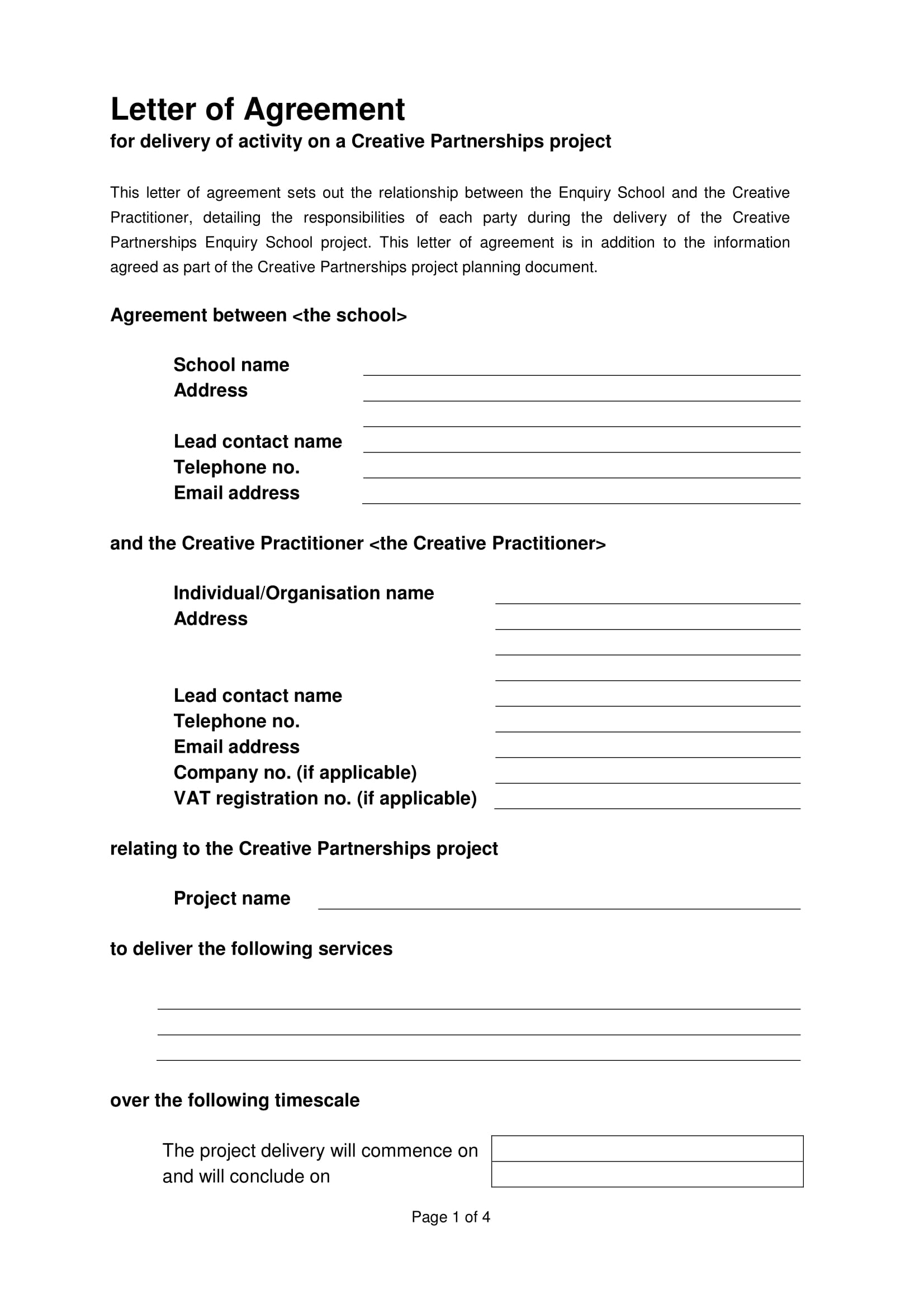
Benefits of Using a Letter of Agreement
There are several benefits to using a letter of agreement in business deals. Some of the key advantages include:
- Clarity: A letter of agreement helps to clarify the terms and conditions of the agreement, reducing the risk of misunderstandings.
- Protection: By having a written record of the agreement, both parties are protected in case of any disputes or disagreements.
- Professionalism: Using a letter of agreement demonstrates professionalism and seriousness in business dealings.
- Enforceability: A letter of agreement is a legally binding document that can be enforced in court if necessary.
- Organization: Having a written agreement helps to keep the deal organized and ensures that all parties are aware of their responsibilities.
- Flexibility: A letter of agreement can be customized to meet the specific needs of the parties involved, making it a versatile tool for various types of agreements.
- Time-saving: By outlining the key terms and conditions upfront, a letter of agreement can save time in negotiating more formal contracts.
When Should You Use a Letter of Agreement?
A letter of agreement is typically used in situations where a more formal contract is not necessary or practical. Some common scenarios where a letter of agreement may be appropriate include:
- Freelance projects: When hiring a freelancer for a project, a letter of agreement can outline the scope of work, deadlines, and payment terms.
- Partnership agreements: When entering into a partnership with another business, a letter of agreement can clarify the roles and responsibilities of each party.
- Consulting services: When hiring a consultant, a letter of agreement can specify the services to be provided and the compensation to be paid.
- Supplier agreements: When working with a supplier, a letter of agreement can outline the terms of the supply arrangement, including pricing and delivery schedules.
