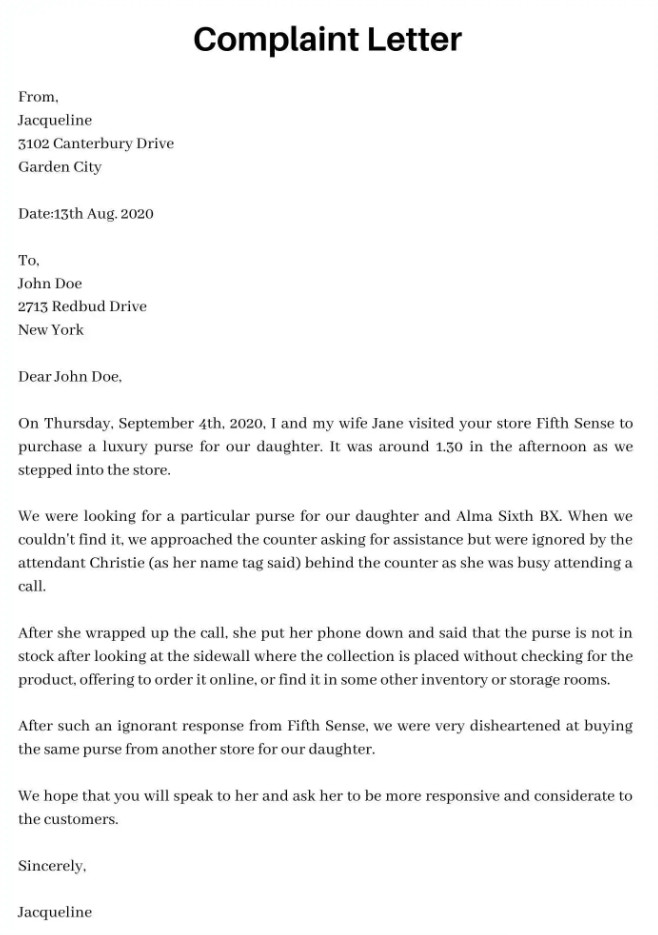
Have you ever been unhappy with a product, service, or experience but didn’t know how to express your dissatisfaction effectively? Writing a letter of complaint is a powerful way to formally state your concerns while seeking a specific resolution. It allows you to create a clear, documented record of the problem for future reference and encourages the business to improve. In this article, we will guide you on how to craft a professional letter of complaint that increases the chances of a positive outcome compared to informal complaints.
What is a Letter of Complaint?
A letter of complaint is a formal document that you write to express your dissatisfaction with a product, service, or experience. It serves as a structured way to communicate a grievance professionally and seek a specific resolution, such as a refund, repair, or apology. The primary goal of a letter of complaint is to address the issue at hand while maintaining a respectful and constructive tone.
Why Write a Letter of Complaint?
There are several reasons why writing a letter of complaint is beneficial:
- Formal Record: It provides a documented record of the issue, which can be useful for future reference.
- Professional Communication: It allows you to communicate your concerns in a structured and professional manner.
- Potential Resolution: It increases the likelihood of receiving a specific resolution, such as a refund, repair, or apology.
- Encourages Improvement: It provides feedback to the business and encourages them to improve their products or services.
What to Include in a Letter of Complaint
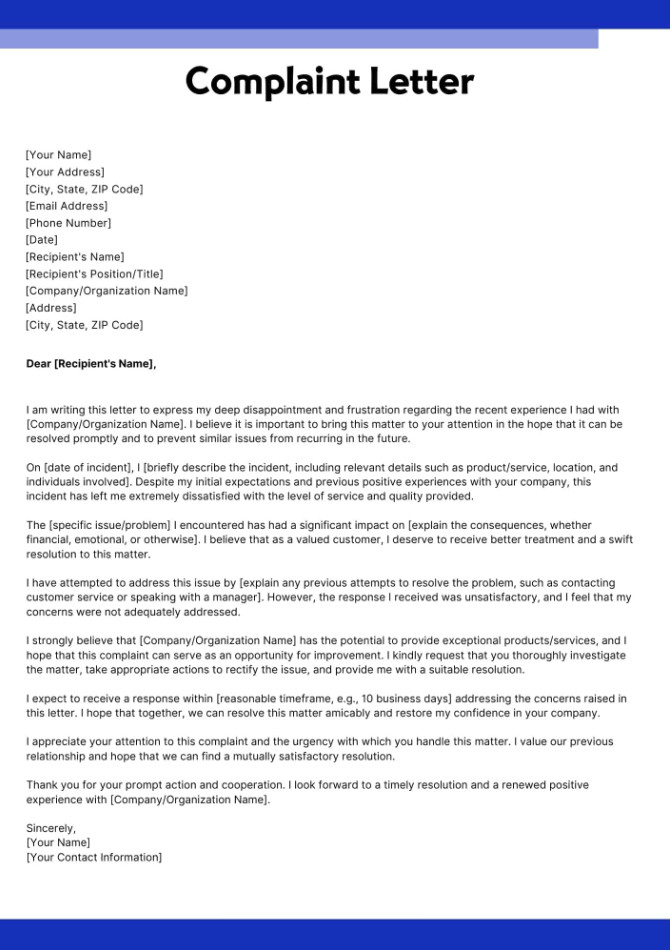
When writing a letter of complaint, it is essential to include the following elements:
- Clear Description of the Issue: Clearly explain what went wrong and why you are dissatisfied.
- Date and Time of the Incident: Provide details of when the issue occurred to help the business investigate.
- Evidence or Documentation: Attach any relevant documents, such as receipts or photos, to support your claim.
- Desired Resolution: Clearly state what you expect as a resolution, whether it’s a refund, repair, or apology.
- Contact Information: Include your contact details so the business can reach out to you for further clarification.
How to Write a Letter of Complaint
Follow these steps to write an effective letter of complaint:
1. Start with a Polite Greeting
Begin your letter by addressing the recipient politely, such as “Dear [Recipient’s Name].” This sets a respectful tone for the rest of the letter.
2. Clearly State the Issue
Provide a clear and concise description of the problem, including relevant details such as dates, times, and any evidence you have to support your claim.
3. Express Your Feelings
Share how the issue has affected you personally and why you are dissatisfied with the product, service, or experience. Be honest but remain professional in your tone.
4. Request a Specific Resolution
Clearly state what you expect as a resolution to the issue, whether it’s a refund, replacement, repair, or apology. Be realistic in your demands.
5. Provide Contact Information
Include your contact details at the end of the letter so the recipient can reach out to you for further discussion or clarification.
6. End with a Polite Closing
Thank the recipient for their attention and consideration, and express your hope for a prompt resolution to the issue.
Tips for Successful Letter of Complaint
Follow these tips to increase the effectiveness of your letter of complaint:
- Be Specific: Provide detailed information about the issue to help the recipient understand the problem.
- Stay Calm and Professional: Maintain a polite and respectful tone throughout the letter, even if you are frustrated.
- Offer Solutions: Suggest possible resolutions to the issue to show that you are willing to work towards a positive outcome.
- Proofread Carefully: Check for any spelling or grammar errors before sending the letter to ensure clarity and professionalism.
In Conclusion
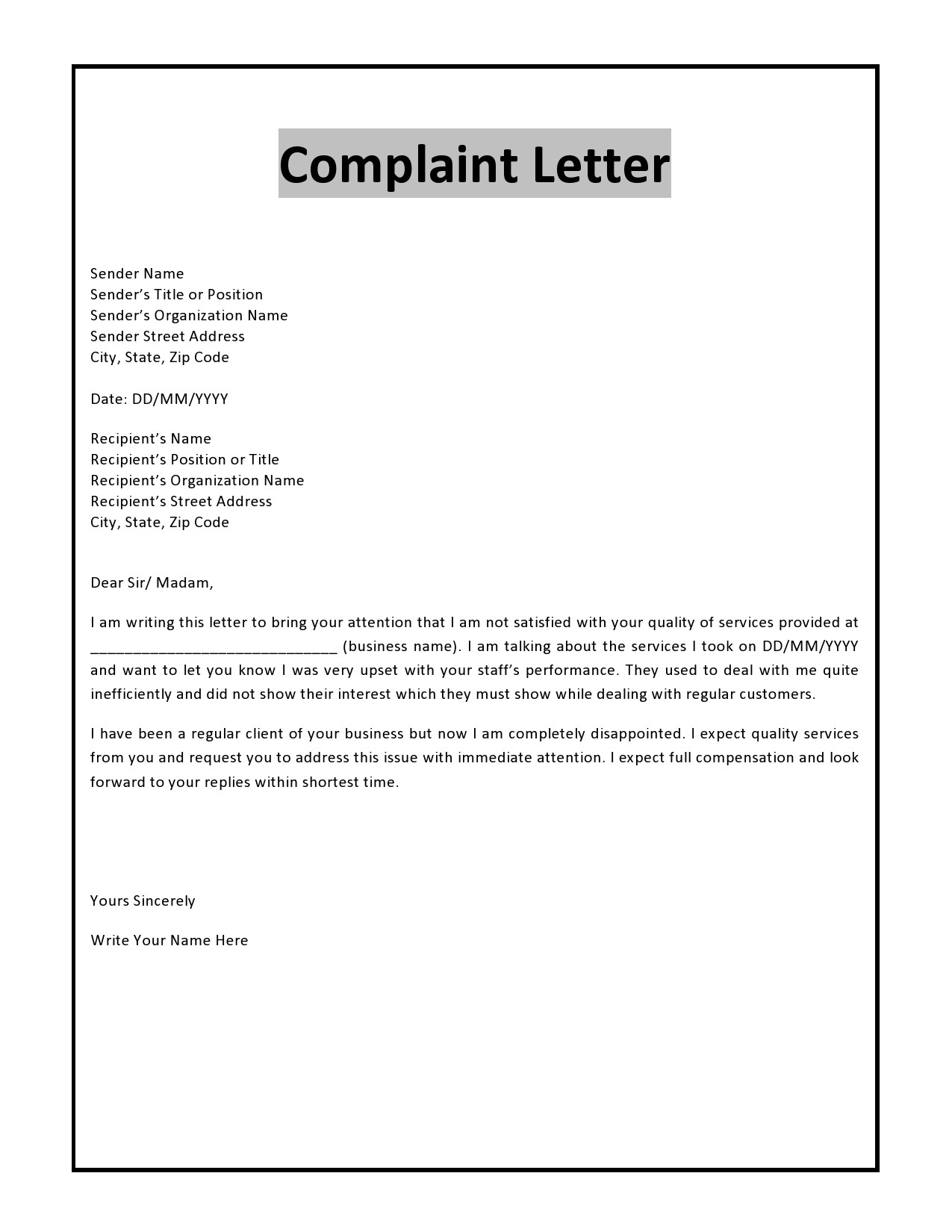
Writing a letter of complaint is an effective way to express your dissatisfaction with a product, service, or experience while seeking a specific resolution. By following the tips and guidelines provided in this article, you can craft a professional letter that increases the chances of a positive outcome. Remember to stay calm, provide specific details, and maintain a respectful tone throughout the complaint letter. Your feedback can help businesses improve their products and services, ultimately leading to a better customer experience for all.
