Receiving a speeding ticket can be stressful, especially when the fine is too expensive to pay all at once. Fortunately, some courts and traffic agencies offer a speeding ticket payment plan that allows eligible drivers to pay their fines through smaller installments over an agreed period.
A payment plan can make managing a traffic violation more affordable while helping you avoid the financial pressure of a single large payment. However, eligibility requirements, installment amounts, application procedures, and payment deadlines vary depending on your location and the court handling your citation.
Using a speeding ticket payment plan worksheet can help you organize your financial information, calculate an affordable monthly payment, and prepare a reasonable installment proposal. This guide explains how these plans work, what information to prepare, and how to create a repayment schedule that fits your budget.
What Is a Speeding Ticket Payment Plan?
A speeding ticket payment plan is an arrangement that allows a driver to pay a traffic fine in multiple installments instead of paying the entire balance immediately. Depending on local rules, the arrangement may be offered by a municipal court, traffic court, county clerk, or another authorized agency.
For example, if your speeding ticket fine is $360, the court may allow you to divide the balance into six monthly payments of $60. The actual payment amount and repayment period depend on the court’s approval and applicable regulations.
These arrangements are sometimes called:
- Traffic ticket installment payment plans
- Citation payment agreements
- Traffic fine repayment plans
- Speeding ticket payment arrangements
- Ability-to-pay programs
Not every court offers the same options. Some jurisdictions may require an application, financial documentation, an initial payment, or a review of your ability to pay.
Who Can Request a Traffic Ticket Payment Plan?
Drivers who cannot reasonably afford to pay their entire traffic fine upfront may be able to request an installment arrangement. However, approval is not automatic.
Depending on the jurisdiction, eligibility may depend on:
- Outstanding fine balance: The citation must have an unpaid amount eligible for an installment arrangement.
- Financial circumstances: Some courts consider income, household expenses, and financial hardship.
- Payment history: Previous missed payments or outstanding court obligations may affect eligibility.
- Application requirements: Certain courts require a formal request or financial disclosure.
- Case status: The citation must meet the court’s requirements for payment arrangements.
Before submitting a request, contact the court or agency listed on your speeding ticket. Ask whether installment payments are available and whether you must appear in person or submit an application online.
What Information Should a Speeding Ticket Payment Plan Worksheet Include?
A speeding ticket payment plan worksheet helps organize the information needed to estimate affordable installments. It can also serve as a preparation document before completing an official court application.
1. Citation and Case Details
Start by recording the basic information associated with your traffic violation.
- Ticket or citation number
- Court or issuing agency name
- Date the ticket was issued
- Type of traffic violation
- Total fine amount
- Original payment deadline
Check these details against your actual citation to avoid mistakes when contacting the court.
2. Monthly Income
Record your regular monthly income after taxes. Include additional income sources if they are consistent and available for household expenses.
- Employment income
- Self-employment income
- Part-time or secondary job income
- Other regular income
Using take-home income instead of gross income provides a more realistic picture of how much money is available for monthly payments.
3. Essential Monthly Expenses
List the expenses that must be covered before allocating money toward your speeding fine.
- Rent or mortgage payments
- Electricity, water, and other utilities
- Groceries and household necessities
- Transportation and fuel
- Insurance premiums
- Healthcare expenses
- Other essential financial obligations
Accurately recording these expenses helps prevent you from proposing an installment amount that is difficult to maintain.
4. Proposed Payment Amount
After calculating your available monthly funds, determine how much you can reasonably contribute toward the traffic fine.
For example, consider this simplified monthly budget:
- Monthly take-home income: $3,000
- Essential monthly expenses: $2,650
- Remaining amount: $350
- Proposed speeding ticket payment: $60
In this example, a $60 monthly installment may be a reasonable starting proposal. However, you should also account for irregular expenses and unexpected costs before deciding on a final amount.
How to Create a Speeding Ticket Payment Plan
Creating a repayment schedule involves more than dividing the fine into equal payments. You should understand the court’s requirements, select realistic payment dates, and confirm the arrangement before relying on it.
Step 1: Check Your Outstanding Fine
Review your speeding ticket or contact the issuing agency to confirm the total amount due. Ask whether additional administrative fees, court costs, or late charges have been added.
Step 2: Contact the Court
Find the official contact information for the court or agency responsible for your citation. Ask whether a payment plan is available, what eligibility requirements apply, and how to submit a request.
Step 3: Calculate Your Affordable Installment
Use your monthly income and essential expenses to estimate your available funds. Choose an installment amount that leaves enough room for necessary living expenses and financial emergencies.
Step 4: Prepare Your Payment Proposal
Write down the amount you can pay upfront, your proposed monthly installment, and your preferred payment start date.
For example, a $480 fine could be proposed as follows:
- Total outstanding fine: $480
- Initial payment: $80
- Remaining balance: $400
- Monthly installment: $50
- Estimated repayment period: 8 months
This is an illustrative calculation, not a guaranteed court-approved arrangement. Confirm the permitted payment amounts and schedule with the relevant agency.
Step 5: Submit the Required Application
Complete the official payment plan application if one is required. Attach supporting financial information when requested, and keep a copy of everything you submit.
Step 6: Confirm the Approved Terms
Do not assume that your proposed payment schedule has been accepted simply because you submitted a request. Obtain confirmation of the approved installment amount, payment dates, accepted payment methods, and any additional conditions.
Speeding Ticket Payment Plan Worksheet Template
A printable worksheet makes it easier to organize your information before contacting the court. The following template is designed to cover the essential details of a speeding ticket installment request.
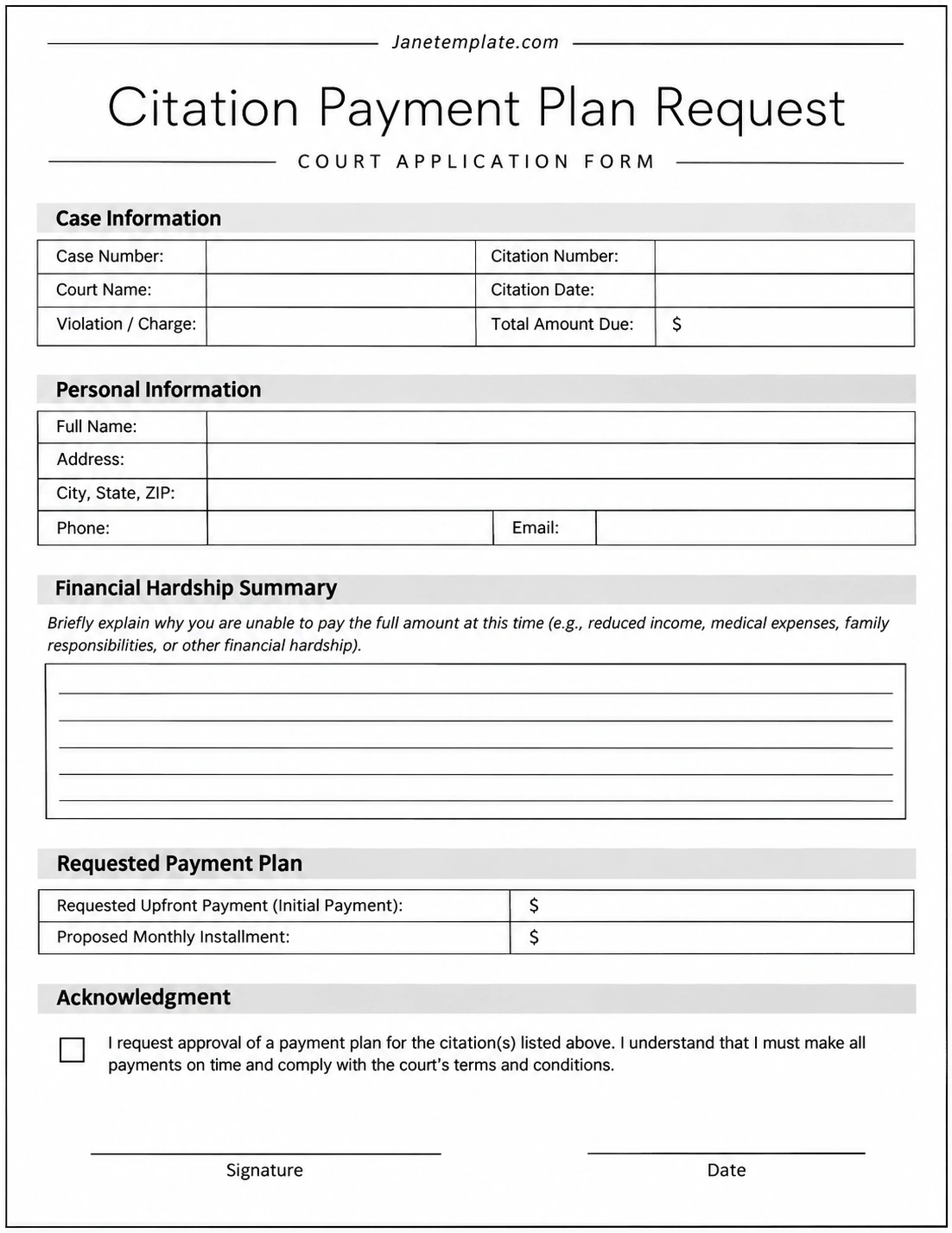
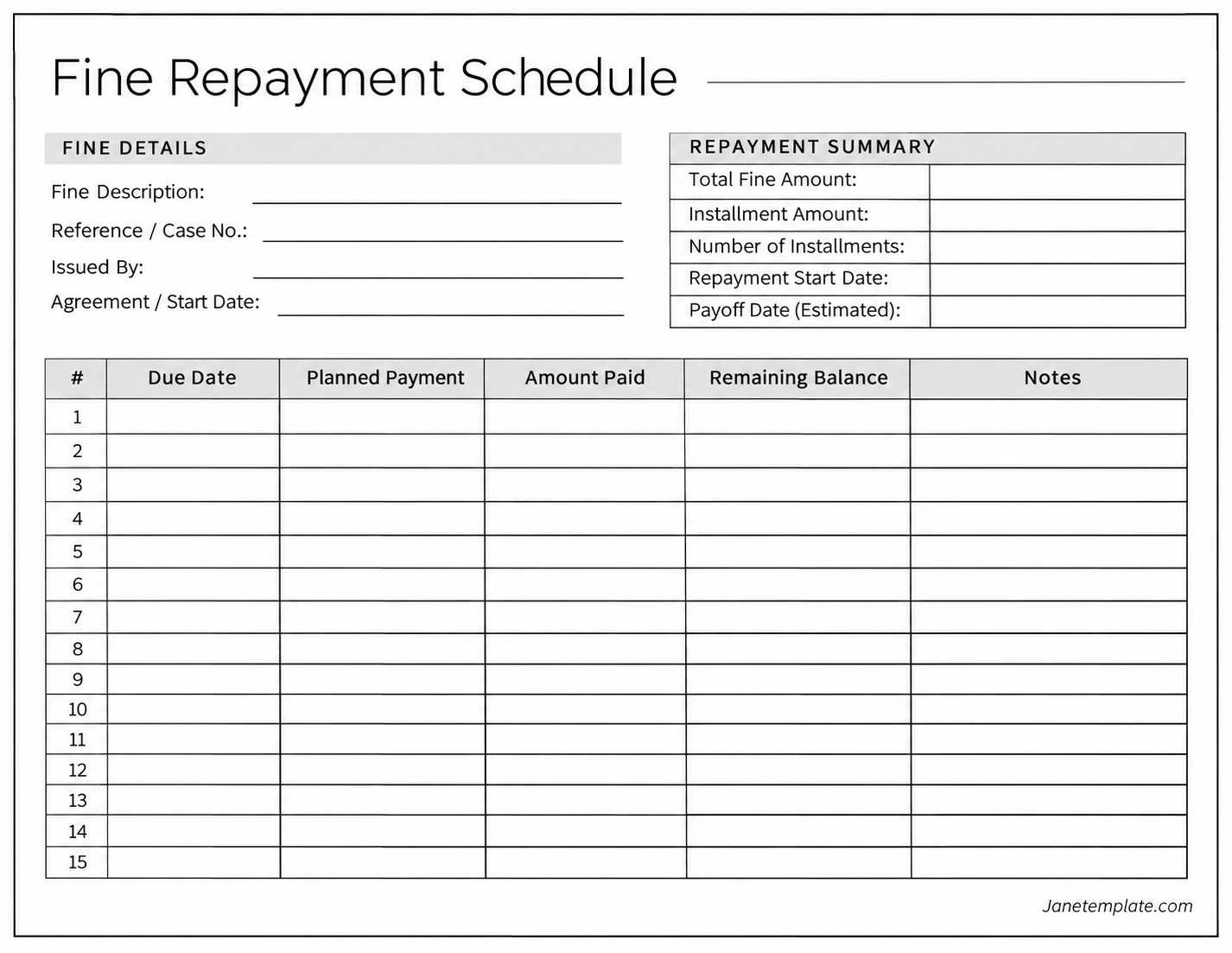
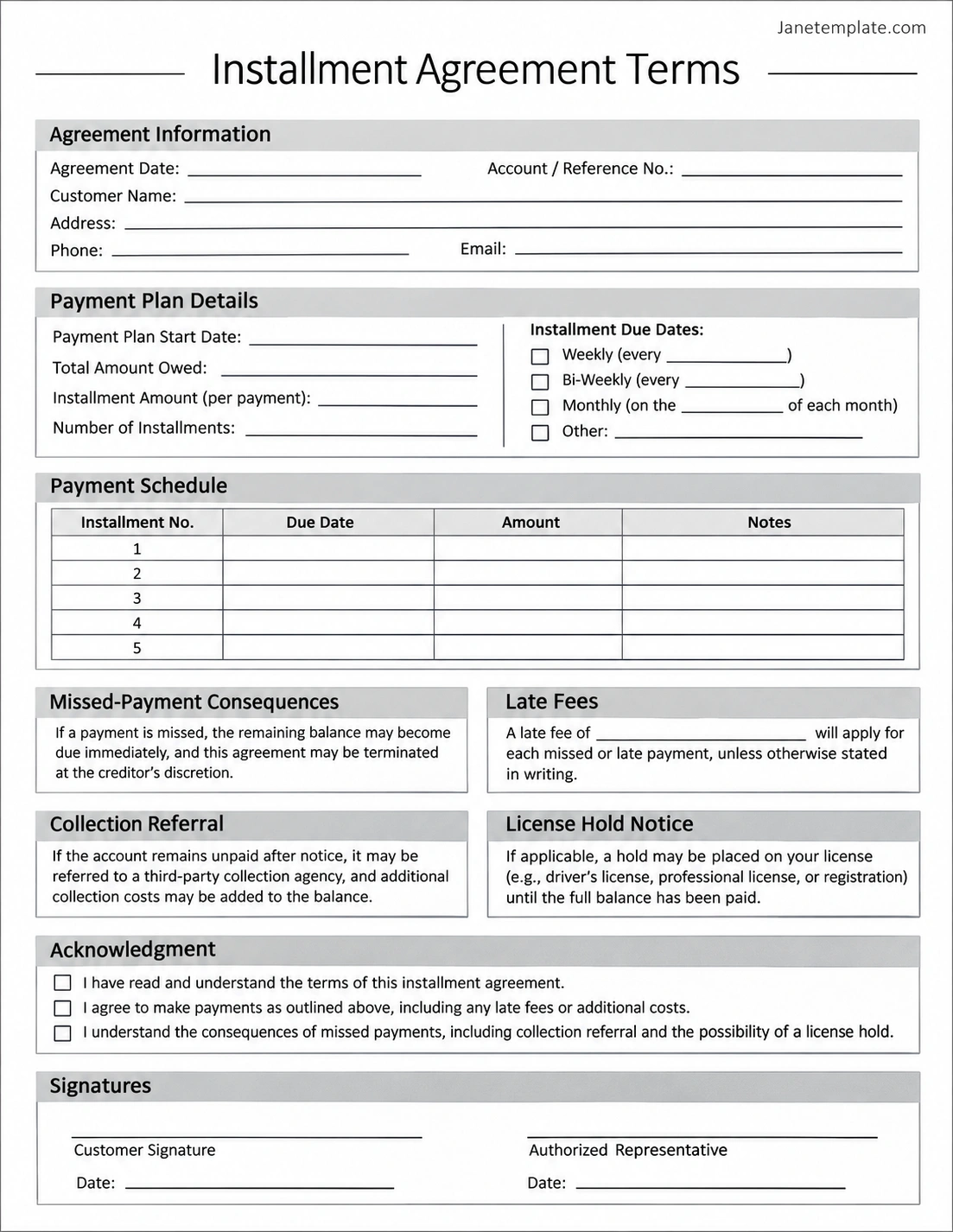
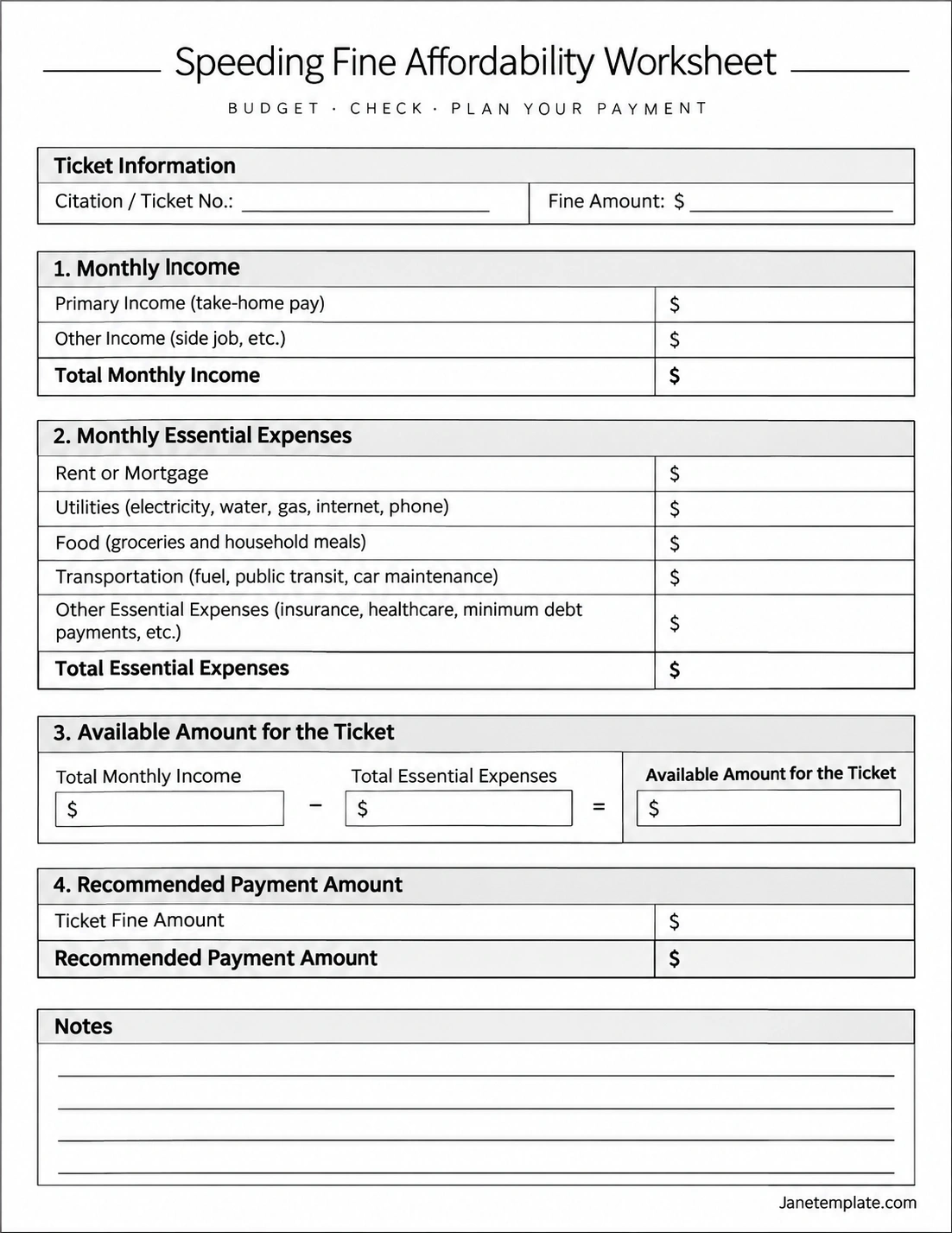
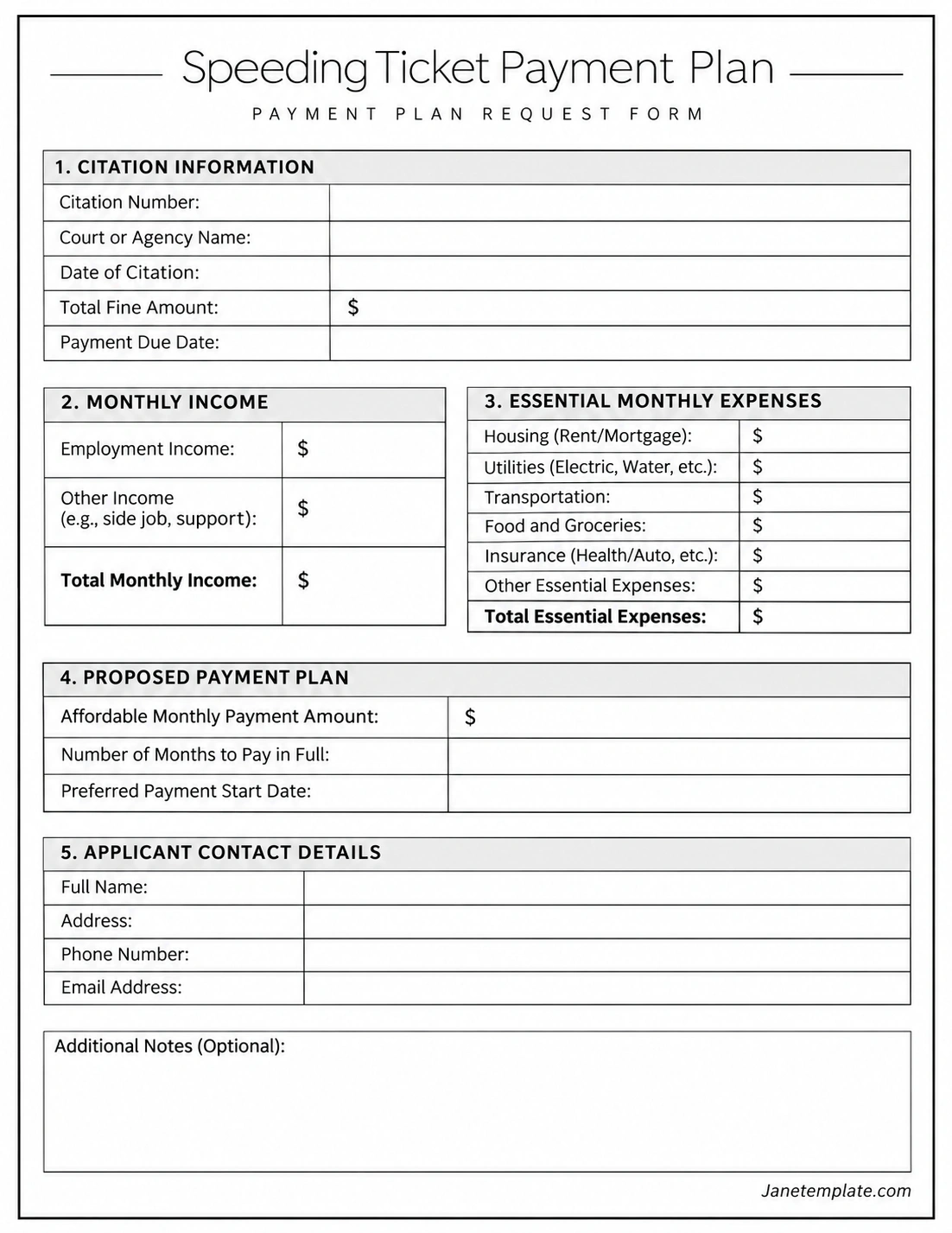
The worksheet includes several useful sections:
- Citation information: Record the ticket number, court name, fine amount, and payment deadline.
- Monthly income: Calculate your available income from employment and other sources.
- Essential expenses: List housing, utilities, food, transportation, and other necessary costs.
- Proposed payment plan: Enter your preferred upfront payment, monthly installment, and repayment period.
- Contact details: Keep your personal information available when preparing an official application.
This printable is a personal planning tool. It is not an official court document unless the relevant court specifically accepts it as part of its application process.
How to Track Your Speeding Ticket Installment Payments
Once your payment plan is approved, maintaining a clear record of every installment is important. A repayment tracker helps you monitor upcoming deadlines and see how much of your fine remains unpaid.
For accurate tracking, record the following information:
- Payment due date
- Planned installment amount
- Actual amount paid
- Payment confirmation or receipt number
- Remaining balance
Keep receipts and confirmation emails until the full balance is paid. If you use automatic payments, regularly check your account to ensure that each transaction is processed successfully.
Understanding Payment Plan Terms and Possible Consequences
Before agreeing to an installment arrangement, carefully review all payment conditions. Missing a payment can create additional financial or legal complications, depending on local regulations and the terms of your agreement.
Late Payment Fees
Some jurisdictions may impose additional fees for late or missed installments. Ask whether a grace period applies and whether late charges can be avoided or waived.
Collection Referrals
Unpaid traffic fines may be referred to a collection agency or handled through other enforcement procedures where permitted by law.
License or Registration Holds
Depending on state and local regulations, unresolved traffic obligations may affect driving privileges, vehicle registration, or other licensing matters. The consequences vary significantly by jurisdiction.
Payment Plan Cancellation
Some agreements allow the court to cancel an installment arrangement after missed payments. This may make the remaining balance immediately due or trigger other collection procedures.
If you anticipate difficulty making an installment, contact the court before the due date. Ask whether a revised payment arrangement or other assistance is available.
Tips for Making Your Payment Plan More Manageable
A successful repayment plan should fit your actual financial situation. These practical tips can help you stay organized throughout the repayment period.
- Choose realistic installments: Avoid agreeing to an amount that puts essential household expenses at risk.
- Set payment reminders: Use calendar alerts several days before each due date.
- Keep an emergency reserve: Leave room for unexpected expenses rather than allocating every available dollar.
- Save payment receipts: Maintain a digital or printed record of completed installments.
- Review your budget regularly: Update your financial worksheet when your income or expenses change.
- Communicate with the court: Ask about available options if your financial circumstances change.
Frequently Asked Questions About Speeding Ticket Payment Plans
Can I pay a speeding ticket in monthly installments?
Yes, some courts and traffic agencies allow eligible drivers to pay speeding tickets in monthly installments. Availability, eligibility, and payment terms depend on the jurisdiction. Contact the court listed on your citation to confirm your options.
How do I request a speeding ticket payment plan?
Contact the court or agency handling your citation and ask about its installment payment process. You may need to complete an application, provide financial information, and propose an affordable payment schedule.
Can I request a payment plan if I have a low income?
Possibly. Some jurisdictions offer ability-to-pay programs or financial hardship arrangements. You may be asked to provide income details, essential expenses, or supporting documentation to determine eligibility.
How much should I pay each month?
Your monthly installment should be based on the approved payment terms and your available income after essential expenses. Calculate a realistic amount before submitting your proposal, and confirm the final amount with the court.
What happens if I miss a speeding ticket payment?
Missing an installment may result in late fees, cancellation of the agreement, collection activity, or other consequences permitted by local law. Contact the court as soon as possible if you cannot make a scheduled payment.
Can I pay off my speeding ticket early?
Many payment arrangements allow early repayment, but you should verify the applicable conditions with the court. Ask whether additional payments can be made without penalties and how to obtain confirmation that your balance is paid in full.
Is a speeding ticket payment plan worksheet an official court form?
Not necessarily. A printable worksheet is generally a personal budgeting and planning document. Each court may have its own official application, financial affidavit, or installment agreement that must be completed separately.
Can I request a payment plan after the original due date?
Some courts may consider requests after the original deadline, but additional fees or enforcement actions may already apply. Contact the issuing agency promptly to understand your available options.
Conclusion
A speeding ticket payment plan can make an expensive traffic fine easier to manage by dividing the outstanding balance into smaller installments. However, the availability and conditions of these arrangements depend on the court or agency responsible for your citation.
Start by reviewing your ticket, calculating your monthly income and essential expenses, and determining an affordable payment proposal. Use a speeding ticket payment plan worksheet to organize your information, prepare your application, and track each installment.
Most importantly, confirm the official payment terms before making assumptions about your repayment schedule. With careful budgeting and consistent payment tracking, you can manage your traffic fine more responsibly while keeping your essential financial obligations on track.
Download: Speeding Ticket Payment Plan Template
