Medical bills can quickly become overwhelming, especially when several healthcare providers send separate statements or insurance does not cover the full cost of treatment. A medical bills payment plan can help make these expenses easier to manage by organizing outstanding balances, setting affordable installments, and tracking payments over time.
Instead of trying to remember multiple due dates and account balances, you can use a structured worksheet to keep everything in one place. Whether you are paying hospital bills, doctor visits, prescription expenses, or other healthcare costs, a simple payment plan can make it easier to stay organized and avoid missed payments.
In this guide, you will learn how to create a medical bill repayment schedule, calculate monthly installments, organize insurance information, and use a printable medical bills payment plan template to manage your expenses.
What Is a Medical Bills Payment Plan?
A medical bills payment plan is an arrangement that allows patients to pay outstanding healthcare expenses through smaller installments instead of paying the entire balance at once. Depending on the healthcare provider, payments may be scheduled weekly, biweekly, or monthly.
Some hospitals and medical offices offer interest-free payment arrangements, while others may charge interest or require a down payment. The terms depend on the provider and the specific agreement.
A medical payment plan worksheet helps you organize these arrangements by recording important details such as:
- Patient name and medical account information.
- Hospital, clinic, or healthcare provider details.
- Original medical bill and outstanding balance.
- Insurance payments and adjustments.
- Monthly installment amount and payment due dates.
- Interest rates, down payments, and additional terms.
- Payment history and remaining balance.
Having these details in one document makes it easier to understand your financial responsibilities and monitor your progress toward paying off medical debt.
Why Use a Medical Bills Payment Plan Worksheet?
Managing medical expenses can become complicated when you receive multiple bills from different healthcare providers. A dedicated worksheet provides a simple way to organize your financial information and monitor repayment progress.
1. Keep All Medical Bills Organized
You may receive separate statements from a hospital, physician, laboratory, imaging center, or specialist. A medical bill tracker allows you to record each account separately without losing track of outstanding balances.
2. Monitor Insurance Payments
Insurance coverage can change the amount you are responsible for paying. Recording insurance adjustments, payments, and pending claims helps you distinguish between the original charges and your actual patient responsibility.
3. Plan Affordable Monthly Installments
A repayment worksheet helps you compare your outstanding balance with your available monthly budget. You can use this information when discussing a payment arrangement with your healthcare provider.
4. Avoid Missed Payment Dates
Recording scheduled due dates and actual payment dates makes it easier to stay consistent. You can also identify upcoming installments before they become overdue.
5. Track Your Remaining Balance
Every time you make a payment, update the amount paid and remaining balance. This creates a clear record of your repayment progress and helps you estimate when the account may be paid in full.
What to Include in a Medical Bills Payment Plan
A useful medical bill payment plan template should contain several sections that cover account information, insurance details, repayment terms, and payment history.
Patient and Provider Information
Start by recording the basic details associated with the medical account. Include:
- Patient name.
- Account or reference number.
- Healthcare provider or hospital name.
- Provider contact information.
- Date or dates of medical services.
These details help you identify each bill, particularly when managing accounts from multiple providers.
Medical Balance and Insurance Details
Before calculating installments, establish the amount you actually owe. Record the original charges, insurance payments, contractual adjustments, and outstanding patient balance.
You should also note whether an insurance claim is pending, approved, denied, or still being reviewed. An Explanation of Benefits (EOB) is useful for understanding how an insurer processed a claim, but it is generally not a bill. Compare it with the provider’s statement before making payment arrangements.
If a claim is still pending, confirm the expected patient responsibility with your insurer and healthcare provider before agreeing to a final repayment amount.
Monthly Payment Terms
The payment plan section should clearly describe the repayment arrangement. Include the following information:
- Total balance included in the agreement.
- Initial down payment, if required.
- Monthly installment amount.
- Payment frequency.
- First payment due date.
- Number of installments.
- Interest rate or applicable fees.
- Estimated final payment date.
Always confirm whether the agreement includes interest, administrative fees, or penalties for late payments. Ask the provider to explain any terms you do not understand.
Payment History and Remaining Balance
A payment log provides a record of every installment. Create columns for the payment number, payment date, amount paid, payment method, and remaining balance.
Keeping this information updated makes it easier to verify transactions and resolve potential billing discrepancies.
How to Calculate a Medical Bill Payment Plan
Calculating a basic installment amount is straightforward when you know the outstanding balance and the number of payments you want to make.
For a payment plan without interest or additional fees, use this formula:
Monthly Payment = Outstanding Balance ÷ Number of Monthly Payments
For example, suppose your outstanding medical balance is $2,400 and your provider agrees to a 12-month interest-free payment arrangement.
- Total medical balance: $2,400
- Number of payments: 12 months
- Monthly installment: $200
- Interest rate: 0%
In this example, you would pay $200 each month for 12 months to settle the balance.
If the provider requires a $400 down payment, the remaining balance becomes $2,000. Dividing that amount into 10 installments would result in monthly payments of $200.
These examples assume no interest, fees, or additional adjustments. If your payment agreement includes interest or other charges, the installment calculation will be different. Always use the payment terms confirmed by your provider.
How to Create a Medical Bills Payment Plan
Creating a repayment plan does not need to be complicated. Follow these practical steps to organize your medical expenses and establish a manageable schedule.
Step 1: Collect All Medical Statements
Gather your hospital bills, physician statements, insurance documents, and payment receipts. Separate each account by provider so you can identify which balances are outstanding.
Step 2: Verify Your Outstanding Balances
Review each medical statement and compare it with your insurance Explanation of Benefits. Contact the provider if you notice duplicate charges, incorrect information, or payments that have not been credited.
Do not assume that the first statement reflects your final responsibility, especially when insurance claims are still being processed.
Step 3: Contact Your Healthcare Provider
Ask the billing department whether it offers monthly installment arrangements, financial assistance, or other payment options. Some providers may offer interest-free plans or reduced payment amounts depending on their policies and eligibility requirements.
Step 4: Determine an Affordable Monthly Amount
Review your monthly income and essential expenses before choosing an installment amount. Your proposed medical payment should fit within your budget without preventing you from covering basic living costs.
Step 5: Confirm the Payment Agreement
Request written confirmation of the agreed balance, payment amount, due dates, interest, fees, and consequences of missed payments. Keep a copy of the agreement for your records.
Step 6: Record Every Payment
After making an installment, update your payment log with the date, amount, and confirmation details. Compare the updated balance with your provider’s records periodically.
Free Printable Medical Bills Payment Plan Templates
A printable medical bills payment plan template can simplify the process of organizing healthcare expenses. Instead of creating a spreadsheet from scratch, you can use a ready-made worksheet to record account information, repayment terms, and payment progress.
The following printable worksheets offer different ways to organize medical bills and manage repayment schedules.
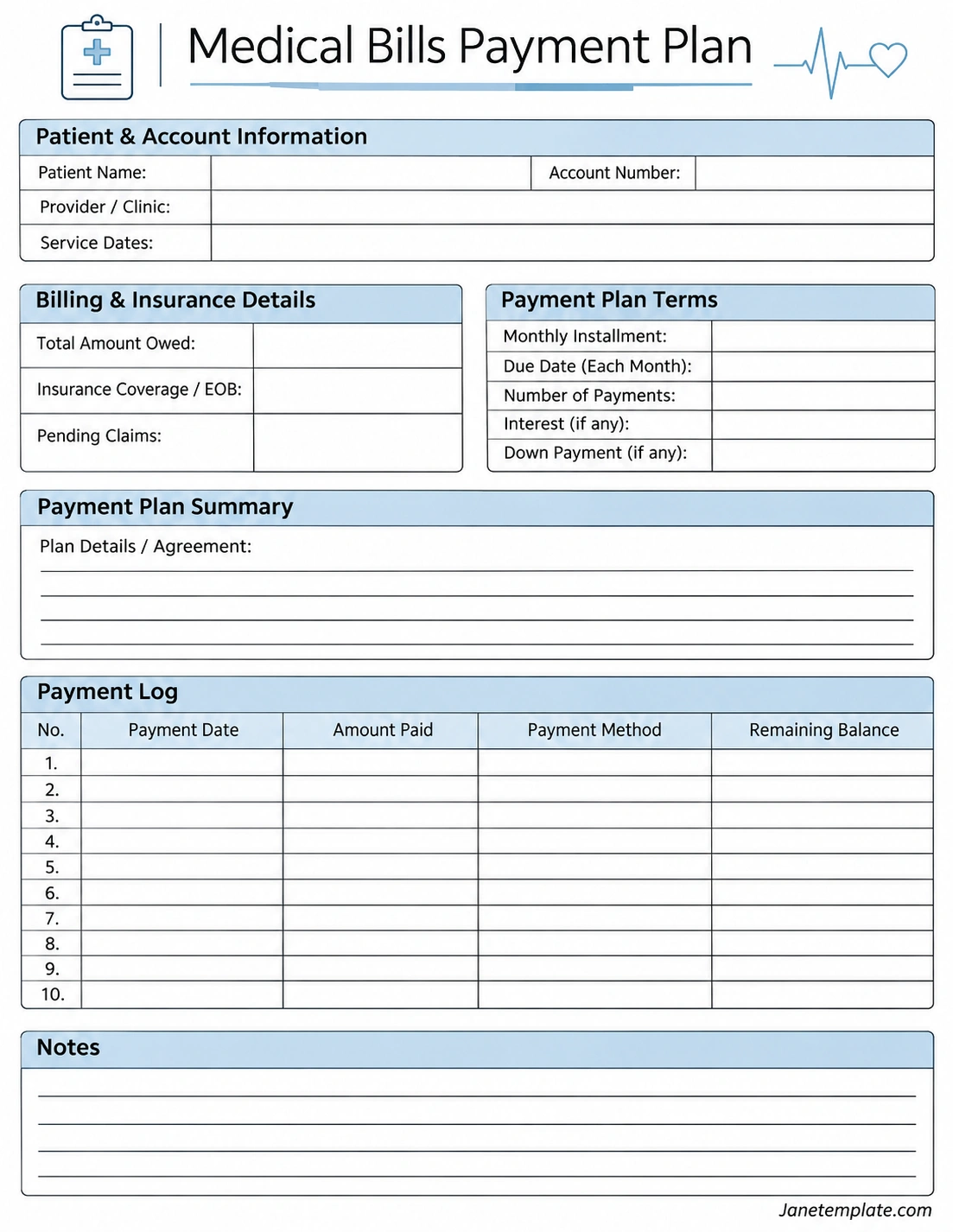
Medical Bills Payment Plan Template
Use this comprehensive worksheet to organize patient details, provider information, insurance balances, installment terms, and payment history in one place.
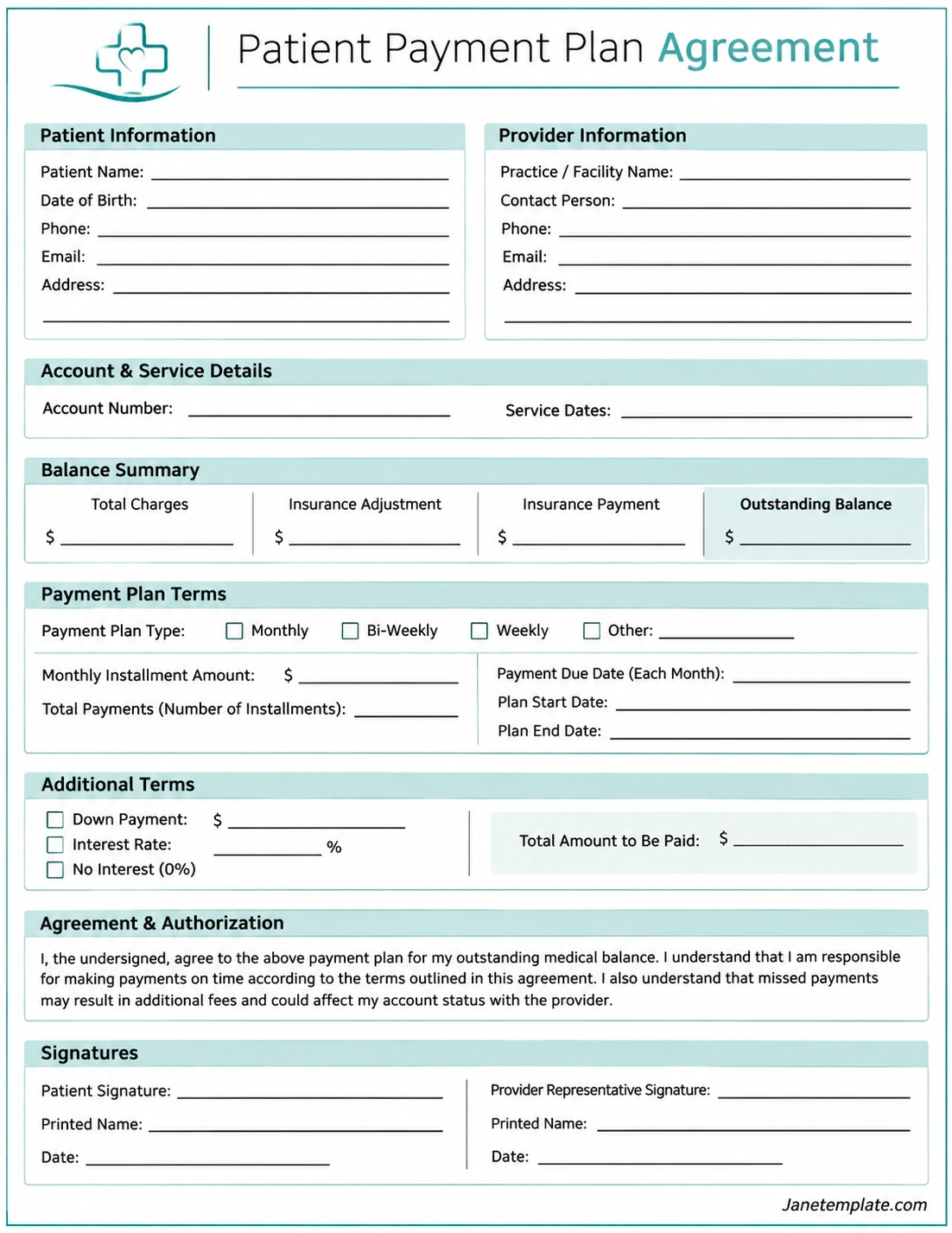
Patient Payment Plan Agreement
If you need to document an arrangement with a healthcare provider, use an agreement worksheet to record the agreed payment terms, down payment, installment amount, and signatures.
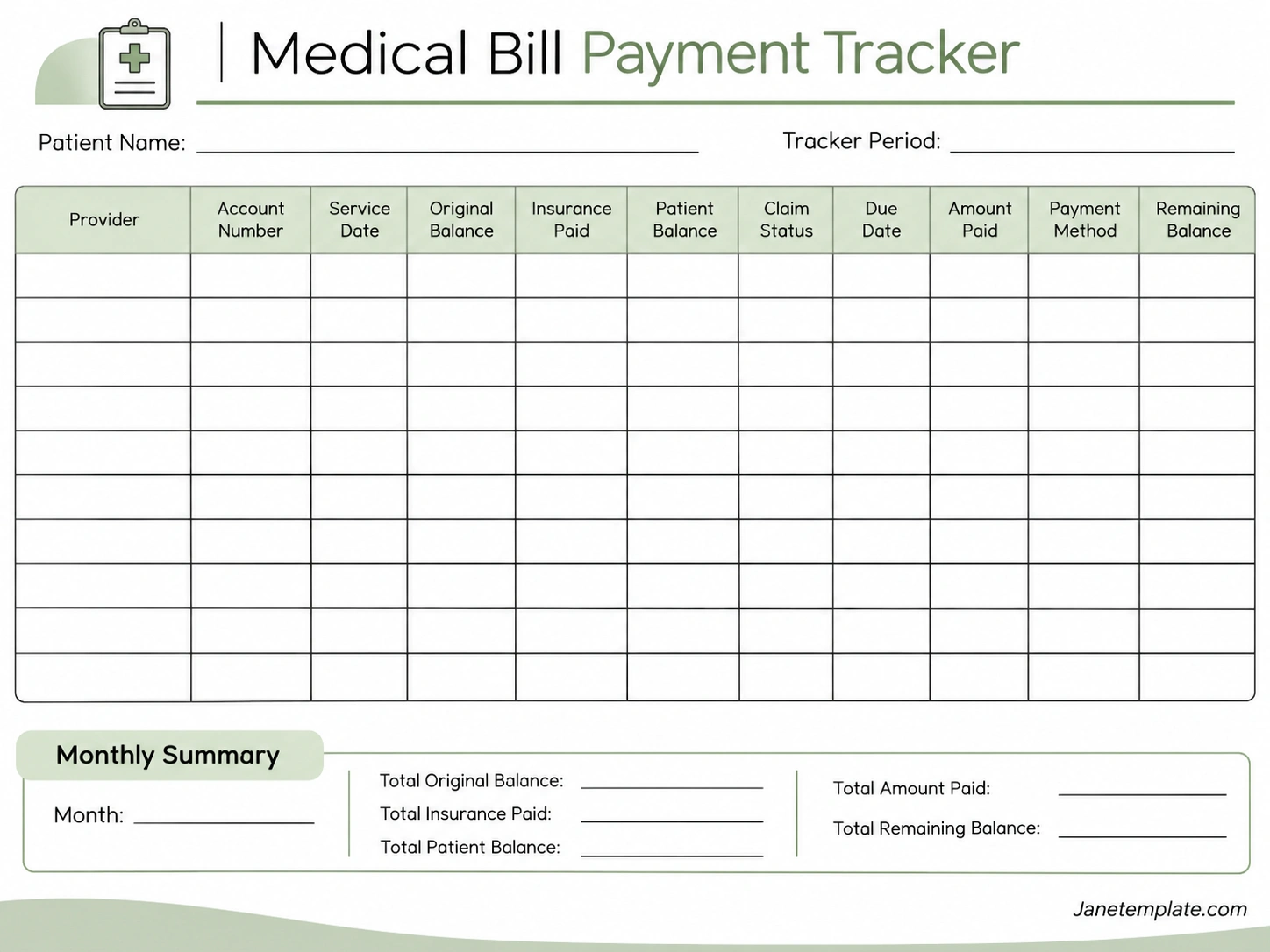
Medical Bill Payment Tracker
A payment tracker is useful when you manage multiple healthcare accounts. Record each provider, original balance, insurance payment, amount paid, and remaining balance.
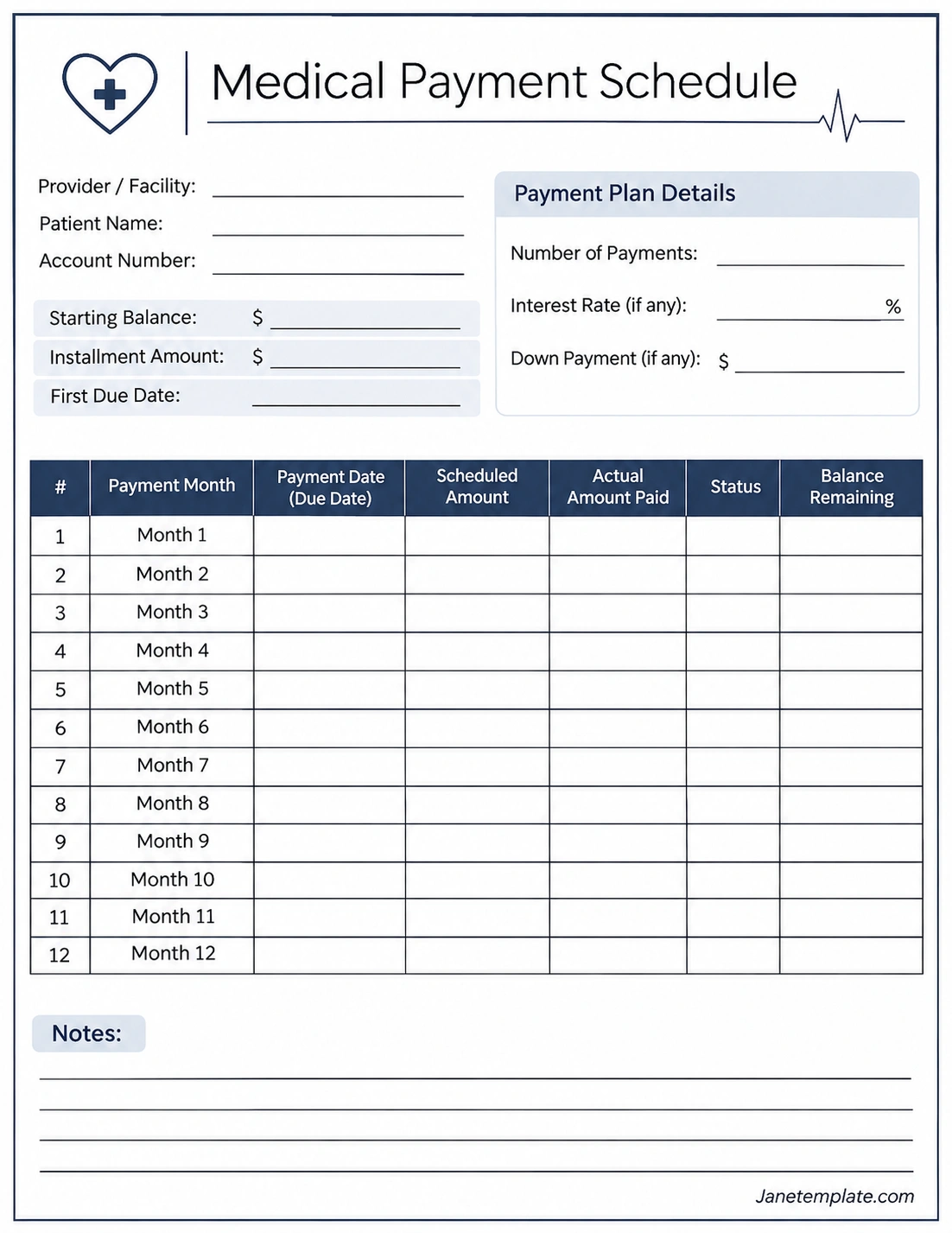
Medical Payment Schedule
Use a payment schedule to organize monthly installments and monitor whether each scheduled payment has been completed.
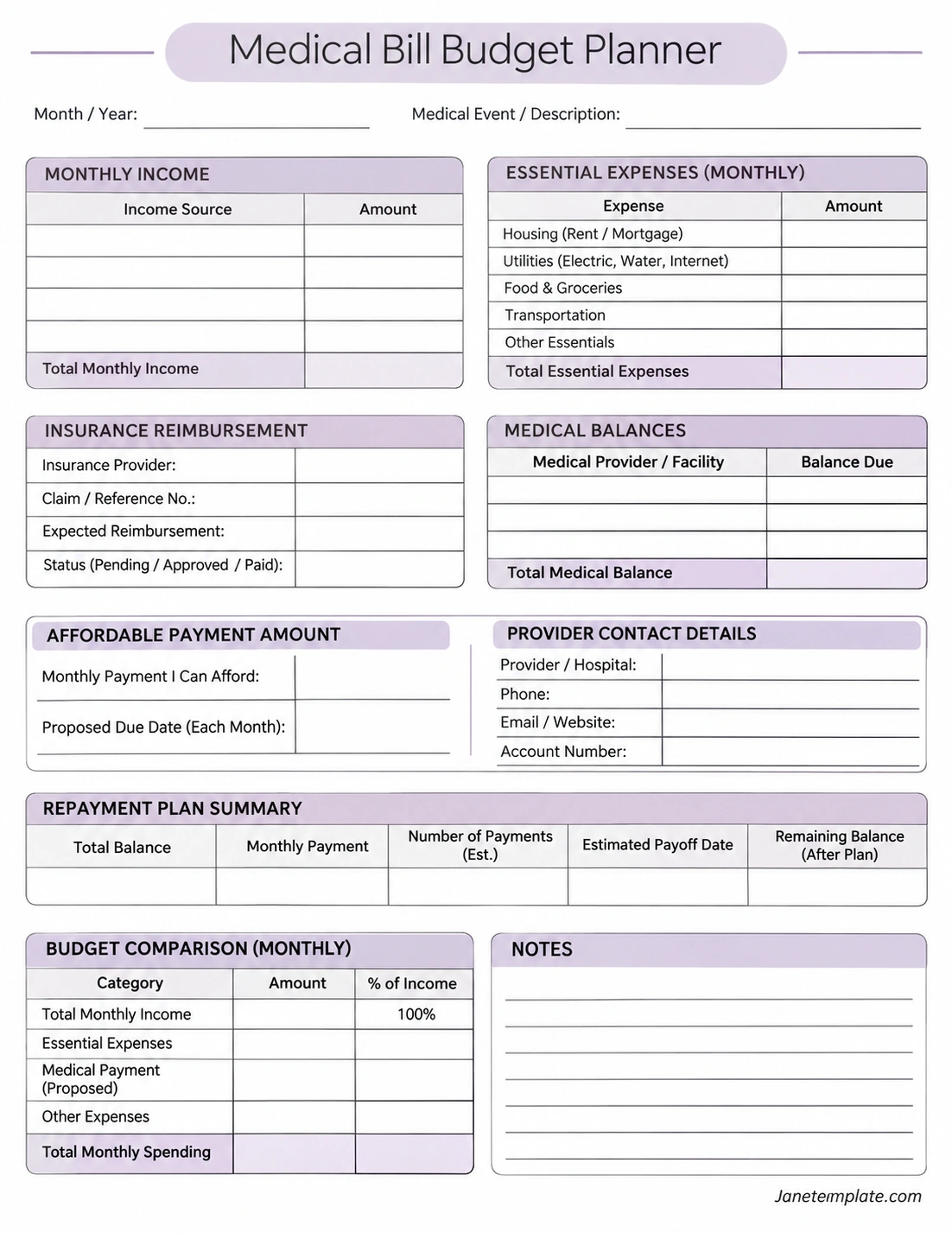
Medical Bill Budget Planner
If you are unsure how much you can afford to pay each month, a budget planner can help you compare income, essential expenses, and medical repayment obligations.
Tips for Managing Medical Bills More Effectively
A payment worksheet is most useful when combined with good billing and budgeting habits. Consider these practical tips:
- Review every statement: Check service dates, provider names, insurance adjustments, and outstanding balances.
- Ask about financial assistance: Hospitals and nonprofit healthcare organizations may offer financial assistance programs for eligible patients.
- Compare payment options: Ask about interest-free arrangements, extended repayment periods, and available discounts before accepting an agreement.
- Keep payment confirmations: Save receipts, bank confirmations, and provider statements as proof of payment.
- Set payment reminders: Add due dates to your calendar to help prevent missed installments.
- Review your budget regularly: Update your income and expenses when your financial circumstances change.
- Communicate early: If you cannot afford an upcoming installment, contact the billing department before the due date to discuss possible adjustments.
Most importantly, do not ignore medical statements or collection notices. Ask questions and seek clarification whenever you are unsure about your balance or repayment obligations.
Frequently Asked Questions About Medical Bills Payment Plans
1. What is a medical bills payment plan?
A medical bills payment plan is an arrangement that allows patients to repay outstanding healthcare expenses through scheduled installments. Instead of paying the entire balance immediately, patients make smaller payments over an agreed period.
2. Can I negotiate a payment plan for medical bills?
Yes. Many hospitals and healthcare providers allow patients to discuss payment arrangements. You can contact the billing department to ask about affordable installments, interest-free options, financial assistance, or other available solutions.
3. How do I calculate monthly medical bill payments?
For an interest-free payment arrangement, divide the outstanding balance by the number of monthly installments. For example, a $1,800 balance divided into 12 payments equals $150 per month. Additional interest or fees may change the required amount.
4. What information should a medical bill payment tracker include?
A medical bill payment tracker should include the patient name, provider information, account number, original balance, insurance payments, outstanding amount, payment dates, amounts paid, and remaining balance.
5. Can I use a spreadsheet to track medical bills?
Yes. A spreadsheet is a convenient way to organize multiple medical accounts, calculate outstanding balances, record installment payments, and monitor repayment progress. You can also use a printable medical bill tracker if you prefer writing information by hand.
6. Should I pay a medical bill before insurance processes the claim?
It is generally helpful to wait until the insurance claim has been processed and you have reviewed the provider’s updated statement. Contact your insurer and provider if you are unsure whether a balance is final or still subject to adjustment.
7. What happens if I miss a medical payment plan installment?
The consequences depend on your agreement and the provider’s policies. You may receive a reminder, be charged applicable fees, or lose certain payment arrangement benefits. Contact the billing department as soon as possible if you anticipate missing a payment.
8. Can I pay off a medical payment plan early?
Many providers allow early payments or full repayment before the scheduled end date. However, you should confirm whether early repayment is permitted and whether any additional conditions apply to your agreement.
9. Are medical payment plans interest-free?
Some healthcare providers offer interest-free payment plans, while others may charge interest or administrative fees. Always request the complete terms in writing before accepting an arrangement.
10. What is the difference between a medical bill tracker and a payment plan worksheet?
A medical bill tracker focuses on recording outstanding balances and payment history. A medical payment plan worksheet goes further by organizing installment amounts, repayment periods, due dates, and agreement terms. Both tools can be used together to manage healthcare expenses.
Conclusion
Managing healthcare expenses becomes easier when you have a clear system for organizing outstanding balances, insurance information, and monthly installments. A medical bills payment plan helps you understand your repayment responsibilities, establish a realistic schedule, and track every payment until your balance is settled.
Whether you prefer a printable worksheet, payment tracker, budget planner, or spreadsheet, the most important thing is to keep your information accurate and updated. Start by reviewing your medical statements, confirming your insurance adjustments, and discussing affordable repayment options with your healthcare provider.
With a well-organized medical payment plan, you can manage healthcare expenses more confidently and maintain better control over your monthly budget.
