Replacing worn-out tires is an important part of vehicle maintenance, but the cost can sometimes put pressure on your budget. A new set of tires, installation, balancing, alignment, and additional service fees can quickly add up. A tire payment plan can make these expenses easier to manage by dividing the total cost into smaller, scheduled payments.
Whether you are purchasing new tires for your personal vehicle or running an automotive shop that offers installment arrangements, having a clear payment plan helps keep everything organized. It allows you to record the total purchase price, initial payment, financing terms, payment dates, and remaining balance in one place.
In this guide, you will learn how to create and manage a tire installment payment plan, what information to include, and how to compare different financing options. You can also use the printable tire payment plan worksheets below to organize your expenses and track payments from start to finish.
What Is a Tire Payment Plan?
A tire payment plan is a budgeting or installment arrangement that allows someone to pay for a tire purchase over an agreed period instead of paying the entire amount upfront. Depending on the seller or financing provider, payments may be divided into weekly, biweekly, or monthly installments.
For example, suppose you need four new tires that cost $800, including installation and related services. Instead of paying the full amount immediately, you might arrange to pay $200 upfront and divide the remaining $600 into six monthly installments of $100, assuming there is no additional interest or fee.
A tire payment plan worksheet helps you record these details and monitor your progress. It can be used for personal budgeting, comparing financing offers, or documenting an installment arrangement with a tire shop.
What Should a Tire Payment Plan Include?
A useful tire payment plan should contain enough information to explain the purchase and make every installment easy to track. The following details are important when creating your worksheet.
1. Total Tire Purchase Cost
Start by calculating the complete cost of replacing your tires. Do not record only the advertised tire price. Include additional services and charges that may affect the final amount.
- Tire purchase price and quantity.
- Mounting and installation fees.
- Wheel balancing services.
- Wheel alignment, if required.
- Tire disposal and recycling fees.
- Applicable sales taxes and additional charges.
Recording the complete purchase cost gives you a more accurate starting point for calculating your payment obligations.
2. Down Payment or Initial Payment
A down payment is the amount paid upfront when purchasing tires through an installment arrangement. It reduces the remaining amount that needs to be financed or paid over time.
For example, if your total tire purchase costs $900 and you make a $200 down payment, the remaining balance before financing charges is $700.
Always record the down payment separately so you can distinguish the amount already paid from the outstanding balance.
3. Financing Terms and Payment Frequency
If you are using a financing provider or an installment agreement, include the relevant payment terms. These details help you understand the actual cost of borrowing and your payment responsibilities.
- Payment frequency: Weekly, biweekly, or monthly.
- Loan term: The total number of weeks or months allowed for repayment.
- APR: The annual percentage rate, when applicable.
- Installment amount: The scheduled amount due for each payment.
- Additional fees: Any applicable service, financing, or late payment charges.
- Early payoff terms: Whether you can pay the remaining balance early without a penalty.
Review the financing agreement carefully before accepting an offer. A smaller installment does not necessarily mean a cheaper purchase because a longer repayment period may increase the total amount paid.
4. Payment Schedule and Remaining Balance
A payment schedule is one of the most important parts of a tire payment plan worksheet. It provides a clear record of when payments are due and how much remains after each transaction.
Consider including these columns in your payment tracking table:
- Payment number.
- Scheduled due date.
- Expected installment amount.
- Actual payment amount.
- Date the payment was completed.
- Remaining outstanding balance.
- Payment status or additional notes.
Updating this information after every payment makes it easier to identify missed installments and track your progress toward paying off the purchase.
Free Printable Tire Payment Plan Templates
Using a printable worksheet can make tire payment management simpler. Instead of keeping payment details in different notes or spreadsheets, you can organize important information on a single page.
Here are five printable worksheets designed for different tire budgeting and installment tracking needs. Each template has a different purpose, so you can choose the one that matches your situation.
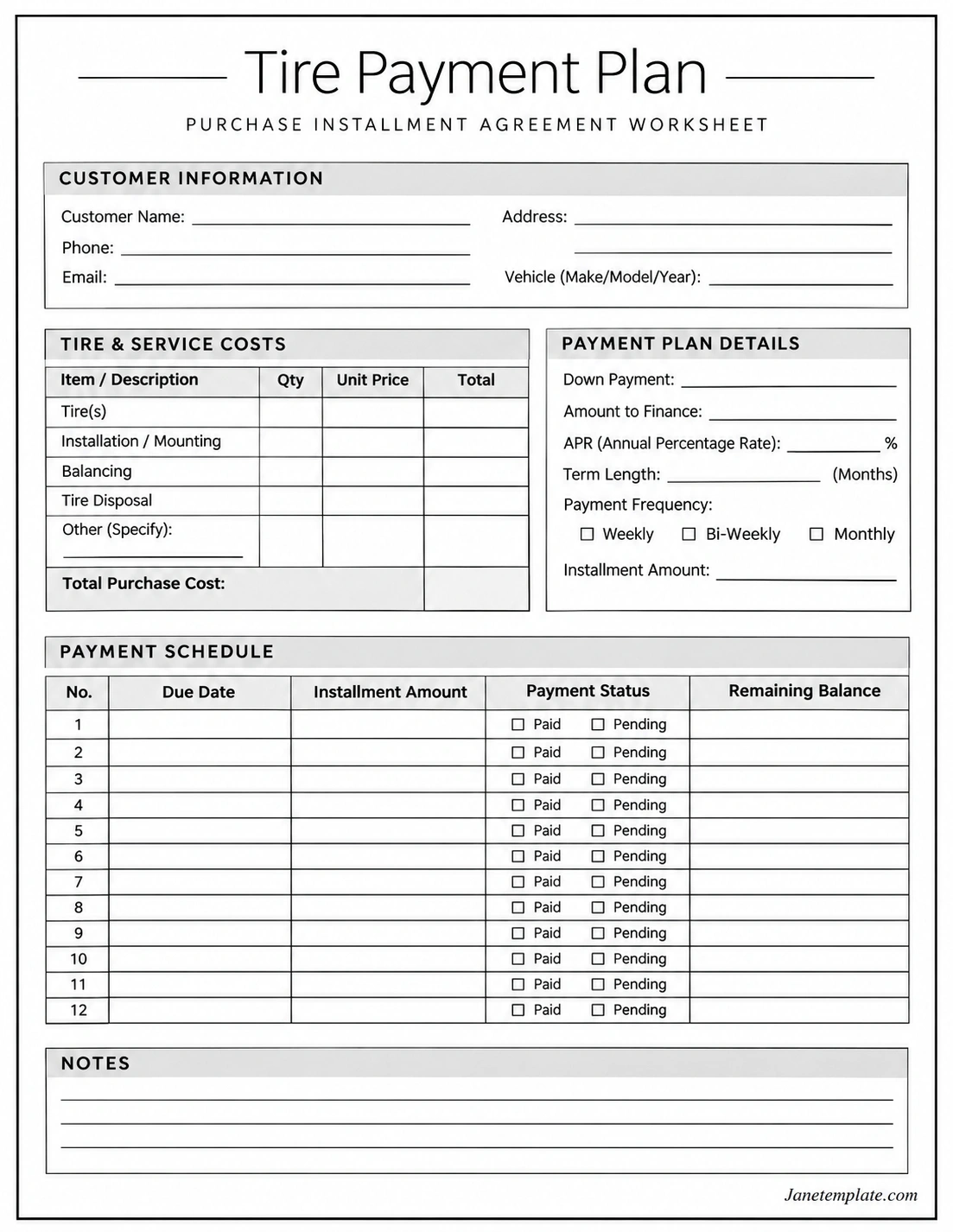
1. Tire Payment Plan Template
This is the main worksheet for organizing a tire purchase installment arrangement. It includes customer information, tire and service costs, down payment, financing details, and a payment schedule.
It is particularly useful for buyers who want to record the complete purchase details before beginning an installment plan.
2. Tire Payment Schedule Template
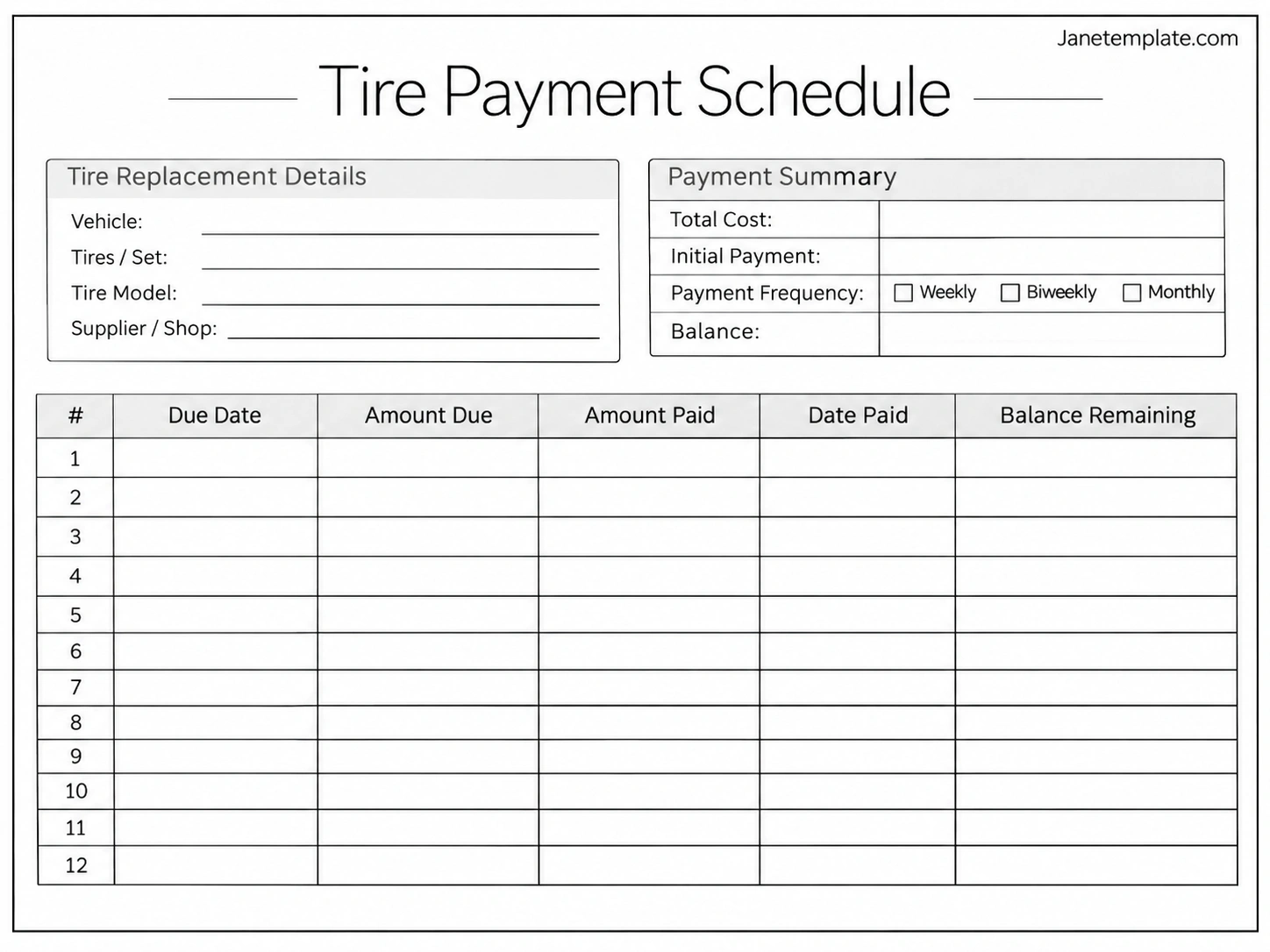
If you already have an installment agreement, a payment schedule worksheet can help you focus on upcoming due dates and completed transactions.
Use this template to record each installment, the actual amount paid, the payment date, and the remaining balance. It is especially helpful when you need a simple overview of your payment obligations.
3. Tire Financing Comparison Worksheet
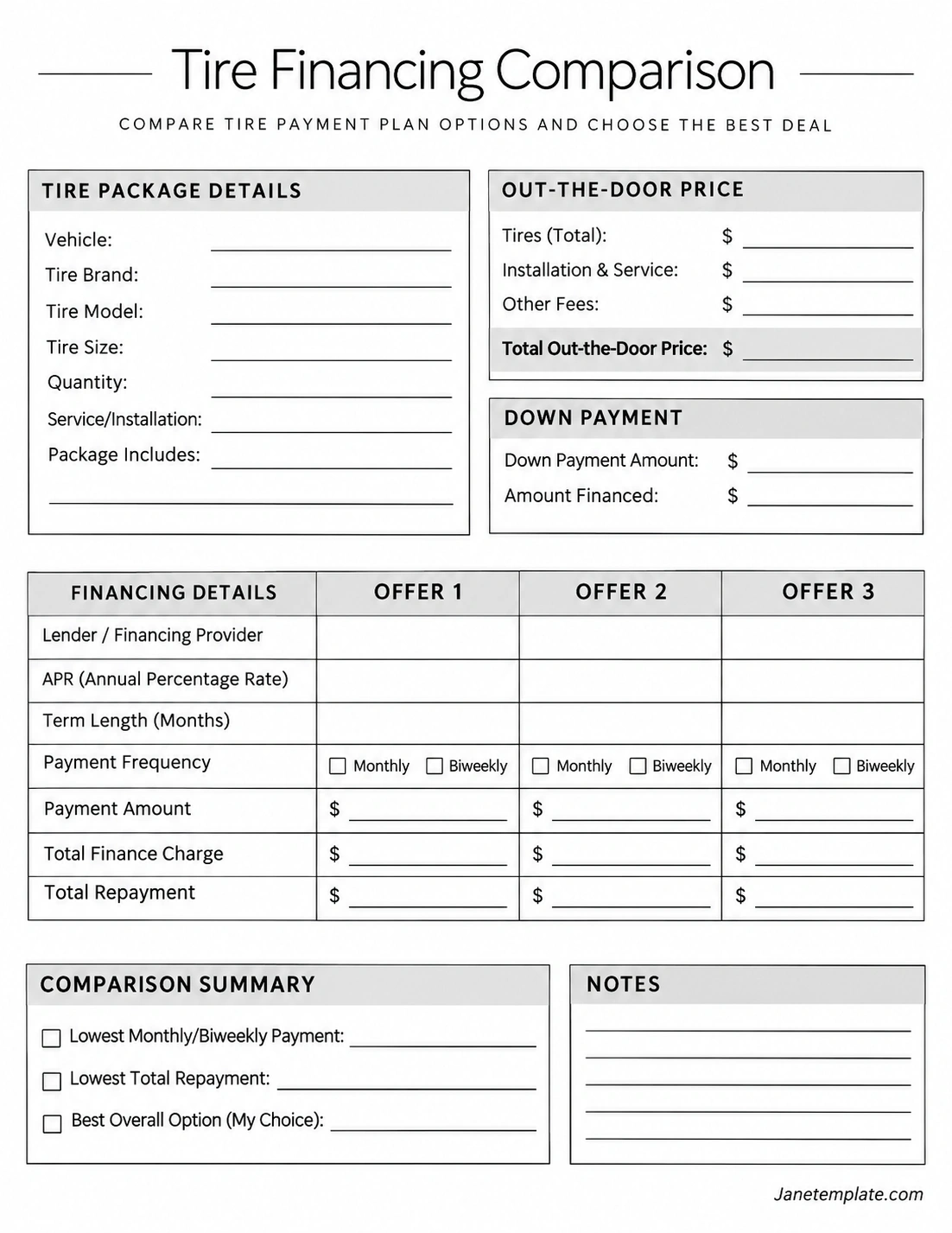
Not all tire financing options have the same interest rates, repayment periods, or fees. Comparing several offers before making a decision can help you avoid unnecessary expenses.
This worksheet provides space to compare three financing options side by side. You can record each provider’s APR, payment frequency, installment amount, total finance charges, and total repayment amount.
4. Tire Payment Agreement Template
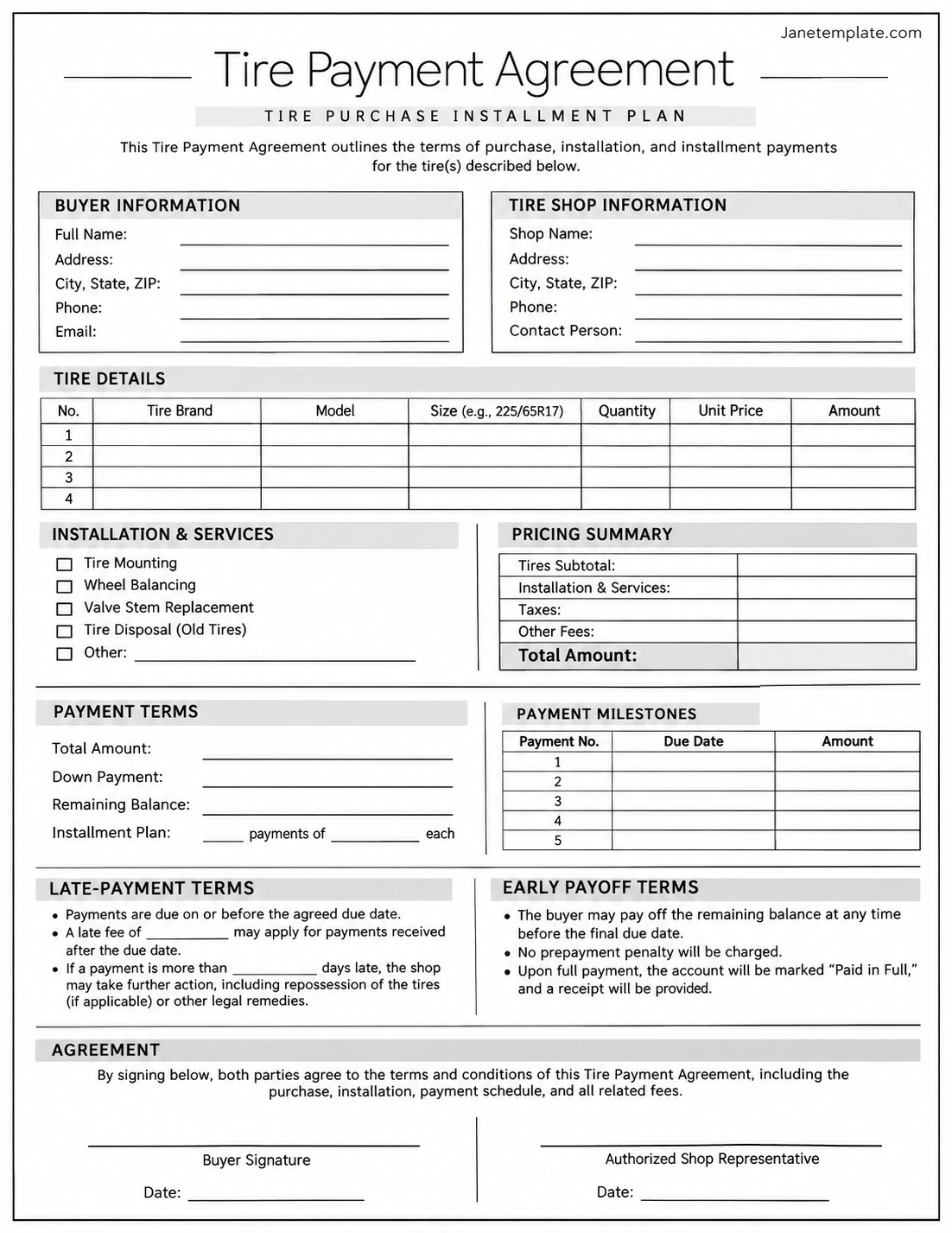
For buyers and automotive shops that arrange direct installment payments, documenting the agreed terms can help prevent misunderstandings.
This template includes buyer details, shop information, tire specifications, service costs, payment milestones, and signature sections. It also provides space for recording late payment and early payoff terms.
However, a printable worksheet is not automatically a legally sufficient financing contract. Both parties should review the terms and use any additional documentation required by applicable laws.
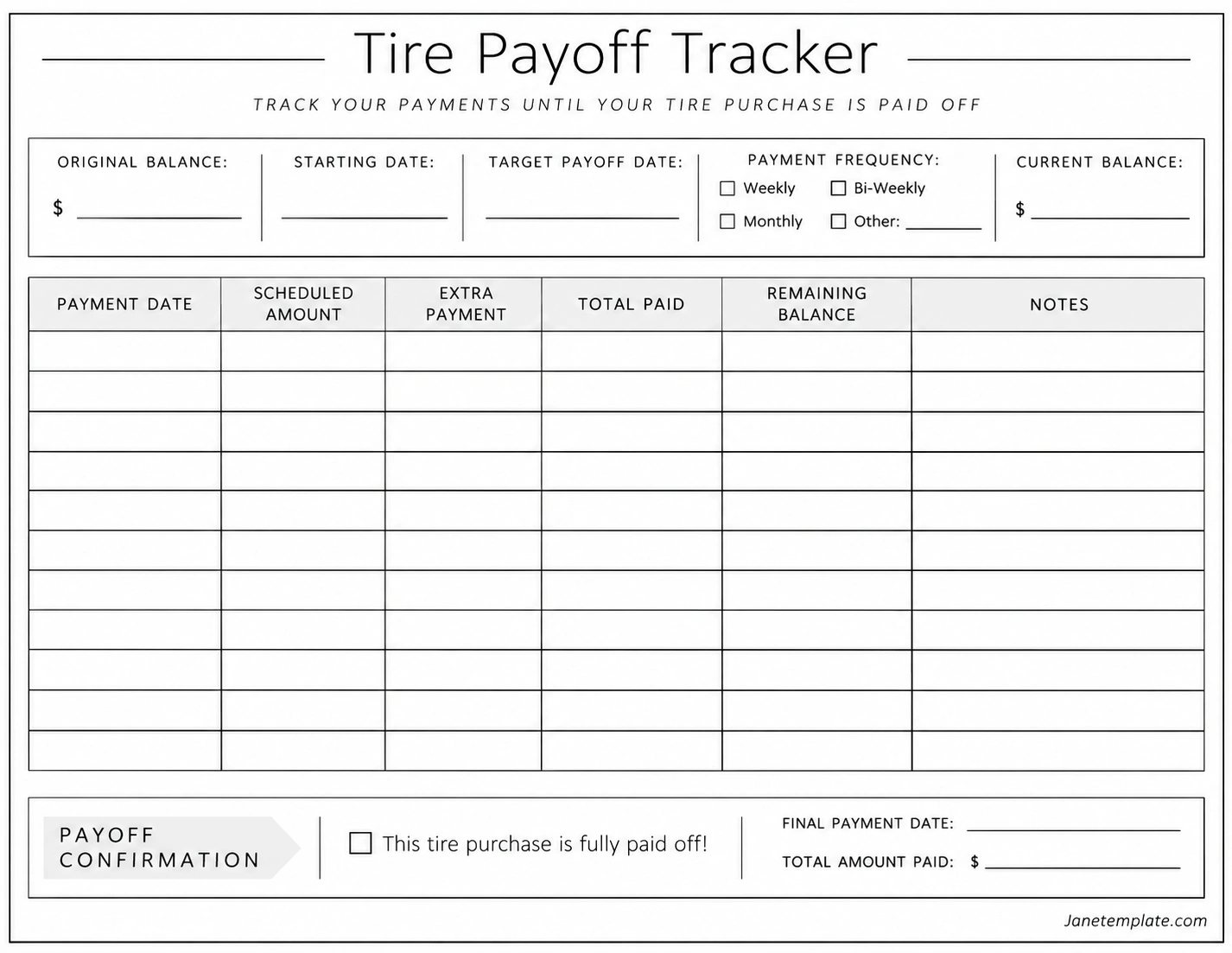
5. Tire Payoff Tracker
A payoff tracker is designed for people who want to monitor their progress until the entire tire purchase balance has been paid.
It provides space for the original balance, payment frequency, scheduled installments, additional payments, and current outstanding balance. You can also record the final payment date when the account is fully paid.
How to Create a Tire Payment Plan
Creating a practical tire payment plan does not have to be complicated. Follow these steps to organize your purchase and establish a manageable repayment schedule.
Step 1: Calculate the Complete Purchase Price
Ask the tire shop for an itemized estimate. Include the cost of all tires, installation, balancing, taxes, and other applicable fees. Use the final out-the-door price rather than estimating from the tire price alone.
Step 2: Determine Your Down Payment
Decide how much you can comfortably pay upfront without affecting essential household expenses. A larger down payment generally reduces the amount you need to finance.
Step 3: Calculate the Remaining Balance
Subtract your initial payment from the total purchase cost. If financing charges apply, account for them when calculating the repayment amount.
Step 4: Choose a Payment Frequency
Select a schedule that matches your income and budget. Weekly payments may work for people paid every week, while monthly installments may be more convenient for those with regular monthly income.
Step 5: Record Every Payment
Write down each scheduled installment and update the worksheet whenever you make a payment. Keep receipts or electronic payment confirmations as supporting records.
Step 6: Review Your Remaining Balance
Check your payment progress regularly. If you have extra funds available, ask whether additional payments can reduce your balance or shorten the repayment period without additional penalties.
Example of a Tire Payment Plan
The following example shows how a simple installment arrangement might work when purchasing a new set of tires.
- Four tires: $640
- Installation and balancing: $100
- Taxes and other fees: $60
- Total purchase cost: $800
- Down payment: $200
- Remaining balance: $600
- Repayment period: 6 months
- Monthly installment: $100
In this example, the buyer pays $200 upfront and makes six monthly payments of $100. The total amount paid is $800, assuming the arrangement has no interest or additional financing charges.
If the financing provider charges interest or fees, the installment amount and total repayment cost will be different. Always use the actual terms provided by the seller or lender when preparing your worksheet.
Tips for Managing Tire Installment Payments
A well-organized payment plan can help you avoid missed due dates and unexpected expenses. Consider these practical tips when managing your tire purchase.
- Choose affordable installments: Make sure the payment amount fits your regular budget.
- Compare total repayment costs: Look beyond the monthly payment and review interest and fees.
- Set payment reminders: Use calendar notifications to remember upcoming due dates.
- Keep payment receipts: Save proof of every completed transaction.
- Review financing conditions: Understand late fees, early payoff rules, and other agreement terms.
- Update your worksheet: Record payments promptly to maintain an accurate balance.
These simple habits can make a tire payment plan easier to manage and help you stay in control of your vehicle maintenance expenses.
Frequently Asked Questions About Tire Payment Plans
Can I buy tires and pay for them in installments?
Yes. Some tire retailers, automotive shops, and third-party financing providers offer installment payment options. Availability depends on the seller, financing provider, eligibility requirements, and applicable terms.
What is usually included in a tire payment plan?
A tire payment plan typically includes the total purchase price, down payment, remaining balance, payment frequency, installment amount, due dates, and applicable financing charges. Some plans also include installation and related service expenses.
Can I make weekly or biweekly tire payments?
Some financing providers and tire shops allow weekly or biweekly installments. However, payment frequency depends on the specific agreement. Check the available options before choosing a plan.
Does a tire payment plan charge interest?
Not necessarily. Some installment arrangements may offer interest-free payments, while others charge interest or additional fees. Review the APR, financing charges, and total repayment amount before agreeing to the terms.
How do I calculate my remaining tire payment balance?
Start with the amount financed, add any applicable charges, and subtract the payments credited to your account. If interest accrues over time, use the lender’s current payoff balance rather than relying only on a basic subtraction.
What is the difference between a tire payment plan and tire financing?
A tire payment plan is a general arrangement for dividing a tire purchase into multiple payments. Tire financing usually refers to a credit-based arrangement provided by a retailer or financial institution, potentially involving interest, fees, and formal credit terms.
Can I pay off my tire payment plan early?
Some plans allow early repayment, but the conditions vary. Check whether additional payments reduce the outstanding balance and whether an early payoff fee applies.
Why should I use a tire payment plan worksheet?
A worksheet helps you organize purchase costs, record payment dates, monitor completed installments, and calculate your remaining balance. It can also help you compare financing offers before committing to a payment arrangement.
Conclusion
A tire payment plan can make replacing your tires easier to budget for by organizing the purchase into manageable installments. Whether you are planning a personal vehicle expense, comparing financing offers, or documenting an agreement with a tire shop, keeping accurate payment records is important.
Using a printable worksheet makes it easier to calculate your total costs, record your down payment, organize due dates, and monitor your remaining balance. Choose the template that fits your needs and update it regularly to keep your tire payment arrangement organized from the first installment to the final payoff.
Tire Payment Plan Template – Download
