When hiring a lawn care service provider, it’s essential to have a clear, legally binding contract in place to protect both parties involved. A service agreement outlines the services to be performed, the schedule, pricing, payment terms, responsibilities, and how any issues will be addressed. This agreement acts as a roadmap for a smooth and dispute-free relationship, ensuring consistent, high-quality lawn maintenance.
What is a Lawn Care Service Agreement?
A lawn care service agreement is a contract between a client and a provider that details the terms and conditions of the services to be performed. It sets clear expectations for both parties, outlining the scope of work, pricing, payment terms, responsibilities, and procedures for handling any disputes or issues that may arise during the course of the agreement.
Why is a Lawn Care Service Agreement Important?
A lawn care service agreement is essential for both the client and the provider to ensure a clear understanding of the services to be performed, the schedule, pricing, and responsibilities. By having a written agreement in place, both parties are protected in case of any misunderstandings or disputes, and it helps to maintain a professional and transparent relationship throughout the duration of the service.
Key Elements of a Lawn Care Service Agreement
When creating a lawn care service agreement, several key elements should be included to ensure clarity and protect both the client and the provider:
- Scope of Work. Clearly outline the specific services to be performed, including mowing, edging, fertilizing, weed control, and cleanup.
- Pricing. Detail the pricing structure, whether it’s a flat fee, hourly rate, or based on the size of the lawn.
- Payment Terms. Specify how and when payment will be made, whether it’s weekly, monthly, or upon completion of the services.
- Responsibilities. Define the responsibilities of both the client and the provider, such as access to the property, equipment maintenance, and communication.
- Schedule. Establish a schedule for the services to be performed, including the frequency of visits and any seasonal considerations.
- Termination Clause. Include a clause outlining the process for terminating the agreement, including notice requirements and any fees associated with early termination.
- Dispute Resolution. Specify how any disputes or issues will be resolved, whether through mediation, arbitration, or small claims court.
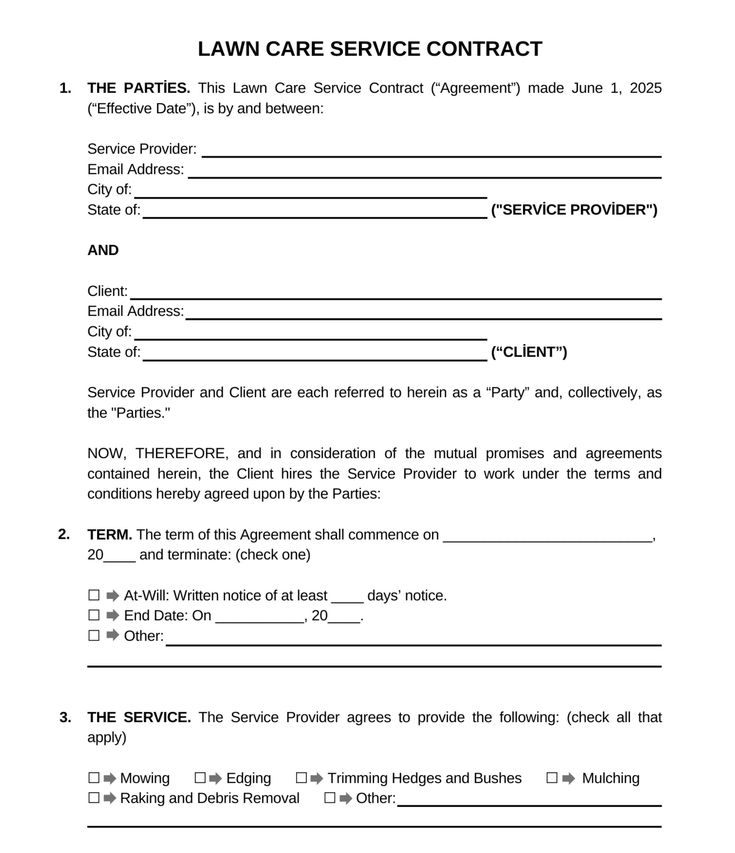
How to Create a Lawn Care Service Agreement
Creating a lawn care service agreement doesn’t have to be complicated. Follow these steps to draft a clear and comprehensive contract:
- Identify the Parties. Clearly identify the client and the provider by including their full legal names and contact information.
- Outline the Services. Detail the specific services to be performed, including any additional services that may be offered.
- Set the Pricing. Specify the pricing structure, including any additional fees or charges that may apply.
- Establish Payment Terms. Define how and when payment will be made, whether it’s by cash, check, credit card, or online payment.
- Include a Schedule. Set a schedule for the services to be performed, including the frequency of visits and any seasonal considerations.
- Address Responsibilities. Clearly define the responsibilities of both parties, including access to the property, equipment maintenance, and communication.
- Include a Termination Clause. Specify the process for terminating the agreement, including notice requirements and any fees for early termination.
- Outline Dispute Resolution. Detail how any disputes or issues will be resolved, whether through mediation, arbitration, or small claims court.
Tips for a Successful Lawn Care Service Agreement
To ensure a successful and hassle-free relationship with your lawn care service provider, consider the following tips:
- Communicate Clearly. Maintain open communication with your provider to address any concerns or changes in the agreement.
- Review the Agreement Regularly. Periodically review the agreement to ensure it still reflects your needs and expectations.
- Keep Records. Keep detailed records of payments, services performed, and any communications related to the agreement.
- Address Issues Promptly. If any issues arise, address them promptly and work with your provider to find a resolution.
- Seek Legal Advice. If you’re unsure about any aspect of the agreement, seek legal advice to ensure your rights are protected.
- Provide Feedback. Offer feedback to your provider to help improve the quality of services and maintain a positive relationship.
- Renew or Update the Agreement. As needed, renew or update the agreement to reflect any changes in services, pricing, or terms.
Conclusion
A lawn care service agreement is a crucial document for both clients and providers to establish clear expectations, protect their rights, and maintain a professional relationship. By including key elements such as scope of work, pricing, payment terms, responsibilities, and dispute resolution, both parties can ensure a smooth and successful lawn maintenance experience. Follow the tips outlined in this guide to create a comprehensive and effective lawn care service agreement that benefits everyone involved.
