A notarized letter is a written document that has been signed in the presence of a notary public, who verifies the identity of the signer and completes the required notarization process. Notarization can provide additional assurance that the person who signed the document was properly identified and signed willingly.
People may need a notarized letter for personal, business, legal, financial, educational, or administrative purposes. Depending on the situation and jurisdiction, a notarized document may help establish the authenticity of a signature and provide greater confidence to the person or institution receiving it.
If you need to prepare a notarized letter, it is important to understand what information belongs in the letter, what a notary actually verifies, and what steps are normally involved before signing.
What Is a Notarized Letter?
A notarized letter is a letter that has been signed and notarized according to the applicable rules of the jurisdiction where the notarization takes place. The notary public generally verifies the signer’s identity, observes or otherwise properly handles the signing process as required, and completes a notarial certificate or acknowledgment.
The purpose of notarization is primarily to provide assurance about the identity of the person signing and the authenticity of the signing process. A notary does not generally determine whether every statement contained in the letter is true or whether the underlying agreement is legally valid.
This distinction is important. A notarized signature does not automatically make every statement in a document legally correct, nor does notarization necessarily mean that a government agency, court, bank, school, or other organization must accept the document.
Why Do You Need a Notarized Letter?
A notarized letter may be requested when the recipient wants additional verification of the signer’s identity and signature. It can provide a more formal level of authentication than an ordinary unsigned or privately signed letter.
Common reasons for requesting a notarized letter include:
- Verifying the identity of the person signing the document
- Providing evidence that a signature was properly executed
- Supporting certain administrative applications
- Confirming authorization or consent
- Supporting personal or business transactions
- Providing documentation requested by an institution
- Reducing concerns about fraudulent signatures
- Meeting a specific notarization requirement
The exact requirements vary depending on the document, recipient, and applicable local law. Always check the requirements of the organization requesting the letter before preparing it.
What Does a Notary Public Verify?
A common misconception is that a notary verifies every fact written in a letter. In most situations, the notary’s role is narrower.
Identity of the Signer
The notary generally verifies the identity of the person signing using an acceptable form of identification or another legally permitted method. Identification requirements vary by jurisdiction.
Willingness to Sign
The notarization process is generally intended to help establish that the signer is acting voluntarily rather than being improperly pressured or coerced.
Signature or Acknowledgment
Depending on the type of notarial act, the signer may sign the document in the notary’s presence or acknowledge that an existing signature is theirs. The specific procedure depends on the applicable law and type of notarization.
Notarial Certificate
The notary completes the appropriate notarial certificate or acknowledgment, which typically identifies the notarial act, jurisdiction, date, and other required information. The certificate is an important part of the notarization process.
What Does a Notarized Letter Look Like?
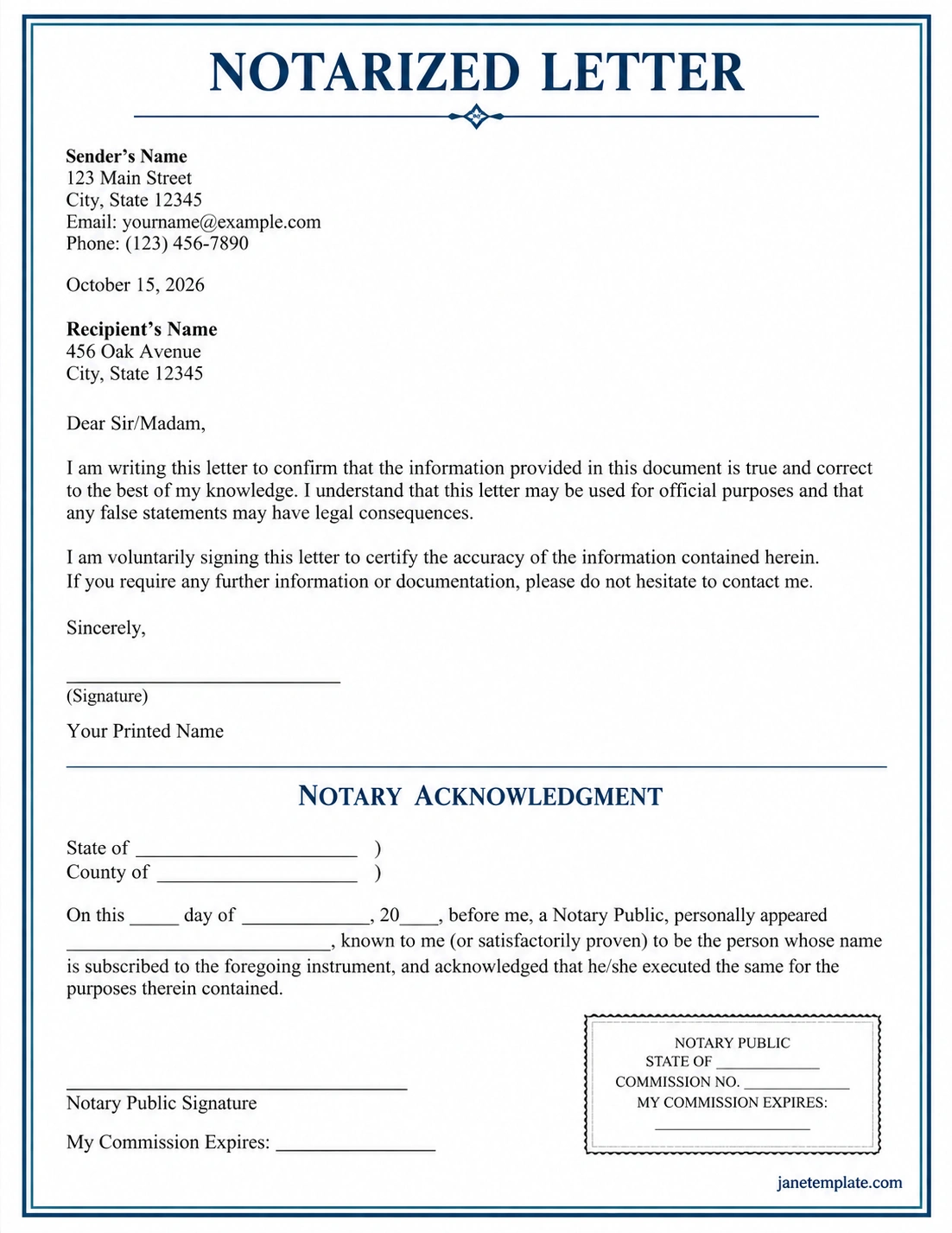
A notarized letter generally looks like a regular formal letter with an additional section for the notarial certification. The main body should clearly explain the purpose of the letter and provide the necessary facts or statements.
A typical notarized letter may contain:
- Date
- Recipient information
- Subject or purpose of the letter
- Formal statement or explanation
- Relevant names and identifying information
- Signature of the person making the statement
- Printed name of the signer
- Notarial acknowledgment or jurat, when applicable
- Notary’s signature and required information
- Notary seal or stamp when required
The exact format of the notarial section should follow the requirements of the notary’s jurisdiction rather than being copied blindly from an online example.
How to Write a Notarized Letter
Writing the letter itself is usually straightforward. The most important goal is to communicate the relevant information clearly and accurately.
1. Add the Date
Begin with the date the letter is prepared. If the document has a specific signing deadline, make sure the date is consistent with the recipient’s requirements.
2. Identify the Recipient
Address the letter to the person, organization, agency, or institution that will receive it. If the recipient has provided specific addressing instructions, follow them carefully.
3. State the Purpose
Clearly explain why you are providing the letter. Avoid unnecessary background information that does not contribute to the purpose of the document.
4. Provide the Required Information
Include the names, dates, facts, statements, authorization, consent, or other information relevant to the purpose of the letter. Make sure all information is accurate before signing.
5. Add the Signature Section
Leave sufficient space for the signer to sign. Include a printed name line when appropriate.
6. Complete the Notarization
Follow the notary’s instructions for the appropriate notarial act. Do not sign the document prematurely if the notary requires you to sign in their presence.
Basic Notarized Letter Structure
A simple notarized letter can follow a structure such as the following:
- Date: The date of the letter.
- Recipient: The person or organization receiving the document.
- Subject: A brief description of the purpose.
- Opening: A formal greeting or introductory statement.
- Body: The relevant facts, declaration, authorization, or explanation.
- Closing: A professional closing statement.
- Signature: The signer’s signature and printed name.
- Notarial section: The appropriate acknowledgment or jurat completed by the notary.
This structure can be adapted to many different situations. However, if an organization provides a required form, use that form instead of replacing it with a generic template.
Common Types of Notarized Letters
The phrase notarized letter can refer to many different documents. The appropriate wording depends on the reason the letter is being prepared.
Notarized Authorization Letter
A notarized authorization letter may be used when one person wants to authorize another person to perform a specified action on their behalf. The exact authority should be stated clearly and should not exceed what is legally permitted.
Notarized Consent Letter
A notarized consent letter documents a person’s consent to a specified matter. The recipient may require notarization to provide additional assurance that the consent was actually given by the named signer.
Notarized Statement
A person may be asked to provide a notarized statement confirming certain facts or circumstances. The statement should be accurate and limited to information the signer can truthfully attest to.
Notarized Proof of Residency Letter
Some organizations may request a notarized letter concerning a person’s residence or living arrangement. Requirements vary considerably, so confirm exactly what supporting documents the recipient accepts.
Notarized Financial Support Letter
A financial support letter may be requested in certain administrative or educational situations. If notarization is required, the letter should clearly identify the person providing the support and describe the nature of the commitment.
What to Bring to a Notary
Before visiting a notary, prepare the documents and information you may need. Requirements differ by location, but the following items are commonly relevant:
- The document that needs to be notarized
- An acceptable government-issued identification document
- Any supporting documents specifically requested
- Information required to complete the notarial certificate
- Payment for the applicable notary fee, when required
Contact the notary beforehand if you are unsure whether your identification or document format is acceptable.
Should You Sign a Notarized Letter Before Seeing the Notary?
Do not assume that you should sign the document before your appointment. Some notarizations require the signer to sign in the notary’s presence, while other notarial acts may involve acknowledging a signature that has already been placed on the document.
The safest approach is to ask the notary how the document should be signed before completing the signature. This can help prevent having to repeat the process.
Notarized Letter vs. Regular Letter
The main difference between an ordinary letter and a notarized letter is the additional notarial verification associated with the signature.
A regular letter may simply contain the writer’s signature. A notarized letter includes a notarial act performed according to applicable requirements. This can provide the recipient with additional assurance concerning the identity of the signer and the circumstances surrounding the signature.
However, notarization does not automatically make a document legally enforceable. Whether a document creates legal rights or obligations depends on its content, applicable law, and the circumstances surrounding it.
Common Mistakes to Avoid
Preparing a notarized letter requires attention to detail. Several common mistakes can create unnecessary delays.
- Signing too early: Ask the notary whether you must sign in their presence.
- Using incorrect information: Check names, dates, addresses, and other details carefully.
- Leaving out required information: Review the recipient’s requirements before the appointment.
- Using the wrong notarial act: The appropriate acknowledgment or jurat depends on the circumstances and local requirements.
- Assuming notarization guarantees legal validity: Notarization verifies a notarial act, not necessarily the truth or enforceability of every statement.
- Ignoring recipient requirements: Some organizations have their own forms or specific notarization rules.
Tips for Creating a Professional Notarized Letter
A professional document should be clear, concise, and easy to review. Use a readable font, consistent spacing, and descriptive headings where appropriate.
Keep the main statement focused on the purpose of the letter. Avoid exaggerated language or unnecessary claims. If the document contains important legal obligations, consider obtaining advice from a qualified legal professional before signing.
It is also helpful to leave enough room for the signature and notarial certificate. Do not place text in the area reserved for the notary unless the required form specifically includes text there.
When Should You Get Legal Advice?
A notary public is not necessarily a lawyer and generally does not provide legal advice simply by notarizing a document. If the letter creates significant legal rights, transfers property, establishes financial obligations, grants broad authority, or is connected with a legal dispute, professional legal advice may be appropriate.
You should also seek guidance when an institution has provided specific legal or formatting requirements that you do not understand. Following the recipient’s instructions can be essential when the document is being submitted for an important legal or administrative purpose.
Frequently Asked Questions About Notarized Letters
What is a notarized letter?
A notarized letter is a letter signed in connection with a notarial act performed by a notary public. The process generally involves verifying the signer’s identity and completing the appropriate notarial certificate according to applicable requirements.
Does a notarized letter make the information legally true?
Not necessarily. Notarization generally concerns the signing process and the identity of the signer. It does not automatically verify every factual statement contained in the letter.
Does a notarized letter make a document legally binding?
Not necessarily. Whether a document is legally binding depends on its wording, applicable law, and the circumstances involved. Notarization alone does not automatically create legal enforceability.
Can I write my own notarized letter?
In many situations, you can prepare the underlying letter yourself and then have the signature notarized. However, specific requirements vary by jurisdiction and by the organization requesting the document.
What identification do I need for a notarized letter?
A notary commonly requires an acceptable form of identification, such as a government-issued identification document. The exact types of identification accepted depend on the applicable jurisdiction.
Should I sign my notarized letter before going to the notary?
It depends on the type of notarial act. Some documents must be signed in the notary’s presence, while others may involve acknowledgment of an existing signature. Ask the notary before signing if you are unsure.
Can a notary notarize any letter?
Not necessarily. A notary must follow the laws and rules applicable to the notarial act. Some documents may also require a particular form of notarization or additional procedures.
Does a notarized letter work in every country?
Not automatically. Notarization rules and requirements vary between countries and jurisdictions. A document intended for use in another country may require additional authentication, legalization, or an apostille depending on the circumstances.
How long does a notarized letter remain valid?
There is no universal expiration period for every notarized letter. The validity and usefulness of the document depend on its purpose, wording, applicable law, and the requirements of the organization receiving it.
Conclusion
A notarized letter provides an additional level of formality and authentication by connecting a signature with a verified identity and a recognized notarial act. It can be useful when a recipient wants greater assurance that a document was signed by the person identified in it.
When preparing a notarized letter, focus on accurate information, clear wording, a properly prepared signature section, and the requirements of the organization receiving the document. Bring appropriate identification and follow the notary’s instructions regarding the signing process.
Most importantly, remember that notarization does not automatically confirm that every statement is true or that a document is legally enforceable. Requirements vary by jurisdiction and purpose, so verify the applicable rules before signing and seek qualified legal advice when the document involves significant legal rights or obligations.
Download: Notarized Letter Template
